

TL;DR:
- West Springs lawns face unique challenges from Chinooks, clay soils, and wind, requiring tailored care.
- Using drought-tolerant grass varieties and season-specific maintenance helps lawns survive Calgary’s climate.
- Observation and moderation are key; overwatering, over-fertilising, and cutting too short harm lawn health.
Calgary’s climate is genuinely tough on lawns. West Springs homeowners deal with chinook winds that swing temperatures by 20°C in a single day, heavy clay soils that drain poorly, and summer droughts that can brown even a well-tended yard within weeks. Generic lawn care advice written for milder climates simply does not hold up here. This guide pulls together evidence-backed, locally tested strategies to help you build a lawn that looks great in July and survives February without a scratch. Whether you’re starting fresh or trying to fix persistent problems, you’ll find clear, practical steps that actually work in West Springs.
Table of Contents
- Why West Springs lawns need special care
- Essential seasonal lawn care for Calgary homes
- Water-wise grass and alternatives for Calgary’s climate
- Simple mistakes West Springs homeowners make (and easy fixes)
- A Calgary pro’s take: what most guides miss about local lawn care
- Get expert help for your West Springs lawn
- Frequently asked questions
Key Takeaways
| Point | Details |
|---|---|
| Local climate affects lawns | West Springs’ climate demands special lawn care strategies for lasting results. |
| Seasonal care is essential | Spring, summer, fall, and winter each require different maintenance steps for a healthy yard. |
| Water efficiency pays off | Choosing drought-tolerant grass and using deep watering methods save water and boost resilience. |
| Common mistakes are fixable | Most homeowner errors, like mowing too short or overwatering, are easy to spot and correct. |
| Expert help is available | Professional services offer guidance and labour for those wanting stress-free, beautiful lawns year-round. |
Why West Springs lawns need special care
West Springs sits at a higher elevation on Calgary’s western edge, which means it catches more wind, experiences sharper temperature swings, and often sees the full force of chinook events before other neighbourhoods do. That context matters enormously when you’re trying to keep grass alive and healthy.
Calgary’s clay-heavy soils are notoriously dense. Water pools on the surface rather than soaking in, roots struggle to push deep, and compaction builds up quickly under foot traffic or heavy equipment. A lawn growing in shallow, compacted clay is already fighting an uphill battle before summer heat even arrives.
Chinooks are the wild card. A warm chinook in January can fool dormant grass into waking up, only for temperatures to crash again days later. This freeze-thaw cycle stresses root systems and can cause significant winter kill, especially in low-lying areas where water collects and refreezes.
Expert tip: Cool-season grasses like fescue develop deeper root systems than Kentucky bluegrass, making them far better suited to Calgary’s clay soils and dry spells. Deeper roots mean more drought tolerance and better recovery after chinook stress.
Understanding lawn care benefits in Calgary starts with recognising that a healthy lawn isn’t just about looks. It manages stormwater, reduces soil erosion, and keeps your property value strong through every season.
Here are the most common mistakes West Springs homeowners make without realising it:
- Overwatering: Daily shallow watering encourages surface roots that burn out fast in drought
- Mowing too short: Scalping the lawn in summer stresses grass and opens the door to weeds
- Fertilising at the wrong time: Applying nitrogen in midsummer pushes soft growth that scorches easily
- Ignoring fall prep: Skipping aeration and overseeding in autumn leaves lawns thin and vulnerable heading into winter
- Using generic seed mixes: Varieties bred for wetter climates fail quickly under Calgary’s watering restrictions
A standard bluegrass lawn in Calgary can require up to 500 litres of water per week during peak summer. Switching to drought-adapted varieties or blended mixes can cut that figure by 30 to 50 per cent, a meaningful saving when water restrictions are in effect.
Essential seasonal lawn care for Calgary homes
Now that you understand West Springs’ unique lawn challenges, here are the seasonal strategies to keep your yard at its best year-round.
- Spring: Rake out dead thatch and debris as soon as the ground thaws. Aerate compacted soil, overseed thin patches, and apply a slow-release fertiliser once nighttime temperatures stay above 5°C. Check your mower blade and sharpen it before the first cut.
- Early summer: Begin mowing at a height of 7 to 9 centimetres. Never remove more than one-third of the blade in a single cut. Start deep watering cycles twice a week rather than light daily watering. Review spring yard clean up tips to make sure nothing gets missed.
- Late summer: Reduce watering slightly if rainfall picks up. Watch for signs of grub activity or fungal patches, which appear as irregular brown rings. Hold off on fertilising until temperatures cool.
- Fall: This is the most important season for long-term lawn health. Aerate again, overseed bare areas, and apply a fall fertiliser high in potassium to harden roots before freeze-up. Keep mowing until growth stops, then do a final cut slightly shorter than usual to reduce snow mould risk. Use the annual Calgary lawn checklist to stay on track.
- Winter: Avoid walking on frozen or dormant turf. Keep heavy objects and vehicles off the lawn. Limit salt use near grass edges, as road salt causes significant browning and soil damage.
Pro Tip: Leave your grass clippings on the lawn after mowing. Clippings return nutrients to the soil naturally, acting as a free, slow-release fertiliser that reduces how often you need to apply synthetic products.
Water-wise grass and alternatives for Calgary’s climate
To achieve a truly resilient and water-smart lawn, consider your grass type or even creative alternatives.
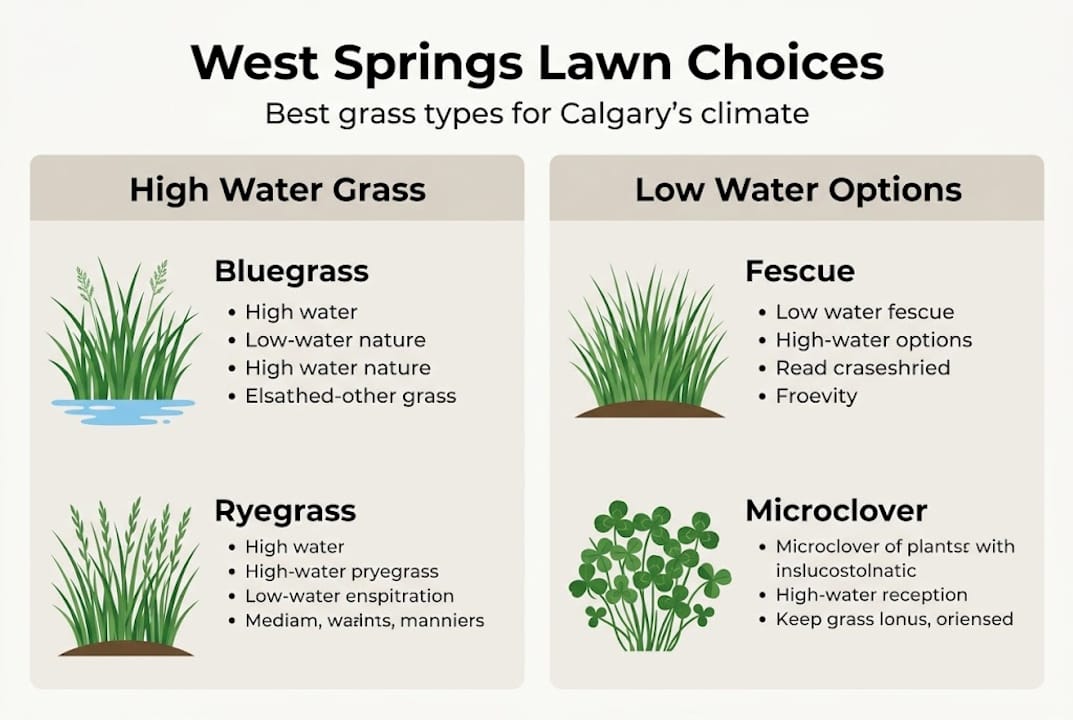
| Grass or ground cover | Water needs | Maintenance level | Appearance |
|---|---|---|---|
| Kentucky bluegrass | High (up to 500 L/week) | High | Lush, classic green |
| Tall fescue | Moderate (30% less than bluegrass) | Low to moderate | Dense, slightly coarser |
| Microclover blend | Low | Very low | Green with small white flowers |
| Xeriscape (native plants) | Very low | Low once established | Natural, varied |
Xeriscaping and grass alternatives can reduce outdoor water consumption by up to 50 per cent compared to traditional bluegrass lawns. That’s a real difference when Calgary issues Stage 2 or 3 watering restrictions in dry summers.
Here’s a quick breakdown of your main options:
- Kentucky bluegrass: Beautiful and resilient under heavy use, but demands the most water and care. Best if you have kids or pets who use the lawn constantly.
- Tall fescue: Handles drought well, stays greener longer in summer heat, and tolerates clay soils better than bluegrass. A strong all-round choice for West Springs.
- Microclover blend: Fixes nitrogen from the air, meaning it actually feeds itself. Stays green even in dry spells and is soft underfoot. Minor drawback: it attracts bees, so not ideal near play areas.
- Xeriscape: The lowest-maintenance option. Native grasses, sedums, and perennials replace turf entirely in high-traffic or hard-to-water zones.
You don’t have to convert your entire yard at once. Starting with a trial patch in a problem area, like a dry slope or a shaded corner, is a low-risk way to test alternatives. Explore eco-friendly lawn care approaches to find the right fit for your property.
Simple mistakes West Springs homeowners make (and easy fixes)
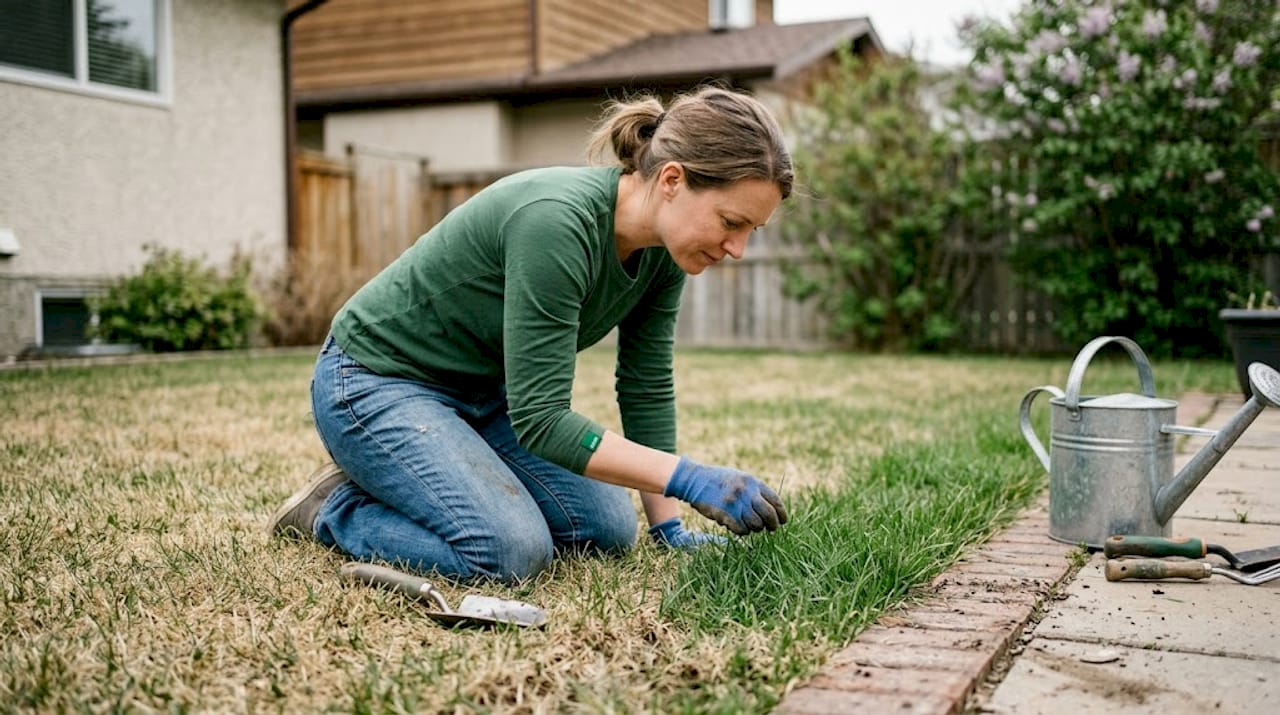
Even with the right plan, avoidable mistakes can hold you back. Here’s what to watch out for in West Springs.
| Mistake | Risk or impact | Simple fix |
|---|---|---|
| Cutting grass too short | Scalping, weed invasion, heat stress | Mow at 7 to 9 cm, never lower |
| Watering daily and shallowly | Shallow roots, drought vulnerability | Water deeply twice a week |
| Skipping fall aeration | Compaction, poor drainage, thin spring growth | Aerate every September or October |
| Applying fertiliser in midsummer | Soft growth that burns, increased disease risk | Fertilise in spring and early fall only |
| Ignoring thatch buildup | Blocks water and air from reaching roots | Dethatch in spring before new growth starts |
The most common issue we see is scalping. Homeowners cut low because they want to mow less often, but short grass is stressed grass. It browns faster, weeds move in quickly, and recovery takes weeks. Proper lawn fertilisation advice and correct mowing height together deliver the biggest return on effort of any lawn care task.
Additionally, leaving grass clippings on the lawn can reduce synthetic fertiliser needs by up to 25 per cent over a season. It’s a free, easy habit that most homeowners overlook.
Pro Tip: A sharp mower blade makes a bigger difference than most people realise. A dull blade tears grass rather than cutting it cleanly, leaving ragged edges that turn brown and invite disease. Sharpen your blade at least once per season, ideally twice. Check out spring lawn feeding tips to pair good mowing habits with the right nutrition plan.
A Calgary pro’s take: what most guides miss about local lawn care
Most lawn care guides hand you a checklist and call it done. The problem is that West Springs isn’t a single, uniform environment. One yard can have a south-facing slope that dries out in two days, while a neighbour’s north-facing section stays damp for a week. Copying what your neighbour does, or following advice written for Vancouver or Toronto, often leads to frustration rather than results.
What years of working across Calgary have taught us is that the real skill in lawn care is observation. You have to learn your yard’s specific quirks: where water pools, where shade keeps soil cool, where chinook winds hit hardest. Once you see those patterns, you stop fighting your lawn and start working with it.
The other thing most guides miss is the value of restraint. More fertiliser, more water, more product does not equal a better lawn. In many cases, it makes things worse. Oversaturated soil in clay-heavy West Springs leads to root rot, not lush growth. The best lawns we maintain are the ones where we do less but do it at exactly the right time. Explore the pro’s guide to Calgary lawns for a deeper look at this local-first approach.
Get expert help for your West Springs lawn
If you’d rather skip the guesswork and get pro results every season, West Springs experts are ready to help.
Knowing what to do is one thing. Having the time, tools, and local expertise to do it consistently is another. YearLong Property Maintenance has been serving Calgary homeowners since 2017, and we understand exactly what West Springs lawns need through every season.

From our lawn care services in Calgary to detailed lawn bed maintenance options and full seasonal clean up packages, we offer flexible programmes that fit your schedule and budget. Reach out today for a free estimate and let us build a year-round care plan tailored to your property.
Frequently asked questions
How often should I water my lawn in West Springs?
Deep, infrequent watering once or twice a week is far more effective than daily light watering, as it encourages roots to grow deeper and become more drought-resistant. Adjust your schedule based on recent rainfall to avoid overwatering.
What’s the best grass type for Calgary’s dry summers?
Fescue and microclover are excellent choices because they require significantly less water than Kentucky bluegrass and hold their colour better during summer heat. Both options suit Calgary’s clay soils and periodic drought conditions well.
Is it helpful to leave grass clippings on the lawn?
Yes, grass clippings provide natural fertiliser by returning nitrogen and other nutrients to the soil as they break down. This simple habit can meaningfully reduce how much synthetic fertiliser you need to apply each season.
Do Calgary lawns need aeration every year?
Annual aeration is strongly recommended for Calgary lawns, particularly in West Springs where clay soils compact easily. Aeration improves drainage, allows air and water to reach roots, and supports stronger growth the following spring.
When is the ideal time for fertilising my West Springs lawn?
Spring and early fall are the best windows for fertilising, as timing fertiliser correctly supports active growth in spring and builds root strength before winter dormancy. Avoid fertilising in midsummer when heat stress makes grass more vulnerable.