

Many Calgary homeowners believe that spreading fertiliser immediately after snow melts guarantees a vibrant lawn. This common misconception often leads to wasted nutrients, increased weed growth, and disappointed expectations. Understanding Calgary’s unique climate and soil conditions is essential for timing spring feeding correctly and achieving lasting lawn health. This guide reveals how to optimise spring feeding techniques for Calgary’s environment, ensuring your lawn thrives through proper timing, fertiliser selection, and sustainable practices.
Table of Contents
- Understanding Calgary’s Unique Lawn Challenges In Spring
- Timing Is Everything: When And Why To Feed Your Lawn In Calgary
- Choosing The Right Fertiliser For Calgary Lawns
- Environmental Best Practices For Sustainable Spring Feeding
- Step-By-Step Spring Feeding Guide For Calgary Homeowners
- Common Misconceptions About Spring Lawn Feeding
- Integrating Spring Feeding Into Year-Round Lawn Care
- Discover Expert Lawn Care Services In Calgary
- Frequently Asked Questions
Key takeaways
| Point | Details |
|---|---|
| Wait for soil warmth | Begin feeding only when soil reaches approximately 10°C to maximise nutrient uptake and prevent waste. |
| Choose slow-release fertilisers | These reduce nutrient runoff by up to 40% and provide sustained feeding throughout the growing season. |
| Prioritise phosphorus | Spring applications with phosphorus support robust root development after winter dormancy. |
| Avoid overfeeding | Excessive nitrogen application increases disease susceptibility and harms local waterways during spring thaw. |
| Integrate with maintenance | Coordinate feeding with mowing, watering, and cleanup for comprehensive lawn health. |
Understanding Calgary’s unique lawn challenges in spring
Calgary’s temperate continental climate creates distinct challenges for spring lawn care. Cold winters and unpredictable spring weather patterns delay grass emergence from dormancy, requiring homeowners to adjust feeding strategies accordingly. Unlike regions with milder climates, Calgary lawns face prolonged freezing periods that deplete soil nutrients and stress root systems.
Soil conditions in Calgary present additional obstacles. Post-winter phosphorus levels drop 10-20% below optimal, directly impacting root development during the critical spring recovery phase. This nutrient depletion occurs because freeze-thaw cycles disrupt soil structure and microbial activity essential for nutrient cycling.
Spring thaw dramatically affects soil moisture and temperature. Melting snow saturates soil, creating temporarily waterlogged conditions that limit oxygen availability to roots. As soil gradually warms, microbial populations reactivate, but this process takes weeks longer in Calgary than in southern regions.
Calgary homeowners must recognise these factors:
- Soil temperature dictates nutrient uptake efficiency more than calendar dates
- Clay-heavy Calgary soils retain moisture longer, delaying warming
- Rapid temperature swings between day and night slow grass recovery
- Wind exposure accelerates soil drying in exposed areas
Understanding these unique conditions forms the foundation for effective spring feeding strategies tailored to Calgary’s environment.
Timing is everything: when and why to feed your lawn in Calgary
Successful spring feeding hinges entirely on soil temperature, not arbitrary calendar dates. Optimal nutrient uptake occurs at approximately 10°C, when grass roots actively resume growth after winter dormancy. Applying fertiliser before reaching this threshold wastes nutrients through leaching and volatilisation while promoting weed germination over desirable grass growth.
Feeding too early creates multiple problems. Nutrients applied to cold soil remain unavailable to dormant grass roots, allowing rain and snowmelt to wash them into storm drains. This premature application also gives cool-season weeds a competitive advantage, as many weed species germinate at lower temperatures than turfgrass.
Root activity and nutrient absorption are directly temperature-dependent. Below 10°C, grass roots remain largely inactive, unable to absorb applied nutrients efficiently. As soil warms, root metabolism accelerates dramatically, enabling rapid nutrient uptake that supports vigorous spring growth.
Monitor soil temperature using these practical methods:
- Insert a soil thermometer 5-8 centimetres deep at multiple lawn locations
- Take readings mid-morning for three consecutive days
- Calculate the average temperature across all measurements
- Begin feeding when the average consistently reaches 10°C
- Check shaded areas separately, as they warm more slowly
Pro Tip: Keep a simple log of soil temperatures starting in early April. Calgary typically reaches the 10°C threshold between late April and mid-May, but annual variation can shift this window by two weeks either direction.
Mastering this timing transforms feeding effectiveness. When you master lawn fertilisation through temperature-based scheduling rather than guesswork, you maximise nutrient efficiency while minimising environmental impact and cost.
Choosing the right fertiliser for Calgary lawns
Fertiliser selection significantly impacts both lawn performance and environmental sustainability. Calgary’s unique soil chemistry and climate conditions require specific nutrient formulations to deliver optimal results during the critical spring recovery period.
Three main fertiliser categories serve different purposes. Slow-release formulations coat nutrients with materials that dissolve gradually over 6-12 weeks, providing sustained feeding. Quick-release fertilisers deliver immediate greening but require more frequent applications. Organic options improve soil biology but release nutrients more slowly than synthetic alternatives.
Phosphorus plays a crucial role in spring root development. This nutrient supports cell division and energy transfer within plant tissues, making it essential for rebuilding root systems damaged by winter freezing. Calgary’s naturally phosphorus-deficient soils benefit substantially from spring applications containing this element.
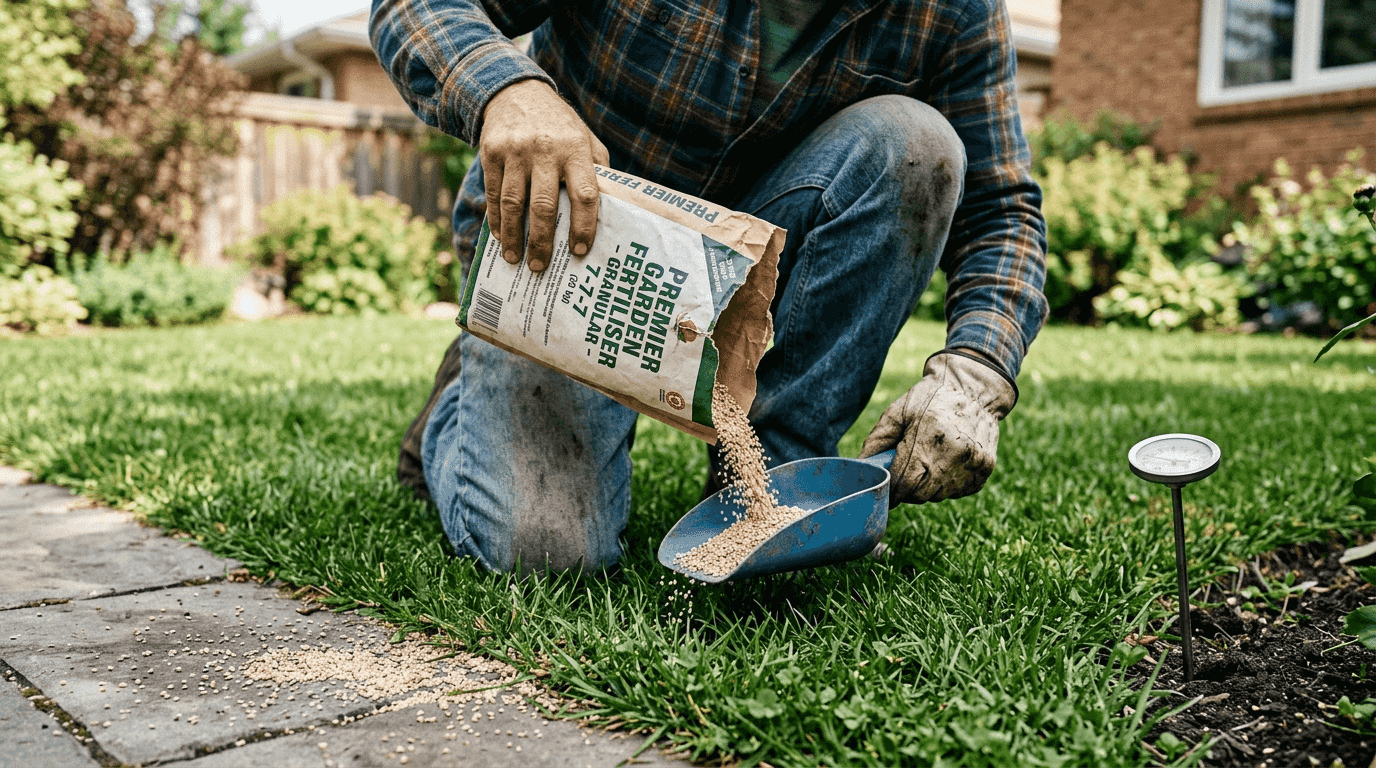
Slow-release fertilisers reduce nutrient runoff by 40% compared to quick-release types, making them environmentally superior for Calgary applications. This reduction matters especially during spring thaw when saturated soils cannot absorb excess nutrients.
| Fertiliser Type | Nutrient Release | Environmental Impact | Best Use |
|---|---|---|---|
| Slow-release | 6-12 weeks | Low runoff risk | Spring base feeding |
| Quick-release | 1-2 weeks | Higher runoff potential | Emergency greening |
| Organic | 8-16 weeks | Minimal environmental harm | Soil health building |
| Starter blend | 4-8 weeks | Moderate risk | New seeding areas |
Consider these factors when selecting fertilisers:
- Look for formulations with at least 10% phosphorus for spring applications
- Choose products with 50% or more slow-release nitrogen
- Verify the fertiliser is appropriate for cool-season grasses
- Check for added micronutrients like iron that enhance spring greening
Exploring different lawn fertiliser options helps homeowners match products to their specific soil conditions and environmental values. Laboratory soil testing provides precise nutrient recommendations, eliminating guesswork from fertiliser selection.
Environmental best practices for sustainable spring feeding
Sustainable feeding practices protect Calgary’s waterways while maintaining lawn health. Spring thaw creates heightened runoff risk, making application techniques and product selection critical for environmental responsibility.
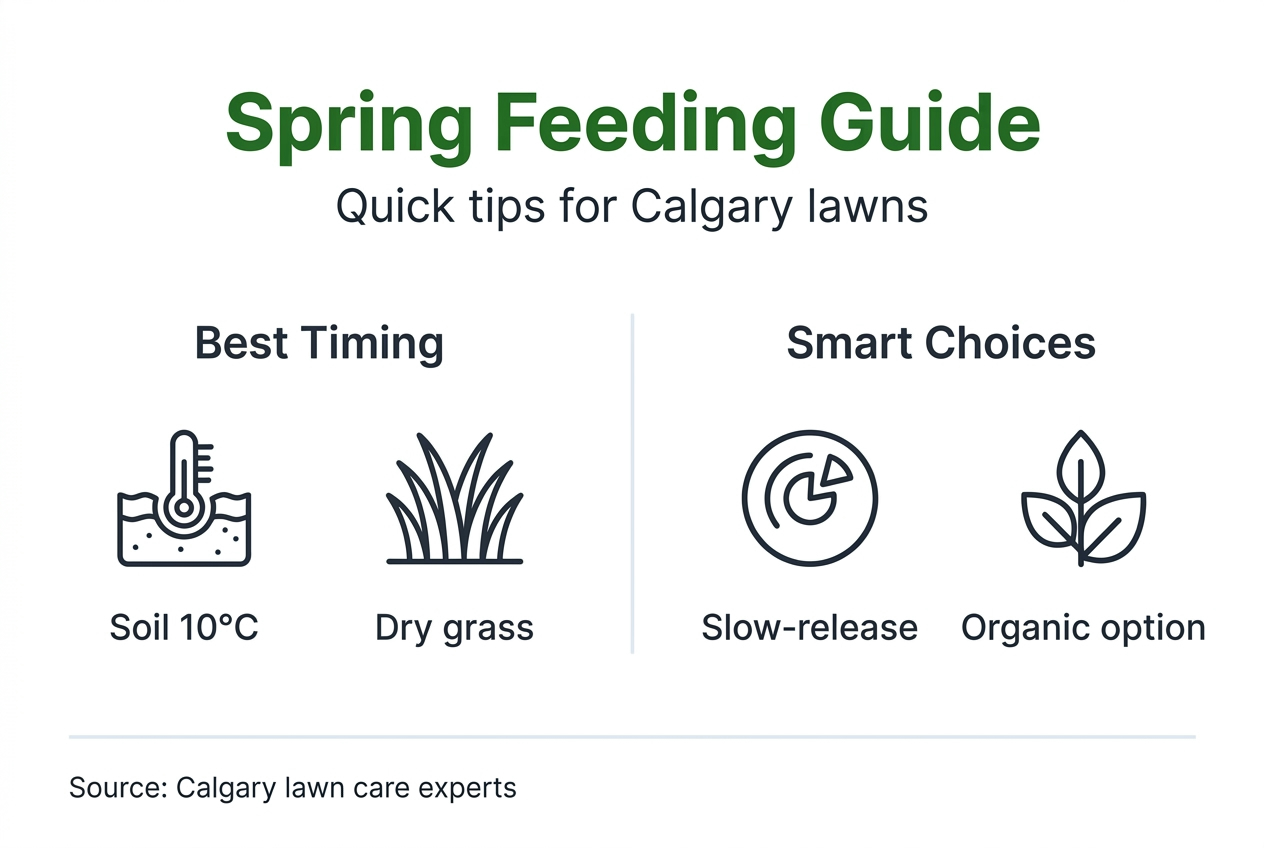
Proper application techniques prevent nutrient loss. Apply fertiliser only to dry grass when no rain is forecast within 24 hours. Use calibrated spreaders to ensure even distribution at manufacturer-recommended rates. Create buffer zones of at least 3 metres around storm drains, streams, and ponds where no fertiliser is applied.
Leaving grass clippings recycles valuable nutrients naturally. Clippings contain approximately 4% nitrogen by weight, supplementing applied fertilisers without additional cost or environmental impact. This simple practice reduces annual fertiliser requirements by 25-30% while improving soil organic matter.
Slow-release formulations provide superior environmental protection. Reducing nutrient leaching by 40% during spring thaw protects local waterways from algal blooms and contamination. This protection becomes especially important in Calgary, where spring runoff flows directly into the Bow and Elbow Rivers.
Integrate feeding with comprehensive maintenance practices:
- Schedule feeding after completing spring yard clean up essentials to ensure even application
- Coordinate with your regular lawn care in Calgary schedule
- Water lightly after application only if no rain is forecast
- Avoid feeding before heavy rain events that increase runoff risk
Pro Tip: Mark storm drains on your property with temporary flags during spring feeding. This visual reminder prevents accidental fertiliser application near these sensitive areas, dramatically reducing nutrient pollution risk.
Consider professional lawn mowing services that mulch clippings rather than bagging them, maximising nutrient recycling while reducing waste. These integrated approaches create truly sustainable lawn care systems that benefit both your property and Calgary’s environment.
Step-by-step spring feeding guide for Calgary homeowners
Follow this systematic approach to achieve professional results with spring lawn feeding tailored specifically to Calgary conditions.
Monitor soil temperature starting in early April using a soil thermometer inserted 5-8 centimetres deep. Take readings at multiple locations across your lawn, especially in shaded areas that warm more slowly. Record temperatures for three consecutive days and calculate the average.
Begin feeding when soil temperature reaches the target range and grass shows signs of active growth. Look for emerging green shoots and increasing blade length as confirmation that roots are actively absorbing nutrients.
Select a starter fertiliser containing phosphorus and slow-release nitrogen appropriate for cool-season grasses. Read the label carefully to verify application rates, typically 1-2 kilograms of actual nitrogen per 100 square metres for spring feeding.
Calibrate your spreader according to manufacturer instructions. Walk at a steady pace, applying fertiliser in overlapping passes to ensure even coverage. Avoid double-applications at turn-around points by closing the spreader before stopping.
Water the lawn lightly within 24 hours if no rain occurs. Apply approximately 0.5 centimetres of water to move nutrients into the root zone without causing runoff.
Schedule follow-up feeding 4-6 weeks after the initial application. This timing supports sustained growth without overloading the lawn with excess nutrients that could promote disease.
Integrate feeding with regular mowing and watering routines. Maintain grass height at 6-8 centimetres during spring to promote deep root growth and shade out weed seedlings.
Recognise the connection between feeding and overall yard clean up importance. Removing winter debris and thatch before feeding ensures nutrients reach soil rather than being trapped in dead organic matter. Consider expert spring clean up services if your lawn requires extensive preparation before feeding.
Document your feeding schedule, products used, and observed results. This record helps refine your approach annually, adapting to your specific lawn’s needs and Calgary’s variable climate patterns.
Common misconceptions about spring lawn feeding
Several widespread myths undermine feeding success for Calgary homeowners. Recognising and correcting these misunderstandings prevents wasted effort, money, and potential lawn damage.
Feeding alone does not guarantee lawn health. Many homeowners believe fertiliser applications compensate for inadequate watering, poor mowing practices, or compacted soil. In reality, feeding works synergistically with proper cultural practices. Without adequate irrigation and appropriate mowing height, even perfectly timed feeding fails to produce desired results.
Over-application creates serious problems rather than faster results. Excessive nitrogen promotes lush, weak growth highly susceptible to fungal diseases and insect damage. Heavy feeding also increases mowing frequency and water requirements while contributing to environmental pollution through runoff.
Key misconceptions to avoid:
- Early feeding does not accelerate spring green-up if soil remains too cold for root activity
- More fertiliser does not equal better results; excess nutrients harm rather than help
- Single heavy applications perform worse than multiple lighter feedings spread throughout the season
- Premium price does not always indicate superior product; check actual nutrient content and release characteristics
- Feeding eliminates the need for other maintenance practices
Many homeowners ignore label instructions, assuming more is better. Fertiliser labels provide scientifically determined application rates designed to optimise results while minimising environmental impact. Doubling recommended rates doubles cost and pollution without improving lawn quality.
Soil conditions matter as much as timing. Compacted soil prevents root growth regardless of nutrient availability. High pH Calgary soils may require sulphur amendments to improve nutrient uptake efficiency. Without addressing these underlying issues, feeding provides limited benefits.
Integrating spring feeding into year-round lawn care
Spring feeding represents one component of comprehensive lawn management rather than a standalone solution. Successful Calgary lawns result from coordinated seasonal care that addresses changing needs throughout the year.
Coordinate feeding with irrigation schedules. Spring feeding increases nutrient demand, requiring adequate moisture for uptake and utilisation. Adjust watering frequency and duration as temperatures rise and grass growth accelerates. During Calgary’s typically dry springs, supplemental irrigation often becomes necessary within weeks of feeding.
Prepare lawns for summer challenges through spring feeding. Robust root systems developed during spring feeding improve drought tolerance and disease resistance during Calgary’s hot, dry summers. Adequate phosphorus during spring creates the foundation for season-long lawn health.
Regular soil testing eliminates guesswork from feeding decisions. Test soil every 2-3 years to track nutrient levels, pH, and organic matter content. Adjust fertiliser selection and application rates based on test results rather than assumptions. This data-driven approach optimises both lawn performance and environmental sustainability.
Ongoing maintenance sustains lawn vitality established through proper spring feeding:
- Schedule regular seasonal lawn clean up to remove debris and maintain appearance
- Invest in professional lawn bed maintenance to address compaction and thatch buildup
- Adjust feeding programmes based on observed lawn performance and soil test recommendations
- Monitor for pest and disease issues that proper nutrition helps prevent
View spring feeding as the beginning of a continuous care cycle. Summer maintenance sustains spring gains. Fall feeding prepares lawns for winter dormancy. This integrated approach produces consistently healthy lawns that enhance property value and enjoyment year after year.
Discover expert lawn care services in Calgary
Achieving optimal spring feeding results requires knowledge, proper equipment, and consistent execution. While this guide provides comprehensive information, many Calgary homeowners prefer professional assistance to ensure best practices and save valuable time.

YearLong Property Maintenance brings years of Calgary-specific expertise to every lawn care project. Our team understands local soil conditions, climate patterns, and grass species requirements that influence feeding success. We coordinate spring feeding with comprehensive maintenance programmes designed for Calgary’s unique environment.
Our professional lawn care Calgary services include soil testing, customised feeding schedules, and integrated pest management. We handle everything from initial spring preparation through year-round maintenance, ensuring your lawn receives expert attention at every growth stage. Our lawn bed maintenance services address underlying soil issues that limit feeding effectiveness, creating optimal conditions for nutrient uptake.
Schedule your seasonal lawn clean up and feeding consultation today. Discover how professional care transforms your lawn into the neighbourhood showcase you envision.
Frequently asked questions
What is the best soil temperature to start spring lawn feeding in Calgary?
Ideal soil temperature is approximately 10°C for effective nutrient uptake and active grass growth. Feeding before reaching this temperature wastes fertiliser through leaching and promotes weed germination over desirable grass development.
How often should I feed my lawn during spring in Calgary?
Apply spring feeding once when soil reaches target temperature, typically late April through mid-May. Schedule follow-up feeding 4-6 weeks later to maintain turf density and colour through early summer.
Can I use organic fertilisers for my spring lawn feeding in Calgary?
Organic fertilisers improve soil health and provide sustainable nutrition but release nutrients more slowly than synthetic options. They work well for long-term soil building but may delay early spring green-up compared to quick-release synthetic fertilisers.
What are some common mistakes Calgary homeowners make with spring lawn feeding?
Applying fertiliser too early before soil warms sufficiently wastes nutrients and promotes weeds. Over-applying nitrogen increases disease susceptibility and environmental harm. Neglecting to coordinate watering and mowing with feeding reduces overall effectiveness.
One Response