

Maintaining a healthy lawn in Calgary means adapting to seasonal weather extremes, from summer droughts to heavy spring rains and harsh winters. Without a clear year-round maintenance plan, lawns suffer from stress, disease, and property risks like flooding or foundation damage. This comprehensive checklist guides Calgary homeowners through essential lawn care tasks for every season in 2026, covering mowing heights, watering strategies, drainage management, and seasonal preparations. By following these steps, you’ll keep your lawn vibrant, conserve water, and protect your property from climate-related damage throughout the year.
Table of Contents
- Essential Lawn Maintenance Criteria For Calgary Homeowners
- Spring And Summer Lawn Maintenance Tasks
- Fall Lawn Maintenance And Preparing For Winter
- Year-Round Property Maintenance Linked To Lawn Health
- Yearlong Lawn Care Services In Calgary
Key takeaways
| Point | Details |
|---|---|
| Optimal lawn height | Maintaining grass at 5-7 cm reduces water evaporation and supports healthy growth during Calgary’s dry periods. |
| Storm drain clearing | Regularly clearing drains prevents flooding damage during heavy rainfall events common in Calgary. |
| Seasonal mowing adjustments | Adjusting mowing frequency and height prepares lawns for winter dormancy and spring recovery. |
| Foundation protection | Directing stormwater away from your home prevents basement flooding and structural issues. |
| Fall lawn strengthening | Late-season care builds root strength and disease resistance for surviving Calgary winters. |
Essential lawn maintenance criteria for Calgary homeowners
Calgary’s climate demands specific lawn care practices to balance water conservation with healthy growth. Maintaining lawn height at 5-7 cm creates natural shade over soil, reducing evaporation and helping your lawn withstand drought conditions. This simple adjustment cuts water needs significantly while promoting deeper root development.
Regular mowing maintains this optimal height and prevents stress on grass plants. When blades grow too long, they become weak and susceptible to disease. Too short, and roots suffer from inadequate photosynthesis. Consistent mowing at the right height keeps your lawn resilient against Calgary’s temperature swings and occasional water restrictions.
Drainage management protects both lawn health and property integrity. Clearing storm grates and drains prevents water accumulation that drowns grass roots and creates breeding grounds for pests. During Calgary’s intense spring runoff or summer thunderstorms, blocked drains can quickly lead to flooding.
Directing water flow away from your home foundation is equally critical. Pooling water near basement walls increases moisture intrusion risk and can compromise structural stability over time. An efficient lawn care workflow integrates drainage checks with regular mowing schedules.
Pro Tip: Walk your property after heavy rain to identify low spots where water collects, then address these areas with soil grading or strategic plantings that absorb excess moisture.
Comprehensive lawn care in Calgary means thinking beyond grass height to consider how water moves across your entire property, protecting both landscape investment and home value.
Spring and summer lawn maintenance tasks
Spring awakening requires immediate attention to lawn health after winter dormancy. Begin mowing once grass reaches about 8 cm, cutting back to the ideal 5-7 cm height to encourage lateral growth and thicker turf. This height provides soil shading that conserves moisture during Calgary’s dry spring winds.
Watering strategy matters more than frequency. Deep, infrequent watering encourages roots to grow downward, seeking moisture at lower soil levels. This creates drought-resistant grass that survives Calgary’s occasional water restrictions. Aim for 2.5 cm of water weekly, delivered in one or two sessions rather than daily sprinkling. Early morning watering minimises evaporation loss.
Summer maintenance focuses on stress prevention. As temperatures rise, grass growth accelerates, requiring more frequent mowing. Never remove more than one-third of blade length in a single cut, as this shocks plants and weakens root systems. During heat waves, raise mowing height slightly to provide extra soil protection.
Pro Tip: Leave grass clippings on the lawn after mowing. They decompose quickly, returning nitrogen to soil and reducing fertiliser needs by up to 25%.
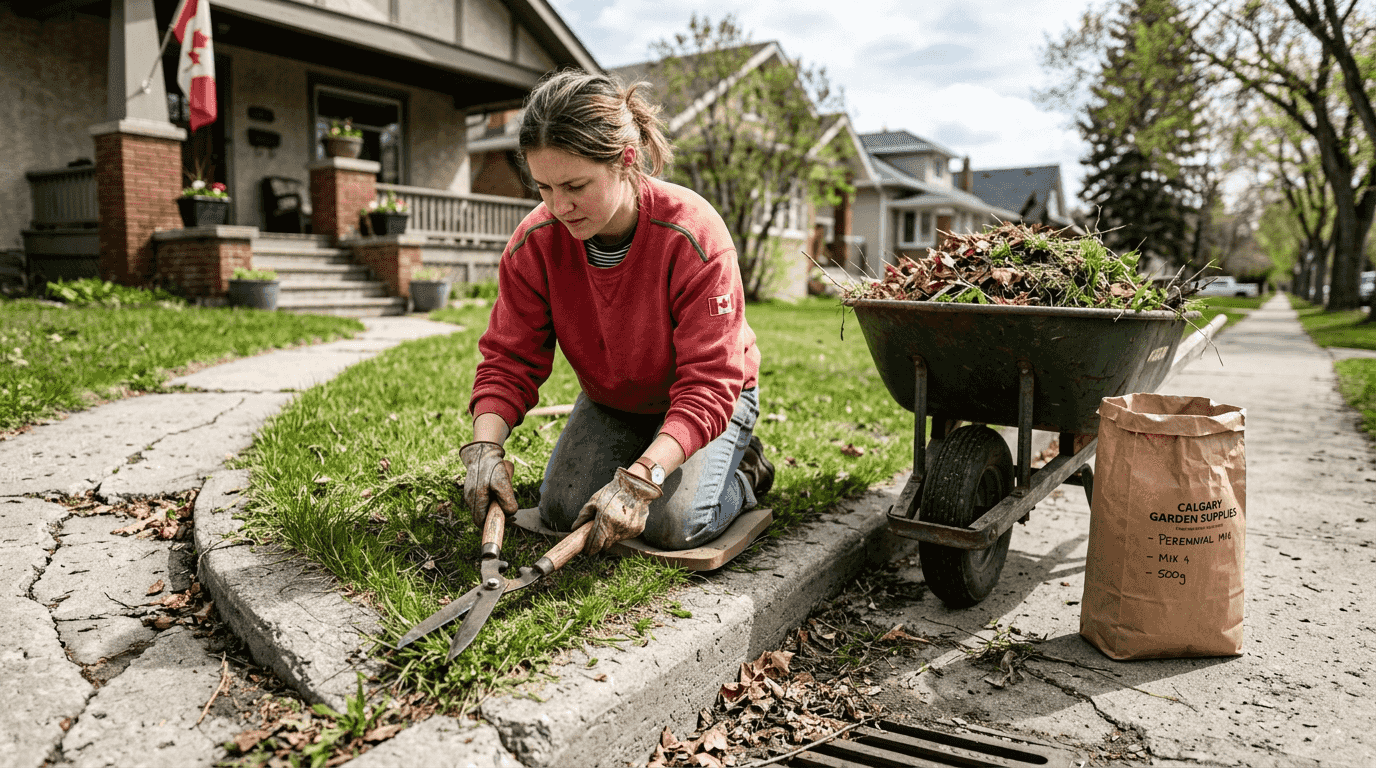
Debris management and drainage checks become routine tasks. Clear storm drains monthly, and inspect downspouts to ensure water flows away from foundations into garden beds or lawn areas. Lawn bed maintenance around property perimeters helps absorb runoff naturally.
Watch for early drought stress signals like colour changes from deep green to blue-grey, or footprints that remain visible on grass after walking. These signs indicate immediate watering needs. Professional lawn mowing services maintain consistent height and health when summer schedules get busy.
Pest monitoring prevents small problems from becoming major infestations. Check for unusual brown patches, increased insect activity, or fungal growth during weekly mowing. Early detection allows targeted treatment before damage spreads across your entire lawn.
Fall lawn maintenance and preparing for winter
Fall care determines how well your lawn survives Calgary’s harsh winter and rebounds in spring. Continue regular mowing through September and October, maintaining grass length at 2.5-3 inches to support continued photosynthesis as temperatures drop. This height prevents matting under snow while storing enough energy in roots for spring recovery.
Mowing frequency naturally decreases as growth slows in cooler weather. By late October, grass enters dormancy preparation, requiring cuts only every two weeks instead of weekly. Perform the final mowing approximately one week before Calgary’s first hard frost, typically in early November.
Leaf removal becomes critical for preventing disease and pest harbourage. Thick leaf layers block sunlight and trap moisture, creating ideal conditions for snow mould and other fungal problems. Rake or mulch leaves weekly during peak fall colour, incorporating finely shredded material into lawn bed maintenance areas as natural compost.
Pro Tip: Use a mulching mower to chop leaves into small pieces that decompose over winter, enriching soil with organic matter without creating problematic mats.
Fall fertilisation strengthens root systems for winter survival. Apply slow-release fertiliser in late September, giving grass time to absorb nutrients before dormancy. This application supports root growth during cool fall weather and provides stored energy for rapid spring green-up.
Final essential maintenance tasks include aerating compacted soil areas and overseeding thin patches. Aeration allows water and nutrients to penetrate deeper, while fall seeding takes advantage of warm soil and reduced weed competition. New grass establishes roots before winter, emerging strong in spring.
Complete a thorough seasonal clean-up by removing garden debris, trimming perennials, and clearing gutters. These tasks prevent winter damage and prepare your entire property for snow season. Store lawn equipment properly after draining fuel and sharpening mower blades for next season.
Year-round property maintenance linked to lawn health
Property-wide maintenance protects lawn investments and prevents costly damage from Calgary’s climate extremes. Storm drain clearing ranks among the most important tasks, requiring attention every season. Clearing storm grates before spring melt and summer storms prevents water backup that floods lawns and basements.
Water management extends beyond drains to include strategic runoff direction. Install downspout extensions that carry roof water at least two metres from foundations, directing flow into garden beds or lawn areas that absorb moisture naturally. This practice prevents basement seepage while providing free irrigation to landscape plants.
Foundation crack sealing protects home integrity and prevents water intrusion that damages both structure and surrounding lawn areas. Inspect foundations twice yearly, sealing any cracks wider than 3 mm with appropriate caulking or hydraulic cement. Small repairs prevent major problems during freeze-thaw cycles.
Gutter maintenance ensures efficient water flow away from property. Clean gutters quarterly, removing leaves and debris that cause overflow onto lawn edges. Overflowing gutters create erosion channels and concentrate water near foundations, exactly where you don’t want it.
| Maintenance Task | Spring | Summer | Fall | Winter | Primary Benefit |
|---|---|---|---|---|---|
| Clear storm drains | Monthly | Monthly | Monthly | As needed | Flood prevention |
| Direct stormwater | After rain | After rain | Before freeze | N/A | Foundation protection |
| Seal foundation cracks | Inspect | N/A | Seal | N/A | Water damage prevention |
| Clean gutters | Deep clean | Check | Deep clean | Remove ice | Proper drainage |
| Grade soil away from house | Adjust | Monitor | Final check | N/A | Moisture control |
Pathway and driveway maintenance contributes to overall property drainage. Concrete cleaning removes debris that blocks water flow, while proper grading ensures runoff moves toward appropriate drainage points rather than pooling on hardscapes or lawn edges.
Integrated yard preparation combines lawn care with property-wide tasks, creating a comprehensive approach that protects your entire investment. Regular attention to drainage, foundations, and water management prevents the expensive repairs that result from neglect.
Yearlong lawn care services in Calgary
Implementing this comprehensive checklist requires time, equipment, and local climate knowledge. Yearlong Property Maintenance brings all three to Calgary homeowners seeking professional lawn care solutions. Our lawn care services maintain optimal grass height, manage seasonal transitions, and protect your property from climate-related damage throughout 2026.

Our team handles everything from weekly mowing to lawn bed maintenance and complete seasonal clean-ups, ensuring your property follows best practices year-round. We understand Calgary’s unique climate challenges and adjust care strategies for each season, from spring green-up through winter preparation. With flexible service packages and a satisfaction guarantee, we make professional lawn maintenance accessible and reliable. Let us handle the checklist while you enjoy a healthy, vibrant lawn that enhances your property value and curb appeal.
FAQ
What is the ideal lawn height for Calgary?
The ideal lawn height during Calgary’s growing season is 5-7 cm, which provides soil shading that reduces water evaporation. This height supports healthy root development and helps grass withstand drought conditions common in Calgary summers. Maintaining consistent height through regular mowing creates resilient turf that requires less irrigation and resists disease pressure.
How often should I mow my lawn in the fall?
Mow regularly in early fall while grass continues active growth, then reduce frequency as growth slows in late October. Perform your final mowing approximately one week before Calgary’s first hard frost, typically in early November. This timing allows grass to enter dormancy at the proper height of 2.5-3 inches, preventing snow mould while maintaining enough blade length for photosynthesis.
Why is directing stormwater away from my house important?
Directing stormwater away prevents water damage to foundations and eliminates basement flooding risk during Calgary’s heavy spring runoff and summer storms. Proper drainage protects structural integrity and prevents moisture intrusion that leads to mould growth and expensive repairs. Water directed into lawn or garden areas provides natural irrigation while keeping your home safe and dry.