

TL;DR:
- Preventative landscaping involves designing yards to manage water, fire, and seasonal stress proactively.
- It offers long-term savings by reducing repair costs and increasing property value.
- Regular seasonal tasks and proper planning are essential for effective yard resilience in Calgary’s climate.
Your yard does more than make your home look good. In Calgary, where winters are brutal, Chinooks arrive without warning, and spring melt can flood a foundation in hours, your landscaping is genuinely your first line of defence. Preventative landscaping is the practice of designing and caring for your outdoor space to stop problems before they start, saving you money, protecting your home, and adding real value to your property. This article walks you through exactly what preventative landscaping is, how it compares to the reactive approach most homeowners take, and the specific strategies that work best in Calgary’s climate.
Table of Contents
- What is preventative landscaping and why does it matter?
- How preventative landscaping differs from reactive maintenance
- Core strategies for effective preventative landscaping in Calgary
- Long-term benefits: Property value, cost savings, and climate resilience
- Our perspective: Why most Calgary homeowners overlook preventative landscaping
- Next steps: Expert help for preventative landscaping in Calgary
- Frequently asked questions
Key Takeaways
| Point | Details |
|---|---|
| Focus on prevention | Act early with landscaping choices to avoid bigger, more expensive problems in Calgary’s climate. |
| Proactive vs. reactive care | Maintenance before damage occurs is always more effective and cost-efficient than waiting until problems arise. |
| Boost property value | Preventative landscaping not only saves money but also increases the appeal and safety of your home. |
| Local strategies work best | Tailor your landscaping plan to Calgary’s unique weather and FireSmart zone guidance for best results. |
What is preventative landscaping and why does it matter?
Preventative landscaping means making deliberate choices about how you design, plant, and maintain your yard so that future damage is less likely to occur. It is not just about keeping things tidy. It is about anticipating what Calgary’s climate will throw at your property and setting up your yard to handle it without costly consequences.
Most homeowners think of landscaping as an aesthetic choice. The reality is that your yard actively manages water flow, soil stability, fire risk, and even the temperature around your home. When those systems are neglected or poorly designed, you end up with eroded slopes, pooling water near your foundation, dead plants that become fire fuel, and ice hazards in winter.
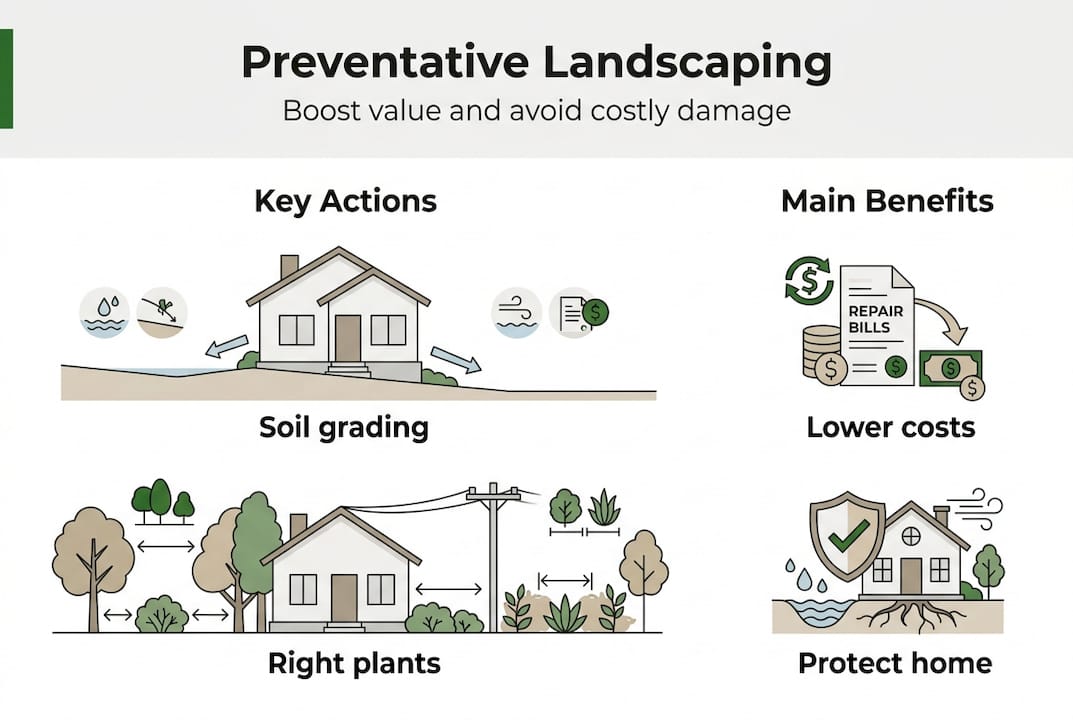
Calgary’s climate makes this especially important. The city experiences some of the most dramatic temperature swings in Canada, with Chinooks pushing temperatures up by 20°C in a matter of hours. Freeze and thaw cycles stress soil, crack hardscaping, and heave tree roots. Spring snowmelt can overwhelm drainage systems that were never designed to cope. Without a proactive plan, your yard absorbs all of that stress, and eventually, so does your home.
Preventative landscaping covers a broad range of practices:
- Grading and drainage to direct water away from your foundation
- Plant selection that suits Calgary’s hardiness zone and temperature extremes
- Mulching to regulate soil temperature and retain moisture
- Debris removal to reduce fire risk and pest habitat
- Pruning to keep trees and shrubs structurally sound before storms hit
There is also a meaningful overlap with FireSmart landscaping principles, which promote defensible space around your home to reduce wildfire risk. FireSmart guidance encourages homeowners to think in zones around their property, choosing fire-resistant plants and keeping combustible materials away from structures. This aligns directly with general preventative landscaping goals.
“A well-maintained yard is not just curb appeal. It is an active system protecting your home from water, fire, and seasonal stress.”
Pro Tip: Start your preventative plan by reading our spring yard clean up tips to identify which risks are most relevant to your property before the busy season begins.
How preventative landscaping differs from reactive maintenance
After understanding what preventative landscaping is, it is important to see how it contrasts with the traditional reactive approach Calgary homeowners often take.
Reactive maintenance means you wait for a problem to appear and then fix it. The soil erodes, so you patch it. The plant dies, so you replace it. Water pools near your house, so you call someone to fix the drainage. This approach is common because problems feel more urgent once they are visible. But it is almost always more expensive and more disruptive than preventing the issue in the first place.
Preventative landscaping flips that model. You grade the soil properly before erosion starts. You choose plants suited to Calgary winters before you lose half your garden. You install proper drainage before your basement takes on water.
Here is a side-by-side comparison to make this concrete:
| Scenario | Reactive approach | Preventative approach |
|---|---|---|
| Water pooling near foundation | Emergency drainage repair | Proper grading during install |
| Dead plants after winter | Replace in spring | Choose zone-appropriate species |
| Eroded garden beds | Resod or regrade | Mulch and edge beds annually |
| Ice buildup on walkways | Salt and shovel reactively | Grade and drain before freeze |
| Fire risk from dry debris | Clear after a warning | Regular seasonal debris removal |
The FireSmart Landscaping Guide confirms that proactive landscaping can help homeowners avoid common seasonal damage, which is especially relevant in Alberta where fire seasons are intensifying.
To shift from reactive to preventative, follow these steps:
- Audit your yard each spring and fall to identify drainage, plant health, and debris issues
- Create a seasonal task list using a lawn maintenance checklist tailored to Calgary’s conditions
- Schedule tasks in advance rather than waiting for visible damage
- Document changes so you can track what is working and what needs adjustment
- Follow through on outdoor cleanup steps before each season transition
The long-term savings are significant. Replacing a single mature tree costs hundreds of dollars. Repairing foundation drainage can cost thousands. Preventative care costs a fraction of that, spread across the year in manageable tasks.
Core strategies for effective preventative landscaping in Calgary
Knowing the difference between proactive and reactive care, let’s look at the main strategies you can start using in your own yard.
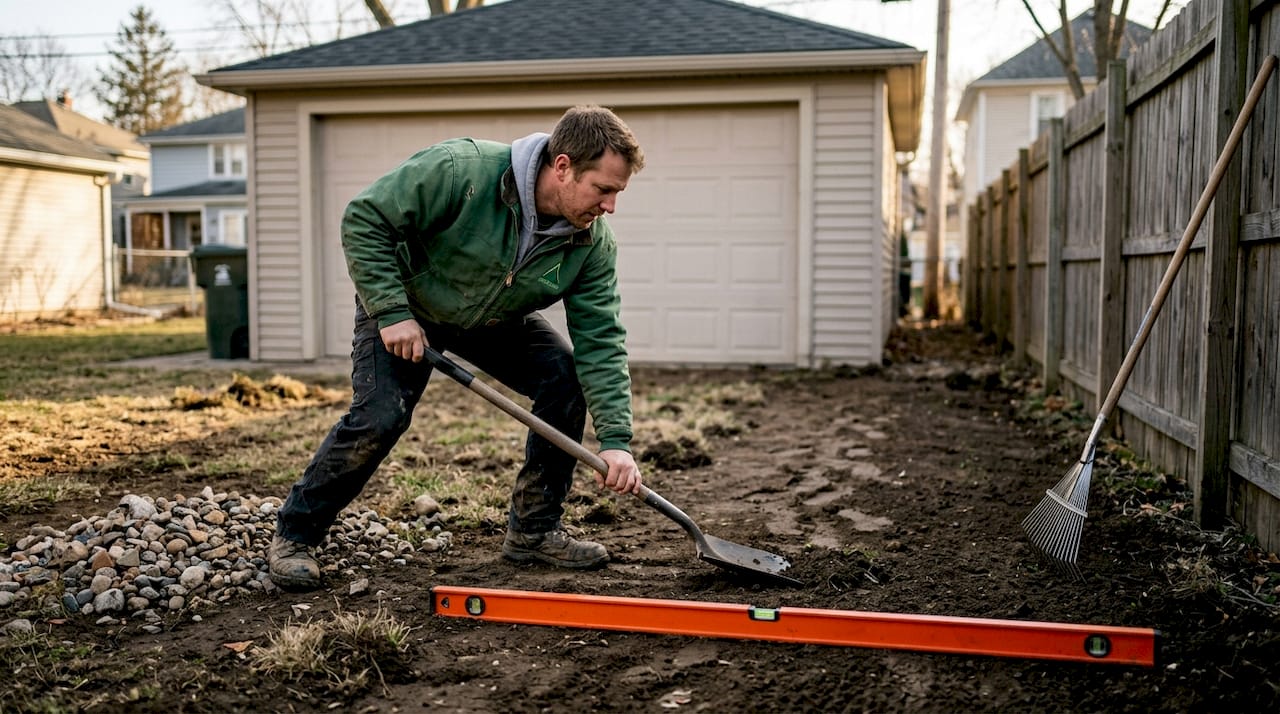
Soil grading and drainage is the single most important preventative step for Calgary homeowners. Your yard should slope away from your foundation at a rate of about 5 centimetres per metre for the first 3 metres. If it does not, spring melt and heavy rain will push water toward your home rather than away from it.
Mulching does more than it looks. A 5 to 8 centimetre layer of organic mulch in your garden beds regulates soil temperature during freeze and thaw cycles, retains moisture during dry spells, and suppresses weeds that compete with your plants. It also reduces the bare soil that erodes during Calgary’s heavy spring rains.
Plant selection matters enormously. Calgary sits in hardiness zone 4a, which means plants that thrive in milder climates will simply not survive here. Choose species rated for zone 3 or 4 to build in a buffer. FireSmart zones also promote plant choices and placement to help prevent wildfire and seasonal damage, so consider fire-resistant, low-moisture plants near your home’s perimeter.
Here is a seasonal breakdown of core preventative tasks:
| Season | Key tasks |
|---|---|
| Spring | Grade soil, remove debris, inspect drainage, aerate lawn |
| Summer | Mow at correct height, water deeply but infrequently, prune dead growth |
| Fall | Mulch beds, remove leaves, cut back perennials, check grading |
| Pre-winter | Clear gutters, protect tree trunks, store irrigation equipment |
Pro Tip: A spring clean up for prevention is your highest-leverage moment of the year. What you do in April and May sets the tone for how your yard handles the entire growing season and the following winter.
Regular pruning is another strategy that homeowners underestimate. Removing dead or weak branches before a storm means fewer broken limbs landing on your fence, your car, or your roof. It also improves air circulation, which reduces fungal disease in Calgary’s humid late summers.
Long-term benefits: Property value, cost savings, and climate resilience
Now that you know how to implement preventative landscaping, let’s explore the real value it brings to you as a Calgary homeowner.
The most direct benefit is cost savings. Preventative landscaping practices help reduce future repair costs and boost home protection. When you prevent soil erosion, you avoid regrading costs. When you maintain proper drainage, you reduce the risk of foundation damage, which is one of the most expensive home repairs a Calgary homeowner can face.
There is also a clear property value impact. A well-maintained yard signals to buyers that the home has been cared for. It reduces perceived risk, which translates into stronger offers and faster sales. Buyers notice when a yard has healthy, established plants, clear drainage, and tidy beds. They also notice when it does not.
Here are the key long-term benefits of a preventative approach:
- Lower water bills through mulching and efficient plant selection
- Reduced repair costs for foundations, drainage, and hardscaping
- Stronger property value through consistent curb appeal and risk reduction
- Wildfire resilience through FireSmart-aligned plant choices and defensible space
- Community safety by reducing debris and fire fuel near shared fences and structures
“The homeowners who invest in prevention are the ones who rarely face emergencies. The ones who wait are the ones calling us in a panic after the first big storm.”
Peace of mind is also real and underrated. When you have a scheduled maintenance plan, you are not anxious every time a storm rolls in. You know your drainage works, your trees are sound, and your beds are protected. Explore more landscaping alternatives and consider pairing them with professional lawn bed maintenance to keep your investment in top shape year-round.
Our perspective: Why most Calgary homeowners overlook preventative landscaping
We have been maintaining Calgary properties since 2017, and the pattern is consistent. Homeowners call us after the damage. After the foundation leak. After the tree falls. After the beds wash out in a May downpour. Rarely before.
It is not laziness. It is human nature. Preventative work feels invisible because when it works, nothing happens. There is no dramatic moment where you see the result. That makes it easy to deprioritise, especially when budgets are tight and the damage has not shown up yet.
But here is what we know from experience: the cost of prevention is almost always a fraction of the cost of repair. And in Calgary, where the climate is genuinely punishing, that gap is wider than in most cities.
The most powerful shift you can make is treating your yard like a system that needs scheduled care, not emergency responses. Build a lawn care workflow that includes one preventative task per month. It does not have to be large. Inspect your grading in March. Mulch your beds in May. Prune in August. Clear debris in October. Small, consistent actions compound into a yard that genuinely protects your home.
Next steps: Expert help for preventative landscaping in Calgary
Ready to put these tips into action? Here’s where to start for a safer, more valuable Calgary home.
Putting a preventative landscaping plan together takes local knowledge, the right timing, and consistent follow-through. That is exactly what we do at YearLong Property Maintenance. We understand Calgary’s climate, soil conditions, and seasonal rhythms because we work in them every single day.

Whether you need professional bed maintenance services to protect your garden through the seasons, a reliable team of lawn care experts to keep your yard healthy and well-graded, or thorough seasonal cleanup solutions before winter arrives, we have flexible packages to suit your property and your budget. Get in touch with us today and let’s build a plan that keeps your home protected all year long.
Frequently asked questions
What is the main goal of preventative landscaping?
The main goal is to reduce future damage and costly repairs by anticipating and managing risks in your yard before problems arise. Preventative practices help reduce future repair costs and boost home protection.
Which preventative landscaping strategies are most effective in Calgary?
Effective strategies include proper grading, using mulch, planning plant placement, debris removal, and following FireSmart zones for wildfire defence. These approaches are tailored to Calgary’s hardiness zone and seasonal extremes.
How often should preventative landscaping tasks be done?
Tasks should be done seasonally, ideally with a checklist for spring and fall, plus regular spot checks throughout summer and before the first hard freeze.
Does preventative landscaping increase property value?
Yes, a well-maintained landscape reduces risks and boosts curb appeal, which can help raise your property value and make your home more attractive to buyers.