

Spring arrives in Calgary with promise and challenge. Your yard emerges from winter bearing debris, compacted soil, and dormant grass desperate for revival. Effective spring cleanup transforms tired landscapes into vibrant outdoor spaces while protecting your property investment. The difference between a struggling lawn and a thriving one often comes down to timing, technique, and understanding Calgary’s unique climate demands. This guide delivers expert-backed strategies to help you execute a thorough spring cleanup that prevents damage, enhances curb appeal, and sets your yard up for months of healthy growth.
Table of Contents
- Key takeaways
- Why timing is everything in spring cleanup
- Essential tasks for a thorough spring cleanup
- Tools and resources: choosing between DIY and professional help
- Spring cleanup’s impact on curb appeal and property value
- Discover professional spring cleanup services in Calgary
- What are the best spring cleanup tips for Calgary yards?
Key Takeaways
| Point | Details |
|---|---|
| Pollinator timing | Delay garden bed cleanup until nighttime temperatures consistently exceed 10°C to allow pollinators time to emerge and establish themselves. |
| Soil protection | Avoid walking on frozen or wet soil to prevent soil compaction and damage to grass roots. |
| Flood readiness | Inspect grading and clear eavestroughs and downspouts before temperatures rise to ensure water flows away from the foundation and protects the lawn. |
| Start date guide | Mark Mid April as an earliest start date for major lawn work and test soil readiness by squeezing a handful to decide if you should begin yard tasks. |
| DIY versus pro | DIY raking and mulching are manageable but large scale tasks may require professional help. |
Why timing is everything in spring cleanup
Rushing into spring cleanup damages more than it helps. Your eagerness to revive the yard can harm beneficial insects, compact vulnerable soil, and stress grass that hasn’t fully awakened. Proper timing prevents snow mould and frost damage, leading to thicker, healthier lawns throughout the season.
Calgary’s unpredictable spring weather demands patience. Ground conditions fluctuate dramatically between freeze and thaw cycles through March and April. Walking on or working frozen soil creates compaction that suffocates grass roots and prevents proper water infiltration. Similarly, working wet soil squeezes out essential air pockets and creates dense, lifeless patches that struggle all summer.
Pollinators add another timing consideration often overlooked by eager homeowners. Native bees, butterflies, and other beneficial insects overwinter in garden debris, leaf litter, and hollow plant stems. Delay garden bed cleanup until nighttime temperatures consistently exceed 10°C to allow these crucial pollinators time to emerge and establish themselves. This typically occurs in late April or early May in Calgary, though specific timing varies by neighbourhood and elevation.
Spring thaw flooding represents a critical early-season risk requiring immediate attention. Before temperatures rise significantly, inspect your property for proper grading, clear eavestroughs and downspouts, and ensure water flows away from your foundation. The seasonal water checklist provided by the city helps homeowners identify and address potential flooding vulnerabilities before problems develop. Taking these preventive steps in early March protects your home and creates proper drainage patterns that benefit your lawn throughout the growing season.
Pro Tip: Mark your calendar for mid-April as your earliest potential start date for major lawn work. Check soil readiness by squeezing a handful: if it forms a muddy ball, wait another week. If it crumbles loosely, you’re ready to begin yard preparation tasks safely.
“Timing spring cleanup to match soil conditions and pollinator emergence protects your yard’s ecosystem while maximising recovery potential after Calgary’s harsh winters.”
Essential tasks for a thorough spring cleanup
A systematic approach ensures you address every aspect of yard recovery without missing critical steps. Start with assessment, move through debris removal, and finish with preparation tasks that set up summer success.
Begin by walking your entire property to identify winter damage, drainage issues, and areas needing special attention. Look for dead branches, damaged fencing, exposed tree roots, and spots where snow accumulation created depressions or bare patches. This initial survey helps you prioritise tasks and gather necessary materials before starting physical work.
Core spring cleanup tasks in order of execution:
- Clear eavestroughs and downspouts to prevent water damage and foundation issues
- Remove large debris like fallen branches, leftover leaves, and winter protection materials
- Rake lawn gently to remove matted grass and light debris without damaging new growth
- Inspect and repair damaged irrigation systems, hoses, and outdoor water features
- Edge garden beds and pathways to create clean borders and improve appearance
- Apply fresh mulch to garden beds after soil warms but before weeds establish
- Aerate compacted lawn areas only after soil dries completely
- Overseed thin or damaged lawn sections to fill in bare spots
Raking deserves special attention because technique matters enormously. Use a flexible leaf rake rather than a heavy garden rake to avoid tearing emerging grass. Work in one direction with gentle strokes that lift debris without gouging soil. Focus on removing only loose material; leave some organic matter to decompose naturally and feed soil microbes.
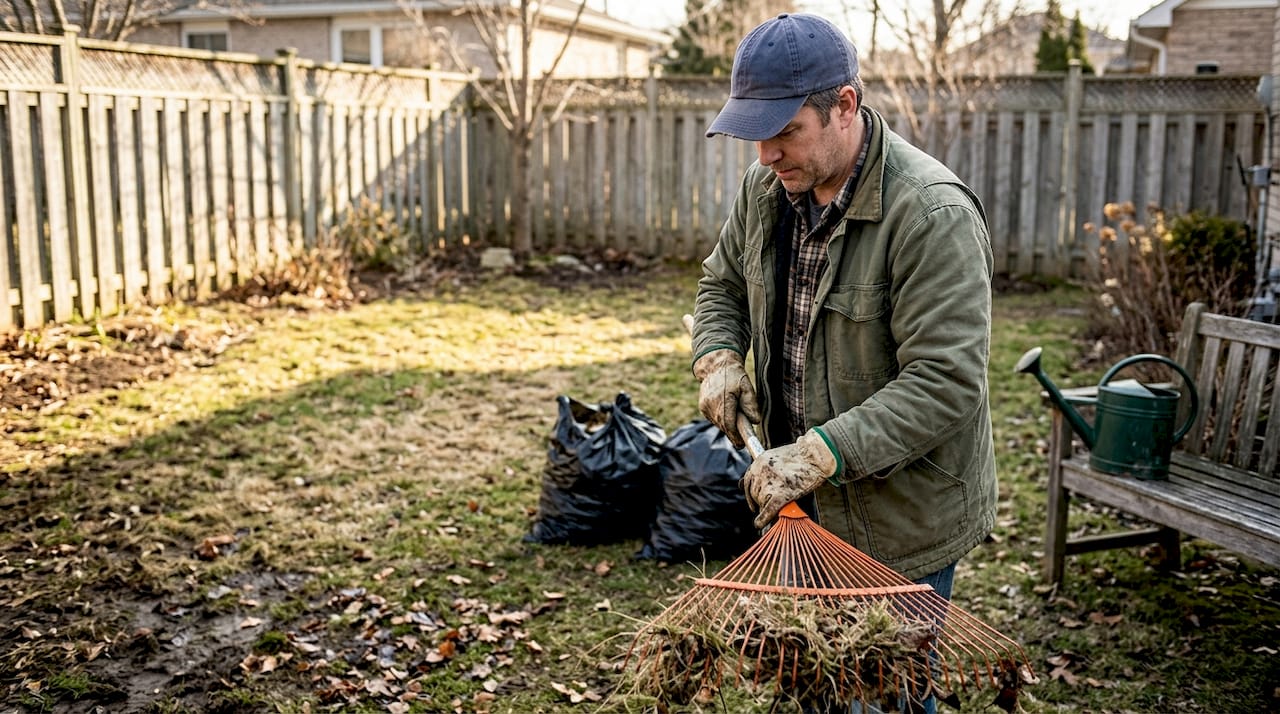
Avoid mowing and aerating on wet or frozen ground to prevent soil compaction that suffocates grass roots. Compacted soil prevents water infiltration, restricts root growth, and creates perfect conditions for moss and weeds. Wait until you can walk across your lawn without leaving deep footprints before attempting aeration or the season’s first mowing.
Gutter maintenance protects your entire property investment. City guides emphasise cleaning eavestroughs and downspouts to prevent flooding during spring melt. Clogged gutters overflow, saturating soil near foundations and creating basement moisture problems. They also prevent proper drainage patterns that keep your lawn healthy. Budget two to three hours for thorough gutter cleaning or hire professionals if your home has multiple stories.
| Task | Priority Level | Best Timing | DIY Difficulty |
|---|---|---|---|
| Eavestrough cleaning | Critical | Early March | Moderate |
| Debris removal | High | Mid-April | Easy |
| Lawn raking | High | Late April | Easy |
| Garden bed refresh | Medium | Early May | Easy |
| Aeration | Medium | Late April/Early May | Difficult |
| Overseeding | Medium | After aeration | Moderate |
Pro Tip: Take before photos of your yard from multiple angles. Document problem areas, bare spots, and drainage issues. These photos help you track progress, remember trouble spots, and communicate effectively with professionals if you need lawn care assistance later. They also prove invaluable for planning next year’s approach and celebrating your success.
Fertilisation timing significantly impacts results. Wait until grass shows active growth with vibrant green colour before applying fertiliser. Feeding dormant grass wastes product and risks runoff into storm drains. Master spring lawn feeding by matching application timing to grass growth stage rather than calendar dates, which vary significantly across Calgary’s diverse microclimates.
Tools and resources: choosing between DIY and professional help
Deciding what to tackle yourself versus hiring professionals depends on task complexity, equipment requirements, physical ability, and available time. Many homeowners successfully handle basic cleanup while outsourcing specialised tasks requiring expensive equipment or technical expertise.
Basic spring cleanup tasks suit DIY approaches for most properties. Raking, debris removal, mulch application, and light edging require minimal investment in tools and physical effort within most people’s capabilities. A quality leaf rake, garden gloves, and wheelbarrow represent your primary equipment needs. These tasks also offer satisfying immediate results that make the physical effort feel worthwhile.
Tasks ideal for DIY execution:
- Raking leaves and light debris from lawns and garden beds
- Removing winter protection materials from plants and shrubs
- Applying mulch to garden beds and around trees
- Hand-pulling early weeds before they establish deep roots
- Cleaning outdoor furniture and decorative elements
- Inspecting and planning for larger projects
Professional services become valuable for tasks requiring specialised equipment, technical knowledge, or significant physical labour. Power raking removes deep thatch layers that hand raking cannot address. Core aeration requires heavy equipment that penetrates compacted soil effectively. Homeowners can handle basic raking and mulching, while managers benefit from professionals for power raking and aeration that demand commercial-grade machinery.
Property size dramatically affects the DIY versus professional calculation. A small urban lot with minimal landscaping suits weekend warrior approaches. Larger properties with extensive garden beds, mature trees, and complex drainage systems benefit from professional efficiency and expertise. Calculate your time investment realistically: what seems like a four-hour project often stretches into multiple weekends once you account for equipment trips, physical fatigue, and unexpected complications.
| Factor | DIY Approach | Professional Service |
|---|---|---|
| Cost | Equipment purchase plus your time | Service fee, no equipment investment |
| Time required | Multiple weekends for thorough cleanup | Completed in hours or single day |
| Equipment needed | Basic tools, possible rentals | Commercial-grade machinery included |
| Physical demand | Significant labour, potential strain | Minimal homeowner effort |
| Results quality | Variable based on experience | Consistent, expert-level outcomes |
| Best for | Small properties, basic maintenance | Large yards, specialised tasks |
Pro Tip: Assess your physical capabilities honestly before committing to DIY cleanup. Spring yard work involves repetitive bending, lifting, and sustained physical effort that can cause injury if you’re not conditioned. Start with small sections, take frequent breaks, and don’t hesitate to call lawn care services if tasks exceed your comfort level. Preventing injury matters more than saving money.
Equipment rental offers a middle ground for specific tasks. Renting a core aerator for a day costs less than hiring a service but requires physical effort to operate the heavy machine. This approach works well for homeowners comfortable with equipment operation who want professional-level results without ongoing service costs. Many power raking services also offer consultation to help you decide which tasks suit DIY approaches and which justify professional investment.
Consider your schedule realistically. Spring cleanup competes with other seasonal demands on your time. If you can dedicate full weekends to yard work, DIY approaches make sense. If your schedule offers only scattered hours, professional services complete work efficiently while you focus on other priorities. The Calgary lawn care programmes provide additional resources for homeowners planning their approach.
Spring cleanup’s impact on curb appeal and property value
Well-executed spring cleanup delivers benefits extending far beyond immediate aesthetic improvements. Your investment in proper yard care compounds throughout the growing season, creating healthier landscapes that require less intervention and resist common problems more effectively.
Lawn health improvements appear within weeks of proper cleanup. Removing matted debris allows sunlight to reach grass crowns, stimulating growth and chlorophyll production. Aeration improves root development by increasing oxygen availability and water penetration. Proper cleanup enhances curb appeal and can lead to 50% thicker lawns compared to neglected properties, creating that lush, resort-quality appearance homeowners desire.
Lawn health benefits from thorough spring cleanup:
- Improved sunlight penetration stimulates robust grass growth and vibrant colour
- Enhanced soil aeration supports deeper root development and drought resistance
- Reduced disease pressure from removing fungal spores and infected plant material
- Better nutrient absorption when fertilisers reach soil rather than sitting on debris
- Decreased weed competition by promoting dense, healthy grass that crowds out invasives
- Improved water efficiency as properly graded yards direct moisture where needed
Curb appeal affects neighbourhood perception and property values measurably. Homes with well-maintained landscapes sell faster and command higher prices than comparable properties with neglected yards. Even if you’re not selling, living in an attractive environment enhances daily quality of life and neighbourhood pride. Your cleanup efforts inspire neighbours to maintain their properties, creating a positive cycle that benefits everyone.
Property managers gain specific advantages from systematic spring cleanup. Tenant satisfaction increases when outdoor spaces look inviting and well-cared-for. Maintenance costs decrease because preventive care addresses small issues before they become expensive problems. Professional appearance attracts quality tenants willing to pay premium rents for properties demonstrating pride of ownership.
“Strategic spring cleanup represents preventive maintenance that protects your property investment while creating outdoor spaces you genuinely enjoy using throughout Calgary’s brief but glorious growing season.”
Long-term yard health depends on consistent seasonal care. Spring cleanup removes winter damage and prepares your landscape for active growth. Following a lawn maintenance checklist throughout the season maintains the foundation you establish during cleanup. This systematic approach prevents the boom-and-bust cycle where yards look great briefly then decline due to neglect.
Environmental benefits extend beyond your property lines. Healthy lawns filter rainwater, reduce erosion, and provide habitat for beneficial insects and birds. Proper cleanup that protects pollinators and maintains biodiversity contributes to Calgary’s urban ecosystem health. These Calgary lawn maintenance tips help you balance aesthetic goals with environmental responsibility.
Discover professional spring cleanup services in Calgary
Transforming your vision of a revitalised yard into reality sometimes requires expert assistance. YearLong Property Maintenance brings years of Calgary-specific experience to comprehensive spring cleanup services designed for homeowners and property managers who value professional results.

Our team understands Calgary’s unique climate challenges and timing requirements. We handle everything from basic debris removal and lawn raking to specialised services like power raking, core aeration, and lawn bed maintenance that refreshes garden spaces. Our seasonal clean up services ensure your property receives proper care matched to current conditions rather than arbitrary calendar dates.
Whether you need a complete property refresh or assistance with specific tasks beyond your DIY capabilities, we offer flexible packages tailored to your needs and budget. Our satisfaction guarantee means you can trust the results. Contact us to discuss how professional lawn care in Calgary can simplify your spring while delivering the beautiful outdoor spaces you deserve.
What are the best spring cleanup tips for Calgary yards?
When should I start spring cleanup in Calgary?
Begin drainage and gutter maintenance in early March before major thaw events. Delay lawn and garden work until late April or early May when soil dries completely and nighttime temperatures consistently exceed 10°C. This protects both your yard and beneficial pollinators.
How can I prevent lawn damage during spring cleanup?
Avoid walking on or working frozen or saturated soil, which causes compaction that suffocates grass roots. Use flexible leaf rakes with gentle technique rather than heavy garden rakes that tear emerging growth. Wait for soil to crumble loosely in your hand before attempting aeration or heavy foot traffic.
Should I hire professionals or do spring cleanup myself?
Handle basic tasks like raking, debris removal, and mulching yourself if you have time and physical ability. Hire professionals for specialised work requiring expensive equipment like power raking and core aeration, or when property size makes DIY approaches impractical. Calgary lawn spring cleanup benefits from expert timing and technique.
What signs indicate my lawn is ready for spring maintenance?
Look for soil that crumbles rather than forms muddy balls when squeezed, grass showing vibrant green growth rather than dormant brown colour, and ground firm enough to walk across without leaving deep footprints. Consistent daytime temperatures above 10°C for at least a week signal readiness for most tasks.
Why is cleaning gutters important for spring yard care?
Clogged eavestroughs overflow during spring melt, saturating soil near foundations and creating flooding risks. Proper drainage protects your home’s structure whilst establishing healthy water flow patterns that benefit lawn growth. Clean gutters prevent expensive water damage and support overall property health throughout the season.
How does spring cleanup improve property value?
Thorough cleanup creates immediately visible curb appeal whilst establishing lawn health that persists throughout the growing season. Properties with well-maintained landscapes sell faster and command higher prices. Following proven Calgary yard preparation tips demonstrates pride of ownership that attracts buyers and tenants whilst enhancing your daily enjoyment of outdoor spaces.