

You’ve probably heard that leaving fallen leaves on your lawn provides natural mulch and nutrients. Whilst this works in gardens, thick leaf layers on grass create serious problems. Calgary’s early winters and heavy snowfall demand proper fall cleanup to protect your lawn from suffocation, disease, and pest damage. This guide explains what fall cleanup involves and why timing matters for your property’s health.
Table of Contents
- What Is Fall Cleanup And Why It Matters
- Key Components Of A Calgary Fall Cleanup
- Why Fall Cleanup Matters For Lawn Health
- Professional Services And DIY Approaches
- Common Misconceptions About Fall Cleanup
- Implementing Your Fall Cleanup: Practical Tips And Timing
- Prepare Your Lawn With Expert Fall Cleanup Services
- Frequently Asked Questions About Fall Cleanup
Key takeaways
| Point | Details |
|---|---|
| Essential tasks | Fall cleanup includes leaf removal, final mowing, aeration, fertilisation, overseeding, and pruning tailored to Calgary’s climate. |
| Timing is critical | Complete cleanup between September 15 and October 31, before the first frost, to prevent winter damage. |
| Professional vs DIY | Professional services offer climate expertise and specialised equipment, whilst DIY saves money but requires proper knowledge and tools. |
| Disease prevention | Regular leaf removal and correct mowing height significantly reduce snow mould, fungal diseases, and pest habitats. |
| Spring benefits | Proper fall cleanup strengthens root systems, ensuring healthier, thicker lawns emerge after Calgary’s harsh winters. |
What is fall cleanup and why it matters
Fall cleanup is a comprehensive seasonal maintenance programme that prepares your lawn and landscape for winter dormancy. This multi-step process protects your grass from Calgary’s harsh conditions and sets the stage for vigorous spring growth.
The process encompasses several critical tasks:
- Leaf and debris removal to prevent suffocation and disease
- Final mowing at optimal height to reduce snow mould risk
- Aeration to relieve soil compaction and improve oxygen flow
- Fertilisation with slow-release nutrients for root strength
- Overseeding bare patches to promote dense spring growth
- Pruning shrubs and cleaning garden beds to prevent winter damage
Calgary’s climate makes timely fall cleanup essential. Our city experiences early frosts, heavy snowfall, and prolonged freezing temperatures that stress lawns. Without proper preparation, your grass faces increased risks of disease, pest infestation, and permanent damage under snow cover.
Thick leaf layers trap moisture against grass blades, creating perfect conditions for fungal growth. Snow mould thrives in these environments, killing grass beneath the snowpack. Debris also provides shelter for rodents and insects that damage roots and crowns during winter months.
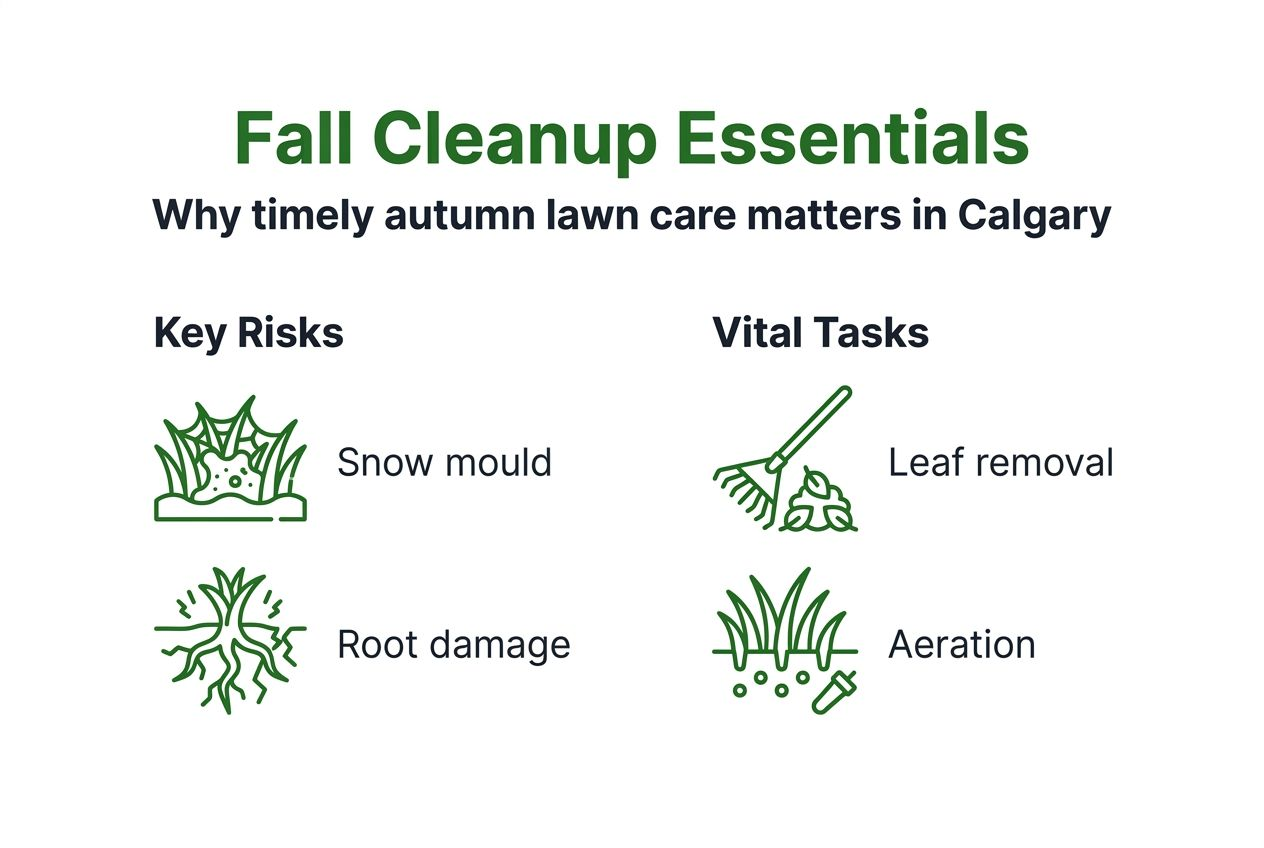
Proper cleanup ensures your lawn enters dormancy healthy and resilient. Strong root systems developed through fall care help grass survive frozen soil conditions and emerge vibrant when temperatures rise. Neglecting these tasks often results in costly spring repairs, thin grass coverage, and persistent weed problems.
Key components of a Calgary fall cleanup
Each fall cleanup task serves a specific purpose in protecting your lawn through winter. Understanding these components helps you recognise quality service or execute effective DIY maintenance.
Leaf and debris removal forms the foundation of fall cleanup. Thick leaf layers block sunlight, trap excessive moisture, and create breeding grounds for pests. Regular removal prevents these issues and eliminates hiding spots for rodents seeking winter shelter. You should clear leaves weekly during peak fall to maintain lawn health.
Final mowing at 2 to 2.5 inches height prevents grass from matting under snow. Longer grass blades fold over and trap moisture, increasing snow mould risk. Shorter grass allows better air circulation and reduces disease pressure during winter months.
Aeration tackles soil compaction that restricts root growth and water absorption. This process creates small holes in your lawn, allowing oxygen, nutrients, and moisture to reach root zones more effectively. Calgary’s clay-heavy soils benefit tremendously from fall aeration, especially after summer foot traffic compacts the ground.
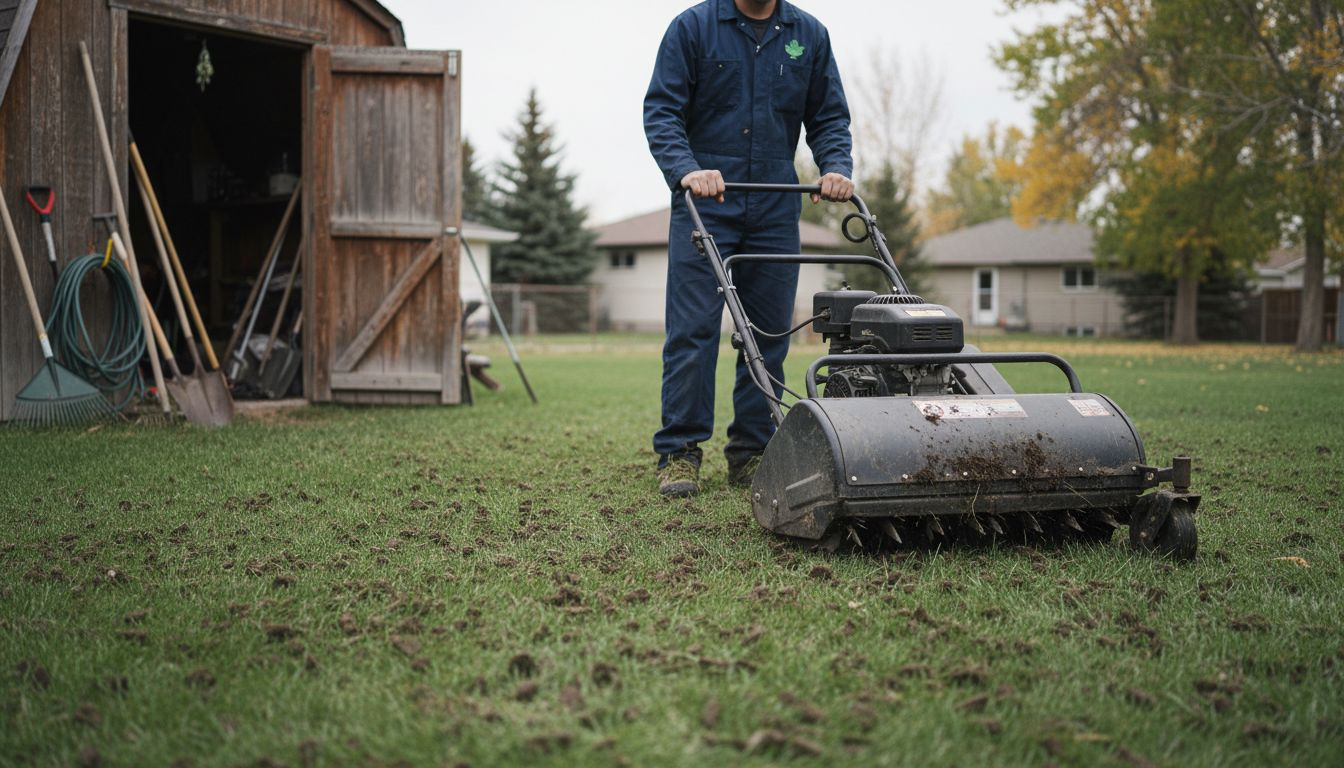
Fall fertilisation with controlled-release products strengthens root systems without promoting excessive top growth. These nutrients feed grass gradually as it prepares for dormancy, building energy reserves that support winter survival and spring recovery. Choose fertilisers formulated for Canadian winters with higher potassium content.
Overseeding addresses bare patches and thin areas before winter arrives. Fall’s cooler temperatures and increased moisture create ideal germination conditions. New grass establishes roots before freezing, filling in weak spots that would otherwise invite weeds come spring.
Pruning shrubs and cleaning garden beds prevents disease spread and protects plants from snow damage. Remove dead branches, clear plant debris, and cut back perennials to reduce fungal spore reservoirs. This maintenance protects your entire landscape, not just your lawn.
Pro Tip: Schedule aeration and fertilisation after a rainfall when soil is moist but not saturated. This timing maximises nutrient penetration and reduces lawn stress from the aeration process.
Why fall cleanup matters for lawn health
The science behind fall cleanup reveals why these tasks dramatically impact your lawn’s vitality. Each component addresses specific threats that intensify during Calgary winters.
Removing leaf litter disrupts habitats for destructive organisms. Fungi that cause snow mould require dark, moist environments to proliferate. Thick leaf mats provide exactly these conditions. Insects seeking protected overwintering sites also favour debris layers. Clearing this material forces pests to find alternative locations away from your grass.
Aeration improves oxygen availability to grass roots, enhancing their cold tolerance. Well-oxygenated root systems maintain stronger cellular structures that resist freezing damage. Compacted soil restricts oxygen flow, weakening roots and making them vulnerable to winter kill. The holes created by aeration also improve water drainage, preventing ice formation around crowns.
Controlled-release fertilisation feeds grass gradually as it enters dormancy. This steady nutrient supply builds carbohydrate reserves in roots without stimulating excessive leaf growth. Strong root systems recover faster when spring arrives, outcompeting weeds for resources and establishing thick coverage quickly.
Preventing thick leaf mats eliminates the primary cause of snow mould outbreaks. This fungal disease appears as circular patches of matted, dead grass when snow melts. Snow mould spores spread rapidly under snowpack, and severe infections require costly overseeding repairs. Simple leaf removal prevents most cases entirely.
Regular fall cleanup reduces spring fungal problems and pest populations significantly. Fewer disease spores and insect eggs survive winter without protective debris layers. Your lawn starts the growing season healthier, requiring less chemical intervention and showing faster green-up.
Pro Tip: Inspect your lawn in early spring for signs of winter damage. Areas showing slow recovery likely needed better fall preparation, helping you improve next autumn’s routine.
Proper winter preparation creates measurably healthier spring lawns. Research shows well-maintained lawns develop 30% denser grass coverage and resist disease pressure more effectively. This thickness crowds out weeds naturally, reducing your maintenance burden throughout the growing season. Investing time in fall cleanup saves money on spring repairs, fertilisers, and weed control treatments.
Professional services and DIY approaches
Homeowners face an important decision each autumn: hire professionals or tackle fall cleanup themselves. Both approaches have merits depending on your circumstances, expertise, and available time.
Professional services bring climate-specific expertise and specialised equipment to your property. Companies operating in Calgary understand local soil conditions, optimal timing windows, and common pest pressures. They own commercial-grade aerators, overseeders, and debris removal equipment that work faster and more effectively than consumer tools.
DIY cleanup saves money but demands proper knowledge and strict timing adherence. You need to understand Calgary’s climate patterns, possess quality tools, and maintain consistent effort throughout autumn. Mistakes in technique or timing can reduce effectiveness significantly, potentially costing more in spring repairs than professional services would have charged.
Cost considerations play a major role in this decision. Professional fall cleanup services in Calgary typically range from $135 to $250 for standard residential properties. This investment covers comprehensive care including aeration, overseeding, fertilisation, and debris removal. DIY approaches reduce direct costs but require tool purchases or rentals, fertiliser expenses, and significant time investment.
| Aspect | Professional Services | DIY Approach |
|---|---|---|
| Expertise | Climate-trained specialists | Requires research and learning |
| Equipment | Commercial-grade tools included | Must purchase or rent tools |
| Time Required | Minimal homeowner involvement | 8-12 hours across several weeks |
| Results Consistency | Guaranteed uniform coverage | Varies with skill and effort |
| Cost | $135-$250 average | $80-$150 in materials plus labour |
Professional companies like those offering comprehensive seasonal maintenance bundle multiple services efficiently. They schedule visits during optimal weather windows, ensuring tasks happen at the right time regardless of your availability. This convenience proves valuable for busy homeowners or those managing multiple properties.
The DIY route works well if you enjoy outdoor work, own necessary equipment, and have flexible schedules. You control exactly how tasks are performed and can address specific problem areas with extra attention. However, inconsistent results often stem from improper aeration depth, incorrect fertiliser application rates, or poor timing relative to frost dates.
Consider your physical capability and tool access honestly. Aerators are heavy machines requiring significant strength to operate. Professional yard cleanup services eliminate these physical demands whilst ensuring thorough, properly timed maintenance.
Common misconceptions about fall cleanup
Several persistent myths about fall cleanup prevent homeowners from achieving optimal lawn health. Clearing these misconceptions helps you make informed maintenance decisions.
Myth: Always leave leaves as natural mulch. Whilst thin leaf layers benefit garden beds, thick accumulations on lawns cause serious damage. Leaves block sunlight, trap excessive moisture, and create environments where snow mould thrives. A light dusting that decomposes quickly differs dramatically from the heavy coverage most Calgary yards receive from surrounding trees.
Myth: No need to mow in fall. Grass continues growing until hard frosts arrive, requiring regular mowing. The final cut at proper height prevents matting under snow and reduces disease risk significantly. Letting grass grow too long invites problems, whilst cutting too short exposes crowns to freezing damage.
Myth: Fall cleanup can wait until spring. Delaying cleanup raises pest and disease risks substantially. Debris provides winter shelter for destructive organisms that emerge hungry in spring. Snow mould develops under snowpack, making spring intervention impossible. Tasks like aeration and overseeding require fall timing to establish roots before freezing.
Myth: Aeration and overseeding damage lawns in autumn. Fall actually provides ideal conditions for these practices. Cool temperatures, increased rainfall, and reduced weed competition help new grass establish quickly. Spring aeration often competes with rapid grass growth and weed germination, reducing effectiveness.
Myth: Fertilising in fall wastes nutrients. Controlled-release autumn fertilisers feed root systems without promoting excessive leaf growth. This targeted nutrition builds winter hardiness and spring vigour. Spring-only fertilisation misses the opportunity to strengthen grass before its most stressful season.
Understanding these facts helps you adopt correct fall and spring cleanup routines that protect your investment. Many lawn problems attributed to harsh winters actually stem from inadequate autumn preparation, not weather severity.
Implementing your fall cleanup: practical tips and timing
Success in fall cleanup depends heavily on proper timing and systematic execution. Follow these steps to maximise your lawn’s winter readiness.
Begin cleanup between September 15 and October 31, before Calgary’s first hard frost typically arrives. This window provides optimal conditions whilst grass remains actively growing enough to recover from maintenance stress.
Remove leaves weekly during peak fall periods. Frequent clearing prevents accumulation that smothers grass and simplifies each session’s workload. Use mulching mowers to chop leaves finely for faster decomposition in garden beds.
Aerate when soil is moist but not frozen, typically mid-September through mid-October. Water your lawn 24 hours before aerating if conditions are dry. Moist soil allows tines to penetrate deeper, creating better oxygen channels.
Complete your final mow when grass growth ceases in late October. Cut to 2 to 2.5 inches height, collecting clippings if they’re excessive. This timing ensures grass enters dormancy at optimal length.
Apply slow-release fertiliser immediately after aeration. The holes allow nutrients to reach root zones directly, maximising uptake efficiency. Choose products formulated for Canadian winters with NPK ratios favouring root development.
Overseed bare spots within a week of aeration. Good seed-to-soil contact through aeration holes improves germination rates. Water lightly but frequently until seeds establish, then reduce frequency before freeze-up.
Prune shrubs and clean garden beds by late October. Remove dead plant material, cut back perennials, and apply mulch to protect roots. This final step prevents disease overwintering and protects landscape plants.
Pro Tip: Prepare all tools and materials in early September. Check equipment function, purchase fertilisers and seed, and schedule professional services early. Popular seasonal cleanup providers book quickly as frost approaches, and waiting reduces your timing flexibility.
Monitor weather forecasts closely as autumn progresses. Unseasonably warm periods extend your working window, whilst early cold snaps require accelerated schedules. Calgary’s variable climate demands flexibility, so maintain readiness to act when conditions favour specific tasks.
Prepare your lawn with expert fall cleanup services
Proper fall cleanup protects your lawn investment and ensures beautiful spring recovery. Professional services eliminate the guesswork, physical demands, and timing challenges that complicate DIY approaches for busy homeowners.

Our expert team handles every aspect of fall preparation tailored to Calgary’s unique climate. From thorough leaf removal and precision aeration to targeted fertilisation and overseeding, we ensure your lawn enters winter in peak condition. Booking early secures optimal service timing before frost arrives.
Explore our comprehensive lawn care services for year-round maintenance programmes that keep your property healthy through every season. Our bed maintenance protects landscape plants whilst our seasonal cleanup packages address both autumn and spring needs efficiently. Contact us today to schedule your fall cleanup and enjoy a healthier, greener lawn next spring.
Frequently asked questions about fall cleanup
What is the best time to do fall cleanup in Calgary?
The optimal window runs from September 15 to October 31, before the first hard frost typically arrives. Begin leaf removal as soon as significant fall occurs, aerate in mid-September through mid-October when soil is moist, and complete final mowing in late October when grass growth ceases.
Can I leave leaves on my lawn as mulch?
No, thick leaf layers on grass cause more harm than benefit. Whilst light leaf cover works in garden beds, heavy accumulation on lawns blocks sunlight, traps moisture, and creates ideal conditions for snow mould and pest habitats. Remove leaves weekly to prevent damage.
How often should I mow my lawn in the fall?
Continue regular mowing until grass growth stops, typically every 7 to 10 days through October. Your final cut should occur in late October at 2 to 2.5 inches height to prevent matting under snow whilst avoiding excessive shortness that exposes crowns to freezing.
Is aeration necessary every fall?
Most Calgary lawns benefit from annual fall aeration due to clay-heavy soils that compact easily. High-traffic areas or lawns showing thinning, poor drainage, or weak growth especially need yearly treatment. Well-established lawns in low-use areas might manage with aeration every second autumn.
What are the benefits of overseeding in fall?
Fall overseeding fills bare patches, increases lawn density, and improves spring recovery with minimal weed competition. Cool temperatures, increased moisture, and reduced disease pressure create ideal germination conditions. New grass establishes strong roots before winter, emerging thick and healthy in spring.