

TL;DR:
- Neglecting outdoor maintenance in Calgary can lead to costly repairs and safety hazards, making seasonal upkeep essential. Proper planning and consistent effort with the right tools help prevent structural damage, basement flooding, and injuries caused by ice and snow. Professional property maintenance services offer practical solutions to ensure your home remains safe, healthy, and visually appealing year-round.
Skipping outdoor maintenance in Calgary is not just inconvenient — it can quietly drain your budget. A cracked driveway left unaddressed through freeze-thaw cycles will cost far more to repair in spring than it would have to seal in autumn. Ice build-up on unshovelled walkways creates real liability. Overgrown beds and poor drainage lead to foundation issues that no homeowner wants to face. If you own or manage a Calgary property, a structured seasonal approach is not optional — it is the smartest financial and safety decision you can make. This guide walks you through every season with practical, Calgary-specific steps to protect your investment year-round.
Table of Contents
- What you need for year-round outdoor maintenance
- Spring and summer: Laying the groundwork for healthy outdoor spaces
- Autumn readiness: Preparing your property for colder months
- Winter strategies: Effective snow removal and property care
- Verifying your maintenance: How to check your work and avoid costly mistakes
- The real difference: Why consistent maintenance saves time and money in Calgary
- Get year-round maintenance help for your Calgary home
- Frequently asked questions
Key Takeaways
| Point | Details |
|---|---|
| Seasonal preparation matters | Preparing for each season prevents costly repairs and keeps your property safe and attractive. |
| Check equipment regularly | Maintaining and inspecting your tools throughout the year saves time and reduces emergencies. |
| Follow local best practices | Adapting your maintenance plan for Calgary’s climate leads to longer-lasting results. |
| Verify your work | A quick check after each season helps spot issues early and ensures thorough property care. |
What you need for year-round outdoor maintenance
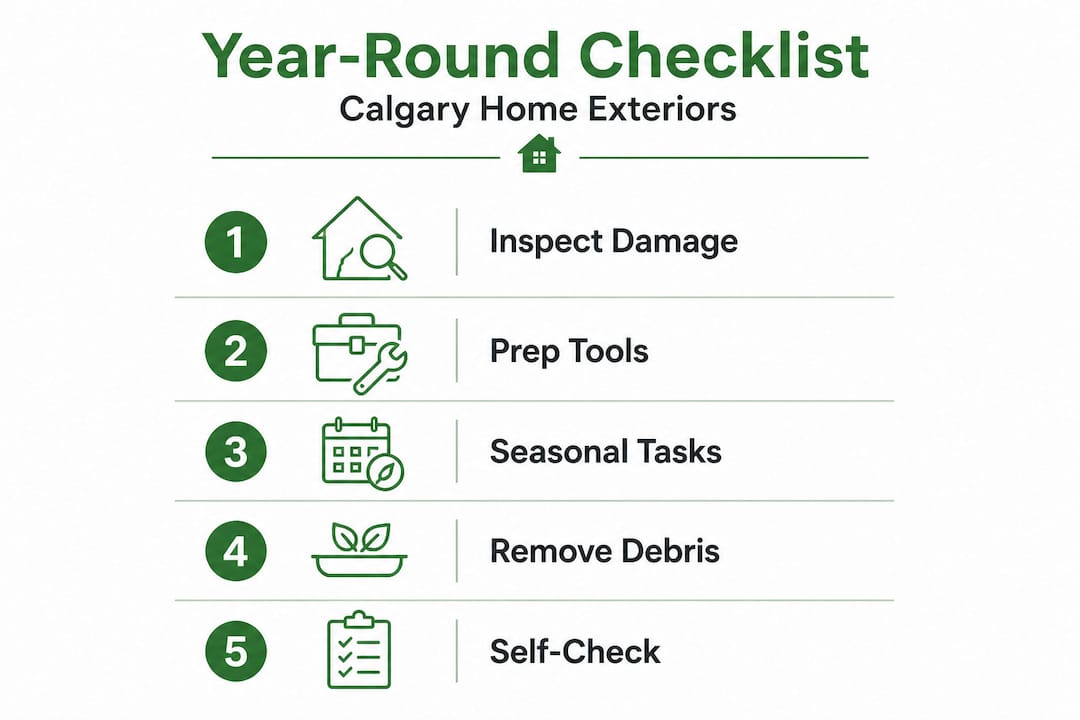
With the dangers of neglect established, it is essential to prepare by gathering the right tools and materials before the seasons shift. Having everything on hand before you need it is what separates reactive, expensive fixes from smooth, scheduled upkeep.
Essential tools by season
| Season | Key tools and materials |
|---|---|
| Spring | Rake, aerator, lawn mower, garden gloves, pruning shears, hose and nozzle |
| Summer | Sprinkler or soaker hose, fertiliser spreader, edger, weeding tools, mulch |
| Autumn | Leaf blower or rake, pruning saw, tarp, drain covers, gutter scoop |
| Winter | Snow shovel, snow blower, ice scraper, calcium chloride de-icer, sand |
Spring cleanup should include starting up yard maintenance equipment after winter to confirm everything functions before your first big lawn session. A mower that sits unused for six months often needs a blade sharpening, a fresh spark plug, and an oil check before it is ready to go.
Here are the core items every Calgary homeowner should have stocked year-round:
- A quality flat-blade snow shovel and a pusher-style shovel
- Calcium chloride de-icer (more effective than rock salt in extreme cold)
- Adjustable pruning shears and a folding pruning saw
- A cordless leaf blower with interchangeable batteries
- Lawn aerator (manual or powered for larger yards)
- Flexible soaker hose for dry summer stretches
- Heavy-duty tarps for debris collection and equipment protection
Checking our seasonal landscaping tips will help you plan ahead and know exactly what you need before each season arrives. Pairing that with a solid lawn maintenance checklist means nothing gets missed when the weather turns.
Pro Tip: Invest in multi-purpose tools where you can. A cordless drill with attachments, a single-platform battery system for multiple power tools, or a combination edger-trimmer will save you both money and storage space in the garage.
Spring and summer: Laying the groundwork for healthy outdoor spaces
Once you have the right tools ready, here is how to tackle Calgary’s spring and summer seasons for optimal property care. The window between snowmelt and the first real heat is short in Calgary, so moving quickly matters.
Step-by-step spring maintenance
- Walk your entire property looking for damage caused by frost, ice, and snow loads. Check window casing, foundation edges, fence posts, and siding for cracks, peeling paint, or moisture damage.
- Clear debris from garden beds, lawn edges, gutters, and downspouts. Dead leaves left over winter trap moisture and invite mould.
- Test your drainage. Pour water near your foundation and watch which direction it flows. Water pooling against a house foundation is one of the most expensive problems a homeowner can face.
- Prune shrubs and trees. Remove dead or crossing branches before new growth emerges. This is also the time to cut back ornamental grasses and perennials to a few centimetres above soil level.
- Aerate and overseed your lawn. Calgary’s clay-heavy soil compacts easily over winter. Aeration opens the soil so fertiliser, water, and air can reach the roots effectively.
- Service your outdoor equipment. A spring home maintenance checklist confirms you should inspect the exterior for drainage, yard debris, and obvious damage before diving into heavy work.
“Addressing drainage issues in spring is the single most impactful thing Calgary homeowners can do to prevent structural problems. Water will always find the path of least resistance, and that path should not be your foundation.”
For a deeper look at getting your lawn back on track after a long winter, our spring yard clean-up tips are tailored specifically to Calgary soil types and weather windows.
Early summer maintenance
Once spring tasks are complete, shift your focus to active lawn health. Mow regularly but never cut more than one-third of the grass blade at a time. Calgary’s dry Chinook winds and warm summers mean your lawn will need consistent watering, ideally in the early morning to reduce evaporation. Fertilise once the lawn is actively growing, usually by late May or early June. Pull weeds before they seed or you will double your work in a few weeks.
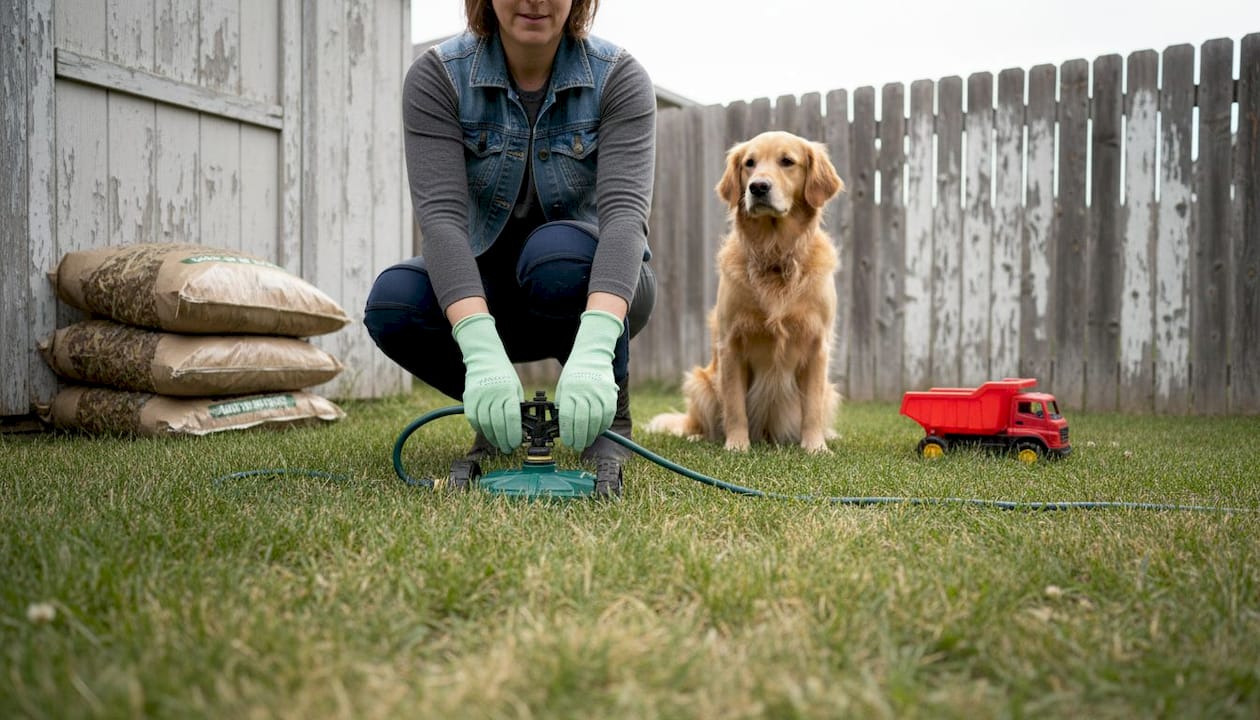
Pro Tip: Address drainage issues early in spring before summer rains arrive. A simple re-grading of a low corner in your yard takes an afternoon but can prevent thousands of dollars in basement repairs.
Autumn readiness: Preparing your property for colder months
With summer tasks complete, it is time to shift focus to autumn and set your property up for a stress-free winter. In Calgary, the cold can arrive suddenly, which means procrastination in October can leave you scrambling in November.
Proactive vs. last-minute autumn preparation
| Approach | Timing | Typical outcome |
|---|---|---|
| Proactive preparation | September to mid-October | Equipment stored properly, beds mulched, paths clear, gutters clean |
| Last-minute preparation | Late October or later | Frozen ground prevents planting or grading, equipment damaged by frost |
| No preparation at all | Skipping autumn tasks entirely | Mould risk, spring flooding, expensive repairs to fencing and siding |
The comparison above makes it clear that timing is everything. Calgary often sees hard frosts by mid-October, and once the ground freezes, your options for outdoor prep narrow dramatically.
Autumn maintenance checklist
- Trim trees and shrubs to remove weak or dead branches before heavy snow loads can snap them. Trimming trees, cleaning yard debris, and inspecting for exterior issues are all crucial in transitional seasons.
- Clear leaves and organic debris from garden beds, gutters, and drains. Wet leaves in gutters freeze and can cause ice damming and roof damage.
- Drain and store garden hoses and shut off exterior water sources to prevent pipe bursts.
- Aerate and fertilise your lawn with a slow-release autumn formula to build root strength before dormancy.
- Inspect exterior surfaces for cracks in concrete, siding, and caulking. Fill gaps before freeze-thaw cycles expand them into major damage.
- Mulch garden beds to protect plant roots and reduce moisture loss during Calgary’s dry, cold winters.
- Mark your driveway and walkway edges with driveway markers for safer snow ploughing later.
Our fall yard preparation tips go deeper on each of these tasks with Calgary-specific timing and product recommendations. Following a thorough autumn programme is genuinely one of the highest-return maintenance activities you can do as a homeowner.
Winter strategies: Effective snow removal and property care
After fall preparation, the challenges of Calgary’s winter require a systematic approach to snow and ice. Calgary winters are not uniform — temperatures can swing dramatically in a single week, alternating between deep freeze and Chinook-driven thaw. That cycle is brutal on outdoor surfaces.
Step-by-step winter snow removal
- Clear paths and driveways promptly after each snowfall. Fresh snow is lighter and easier to move. Waiting allows compaction and ice formation underneath.
- Apply de-icer proactively before temperatures drop below freezing. Calcium chloride is effective down to approximately minus 25 degrees Celsius and will not damage concrete the way some salt blends do.
- Check roof edges and eavestroughs for ice dam build-up after heavy snowfall or a freeze-thaw event. Ice dams can force water under shingles and into the home.
- Inspect walkways and steps regularly throughout the winter for developing cracks or surface heaving caused by frost. Inspecting for cracks and ensuring safe walkways are essential parts of any winter safety routine.
- Keep a clear path to all utility access points, including gas meters, electrical panels, and HVAC intakes. Blocked intakes can cause heating system failures during the coldest nights.
- Shovel snow away from your foundation, not against it. Snow melting against your foundation during a Chinook is a recipe for water infiltration.
Winter safety fact: Most winter injuries on residential properties occur from slipping on uncleared or poorly treated walkways. Regular snow clearing combined with proactive de-icing dramatically reduces this risk for both residents and visitors.
Our snow removal safety strategies outline the specific Calgary conditions that demand the most attention and how to stay ahead of them.
Pro Tip: In autumn, mark your driveway edges and any raised obstacles like planters or curb drops with bright driveway markers. When everything is under snow, those markers prevent accidental damage from shovels and ploughs.
Verifying your maintenance: How to check your work and avoid costly mistakes
Carrying out maintenance is crucial, but verifying your work ensures lasting results and prevents repeat issues. Many homeowners complete seasonal tasks and move on, only to discover in spring that a problem developed under the snow or behind a fence they never re-checked.
End-of-season self-inspection checklist
- Drainage: Does water flow away from the house on all sides? Are all drain openings clear?
- Surfaces: Are there visible cracks in concrete, asphalt, or paving stones that could expand through freeze-thaw cycles?
- Vegetation: Have all dead or diseased branches been removed? Are beds properly mulched or bare?
- Gutters and downspouts: Are they free of debris and properly connected? Do they discharge water at least 60 centimetres from the foundation?
- Fencing and gates: Are posts still plumb and secure? Have winter heaving or summer soil shifts created gaps?
- Equipment storage: Is all seasonal equipment cleaned, drained, and stored correctly to prevent damage?
Regular inspections for exterior damage, cracks, and drainage issues are considered best practices by experienced property maintenance professionals. A quick 20-minute walk-around every season catches issues before they grow.
Our property care inspection tips give you a printable framework you can bring outside when you do your rounds.
Pro Tip: Schedule inspections at the very start and very end of each season. Put them in your calendar as recurring appointments the same way you would a furnace filter change or a dentist visit. Consistency is what separates well-maintained properties from expensive ones.
The real difference: Why consistent maintenance saves time and money in Calgary
Here is the part most guides skip over. They give you the checklist. They tell you to rake in autumn and shovel in winter. What they rarely say outright is this: the homeowners who spend the least money on their properties over a decade are not the ones who try to do everything perfectly. They are the ones who show up consistently with a modest effort, every single season, without skipping.
Calgary’s climate is genuinely punishing compared to many Canadian cities. The freeze-thaw cycle here is extreme. A crack in your driveway in September is a pothole by April if you leave it. A clogged gutter in October becomes an ice dam in January. These are not hypothetical scenarios — they are patterns we see repeatedly when we assess properties that have fallen behind on care.
The surprising truth is that most urgent, expensive outdoor repairs are not caused by one big storm or one bad season. They are caused by five years of “I’ll get to it.” A consistent seasonal calendar, even an imperfect one, interrupts that accumulation of neglect before it becomes a repair bill. In our experience working across Calgary’s diverse neighbourhoods and property types, the gap between a well-maintained property and a neglected one is rarely about money or knowledge. It is almost always about scheduling and follow-through.
Another thing most guides will not tell you: curb appeal has a compounding effect. A lawn that is properly aerated, fertilised, and edged for three consecutive years is dramatically healthier and more resilient than one that receives sporadic attention. The same is true for concrete. Sealed regularly, it can last decades. Left unsealed, Calgary’s road salts and temperature swings will degrade it within five to seven years. Small, regular investments genuinely beat large, reactive ones every single time.
Get year-round maintenance help for your Calgary home
If keeping up with every season feels like more than your schedule allows, you are not alone. Between work, family, and everything else, consistent outdoor upkeep is often the first thing that gets pushed aside. That is exactly where we come in.

At YearLong Property Maintenance, we have been helping Calgary homeowners and property managers stay ahead of every season since 2017. Whether you need lawn bed maintenance services in spring and summer, thorough seasonal cleanup services in autumn, or reliable professional snow removal all winter long, our team handles it with the local knowledge and dependable follow-through you deserve. Get in touch today and ask about our flexible year-round packages, all backed by our satisfaction guarantee.
Frequently asked questions
What is the most important outdoor maintenance task in spring for Calgary properties?
Spring’s top priority is to inspect for exterior damage, clear yard debris, and verify proper drainage to prevent water from pooling near your foundation and causing costly structural issues.
How often should I check my property for maintenance issues in Calgary?
A quick inspection at the start and end of each season is ideal. Regular inspections for damage and drainage are considered a best practice that prevents small issues from turning into expensive repairs.
Which tools are necessary for year-round home and yard care in Calgary?
You will need a quality snow shovel, a reliable mower, a rake, calcium chloride de-icer, and pruning shears as your core set. Starting up yard equipment after winter is also an essential early spring step.
How can I safely remove snow and ice during Calgary’s winter?
Remove snow promptly after each fall, apply de-icer before temperatures drop sharply, and inspect for cracks and unsafe walkways regularly throughout the season to prevent dangerous slipping hazards.