

Calgary’s freeze-thaw cycles create nearly 40 temperature swings across zero each winter, leaving properties vulnerable to hidden damage that surfaces in spring. This constant expansion and contraction affects everything from foundation cracks to compacted lawns, making spring cleanup far more critical than simple yard tidying. For homeowners and property managers, understanding what spring cleanup truly involves and executing it properly protects structural integrity, prevents costly repairs, and transforms outdoor spaces after months of harsh weather. This guide breaks down the essential tasks, timing considerations, and city resources that make spring cleanup effective in Calgary’s unique climate.
Table of Contents
- Understanding Spring Cleanup In Calgary
- Essential Steps And Best Practices For Effective Spring Cleanup
- City Of Calgary Spring Programs Beneficial For Homeowners
- Maintaining And Enhancing Curb Appeal Through Spring Cleanup
- Get Professional Spring Cleanup Help In Calgary
- Frequently Asked Questions About Spring Cleanup
Key takeaways
| Point | Details |
|---|---|
| Climate-specific challenges | Calgary’s freeze-thaw cycles demand targeted spring cleanup to address foundation stress, lawn compaction, and debris accumulation |
| Sequential task approach | Effective cleanup follows a prioritised order: assess damage, prune vegetation, clear debris, refresh beds, and prepare lawns |
| City program support | Municipal street sweeping and free yard waste drop-off from April to June complement residential cleanup efforts |
| Curb appeal impact | Thorough spring maintenance significantly enhances property value and neighbourhood aesthetics with minimal ongoing effort |
| Professional expertise | Calgary-focused services leverage local climate knowledge to deliver efficient, comprehensive cleanup tailored to regional conditions |
Understanding spring cleanup in Calgary
Spring cleanup addresses the aftermath of Calgary’s punishing winter conditions, which subject properties to unique stresses rarely seen in milder climates. The freeze-thaw cycle damages foundations and lawns through repeated expansion and contraction, creating cracks in concrete, heaving soil, and compressing grass roots. Unlike regions with consistent winter temperatures, Calgary experiences dramatic temperature swings that accelerate deterioration and leave behind substantial debris from ice damage, wind, and delayed snowmelt.
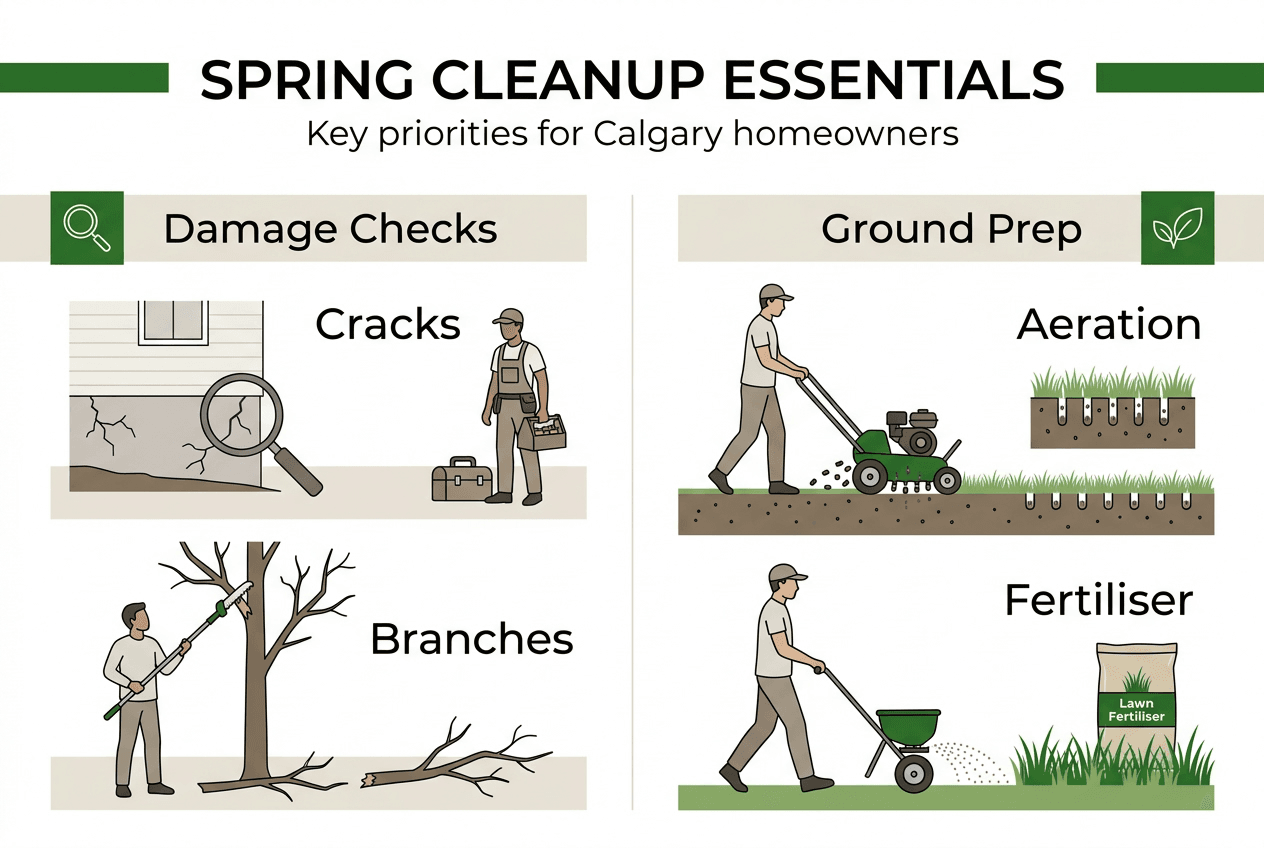
Typical spring cleanup tasks extend well beyond raking leaves. They include removing accumulated winter debris like broken branches and dead vegetation, pruning damaged shrubs and trees to promote healthy growth, cleaning gutters and downspouts to prevent water damage, aerating compacted lawns to restore oxygen flow, and refreshing garden beds with fresh mulch and compost. Each task directly counteracts specific winter damage patterns common to Calgary properties.
Timing proves critical due to Calgary’s unpredictable spring weather. Starting cleanup too early risks damaging waterlogged soil and tender new growth, whilst waiting too long allows problems to worsen. Soil typically thaws by mid-April, but monitoring moisture levels ensures you begin work when conditions support recovery rather than cause additional stress. Walking on saturated ground compacts soil further, undoing months of natural settling.
Pro Tip: Insert a screwdriver into your lawn soil; if it penetrates easily to 15 centimetres, the ground has thawed sufficiently for cleanup work without causing compaction damage.
Understanding why spring clean ups in Calgary are essential helps prioritise tasks based on your property’s specific vulnerabilities. Properties with mature trees require different attention than newer landscapes, and south-facing areas thaw weeks before north-facing sections. This localised approach to outdoor cleanup for Calgary homes maximises effectiveness whilst minimising wasted effort on premature interventions.
Essential steps and best practices for effective spring cleanup
A systematic approach to spring cleanup ensures nothing critical gets overlooked whilst maximising efficiency. Following a logical sequence prevents rework and allows each task to support the next, building momentum toward a fully restored property.
Step 1: Conduct a thorough damage assessment
Walk your entire property looking for winter damage signs: foundation cracks, broken branches, damaged fencing, sunken areas in lawns, and accumulated debris. Document issues with photos to track repairs and create a prioritised action list. This initial survey reveals which areas need immediate attention versus routine maintenance.

Step 2: Prune damaged vegetation strategically
Remove dead, diseased, or damaged branches from trees and shrubs before new growth begins. Proper pruning techniques promote healthy development and prevent disease spread. Cut at natural branch collars rather than leaving stubs, and sterilise tools between plants to avoid cross-contamination.
Step 3: Clear all winter debris systematically
Rake leaves, remove fallen branches, clear dead annual plants, and pick up any litter or foreign objects. Work from back to front, consolidating debris into manageable piles for disposal. This creates a clean slate for subsequent tasks and reveals hidden damage that debris might conceal.
Step 4: Refresh garden beds with amendments
Add fresh compost to replenish nutrients depleted over winter, apply appropriate fertiliser based on soil tests, and spread new mulch to suppress weeds and retain moisture. A 5-8 centimetre mulch layer provides optimal benefits without smothering plants.
Step 5: Prepare and fertilise lawns properly
Rake thoroughly to remove thatch buildup, aerate compacted areas to improve drainage and root growth, overseed thin patches, and apply starter fertiliser to support recovery. Calgary lawn spring cleanup requires patience as grass recovers slowly from winter dormancy.
| Task | Primary Purpose | Optimal Timing | Estimated Duration |
|---|---|---|---|
| Damage assessment | Identify repair priorities | Early April | 1-2 hours |
| Debris removal | Clear working area | Mid-April | 3-5 hours |
| Pruning | Promote healthy growth | Late April | 2-4 hours |
| Bed preparation | Restore soil nutrients | Early May | 4-6 hours |
| Lawn care | Repair winter damage | Mid-May | 3-5 hours |
Gutter cleaning deserves special attention as clogged gutters cause thousands of dollars in foundation damage annually. Remove all debris, flush downspouts with water to confirm proper flow, and inspect for damage or separation. Water pooling near foundations creates the perfect conditions for basement flooding and structural compromise.
Pro Tip: Schedule furnace and air conditioning maintenance during spring cleanup to improve energy efficiency before summer cooling demands begin, saving up to 15% on utility costs.
Different types of outdoor cleaning services address specific property needs, from basic debris removal to comprehensive landscape restoration. Matching services to your property’s condition ensures appropriate resource allocation without overspending on unnecessary interventions.
City of Calgary spring programs beneficial for homeowners
Municipal initiatives significantly support residential spring cleanup efforts, providing resources and services that complement individual property maintenance. Understanding these programs helps homeowners coordinate private efforts with city-wide activities for maximum neighbourhood impact.
The City of Calgary operates an extensive spring street sweeping program that removes accumulated winter sand, gravel, and debris from roadways. Sweeping covers over 17,000 lane kilometres annually between April and June, following predetermined routes published online. This massive undertaking requires coordination from residents to ensure success.
Parking compliance during scheduled sweeping proves essential. Vehicles parked during sweeping hours may receive tickets and prevent effective debris removal, leaving unsightly accumulations that wash into storm drains. The City posts temporary no-parking signs 24 hours before sweeping each street, giving residents adequate notice to relocate vehicles.
Key parking rules during sweeping:
- Move vehicles off streets during posted sweeping hours, typically 7:00 AM to 7:00 PM
- Watch for temporary signage installed the day before your street’s scheduled sweep
- Use driveways, garages, or adjacent streets not scheduled for same-day sweeping
- Return vehicles only after sweepers have passed and signs are removed
Violations result in $100 tickets and incomplete street cleaning that affects entire neighbourhoods. Setting phone reminders when signs appear helps avoid costly oversights during busy spring schedules.
Free yard waste drop-off at City Eco Centres operates from April 11 to June 1 for residential customers, accepting grass clippings, leaves, branches, and other organic yard materials. This service eliminates disposal costs and ensures proper composting of organic waste rather than landfill burial. Locations across Calgary provide convenient access for all residents.
Pro Tip: After city sweepers pass, sweep remaining debris from your curb and property edge into bags for yard waste drop-off, preventing it from washing into storm drains during spring rains.
“Spring street sweeping represents one of Calgary’s largest seasonal operations, requiring cooperation between the City and residents to effectively remove winter’s debris and restore neighbourhood cleanliness. When everyone participates by moving vehicles and properly disposing of yard waste, the collective impact transforms communities.”
Coordinating personal cleanup with seasonal cleanup services and city programs creates comprehensive neighbourhood revitalisation that benefits individual properties and community aesthetics simultaneously.
Maintaining and enhancing curb appeal through spring cleanup
Thorough spring cleanup delivers immediate visual improvements that significantly impact property values and neighbourhood perception. First impressions form within seconds, and well-maintained properties signal care, pride, and attention to detail that resonates with visitors, neighbours, and potential buyers.
Prioritising curb appeal during spring cleanup can increase property values by 5-10% whilst requiring relatively modest investment compared to interior renovations. Simple interventions like fresh mulch, trimmed edges, and healthy lawns create disproportionate positive impact because they frame the entire property and establish expectations before anyone enters.
| Improvement | Property Value Impact | Maintenance Effort | Visual Impact Duration |
|---|---|---|---|
| Fresh garden bed mulch | Moderate (3-5%) | Low | 1-2 seasons |
| Lawn aeration and fertilising | Moderate (3-5%) | Medium | Full season |
| Professional pruning | Low (1-3%) | Low | Full season |
| Power washing walkways | Low (1-3%) | Low | 1-2 seasons |
| Seasonal flower planting | Moderate (3-5%) | High | Single season |
Maintaining improvements after initial cleanup extends benefits throughout the growing season with minimal additional effort. Regular tasks preserve the momentum created during intensive spring work:
- Mow lawns weekly at appropriate heights (6-8 centimetres for Calgary’s climate) to maintain density and crowd out weeds
- Edge walkways and driveways monthly to maintain crisp, defined borders that enhance perceived tidiness
- Deadhead flowers and prune spent blooms to encourage continuous flowering and prevent scraggly appearance
- Water deeply but infrequently (2-3 centimetres weekly) to promote deep root growth and drought resistance
- Monitor for pest and disease issues early when interventions prove most effective and least costly
Pro Tip: Schedule power raking in early May followed by core aeration in late May to maximise lawn recovery; this combination removes thatch whilst improving soil structure, extending the health benefits started during initial spring cleanup by months.
Hardscape maintenance complements landscape care by ensuring walkways, patios, and driveways look as polished as surrounding vegetation. Power washing removes winter grime and salt residue, whilst sealing concrete protects against future freeze-thaw damage. These tasks require annual attention but deliver dramatic visual improvements with lasting protective benefits.
Professional bed maintenance services ensure consistent care throughout the season, preventing the gradual decline that occurs when busy schedules interfere with regular attention. Similarly, comprehensive lawn care programs deliver predictable results through scheduled treatments timed to Calgary’s growing conditions, eliminating guesswork about when and how to intervene.
Investing effort in spring cleanup and follow-through maintenance creates compounding returns as healthy plants become more resilient, requiring less intervention over time. This positive cycle reduces long-term maintenance demands whilst continuously improving property appearance and value.
Get professional spring cleanup help in Calgary
Whilst DIY spring cleanup offers satisfaction and cost savings, professional services deliver efficiency and expertise that busy homeowners and property managers increasingly value. Calgary’s unique climate challenges require specialised knowledge about timing, techniques, and common property vulnerabilities that experienced providers understand intuitively.

Professional teams complete comprehensive cleanup in hours rather than weekends, using commercial equipment that achieves superior results compared to consumer-grade tools. Their familiarity with Calgary’s freeze-thaw impacts, soil conditions, and native vegetation ensures appropriate interventions tailored to local requirements rather than generic approaches that may prove ineffective or harmful.
YearLong Property Maintenance specialises in Calgary properties, offering comprehensive lawn care that addresses spring recovery through fall preparation. Their bed maintenance programs keep gardens vibrant throughout the growing season with scheduled care that adapts to weather patterns and plant needs. For complete property transformation, their seasonal cleanup services handle everything from initial assessment through final touches, delivering move-in-ready results that let you enjoy your outdoor spaces immediately.
Frequently asked questions about spring cleanup
What exactly does spring cleanup include for Calgary properties?
Spring cleanup encompasses removing winter debris, pruning damaged vegetation, cleaning gutters, aerating compacted lawns, refreshing garden beds with compost and mulch, and assessing property damage from freeze-thaw cycles. It addresses Calgary-specific challenges like sand accumulation, ice damage, and delayed snowmelt impacts.
When should I start spring cleanup in Calgary?
Begin cleanup when soil thaws sufficiently to avoid compaction damage, typically mid to late April depending on weather patterns. Test soil readiness by inserting a screwdriver; if it penetrates easily to 15 centimetres, conditions support cleanup work without causing additional stress to recovering landscapes.
How does Calgary’s street sweeping program work?
The City sweeps residential streets between April and June following published schedules, posting temporary no-parking signs 24 hours before sweeping each street. Residents must move vehicles during posted hours (typically 7:00 AM to 7:00 PM) to avoid $100 tickets and ensure effective debris removal from their neighbourhoods.
Can I dispose of yard waste for free in Calgary?
Yes, Calgary residents receive free yard waste drop-off at City Eco Centres from April 11 to June 1 annually. Accepted materials include grass clippings, leaves, branches, and other organic yard debris. This service eliminates disposal costs whilst ensuring proper composting rather than landfill burial.
Does spring cleanup really affect property values?
Thorough spring cleanup and maintained curb appeal can increase property values by 5-10% through improved first impressions and demonstrated care. Simple interventions like fresh mulch, healthy lawns, and trimmed vegetation create disproportionate positive impact because they frame the entire property and signal attention to detail that buyers value.