

TL;DR:
- Spring outdoor cleanup for rentals prepares properties for the season by removing debris, assessing lawns, and ensuring proper maintenance. Timing tasks like pre-emergent herbicide application and irrigation startup is crucial to avoid costly reactive treatments and repairs. Effective staging and early scheduling enhance rental appeal, tenant satisfaction, and long-term property value.
Spring outdoor cleanup for rentals is the process of preparing a property’s exterior each spring to protect its condition, attract quality tenants, and prevent costly seasonal damage. For Calgary landlords, this process carries extra weight. The city’s freeze-thaw cycles leave behind heaved walkways, compacted soil, and debris-laden beds that need attention before the rental season peaks. A thorough spring cleanup, known in property management circles as seasonal exterior maintenance, sets the tone for the entire year. Done right, it reduces reactive repair costs, satisfies HOA requirements, and gives your listing a competitive edge in a market where curb appeal drives first impressions.
What are the essential steps in a spring outdoor cleanup for rental properties?
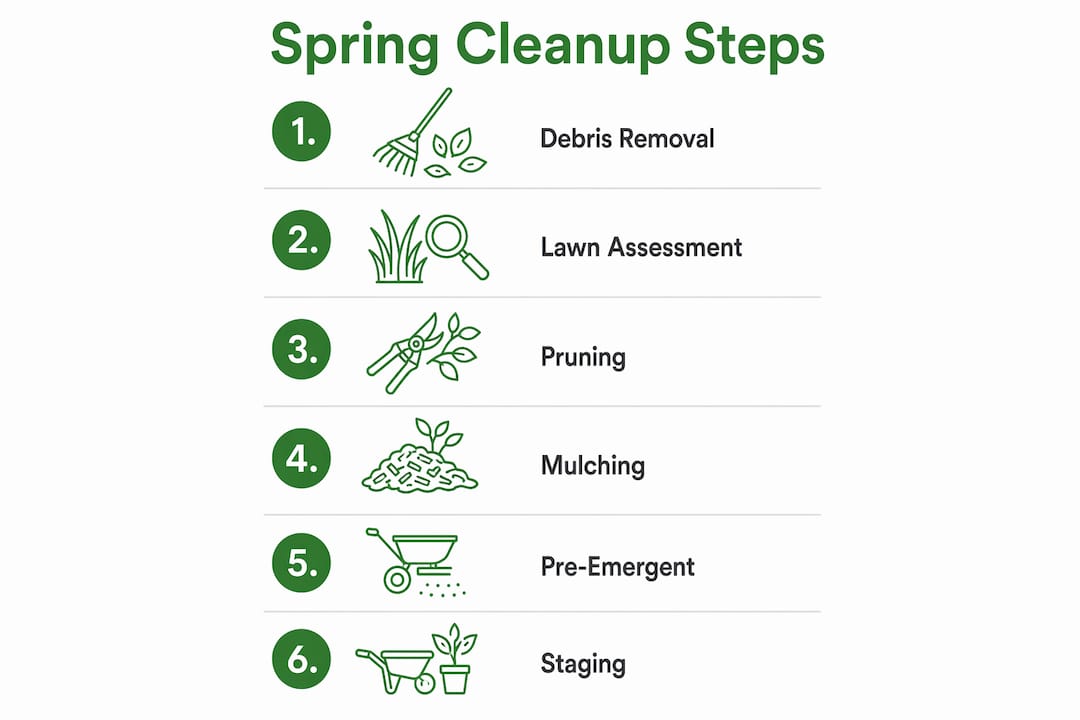
Spring exterior maintenance follows a logical sequence. Skipping steps or reordering them costs time and money, so treat this as a structured process rather than a casual weekend project.
Clear winter debris. Remove dead leaves, broken branches, and any waste left by snow removal equipment. Pay particular attention to beds and lawn edges where debris compacts over winter and smothers new growth.
Assess the lawn before touching it. Look for dead patches, thatch buildup, and areas of soil compaction. For cool-season grasses common in Calgary, set mower height to 3 to 3.5 inches on the first cut to avoid scalping stressed turf. Core aeration is worth scheduling once soil temperatures climb above 50°F.
Apply pre-emergent herbicide at the right moment. This is the single most time-sensitive task in your spring cleaning checklist for rentals. Pre-emergent applications must precede weed germination to work at all. Miss the window in Calgary and you face reactive weed treatments that cost two to three times more.
Prune trees and shrubs. Remove dead wood, crossed branches, and any growth encroaching on walkways or structures. For larger trees or anything near power lines, consult commercial tree maintenance best practices before attempting the work yourself.
Clean gutters and downspouts. Spring melt and debris accumulation block drainage and cause fascia rot. Blocked gutters are one of the most common sources of preventable water damage on rental properties. Yearlong covers the full reasoning behind why gutter cleaning matters if you want the detailed case.
Start up and test the irrigation system. Check for cracked lines, misaligned heads, and controller settings. Catching a broken zone in April costs far less than repairing a flooded bed in July.
Inspect fences, walkways, and exterior lighting. Heaved concrete, loose fence posts, and burnt-out lights are liability issues as much as aesthetic ones. Document every defect with photos before tenants move in.
Pro Tip: Take timestamped before-and-after photos of every exterior area during your spring walkthrough. This documentation is your clearest defence if a tenant disputes damage at the end of a lease.
How does timing affect the results of your spring rental cleanup?

Timing is the variable most Calgary landlords underestimate. Getting the sequence right separates a cleanup that holds all season from one that requires expensive follow-up visits.
The pre-emergent window is the most unforgiving deadline. Missing this window forces you into reactive weed control that costs significantly more and delivers worse results. In Calgary, soil temperatures typically reach the germination threshold in late April to early May, so applications need to happen before that point.
Irrigation startup timing matters almost as much. Testing your system in early spring, before peak demand, means any repairs get scheduled on your timeline rather than a plumber’s emergency rate. Scheduling vendors early in spring reduces bottlenecks as summer move-outs and maintenance demands surge. This is a setup phase, not just a busy season.
- Avoid raking on wet soil. Raking should be delayed until soil begins to dry to prevent damage to grass crowns. Flexible leaf rakes cause far less harm than heavy metal rakes on soft spring turf.
- Prune before bud break where possible. Pruning dormant shrubs is cleaner, faster, and less stressful on the plant than cutting actively growing material.
- Batch vendor visits around calendar anchors. Aligning maintenance tasks with recurring calendar events reduces the number of site visits and lowers your operational overhead across the season.
“Spring is a setup phase, not just a busy season. Landlords who schedule early maintain far better control over summer maintenance demand spikes.” — Second Nature
For a deeper look at how to structure your vendor calendar, Yearlong’s guide on maintenance scheduling for property managers walks through the full workflow.
What tools and services do Calgary landlords need for spring cleanup?
Knowing what to buy and when to hire out is the difference between an efficient cleanup and a frustrating one. Here is a practical breakdown.
| Task | DIY tools | When to hire out |
|---|---|---|
| Debris removal | Flexible leaf rake, tarp, wheelbarrow | Large properties or heavy accumulation |
| Lawn prep | Sharp-bladed mower, aerator | Power raking, severe thatch, large areas |
| Pre-emergent application | Broadcast spreader, granular herbicide | If timing or product selection is uncertain |
| Pruning | Hand pruners, loppers, pole saw | Trees near structures or power lines |
| Gutter cleaning | Extension ladder, gloves, hose | Multi-storey buildings, blocked downspouts |
| Irrigation startup | Hose, pressure gauge | Cracked lines, controller faults, zone failures |
For mulch, choose a product suited to Calgary’s climate. Shredded wood mulch applied at 5 to 8 centimetres depth retains moisture through dry summer stretches and suppresses weeds without smothering perennial crowns. Avoid dyed mulch near light-coloured siding as it bleeds in heavy rain.
A basic spring cleanup for a standard single-family rental in 2026 typically costs between $150 and $400, covering debris removal and pre-emergent application, with full exterior scopes completed within one to three days. That cost is modest relative to the tenant turnover and repair costs that a neglected exterior can generate.
Pro Tip: Bundle your gutter cleaning, lawn prep, and bed maintenance into a single vendor visit. Batching jobs cuts your coordination time and often earns a better rate from the service provider.
Calgary lawn spring cleanup services from a local provider familiar with the city’s soil and climate conditions will consistently outperform generic national franchises on both timing accuracy and product selection.
How does outdoor staging during spring cleanup improve rental appeal?
Spring cleanup is also your best opportunity to photograph the property for listings. Tenants form opinions about a rental within seconds of seeing the exterior, and a well-staged outdoor space signals that the property is well managed.
Outdoor spaces cleaned and staged as functional outdoor rooms can boost rental listing appeal and increase tenant interest for the critical summer season. This means treating the deck, patio, and front walkway as intentional spaces rather than afterthoughts.
- Decks and patios: Power wash surfaces, tighten loose boards, and apply a fresh coat of sealant if the wood looks grey or weathered. A clean deck photographs dramatically better than a stained one and signals quality to prospective tenants.
- Walkways and entry areas: Clear moss, sweep joints, and replace any cracked pavers. The path from the street to the front door is the first physical experience a tenant has with your property.
- Beds and borders: Fresh mulch and a few seasonal plantings, such as ornamental grasses or early perennials, add colour without requiring ongoing maintenance. This is low-cost staging with a high visual return.
- Exterior lighting: Replace burnt-out bulbs and clean fixture lenses. Functional lighting improves both safety and the perceived quality of the property in evening photos.
Refreshing decks and patios as outdoor rooms during spring cleanup significantly enhances rental property marketing photos and tenant experience. For properties with shared outdoor areas, this approach also reduces tenant complaints about common space upkeep. Yearlong’s resource on outdoor property upkeep workflow covers how to maintain these spaces consistently through the rental season.
Key takeaways
Effective spring outdoor cleanup for rentals requires precise timing, the right tools, and a staging mindset that treats the exterior as a direct driver of tenant attraction and property value.
| Point | Details |
|---|---|
| Pre-emergent timing is non-negotiable | Apply before weed germination in late April or early May to avoid reactive treatments costing two to three times more. |
| Document every exterior condition | Before-and-after photos taken during spring cleanup protect landlords from end-of-lease damage disputes. |
| Batch and schedule vendor visits early | Booking spring services ahead of summer demand prevents bottlenecks and keeps costs predictable. |
| Stage outdoor spaces for listings | Clean decks, fresh mulch, and functional lighting directly improve listing photos and tenant interest. |
| Mow at the correct height first | Set mower blades to 3 to 3.5 inches on the first cut to protect cool-season Calgary turf from scalping stress. |
What I’ve learned from years of spring cleanups on Calgary rentals
Most landlords treat spring cleanup as a chore to get through. The ones who get the best return on their properties treat it as an audit. There is a real difference.
When you walk a property in April with a checklist and a camera, you are not just cleaning. You are establishing a baseline condition record, identifying deferred maintenance before it becomes an emergency, and setting clear expectations for the season ahead. Documenting exterior conditions with before-and-after photos is not just good practice. It is your clearest protection when a tenant disputes what was pre-existing and what was caused by their occupancy.
The other mistake I see repeatedly is late scheduling. Landlords wait until May to book lawn care, pruning, and gutter cleaning, then wonder why vendors are backed up until July. Industry best practices suggest scheduling three to four deep exterior cleanups yearly to maintain curb appeal and reduce long-term damage. That cadence only works if you book ahead.
Spring cleanup also reveals patterns. If the same fence section heaves every year, that is a drainage problem, not a fence problem. If the same bed fills with weeds despite pre-emergent applications, the product timing or coverage is off. Paying attention to these patterns over two or three seasons lets you make targeted fixes rather than repeating the same reactive work annually. That is where the real cost savings live.
— Lewie
Let Yearlong handle your spring rental cleanup in Calgary
Calgary landlords managing one property or a full portfolio know that spring is the season where deferred maintenance becomes expensive. Yearlong has been handling spring outdoor cleanup for Calgary rental properties since 2017, with local knowledge of soil conditions, weed pressure timing, and the specific challenges that come with the city’s climate.

From lawn care and yard cleanup to bed maintenance and seasonal mulching, Yearlong offers flexible service packages built around landlord schedules, not contractor convenience. Whether you need a single spring visit or a full-season maintenance programme, the team provides fast scheduling, transparent pricing, and a satisfaction guarantee. Contact Yearlong today to book your spring cleanup before the summer rush fills the calendar.
FAQ
What does spring outdoor cleanup for a rental property include?
Spring outdoor cleanup for rentals typically covers debris removal, lawn assessment and first mowing, pre-emergent herbicide application, pruning, gutter cleaning, irrigation startup, and exterior inspection of fences, walkways, and lighting.
When should Calgary landlords apply pre-emergent herbicide?
Pre-emergent herbicide must be applied before weed germination, which in Calgary typically occurs when soil temperatures rise in late April to early May. Missing this window forces reactive weed treatments that cost two to three times more.
How much does a professional spring cleanup cost for a rental property?
A basic spring cleanup for a standard single-family rental in 2026 costs between $150 and $400, covering debris removal and pre-emergent application, with most full exterior scopes completed within one to three days.
Should landlords hire out spring cleanup or do it themselves?
Tasks like debris removal and basic mowing are straightforward DIY work, but pruning near structures, irrigation repairs, and multi-storey gutter cleaning are best handled by professionals to avoid safety risks and property damage.
How does spring cleanup affect tenant satisfaction and rental income?
A well-maintained exterior signals quality management, reduces tenant complaints about outdoor spaces, and produces better listing photos. Staged outdoor areas, including clean decks and fresh mulch, directly support faster tenant placement and stronger rental interest.