

TL;DR:
- Proper snow removal equipment selection depends on property size, snow volume, and surface type.
- Manual tools are affordable and effective for light snow, while powered blowers are better for large volumes.
- Combining quality basic tools with professional help offers a cost-effective, reliable snow clearance strategy.
Every winter, Calgary homeowners face the same exhausting cycle: unpredictable snowfalls, icy driveways, and a garage full of tools that may or may not be up to the job. Calgary’s climate is unforgiving, delivering everything from light dustings to heavy, wet dumps that can bury a driveway overnight. Picking the right snow removal equipment is not just about convenience — it directly affects your safety, your property, and how much energy you spend each season. This guide walks you through the main equipment types, how to evaluate them honestly, and when it makes more sense to call in the professionals.
Table of Contents
- Key criteria for choosing snow removal equipment
- Manual snow removal tools: Shovels, scrapers, and pushers
- Powered equipment: Snow blowers and snow throwers
- Specialty and accessory tools: Roof rakes, ice choppers, and treatments
- Should you hire a snow removal service?
- A local perspective on smart snow removal
- Get expert snow removal help in Calgary
- Frequently asked questions
Key Takeaways
| Point | Details |
|---|---|
| Match tools to tasks | Consider property size, snow type, and effort when choosing equipment for Calgary winters. |
| Prioritise safety and efficiency | Quality gear and accessory tools help reduce injuries and keep walkways clear all season. |
| Powered options pay off | Snow blowers or throwers can be worth the investment for frequent, heavy snowfalls. |
| Hybrid approach works best | Using both personal equipment and pro services offers flexibility for unpredictable Calgary weather. |
Key criteria for choosing snow removal equipment
Before you buy anything, it helps to think clearly about what you actually need. Selecting equipment workflow is a critical first step for Calgary homeowners because the wrong tool wastes both money and effort. Start with your property’s layout. A compact townhouse driveway calls for a different solution than a wide, double-car driveway on a large lot.
Here are the core criteria to consider when evaluating any snow removal tool:
- Snowfall volume: How many centimetres typically fall at once in your area?
- Surface types: Concrete, interlock, asphalt, and wood each react differently to tools and treatments.
- Physical effort required: Are you comfortable with heavy lifting, or do you need a lower-impact option?
- Storage space: Gas snow blowers take up significant room; compact tools are easier to store.
- Budget: Upfront cost matters, but factor in long-term maintenance too.
Calgary’s snow is notorious for being dense and wet, especially during spring storms. That moisture adds significant weight to each scoop. Equipment that handles dry prairie snow with ease can feel completely inadequate when Calgary throws a classic heavy dump your way. Durability and ergonomic design are not luxuries here — they are practical necessities.
For safer winter strategies, always match tool intensity to task. A lightweight plastic shovel on a heavy, icy surface is a fast track to injury and frustration.
Pro Tip: Do not make your decision based on price alone. A cheaper tool that causes back strain or scratches your driveway surface ends up costing more in the long run.
Manual snow removal tools: Shovels, scrapers, and pushers
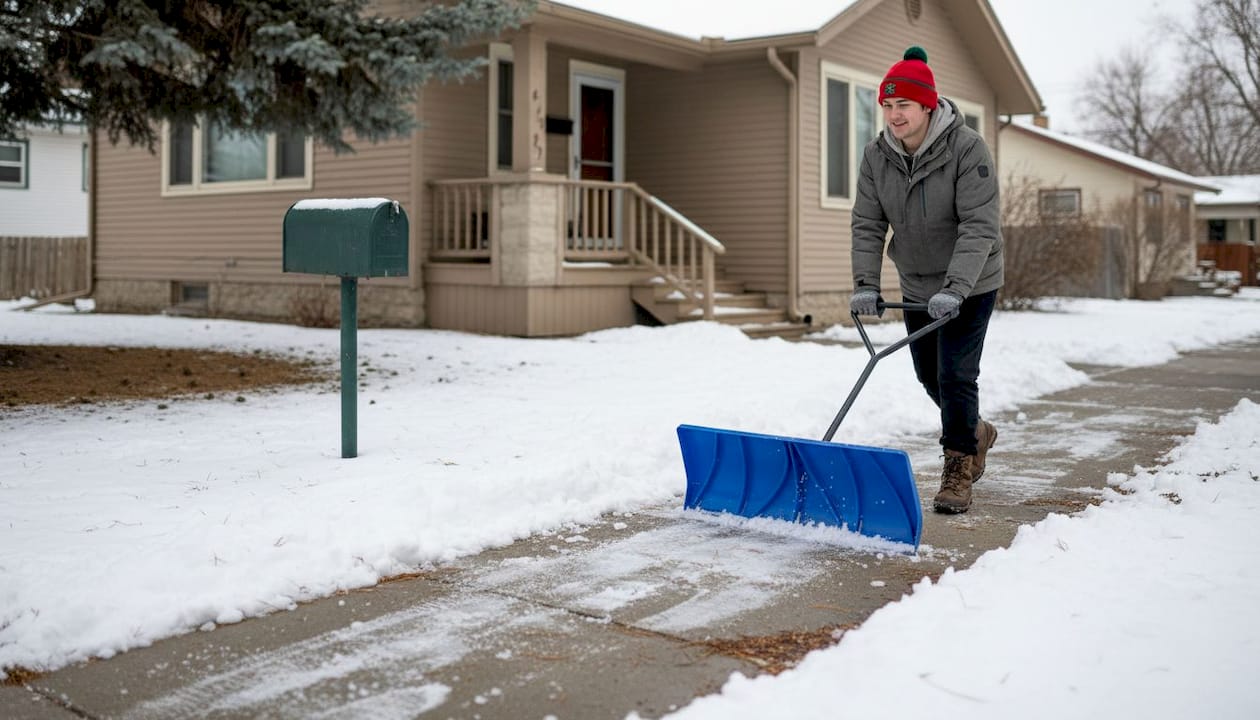
For most Calgary homeowners, manual tools are still the backbone of winter maintenance. They are affordable, easy to store, and perfectly adequate for lighter snowfalls or quick cleanups. Understanding which type to reach for makes a real difference.
Types of shovels to know:
- Ergonomic shovels: Curved or bent handles reduce the need to bend your back. These are ideal for heavy, wet snow.
- Poly (plastic) blade shovels: Lightweight and easy to push, but can crack in extreme cold.
- Metal blade shovels: More durable for chopping through compacted snow and ice, but heavier to use.
- Combo shovels: Feature a metal edge on a poly blade — offering the durability of metal with reduced overall weight.
Separate from shovels, snow pushers are wide, lightweight tools designed to push rather than lift snow. They are excellent for clearing large flat areas quickly when snow is loose and light. Walkway scrapers have a sharp, narrow blade for breaking up ice and compacted snow on tight pathways.
An ergonomic shovel can reduce spinal strain by up to 16% compared to a straight-handled model, making it a worthwhile upgrade for anyone with back concerns.
As noted in Calgary’s heavy snowfall guidance, certain shovel types are simply more effective when the snow is dense and accumulates quickly. Choosing correctly matters.
Pros of manual tools:
- Low upfront cost
- No fuel or electricity needed
- Easy to store and maintain
Cons of manual tools:
- Physical demand increases with heavy snow
- Slower on large surfaces
- Risk of overexertion and injury if used incorrectly
Pro Tip: Use a snow pusher for anything under 10 centimetres of light, fluffy snow. Save your combo or ergonomic shovel for the heavier, wetter stuff. You will finish faster and feel better afterward. You can also browse outdoor cleanup equipment options to round out your seasonal toolkit.
Powered equipment: Snow blowers and snow throwers
When snowfall gets serious, a machine starts to look very appealing. Snow blowers simplify snow removal dramatically for larger properties, and they can handle the kind of volume that would take hours to manage manually.
There are two main categories to understand:
Single-stage snow throwers: Lighter, more compact, and typically electric or battery-powered. These auger (rotating blade) units scoop and throw snow in one motion. They work well on paved surfaces with up to 20 to 25 centimetres of snow.
Two-stage snow blowers: Heavier gas-powered machines that use an auger to break up snow and a separate impeller to throw it. These handle deep, wet, or compacted snow with ease and are ideal for longer driveways.
| Feature | Single-stage thrower | Two-stage blower |
|---|---|---|
| Price range | $300 to $700 | $700 to $2,000+ |
| Max snow depth | 20 to 25 cm | 50 cm or more |
| User effort | Low to moderate | Low |
| Best surface | Paved driveways | All surfaces |
| Power source | Electric or battery | Mostly gas |
For mid-to-large residential properties, steep driveways, or homeowners with mobility concerns, a two-stage blower is often worth the investment. Electric models are quieter, require less maintenance, and are better for the environment — but they lose effectiveness in very deep or wet snow.
Here is a simple list for end-of-season maintenance to keep your machine in shape:
- Run the unit until fuel is depleted (for gas models) before storing.
- Clean off salt, snow, and debris from all surfaces.
- Check belts and auger blades for wear.
- Lubricate moving parts per the manufacturer’s instructions.
- Store in a dry location, ideally indoors or under a weatherproof cover.
If you want help with ongoing upkeep, maintain equipment reminders and professional service options are available through local Calgary providers.
Specialty and accessory tools: Roof rakes, ice choppers, and treatments
Once your driveway and walkways are cleared, there are still areas of your property that deserve attention. Neglecting them can lead to real structural and safety problems.
Roof rakes are long-handled tools designed to pull snow off roof edges without you needing to climb up. Roof snow removal can prevent ice damming and property damage, particularly on homes with lower-pitched roofs or poor insulation. Ice dams form when snow melts, refreezes at the eaves, and forces water back under shingles.
Ice choppers have a heavy, flat or pointed blade for breaking up stubborn ice patches. Use them with care on concrete — aggressive use can chip or crack the surface.
Surface treatments add another layer of protection:
| Tool or treatment | Purpose | Typical use case |
|---|---|---|
| Rock salt | Melts ice quickly | Paved driveways and walkways |
| Pet-safe ice melt | Melts ice without harming animals | Homes with dogs or cats |
| Sand | Adds traction without melting | Icy steps and slopes |
| Roof rake | Removes roof snow | Preventing ice damming |
| Ice chopper | Breaks compacted ice | Thick ice patches on walks |
For outdoor cleaning options that go beyond snow, consider scheduling a thorough surface treatment plan before freeze-up each year.
When to call in professionals instead of handling it yourself:
- Ice buildup is more than 5 centimetres thick on the roof
- Your roof pitch is steep or the surface is fragile
- You have limited mobility or health conditions
- Ice chopping has already damaged your concrete
- Weather is extreme and conditions are unsafe for solo work
Should you hire a snow removal service?
This is the question many homeowners avoid until a bad storm forces the issue. Both DIY and professional snow removal have genuine benefits — the right choice depends on your situation.
Here are four key questions to guide your decision:
- How large is your property? Larger driveways, multiple walkways, and acreage properties are harder to manage alone.
- Do you have the physical capacity? Snow shovelling is demanding cardio work. Anyone with heart conditions or back problems should think carefully.
- How reliable is your timing? Professionals commit to clearing within a set window after snowfall — no delays because you overslept or had a work conflict.
- What is the true cost comparison? Factor equipment purchase, maintenance, fuel, and your time against service pricing.
Pros of DIY snow removal:
- Full control over timing and thoroughness
- No recurring service cost once equipment is purchased
- Suitable for smaller properties with moderate snowfall
Cons of DIY snow removal:
- Physical effort and injury risk
- Equipment maintenance and storage requirements
- Unpredictable demand during heavy storm seasons
Review industry standards to understand what professional clearing should look like and what you are entitled to expect from a reputable service.
Pro Tip: During Calgary’s harshest months, a hybrid approach often works best. Handle lighter snowfalls yourself and book a professional service for major storms. You reduce costs while keeping your property reliably clear.
A local perspective on smart snow removal
After years of working with Calgary homeowners, one pattern stands out clearly: people routinely overbuy equipment. There is an instinct to go big, assuming a heavier, more powerful blower will solve everything. In practice, oversized machines are harder to manoeuvre in tight spaces, more expensive to maintain, and often sit idle most of the season.
Another overlooked problem is improper storage. Tools left exposed to freeze-thaw cycles degrade quickly. Poly blades crack, metal components rust, and engine seals dry out. Investing in quality gear only pays off if that gear is stored correctly at season’s end.
The most effective approach we have seen is a sensible mix: a quality ergonomic shovel, a sturdy pusher, and occasional professional backup for the heavy events. Following local winter strategies tailored to Calgary’s specific conditions will serve you better than any single expensive machine. Simple, well-maintained tools paired with professional help when it counts — that combination outlasts and outperforms the overbuilt setup every time.
Get expert snow removal help in Calgary
If the equipment decisions feel overwhelming, or if you simply want the peace of mind that comes with reliable, professional clearing, YearLong Property Maintenance is here to help.

Our Calgary snow removal services cover residential driveways, walkways, and surrounding surfaces with prompt, dependable results after every significant snowfall. We know Calgary winters because we work through them every year. If you want to start the season prepared, our Calgary snow tips resource is a great starting point before you decide on a full service plan. Reach out for a quote and let us take snow removal off your to-do list entirely.
Frequently asked questions
What is the best type of snow shovel for heavy Calgary snow?
A sturdy ergonomic or combo shovel works best for heavy, wet Calgary snow. The curved handle protects your back while the reinforced blade handles heavy snowfall without splitting or bending under pressure.
Are electric snow blowers effective for Calgary winters?
Electric snow blowers handle light-to-moderate snowfall well and are easy to maintain. For deep or wet snow, gas models deliver more consistent power and clearing capacity.
How can I prevent ice buildup on my driveway?
Regular snow clearing right after snowfall prevents compaction and ice formation. Using pet-safe ice melt, rock salt, or sand adds traction, and preventing ice damming on your roof protects against water infiltration at the eaves.
When should I consider hiring a snow removal service?
Hire a service if you have health concerns, a large or complex property layout, or need guaranteed clearing windows during heavy storms. Professional services offer consistency that DIY equipment cannot always match when Calgary’s worst storms hit.