

TL;DR:
- Small commercial property maintenance involves ongoing care of building systems, exteriors, and safety, not just seasonal tasks. Emphasizing preventive maintenance reduces costs, improves safety, and extends asset life through organized scheduling and vendor coordination. Integrating safety with aesthetic upkeep results in safer, more valuable Calgary properties that require strategic planning and reliable service providers.
If you only call a contractor when something breaks, you are already behind. Small commercial property maintenance is the ongoing, planned care of every building system, shared space, and exterior element that keeps your property safe, functional, and attractive year-round. Most property owners in Calgary treat it as a reaction to problems rather than a prevention of them, and that misunderstanding is exactly what leads to surprise repair bills, unhappy tenants, and liability headaches in the middle of a January cold snap. This guide breaks it all down.
Table of Contents
- What exactly is small commercial property maintenance?
- The critical role of preventive versus reactive maintenance
- Planning and scheduling maintenance for year-round upkeep in Calgary
- Coordinating vendors and tracking maintenance for small commercial properties
- A fresh take: why emphasising safety and coordination beats just aesthetics in Calgary maintenance
- How yearlong.ca supports your Calgary commercial property maintenance needs
- Frequently asked questions
Key Takeaways
| Point | Details |
|---|---|
| Comprehensive maintenance | Small commercial property maintenance includes preventive, corrective, cosmetic, and compliance tasks to keep buildings safe and functional. |
| Preventive focus | Scheduled preventive maintenance reduces emergency repairs, lowers costs, and extends the life of building systems. |
| Year-round scheduling | Organizing maintenance by daily, weekly, monthly, quarterly, and annual tasks ensures consistent upkeep tailored to Calgary’s climate. |
| Vendor coordination | Managing multiple service providers carefully prevents missed or duplicated tasks and improves maintenance effectiveness. |
| Safety over aesthetics | Balancing curb appeal with seasonal safety and liability reduction is critical for long-term property value and tenant satisfaction. |
What exactly is small commercial property maintenance?
Small commercial property maintenance covers both the physical upkeep and management of building systems, safety, and appearance. That is a broader definition than most people expect. It is not just mowing the grass in summer and shovelling snow in winter. It is a continuous programme of tasks that keeps your property operating the way tenants, customers, and regulators expect it to.
Understanding property maintenance terms helps here, because the field divides work into distinct categories. Maintenance categories typically include routine, preventive, corrective, cosmetic, and compliance-focused tasks. Each one plays a different role, and neglecting any category creates gaps that compound over time.
Here is a practical breakdown of what each category actually involves:
- Routine maintenance: Regular cleaning, janitorial services, and minor upkeep that happens on a predictable cycle.
- Preventive maintenance: Scheduled inspections and servicing of mechanical systems, roofing, plumbing, and exterior elements to catch problems before they escalate.
- Corrective maintenance: Repairs triggered after a fault or failure, such as fixing a broken gate latch or repairing cracked pavement.
- Cosmetic maintenance: Painting, landscaping, bed maintenance, and exterior cleaning that protect your property’s visual appeal and first impression.
- Compliance maintenance: Safety inspections, fire system checks, and documentation required to meet municipal regulations and insurance obligations.
Small commercial properties face a specific challenge here. You are often managing all five categories with a short list of vendors and a tight budget. Knowing how to streamline maintenance steps across those categories is what separates properties that run well from those that always seem to have something going wrong.
The critical role of preventive versus reactive maintenance
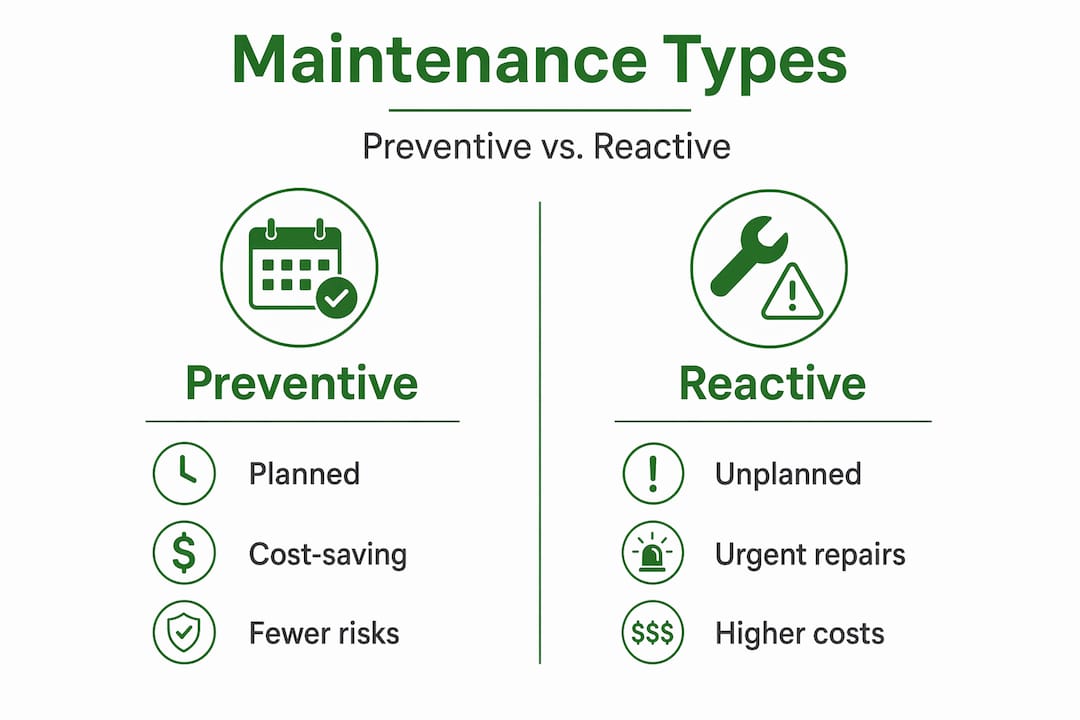
Understanding maintenance types sets you up to organise your property’s upkeep effectively. The distinction between preventive and reactive work is where most small property owners either save money or lose it.
Preventive maintenance is more cost-effective, reduces emergency repairs, and extends equipment life. The evidence behind that claim is striking. Structured preventive schedules can reduce unplanned repairs by 67% and emergency costs by up to 85%. For a small commercial property in Calgary, where a frozen pipe or an unsalted walkway can mean both a repair bill and a personal injury claim, those numbers matter.
| Preventive maintenance | Reactive maintenance | |
|---|---|---|
| Timing | Scheduled before failures occur | Triggered after a failure |
| Cost | Lower over time | Higher per incident |
| Disruption | Minimal, planned | Often urgent and disruptive |
| Risk | Lowers liability exposure | Increases safety and liability risk |
| Best for | HVAC, exteriors, fire systems | Unexpected breakdowns only |
Most well-run small properties use a hybrid approach. In-house staff or a property manager handles daily and weekly routines, while licensed specialists cover quarterly and annual work like HVAC servicing, electrical inspections, and fire safety checks. The key is documenting it all. Using maintenance checklists and setting a target completion rate above 90% for scheduled tasks gives you a measurable benchmark and something concrete to review with vendors.
You also want to track your reactive-to-planned work ratio. If more than 20% of your maintenance work is reactive, your preventive programme needs attention. Using maintenance tracking tips to log every task gives you the data to spot those gaps before they become expensive patterns.
Pro Tip: Set a calendar reminder every quarter to review your reactive repair log. If the same issue appears twice in one year, it belongs on your preventive schedule.
Planning and scheduling maintenance for year-round upkeep in Calgary
With a clear schedule, you can manage maintenance systematically and avoid costly surprises. Maintenance tasks are organised on daily, weekly, monthly, quarterly, and annual schedules governed by task complexity and regulatory needs. For Calgary properties, the seasonal extremes add another layer that most generic guides do not account for.
Here is a practical sequence for building your maintenance calendar:
- List every building system and exterior element you are responsible for, from HVAC and plumbing to parking lots and landscaped beds.
- Assign each task a frequency based on manufacturer guidelines, seasonal demand, and local regulations.
- Group tasks by vendor so you can issue consistent work orders and track performance in one place.
- Build in buffer time before Calgary’s heaviest seasons. Snow removal contracts should be signed before October, and spring cleanup should be scheduled before May, when the ground thaws and debris becomes visible.
- Document completions with dates, photos where relevant, and vendor names for each task.
The cost of skipping any tier is significant. Properties that miss any frequency tier experience 40 to 60% higher emergency repair costs and shorter equipment life. That is a direct hit to your operating budget and asset value.
| Frequency | Example tasks |
|---|---|
| Daily | Tenant requests, janitorial checks, safety walk-throughs |
| Weekly | Exterior litter removal, minor repairs, parking lot inspection |
| Monthly | Lighting checks, plumbing inspection, landscape review |
| Quarterly | HVAC servicing, fire extinguisher checks, gutter cleaning |
| Annual | Roof inspection, certifications, full system audits |
Calgary’s climate makes seasonal outdoor tasks essential for both safety and visual appeal. Ice management from November through March is non-negotiable for liability reasons. Spring cleanup sets the tone for the entire growing season. Summer lawn and bed care protects your curb appeal when foot traffic is highest. And fall prep, clearing leaves, sealing concrete, and winterising irrigation, is what prevents the damage that shows up in spring. Year-round maintenance planning and attention to groundskeeping and landscaping are not optional for Calgary properties. They are part of operating responsibly.
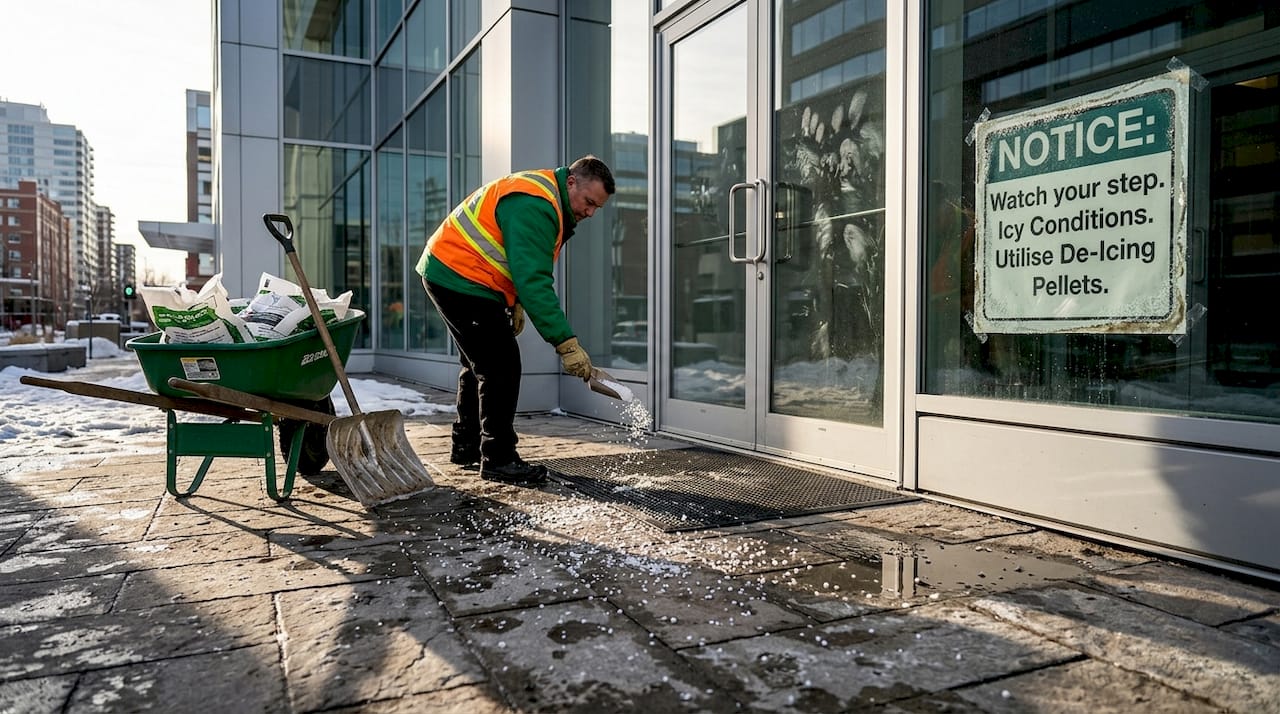
Pro Tip: Book your snow removal and spring cleanup services together in September. Many Calgary providers offer better pricing when you commit to both, and you will have confirmed coverage before the first snowfall.
Coordinating vendors and tracking maintenance for small commercial properties
Now that you know how to schedule tasks, let us explore how better coordination and tracking protect your investment. Even a small commercial property typically involves at least four or five different service providers: a landscaper, a snow removal company, an HVAC technician, an electrician, and possibly a janitorial service. Managing them individually without a system is where maintenance programmes fall apart.
Small commercial property maintenance often involves managing multiple vendors for groundskeeping, mechanical, electrical, and safety inspections. Each vendor has their own schedule, invoicing cycle, and scope of work. Without a central log or coordination point, tasks get duplicated, missed entirely, or completed by the wrong party at the wrong time.
Here is what an effective coordination approach looks like in practice:
- Assign a single point of contact for each vendor and keep their licence and insurance details on file.
- Use a shared task log (even a simple spreadsheet works for smaller properties) where every scheduled task is listed with a due date and a completion field.
- Set response time expectations in writing. For urgent issues, 24 hours is a reasonable standard. For routine requests, 48 to 72 hours is typical.
- Review vendor performance quarterly against your completion targets and response times.
- Communicate proactively with tenants about scheduled maintenance so they are not caught off guard by a crew arriving to service the exterior or a system shutdown for inspection.
Tracking KPIs like preventive maintenance completion and reactive-to-planned work ratios improves service quality and asset value. These are not metrics reserved for large property portfolios. A small office building with three tenants benefits from the same accountability framework as a 20-unit commercial complex.
The maintenance workflow for outdoor services especially rewards coordination. Snow removal, for example, must integrate with parking lot access needs and tenant hours. Lawn care scheduling should account for events or deliveries. When you treat outdoor maintenance checklists as living documents rather than static to-do lists, your property runs noticeably better.
Pro Tip: Add a short vendor review note to every invoice you pay. Over time, this creates a performance record that helps you make informed decisions when contracts come up for renewal.
A fresh take: why emphasising safety and coordination beats just aesthetics in Calgary maintenance
Here is what most property maintenance guides do not say plainly: looking good is not the same as running well.
Many owners over-focus on aesthetics and under-allocate resources for seasonal safety and liability risks like slip hazards and perimeter upkeep. That is backwards. A beautifully landscaped property with an unsalted walkway in February is a liability waiting to happen. In Calgary, where a freeze-thaw cycle can leave black ice overnight, the safety argument for maintenance is far more compelling than the curb appeal argument.
The deeper issue is that small property owners often treat maintenance as a collection of one-off tasks rather than an integrated system. You call the snow removal company in November. You call the landscaper in May. But who is watching the transition between those seasons? Who catches the drainage issue that causes ice to form at your entrance every spring? That gap exists because there is no coordination layer.
What actually works is treating your property the way a portfolio manager treats a set of assets. Every system has a lifecycle. Every exterior element has a seasonal vulnerability. The goal is to minimise unplanned failures not by spending more money, but by spending the right money at the right time on the right tasks. That thinking, combined with clear vendor accountability and a decent tracking system, is what separates properties that hold their value from those that slowly deteriorate between reactive repairs.
Looking at landscaping versus safety decisions, the best properties in Calgary do not choose between them. They build a maintenance programme where curb appeal and safety reinforce each other. A well-maintained lawn bed discourages water pooling. Clean concrete resists cracking. Trimmed shrubs improve sight lines and reduce slip hazards near building entrances. When you plan with both goals in mind, the result is a property that looks professional and operates safely all year.
How yearlong.ca supports your Calgary commercial property maintenance needs
If this guide has made one thing clear, it is that small business property upkeep in Calgary demands more than seasonal good intentions. It requires a plan, reliable partners, and services that actually show up when the work needs to be done.
YearLong Property Maintenance has been supporting Calgary property owners since 2017 with outdoor services built around the demands of this climate. From professional lawn care Calgary in the growing season to dependable Calgary snow removal services through the winter, and thorough lawn bed maintenance Calgary that keeps your property looking sharp between seasons, YearLong covers the outdoor side of your commercial property upkeep checklist with consistency and accountability. Flexible service packages and a satisfaction guarantee mean you are not locked into a one-size-fits-all contract.
Frequently asked questions
What is the difference between preventive and reactive maintenance?
Preventive maintenance involves scheduled inspections and servicing to reduce failures, while reactive maintenance addresses issues after they occur. Preventive work costs less over time and keeps your property safer.
How often should maintenance tasks be scheduled for small commercial properties?
Most commercial properties follow a structured maintenance schedule covering daily through annual tasks, with frequency determined by system complexity and safety requirements. Missing any tier significantly increases emergency repair costs.
Why is vendor coordination important in small commercial property maintenance?
Managing different vendors without a tracking system leads to missed or duplicated work, creating gaps in your maintenance coverage and increasing the risk of safety issues or costly repairs. A central task log solves this quickly.
What are common seasonal maintenance concerns for Calgary commercial properties?
Seasonal routines in Calgary must address snow and ice management for tenant safety, landscaping for curb appeal, and system inspections to protect against the city’s significant temperature swings. Ice control from late October through March is the highest-liability item on the list.
How can small commercial property owners measure maintenance success?
Operational excellence frameworks set measurable targets like preventive maintenance completion above 90% and reactive-to-planned work ratios below 20%. Tracking these numbers turns maintenance from guesswork into a managed, improvable system.