

TL;DR:
- Gravel yards require ongoing maintenance like raking, regrading, weed control, and gravel top-ups.
- Proper drainage and grading are essential to prevent pooling, erosion, and shifting surfaces.
- Consistent seasonal care and professional help when needed keep gravel yards attractive and functional.
Gravel yards have a reputation in Calgary for being the easy, low-maintenance alternative to grass. And in many ways, that reputation is earned — gravel handles our drainage challenges well and cuts down on weekly mowing. But here’s what most homeowners discover too late: a gravel yard left entirely to itself quickly becomes a weedy, uneven mess. Calgary’s intense freeze-thaw cycles and persistent winds do real work on gravel surfaces throughout the year. This guide covers the essential maintenance routines, seasonal tasks, and professional insights that will keep your gravel yard looking sharp and functioning properly without turning yard care into a second job.
Table of Contents
- Understanding gravel yard maintenance: What it is and why it matters
- Core tasks and best practices for gravel yard care
- Managing drainage and grading for lasting results
- Weed prevention and surface renewal techniques
- When to consider professional gravel yard services
- What most guides miss: The art of consistent, seasonal care
- Get professional help for hassle-free gravel yard maintenance
- Frequently asked questions
Key Takeaways
| Point | Details |
|---|---|
| Regular care needed | Gravel yards in Calgary look and perform best with routine raking, inspections, and surface renewal. |
| Drainage is critical | Proper grading and a well-crowned surface prevent water pooling and erosion. |
| Weed control options | Barriers and seasonal herbicides help keep Calgary gravel yards weed-free. |
| Professional help pays off | Experienced crews handle major repairs, tough weeds, and complex grading for long-lasting results. |
Understanding gravel yard maintenance: What it is and why it matters
Gravel yard maintenance means the ongoing, routine care needed to keep a gravel surface draining properly, looking tidy, and staying in its intended place. It covers everything from raking and topping up displaced stone to managing weeds and inspecting drainage grades. The goal is not perfection every single day, but consistent effort that prevents small problems from becoming expensive ones.
Calgary’s climate is particularly hard on gravel surfaces. Our winters bring repeated freeze-thaw cycles, where water seeps between stones, freezes overnight, and then expands. That expansion pushes gravel up and out of place — a process called frost heave. Wind also scatters lighter stones across lawns and walkways, and spring runoff can carve channels right through your surface if drainage is not set up correctly. A solid property upkeep workflow helps you stay ahead of these seasonal pressures rather than reacting to them.
The benefits of proper gravel yard maintenance are straightforward and worth repeating:
- Improved drainage: A well-maintained gravel surface moves water away from your home’s foundation efficiently.
- Weed prevention: Routine care removes weeds before they root deeply and become a much larger problem.
- Lasting curb appeal: A tidy gravel yard adds genuine visual value to your property.
- Cost savings: Small, regular maintenance tasks cost far less than full resurfacing or drainage repairs.
- Extended surface life: Consistent care delays the need for full replacement by years.
The biggest myth worth correcting is that gravel is a “plant it and forget it” solution. As noted in gravel care resources, gravel is superior for drainage and erosion control, but requires consistent effort unlike paved surfaces. Your lawn maintenance checklist should include gravel zones just as it includes grass zones — both need seasonal attention.
A gravel yard treated like a finished project, not a living surface, will cost you more in the long run than the grass lawn you replaced.
Now that you see why not all gravel yards are truly low-care, let’s get specific about essential maintenance routines.
Core tasks and best practices for gravel yard care
Keeping a gravel yard in top shape involves a predictable set of tasks spread across the calendar. None of them are complicated, but the timing and consistency matter a great deal in Calgary’s climate.
Here are the core maintenance tasks, in order of priority:
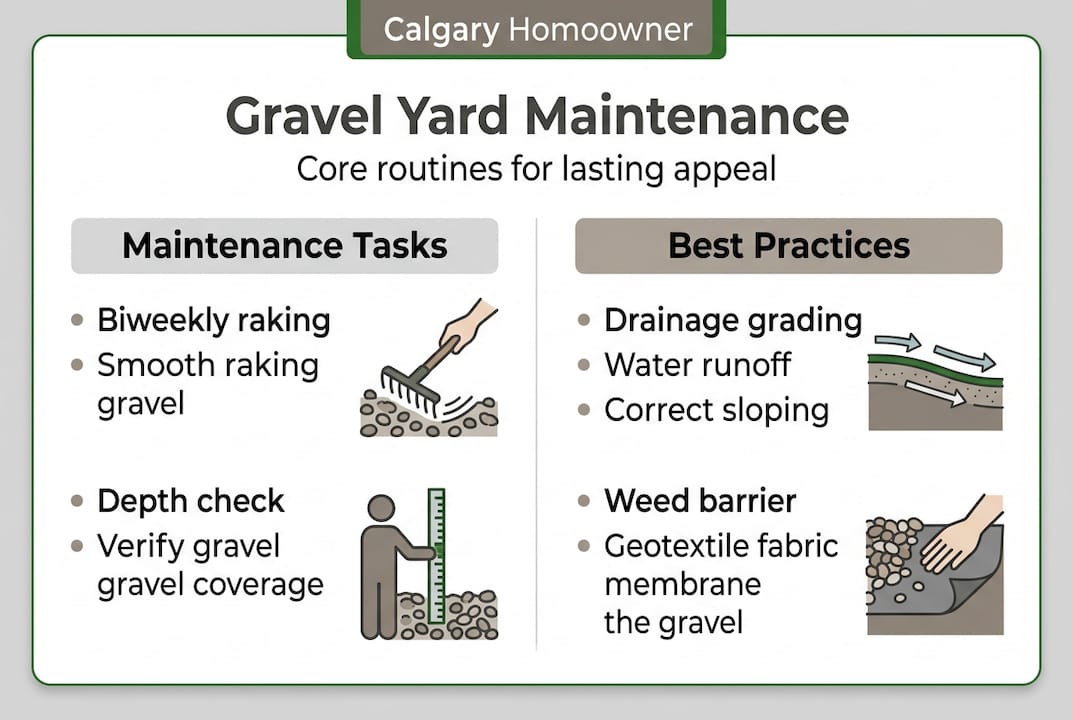
- Rake high-traffic areas biweekly: Raking keeps the surface level, prevents compaction, and redistributes displaced stones. Concentrate on driveways, pathways, and areas near gates where foot and vehicle traffic causes the most movement.
- Inspect for frost heave every spring and fall: After winter, walk the entire surface and look for raised sections, sunken spots, or edges that have shifted. Early fall inspection before freeze-up lets you correct issues before they worsen.
- Apply pre-emergent herbicide in spring: This is the most cost-effective weed control step you can take. Applied before weed seeds germinate, it dramatically reduces your summer weeding workload. Review our spring clean-up tips for the right timing in Calgary.
- Top up gravel as needed: Surfaces thin over time from displacement and compaction. Add fresh stone to match the existing type and colour.
- Re-grade and tighten edges: Use a flat-bladed tool or a box blade to push gravel back into shape and restore clean borders along beds and walkways.
For timing and depth, the benchmarks are clear: maintain a 3-4 inch compacted surface layer, refresh driveways every one to two years, and refresh patio or yard areas every two to three years. Inspecting twice yearly, in spring and fall, keeps small problems from compounding. Following a solid fall clean-up checklist ensures you do not miss gravel zones when preparing for winter.
Leading gravel care guidance confirms that biweekly raking for high-traffic areas, spring and fall inspections for frost heave displacement, pre-emergent herbicides in spring, and tools like box blades for regrading are the key methodologies for lasting results. Your fall yard prep routine should include gravel inspection as a standard step.
Pro Tip: When you top up gravel, always order from the same source and specify the same stone type and size. Mixing different gravels creates an uneven, patchy look and can actually disrupt drainage performance.
With a sense of the essential tasks, it’s important to understand how grading and drainage set the foundation for gravel yard success.
Managing drainage and grading for lasting results
Drainage is not just a detail — it is the whole point of a gravel surface. If your yard does not drain correctly, you will face pooling water, erosion, and a surface that shifts and sinks in ways that are expensive to repair.
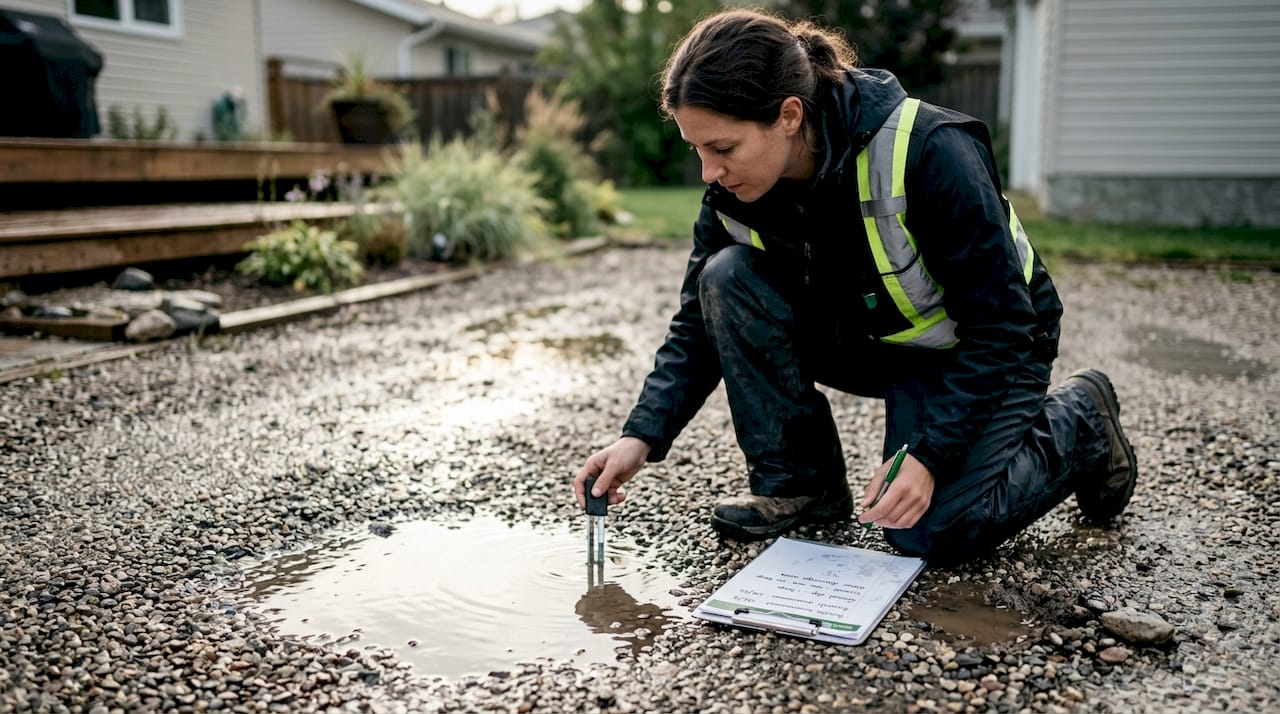
The standard grading requirement is a crowned surface at 1/2 inch per foot (a 4% slope), with edge swales and clear channels to prevent water from pooling. A swale is simply a shallow channel or depression along the yard’s edge that directs water away from the surface and toward a safe discharge point.
| Slope percentage | Drainage performance | Risk level |
|---|---|---|
| Less than 2% | Poor, prone to pooling | High |
| 2-4% | Adequate for light use | Moderate |
| 4-6% (ideal) | Excellent drainage | Low |
| More than 6% | Risk of vehicle drift | High |
As gravel road experts note, avoid over-crowning above 6% to prevent vehicle drift, and use gravel grids to reduce displacement in high-movement areas. Gravel grids are interlocking plastic panels placed beneath the stone layer that lock gravel in place and greatly extend the life of the surface.
Beyond slope, here are the drainage essentials every Calgary homeowner should check:
- Edge restraints: Solid borders keep gravel from migrating into lawns or garden beds.
- Permeable base layer: A compacted base of road crush beneath decorative gravel allows water to pass through rather than puddle.
- Swale inspection: After any significant Calgary rainstorm or snowmelt event, walk your swales to confirm they are clear and flowing.
- Gravel grid installation: Particularly useful in driveways and areas with vehicle traffic.
Our team has worked in neighbourhoods across the city, including providing grading expertise and professional grading services to homeowners dealing with exactly these drainage challenges.
Pro Tip: After a heavy rain, walk your gravel yard within 24 hours and look for any areas where water is still sitting. That standing water tells you exactly where your drainage grade needs attention.
Now that yard owners understand grading and drainage, weed control becomes the next crucial step toward an easy-care yard.
Weed prevention and surface renewal techniques
Weeds in a gravel yard are not just unsightly. They push stones apart, trap moisture, and, once established, are genuinely difficult to eliminate. Prevention is always easier than removal.
| Method | Effectiveness | Best for Calgary timing |
|---|---|---|
| Landscape fabric barrier | High, long-term | Install before gravel placement |
| Polymeric sand fill | Moderate, aesthetic | Spring installation |
| Pre-emergent herbicide | High, seasonal | April application |
| Manual removal | Low to moderate | Ongoing, after rain |
| Chemical spot treatment | Moderate, reactive | Summer as needed |
Barrier methods work best when installed correctly from the start. Landscape fabric placed beneath the gravel layer blocks weed seeds from reaching soil, while polymeric sand or barriers help manage weeds and support topping up gravel every one to three years, especially for driveways and patios.
For active weed management, apply pre-emergent herbicides in spring before soil temperatures rise above 10°C (around late April in Calgary). This timing is critical — too late and the weeds have already germinated. Our weed prevention methods and surface renewal tips pages have more detail on what works specifically in Calgary’s soil.
When topping up gravel, always match the stone type already in place. This matters both aesthetically and functionally — different stone sizes settle and drain differently, and mixing them creates an uneven surface that is harder to maintain.
- Use the same stone size (typically 3/4 inch crushed or pea gravel for yards)
- Match the colour as closely as possible for visual consistency
- Spread and rake the new layer evenly before compacting lightly
Pro Tip: Take a photo and a small sample of your existing gravel to your supplier. Gravel colours and grades vary by quarry, so having a reference prevents costly mismatches when ordering top-up material.
Having covered surface renewal and weed avoidance, let’s look at signs of when it’s best to call in professional help.
When to consider professional gravel yard services
DIY maintenance works well for routine tasks, but some gravel yard problems genuinely require professional tools and expertise to fix properly.
Here are the clear indicators that it is time to call in a professional:
- Deep ruts or significant surface displacement: These require regrading equipment, not just raking.
- Persistent water pooling after every rain: A drainage grade issue that DIY tools cannot reliably correct.
- Weeds returning quickly despite treatment: May indicate the barrier has failed or was never properly installed.
- Edge collapse or spreading: Gravel migrating into gardens or lawns despite edging efforts.
- Post-winter surface failure: Severe frost heave that has disrupted the base layer entirely.
As gravel maintenance specialists confirm, professionals bring equipment for regrading, have local expertise with Calgary soil, and can spot drainage or weed issues before they escalate. That last point matters — catching a drainage problem early saves thousands in foundation or landscaping repairs later.
Local Calgary services also understand the specific soil types across different neighbourhoods, which affects how bases compact and how water moves through the yard. Our lawn care services page outlines how we approach property-wide maintenance with that local knowledge built in from the start.
The homeowners who call us for major gravel repairs almost always say the same thing: “We thought it would take care of itself.”
With all aspects of gravel yard maintenance covered, it’s time for a fresh perspective on what really makes gravel yards shine in Calgary.
What most guides miss: The art of consistent, seasonal care
Here is the honest truth most gravel guides avoid: when a gravel yard fails, the material is almost never the problem. The gap is in the maintenance rhythm. We see it every season. A homeowner installs a beautiful gravel yard, does a bit of work the first autumn, and then lets it go for two or three years. By then, the weeds are rooted, the grade has shifted, and the whole surface needs far more work than a simple top-up.
The yards that always look good — and truly deliver on the “easy maintenance” promise — share one thing. Their owners, or their maintenance crews, do a little work very consistently across seasons. That spring clean-up perspective is more valuable than any single product or tool. Small efforts matched to Calgary’s freeze-thaw and growth cycles keep problems from building up. Consistent seasonal effort is genuinely cheaper and less disruptive than big, infrequent overhauls. The gravel yard that adds curb appeal year-round is the one that gets checked on regularly, not just when something goes wrong.
Get professional help for hassle-free gravel yard maintenance
Maintaining a gravel yard in Calgary is manageable, but staying on top of seasonal tasks, drainage grades, and weed prevention takes time and the right knowledge. Professional crews handle all of it efficiently, so your yard stays looking its best through every season without the guesswork.

At YearLong Property Maintenance, we bring local Calgary expertise and reliable scheduling to every property we serve. From bed maintenance in Calgary to complete lawn care services and even stone cleaning services, we handle the full range of outdoor upkeep so you do not have to. Get in touch today to discuss a maintenance plan that keeps your gravel yard functional, attractive, and genuinely easy to manage year-round.
Frequently asked questions
How often should I rake my gravel yard in Calgary?
Rake high-traffic areas biweekly to maintain an even surface and prevent compaction from building up over time.
What is the ideal thickness for a gravel yard surface?
Aim to maintain 3-4 inches of compacted gravel for the best combination of durability and visual appearance.
How do I stop weeds from taking over my gravel yard?
Install landscape fabric or polymeric sand barriers beneath the gravel, and apply pre-emergent herbicide every spring before soil temperatures climb above 10°C.
How often should I top up gravel in my yard or driveway?
Add 2-3 inches of matching gravel every 1-3 years, with driveways needing more frequent refreshing than patio or yard areas.
Do I need to regrade my gravel yard after every Calgary winter?
Inspect for frost heave and edge movement every spring and fall; minor regrading may be needed each year depending on how severe winter conditions were in your area.