

Many Calgary business owners assume spring cleanup is just about aesthetics, a quick tidy-up to make properties look presentable. Yet this misconception overlooks the critical role cleanup plays in preventing costly damage, enhancing safety, and directly influencing property value. Proper spring cleanup involves systematic inspection, debris removal, and preparation that set the foundation for a healthy, attractive landscape throughout the growing season. This guide reveals the phased approach, financial benefits, and expert insights that help you make informed decisions about spring cleanup for your commercial property.
Table of Contents
- Key takeaways
- Why spring cleanup is essential for business properties
- Financial and visual benefits of spring cleanup for businesses
- Expert approaches and timing nuances for spring cleanup
- Planning and applying an effective spring cleanup strategy for your Calgary business
- Professional spring cleanup services to support your Calgary business
- Frequently asked questions
Key Takeaways
| Point | Details |
|---|---|
| Phased cleanup approach | Spring cleanup should follow a phased approach with early site inspection, mid spring debris removal, and late preparation to ensure a healthy landscape. |
| Hazard and safety focus | Clearing hazards protects customers and reduces liability from slip and fall incidents. |
| Value and maintenance benefits | Well maintained landscapes can boost commercial property values by five to twenty percent with consistent professional care. |
| Professional services edge | Professional services offer specialized equipment and expertise not available through do it yourself approaches. |
Why spring cleanup is essential for business properties
Spring cleanup serves far more than cosmetic purposes for Calgary commercial properties. After months of harsh winter conditions, your landscape faces salt buildup, compacted soil, dead plant material, and hidden structural damage that threaten both safety and property health. The phased approach to spring cleanup includes early site inspection, mid-spring debris removal, and late preparation for planting or mulch application. This systematic method ensures nothing gets overlooked.
Early inspections reveal winter damage before it escalates. Salt accumulation corrodes concrete and kills vegetation. Compacted soil from snow removal equipment prevents proper drainage, creating pooling water that damages roots and foundations. Identifying these issues in March or early April allows you to address them before they multiply into expensive repairs.
Mid-spring debris removal prevents disease and pest infestations. Dead leaves and plant material harbour fungal spores and insect eggs that spread rapidly once temperatures rise. Removing this organic matter eliminates breeding grounds for problems that compromise plant health throughout the season. Professional services understand which debris to remove immediately and which to leave temporarily for ecological benefits.
Clearing hazards protects customers and tenants whilst reducing liability exposure. Broken branches, damaged walkways, and unstable structures pose serious injury risks. A thorough spring cleanup identifies and addresses these dangers before someone gets hurt. The financial and reputational costs of slip-and-fall incidents far exceed prevention expenses.
Pro Tip: Schedule your initial inspection in late February or early March, before the spring rush. This timing allows you to catch subtle damage like cracked pavement or damaged irrigation systems that worsen rapidly once freeze-thaw cycles intensify.
“A comprehensive spring cleanup is the foundation of year-round landscape health. Skipping this critical phase creates cascading problems that cost exponentially more to fix later.”
The spring cleanup benefits for Calgary properties extend beyond immediate appearance. You create conditions for healthy growth, prevent disease transmission, and establish a maintenance baseline that makes summer upkeep simpler and more cost-effective. Business properties that invest in thorough spring cleanup consistently outperform those that skip or minimise this essential service.
Financial and visual benefits of spring cleanup for businesses
Professional spring cleanup delivers measurable returns that justify the investment for Calgary commercial properties. First impressions shape customer and tenant decisions powerfully. Research shows that 68% of people form opinions about a business based on exterior appearance before entering. A well-maintained landscape signals professionalism, attention to detail, and financial stability. Properties with neglected grounds struggle to attract quality tenants and customers regardless of interior quality.

Property value increases directly correlate with landscape maintenance. Well-maintained commercial landscapes boost values by 5% to 20%, with the higher end achieved through consistent professional care. This appreciation compounds annually, making spring cleanup one of the highest-ROI investments for commercial property owners. When you eventually sell or refinance, appraisers factor landscape condition heavily into valuations.
Preventing disease and pest problems saves substantial money over time. A single fungal outbreak can destroy thousands of dollars worth of plantings and require expensive remediation. Spring cleanup removes the organic debris where pathogens overwinter, breaking disease cycles before they start. Similarly, eliminating pest breeding sites prevents infestations that damage plants and create unpleasant conditions for visitors.
| Annual maintenance investment | Potential repair costs avoided |
|---|---|
| Professional spring cleanup: $800-$1,500 | Disease remediation: $3,000-$8,000 |
| Preventative bed maintenance: $600-$1,200 | Replanting damaged areas: $2,500-$6,000 |
| Regular debris removal: $400-$900 | Liability claims: $10,000-$50,000+ |
| Total preventative: $1,800-$3,600 | Total reactive: $15,500-$64,000+ |
Safety improvements reduce liability exposure significantly. Slip-and-fall accidents on commercial properties generate costly lawsuits and insurance claims. Spring cleanup identifies and eliminates hazards like uneven pavement, protruding roots, and damaged walkways. The legal and financial consequences of a single serious injury dwarf the cost of comprehensive spring maintenance.
Occupancy rates improve when properties maintain attractive, safe grounds. Tenants renew leases more frequently in well-maintained buildings, reducing turnover costs and vacancy periods. The importance of spring yard cleanup extends to tenant satisfaction and retention, which directly impacts your bottom line.
“Preventative maintenance through professional spring cleanup delivers 10:1 or better returns by avoiding expensive repairs, liability claims, and tenant turnover costs.”
The financial wisdom of investing in quality spring cleanup becomes clear when you compare modest annual maintenance costs against potential repair expenditures. Business owners who view spring cleanup as discretionary spending rather than essential investment consistently face higher long-term costs and property degradation.
Expert approaches and timing nuances for spring cleanup
Timing spring cleanup involves balancing competing priorities that experts debate vigorously. Some ecologists advocate delaying cleanup to protect pollinator habitats, leaving light debris and dead plant stems where beneficial insects overwinter. Others emphasise early removal to prevent lawn diseases and fungal spread. Professional services navigate this tension by understanding which debris to remove immediately and which to leave temporarily.
The pollinator preservation argument has merit for certain landscape elements. Native bees and other beneficial insects use hollow plant stems and leaf litter as overwintering sites. Removing all debris too early eliminates these habitats before insects emerge. However, this concern applies primarily to naturalized areas and native plantings, not high-traffic commercial zones where disease prevention and appearance take priority.
Disease control requires removing infected plant material promptly. Fungal spores from last season’s infections survive winter in dead leaves and stems. When spring moisture arrives, these pathogens spread rapidly to new growth. Professional cleanup teams identify diseased material and remove it before spore release, breaking disease cycles effectively.
Specialised equipment makes professional services more effective than DIY approaches. Commercial-grade debris vacuums, power rakes, and soil aerators accomplish in hours what takes days manually. Professionals also recognise subtle damage indicators that untrained eyes miss, catching problems early when repairs cost less.
| Approach | Advantages | Disadvantages |
|---|---|---|
| Professional cleanup | Specialised equipment, expert damage identification, comprehensive results, time-efficient, disease prevention expertise | Higher upfront cost, requires scheduling coordination |
| DIY cleanup | Lower immediate expense, direct control over timing, flexibility for small tasks | Lacks specialised tools, risks missing critical damage, time-consuming, potential for incomplete results |
Pro Tip: Consult with professional services before deciding cleanup timing. They assess your specific property conditions, balance ecological concerns with disease prevention, and recommend optimal scheduling that protects both landscape health and beneficial insects.
The expertise professionals bring extends beyond equipment. They understand Calgary’s unique climate challenges, recognise local pest and disease patterns, and know which plants require special handling. This knowledge prevents costly mistakes that DIY approaches often make, like removing debris too aggressively and damaging emerging perennials.
Outdoor cleanup timing in Calgary depends on multiple factors including snow melt patterns, soil temperature, and specific landscape features. Professionals monitor these variables and adjust timing accordingly, ensuring cleanup happens at the optimal moment for your property’s unique conditions.
The debate between immediate cleanup and delayed approaches ultimately requires informed decision-making based on your property’s specific needs, usage patterns, and landscape composition. Commercial properties with high foot traffic and formal plantings benefit from early, thorough cleanup. Properties with naturalized areas can incorporate selective delays that support pollinators whilst maintaining overall health and appearance.
Planning and applying an effective spring cleanup strategy for your Calgary business
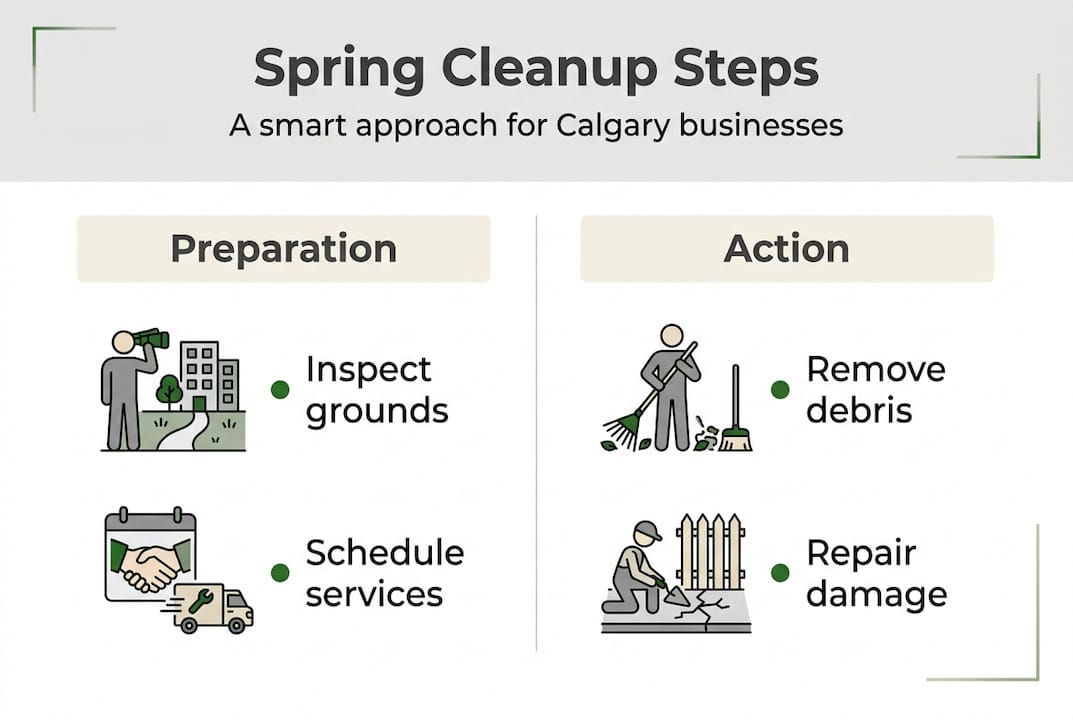
Implementing successful spring cleanup requires systematic planning that addresses your property’s specific needs whilst following proven best practices. This step-by-step approach ensures comprehensive results that set the foundation for a healthy, attractive landscape throughout the growing season.
Conduct early site inspections between late February and mid-March. Walk the entire property documenting winter damage including cracked pavement, damaged irrigation components, broken branches, and areas with excessive salt buildup. Photograph problem areas for reference and prioritise repairs based on safety risks and cost implications. This early assessment allows you to address critical issues before they worsen.
Remove debris and dead plant material during mid-spring, typically late March through mid-April depending on weather. Clear all dead leaves, branches, and winter-killed vegetation from beds, lawns, and hardscapes. Phased cleanup improves efficiency by preventing disease spread and preparing surfaces for subsequent maintenance. Focus on disease-prone areas first, then move to purely cosmetic cleanup.
Prepare soil and beds in late April through early May for planting and mulching. Aerate compacted soil, amend beds with compost, and apply fresh mulch to suppress weeds and retain moisture. This preparation creates optimal conditions for healthy plant growth throughout summer. Edge beds cleanly and ensure proper drainage before new plantings arrive.
Essential equipment and safety considerations for each phase include:
- Heavy-duty rakes and debris bags for initial collection
- Power blowers for efficient leaf and light debris removal
- Soil aerators for addressing compaction issues
- Safety gear including gloves, eye protection, and sturdy footwear
- First aid supplies accessible throughout cleanup activities
- Communication devices for coordinating multi-person teams
Pro Tip: Professional services equipped with commercial-grade vacuums, power rakes, and specialised aerators complete cleanup 3 to 4 times faster than manual methods whilst achieving more thorough results. The time savings alone often justify the cost for business owners.
Maintenance checklist to prevent common issues in later seasons:
- Document all repairs and improvements made during spring cleanup
- Establish regular inspection schedules for high-traffic areas
- Monitor irrigation systems weekly once activated
- Schedule follow-up bed maintenance for mid-summer
- Plan fall cleanup early to avoid seasonal scheduling conflicts
- Review and update landscape maintenance contracts annually
The seasonal cleanup services in Calgary offered by professionals include all these elements within comprehensive packages that ensure nothing gets overlooked. They bring expertise that prevents common mistakes like over-aerating delicate areas, removing mulch too aggressively, or damaging emerging perennials during debris removal.
Successful spring cleanup requires understanding your property’s unique characteristics and challenges. Properties with mature trees need different approaches than newly landscaped sites. High-traffic areas require more frequent attention than peripheral zones. Professional services assess these variables and customise cleanup strategies accordingly.
Timing coordination matters significantly for multi-phase cleanup. Attempting to complete all tasks simultaneously often leads to rushed work and missed details. The phased approach allows each element to receive proper attention whilst building logically toward a fully prepared landscape. Early damage repair prevents issues from worsening. Mid-spring debris removal eliminates disease sources. Late spring preparation creates optimal growing conditions.
Budgeting for comprehensive spring cleanup should account for both routine maintenance and unexpected repairs discovered during inspection. Setting aside contingency funds prevents delays when damage exceeds initial estimates. Properties that skip thorough spring cleanup to save money invariably spend more addressing problems that develop throughout the season.
Professional spring cleanup services to support your Calgary business
YearLong Property Maintenance delivers comprehensive spring cleanup services specifically designed for Calgary commercial properties facing the unique challenges of our climate. Their experienced team uses specialised equipment ensuring thorough debris removal, damage repair, and landscape preparation that DIY approaches cannot match.

Their lawn care services include spring aeration, overseeding, and fertilisation that revitalise turf damaged by harsh winter conditions. The bed maintenance programmes address mulching, edging, and plant health assessments that keep ornamental areas attractive throughout the growing season. Comprehensive seasonal cleanup packages bundle these services efficiently, providing complete property preparation at competitive rates. Partner with YearLong for peace of mind knowing your commercial landscape receives expert care that protects property value and enhances curb appeal year-round.
Frequently asked questions
What months are best for spring cleanup in Calgary?
Optimal timing runs from late March through early May, with early inspections in February. The phased approach starts with damage assessment in March, debris removal in April, and final preparation in early May. Specific timing varies based on snow melt and soil conditions each year.
Can DIY spring cleanup match professional results?
DIY approaches work for small, simple properties but rarely achieve comprehensive results for commercial sites. Professionals bring specialised equipment, damage identification expertise, and efficiency that DIY methods cannot replicate. The time investment and risk of missing critical issues make professional services more cost-effective for most business properties.
How does spring cleanup improve safety at business properties?
Thorough cleanup identifies and eliminates hazards including broken branches, damaged walkways, uneven pavement, and unstable structures. Removing these dangers before customers and tenants encounter them prevents injuries and reduces liability exposure. Professional services systematically inspect for safety issues that property owners often overlook.
What are some signs of winter damage to look for during cleanup?
Key indicators include salt-damaged vegetation showing brown or dead foliage, cracked or heaving pavement, compacted soil with poor drainage, broken irrigation components, and structural damage to fences or retaining walls. Early detection allows cost-effective repairs before problems escalate.
Is delaying cleanup beneficial for pollinators and how to balance this?
Selective delays benefit pollinators in naturalized areas where beneficial insects overwinter in plant stems and leaf litter. Balance this by prioritising disease prevention in formal beds and high-traffic zones whilst leaving naturalized areas undisturbed until late April. Professional services assess your property and recommend timing that protects both landscape health and beneficial insects.