

TL;DR:
- Calgary lawns require flexible season-specific maintenance due to rapid weather changes.
- Proper planning, equipment, and timely care prevent costly lawn problems and improve tenant satisfaction.
- Regular inspections and proactive strategies help maintain healthy, attractive outdoor spaces year-round.
Managing a commercial property in Calgary means watching your lawn go from frozen and brown in March to lush and green by June, then back again before you know it. That cycle puts real pressure on property managers who need outdoor spaces to look sharp every single day. A well-kept lawn signals professionalism, keeps tenants happy, and protects your property’s value. This guide walks you through everything you need, from assessing your site’s unique needs and gathering the right equipment, to executing seasonal care and catching problems before they cost you.
Table of Contents
- Assessing lawn requirements and Calgary climate factors
- Preparing tools, materials, and schedules for optimal results
- Implementing step-by-step maintenance for each season
- Checking results, troubleshooting and common mistakes
- A Calgary perspective: why proactive lawn care saves money and headaches
- Connect with Calgary’s top lawn maintenance experts
- Frequently asked questions
Key Takeaways
| Point | Details |
|---|---|
| Assess local needs | Always evaluate your commercial lawn’s unique requirements based on Calgary’s climate and property type. |
| Equip for each season | Prepare the right tools and materials ahead of time to avoid delays and maintain high lawn quality. |
| Follow seasonal routines | A consistent, season-by-season approach ensures your lawn stays healthy and attractive all year. |
| Monitor and adjust | Check lawn results regularly and fix problems early for reliable performance and fewer surprises. |
Assessing lawn requirements and Calgary climate factors
Not every commercial lawn is the same. A retail strip mall with heavy foot traffic near entrances has very different needs than a quiet office park with shaded corners and minimal pedestrian use. Before you plan a single maintenance task, take stock of what you’re actually working with. Consider the lawn’s total area, the amount of direct sunlight each zone receives, how much foot traffic crosses the turf daily, and whether irrigation is already in place.
Calgary’s climate adds a layer of complexity that many property managers underestimate. Rapid weather changes can affect lawn health in ways that are hard to predict. A warm spell in February can trigger early growth, only for a hard frost to kill tender new shoots days later. Summer can bring weeks of dry heat followed by sudden hail. These swings mean your maintenance plan needs built-in flexibility, not a rigid schedule copied from a southern climate.
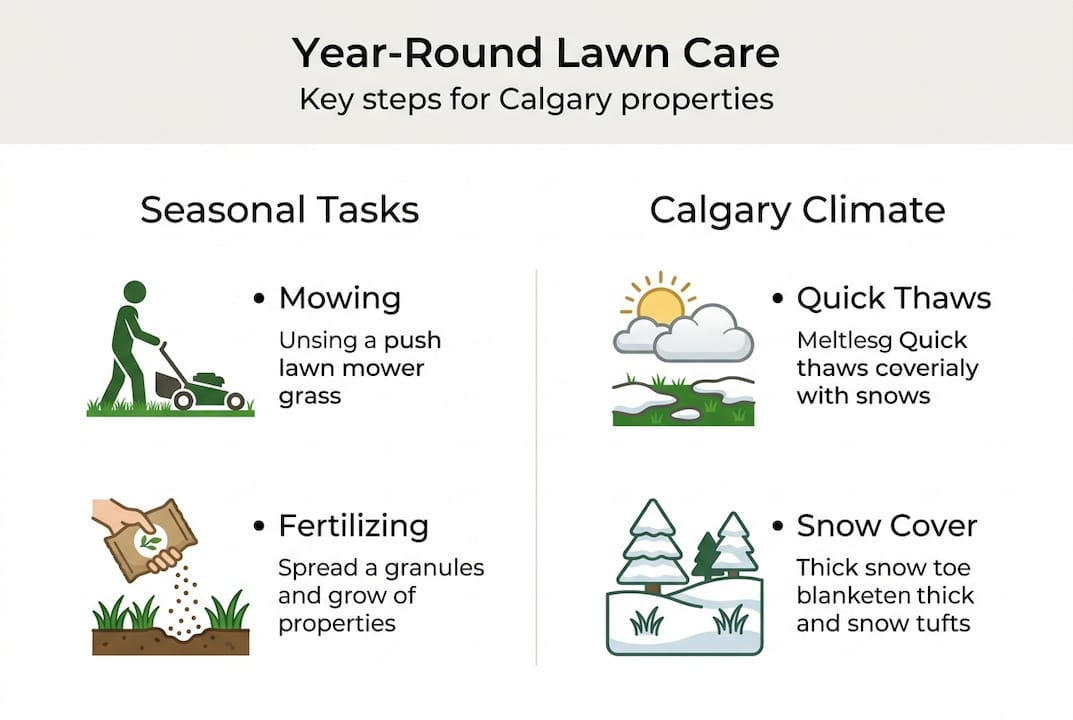
Here is a quick overview of common Calgary commercial lawn types and their core challenges:
| Lawn type | Climate risk | Recommended maintenance frequency |
|---|---|---|
| High-traffic turf (entrances, paths) | Compaction, wear, bare patches | Weekly in growing season |
| Shaded lawn areas | Moss, slow growth, moisture retention | Bi-weekly, with aeration in fall |
| Open sun lawns | Drought stress, browning | Weekly mowing, twice-weekly watering |
| Mixed-use green spaces | Variable wear and sun exposure | Customised schedule per zone |
When you understand each zone’s exposure and use, you can allocate resources where they matter most. A useful starting point is a Calgary lawn maintenance checklist that maps tasks to specific areas of your property.
- Measure each lawn zone separately
- Note sun exposure at different times of day
- Identify irrigation coverage gaps
- Record foot traffic patterns near doors and pathways
- Flag areas with poor drainage or compaction history
Pro Tip: Book a pre-season site inspection in late February or early March. Walking the property before the snow fully melts reveals drainage issues, winter damage, and compaction zones that are easy to miss once grass starts growing.
Preparing tools, materials, and schedules for optimal results
Having identified your site’s needs, the next step is making sure you have the right equipment and materials ready before the season begins. Using the right tools and materials saves time and improves lawn health across every season.
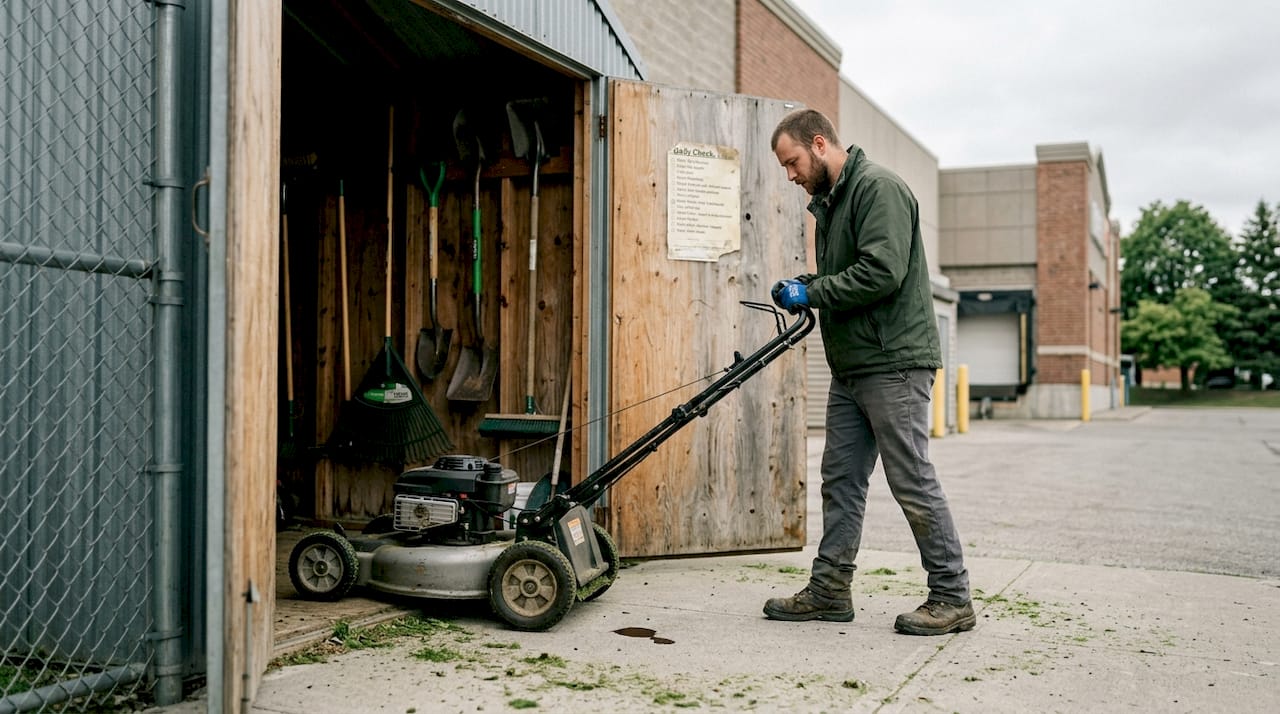
For commercial properties, the core equipment list includes a commercial-grade ride-on or walk-behind mower sized for your property, a core aerator, a string trimmer for edges, a spreader for seed and fertiliser, and a functioning irrigation system. Safety gear, including gloves, eye protection, and steel-toed boots, is non-negotiable.
| Equipment type | Pros | Cons |
|---|---|---|
| Manual/small equipment | Lower upfront cost, easy storage | Slower, labour-intensive, less consistent |
| Professional-grade commercial equipment | Faster, consistent results, built for heavy use | Higher cost, requires trained operators |
| Contracted professional service | No equipment costs, expert knowledge | Ongoing service fees, scheduling coordination |
For seasonal materials, your supply list should shift with the calendar:
- Spring: Cool-season grass seed blends suited to Calgary’s short growing window, slow-release nitrogen fertiliser, pre-emergent weed control
- Summer: Drought-tolerant top-dressing, liquid iron for colour, spot herbicides for broadleaf weeds
- Fall: Winterising fertiliser high in potassium, overseeding mix, compost for thin areas
- Winter: Sand-based traction products (avoid salt near turf), snow stakes to mark lawn edges
Building your annual maintenance calendar around Calgary’s actual seasons, rather than calendar months, is the key to consistent results. Explore seasonal mowing strategies to align your mowing frequency with growth cycles. You can also review available Calgary lawn care services to see where professional support fills gaps in your in-house capacity.
Pro Tip: Service all equipment at the start of each season, not just once a year. A blade sharpened in spring and again in late July cuts cleaner, reduces lawn stress, and prevents the ragged browning that dull blades cause.
Implementing step-by-step maintenance for each season
With tools and scheduling ready, you can move into the practical work. Spring and fall cleanups are vital for lawn recovery and preparation, and they set the tone for every other task that follows.
Spring (April to May)
- Remove all debris, including branches, gravel, and sand left from winter
- Power rake to lift dead thatch and improve air circulation at the soil level
- Re-seed bare or thin patches with a Calgary-appropriate cool-season blend
- Apply a slow-release starter fertiliser to support root development
- Test irrigation systems before the first scheduled watering
Summer (June to August)
- Mow at least once per week, keeping grass at 6 to 8 centimetres to reduce heat stress
- Water deeply two to three times per week in the early morning to minimise evaporation
- Apply spot weed treatments as needed rather than blanket herbicide applications
- Monitor high-traffic zones for compaction and bare spots weekly
Fall (September to October)
- Core aerate the entire lawn to relieve compaction and improve water absorption
- Apply a winterising fertiliser to build root reserves before dormancy
- Remove fallen leaves promptly to prevent smothering and disease
- Overseed thin areas before the ground freezes
Winter (November to March)
- Remove snow from lawn edges and pathways regularly to prevent ice damage
- Avoid heavy foot traffic on frozen turf, as it crushes dormant grass crowns
- Use snow stakes to protect lawn borders from plough damage
For broader seasonal yard cleanup advice, matching your cleanup timing to Calgary’s actual frost dates makes a measurable difference in spring recovery.
Safety notice: Never operate snow blowers or power raking equipment without reading the manufacturer’s safety guide. Keep bystanders clear of discharge zones, and always disengage blades before clearing blockages.
Checking results, troubleshooting and common mistakes
After following seasonal maintenance steps, it is crucial to confirm your efforts are paying off and fix any problems quickly. Regular inspection and prompt troubleshooting minimises costly repairs and downtime on your property.
A healthy commercial lawn shows four clear signs: consistent green colour across zones, dense turf with no visible soil between blades, resilience that bounces back within a day or two of foot traffic, and minimal weed presence. If any of these are off, you have an early warning to act on.
Up to 60% of lawn problems on commercial properties stem from delayed action rather than incorrect technique. Catching an irrigation gap or a compaction issue two weeks earlier can mean the difference between a quick fix and a full re-seeding project.
Common mistakes that Calgary property managers make include:
- Overwatering: Soggy soil invites fungal disease and root rot, especially in low-lying areas
- Neglecting high-traffic zones: Entrances and pathways need more frequent attention than open lawn areas
- Ignoring weather alerts: A forecast cold snap warrants delaying fertiliser application to avoid burning stressed roots
- Mowing too short: Scalping the lawn in summer removes the leaf area that shades roots and retains moisture
- Skipping fall aeration: This single task has the biggest impact on spring recovery and is the most commonly skipped
For persistent issues like recurring bare patches, chronic moss, or drainage problems, consult specialists rather than cycling through DIY fixes. Expert seasonal planning from a qualified Calgary provider can identify root causes that are not obvious from the surface.
Pro Tip: Keep a simple maintenance log, even a shared spreadsheet, that records what was done, when, and what the lawn looked like before and after. Patterns in that data will show you exactly where your programme is working and where it needs adjustment.
A Calgary perspective: why proactive lawn care saves money and headaches
Here is something we have seen repeatedly since 2017: property managers who react to lawn problems always spend more than those who prevent them. A reactive approach feels cheaper in the short term because you are only paying when something looks bad. But by the time a lawn looks bad enough to act on, the damage is already significant.
Calgary’s weather does not give you a warning. A late frost, a dry stretch, or an early snowfall can undo weeks of neglect in a single week. Proactive seasonal planning tips account for those variables in advance, so your response is already built into the schedule rather than scrambled together after the fact.
The properties that consistently attract and retain quality tenants are the ones where the outdoor spaces look cared for every single month, not just in July.
Tenant retention is a real financial factor here. Visible, consistent outdoor maintenance signals that a property is well-managed overall. That perception matters to tenants making renewal decisions, and it matters to prospective tenants comparing options. The lawn is often the first thing they see.
Connect with Calgary’s top lawn maintenance experts
Planning a reliable, year-round lawn maintenance programme for your commercial property is a serious undertaking, and you do not have to manage it alone.

At YearLong Property Maintenance, we build custom maintenance plans for Calgary property managers that cover every season, every zone, and every challenge your site presents. From full-service lawn care services that handle mowing, fertilising, and aeration, to detailed bed maintenance options that keep your entire outdoor space looking sharp, our team brings local expertise and a satisfaction guarantee to every property we serve. Reach out today to get a plan built around your property’s specific needs.
Frequently asked questions
How often should commercial lawns in Calgary be mowed?
During the growing season, mow commercial lawns at least once a week to keep turf healthy and neat. High-traffic areas near entrances may benefit from more frequent attention.
What is the best way to protect lawns during Calgary winters?
Remove snow regularly, avoid salt damage near turf edges, and leave grass slightly longer before dormancy to help protect the crowns. Winter strategies like snow staking also prevent plough damage to lawn borders.
Which tools are essential for commercial lawn maintenance?
A commercial mower, core aerator, string trimmer, fertiliser spreader, and irrigation system are the core tools for Calgary properties. Right tools matched to your property size save significant time and produce more consistent results.
How can I prevent common lawn mistakes?
Track your maintenance routine in a log, inspect high-traffic areas weekly, and adjust your schedule around Calgary’s weather forecasts. Routine checks help prevent the costly mistakes that come from delayed action.