

After construction or renovation wraps up, your commercial property grounds are rarely ready for use. Debris, dust, disturbed soil, damaged plantings, and construction residue cover surfaces that need to be safe, functional, and presentable before tenants, clients, or staff arrive. The business grounds cleanup process is a structured sequence of professional services that restores outdoor areas to clean, compliant, and operational condition. It runs in two main phases: a rough cleanup that tackles bulk debris and hazardous materials immediately after trades leave, followed by a final cleanup that addresses surface washing, landscape restoration, and detailed inspection. Canadian properties face specific regulatory requirements around waste disposal and worker safety, and the timeline from rough to final cleanup typically spans days to several weeks depending on property size and scope.
Here is what a complete commercial grounds cleanup covers:
- Rough cleanup phase: bulk debris removal, sorting and disposing of hazardous construction materials, clearing access paths
- Final cleanup phase: pressure washing hardscapes, window cleaning, air duct and vent clearing, detailed landscape restoration
- Landscape restoration: pruning, bed cleanup, edging, mulching, and irrigation checks
- Hazard management: proper handling and disposal of materials under Canadian environmental regulations
- Equipment used: industrial vacuums, pressure washers, mechanical edgers, dump trucks, wood chippers
- Compliance requirements: adherence to federal and provincial waste disposal standards, worker PPE protocols
- Quality assurance: documented site inspections before handover
What does the business grounds cleanup process involve, step by step?
A thorough commercial post-construction cleanup follows a logical sequence. Skipping steps or rushing the order creates problems downstream, from pest infestations to regulatory fines.
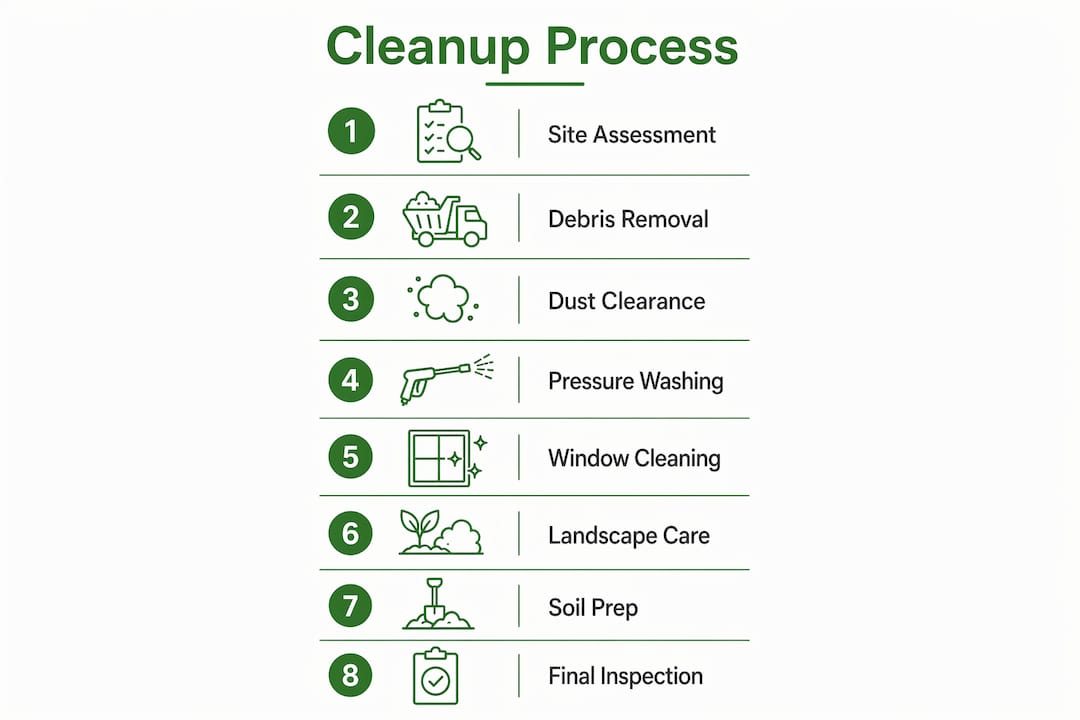
Step 1: Site assessment and safety review
Before any physical work begins, a crew lead walks the full property to document hazards, note debris volumes, and identify materials requiring special handling. This includes locating utility lines, marking irrigation components buried under debris, and flagging any storm damage. The assessment produces a written scope that drives the rest of the job.
Step 2: Rough debris removal
This is the heaviest phase. Crews clear large construction materials: lumber offcuts, concrete chunks, packaging waste, and storm debris. Leaf and debris removal starts here too, because leaves left sitting on grass create conditions for fungal disease and can smother turf before the final cleanup even begins. Dump trucks haul away bulk materials; hazardous items such as treated wood, chemical containers, and asbestos-containing materials are sorted separately for compliant disposal.

Step 3: Dust and particulate removal
Construction generates fine particulate that settles on every surface. Industrial HEPA vacuums clear interior-facing areas, while air vents and ductwork get cleaned to prevent dust from recirculating once the HVAC system runs. Exterior surfaces receive a first-pass blow-down using commercial backpack blowers.
Step 4: Pressure washing and hardscape cleaning
Sidewalks, parking areas, loading docks, and building exteriors where applicable get pressure washed to remove concrete splatter, paint overspray, and general grime. Asphalt maintenance is often scheduled alongside this phase, since construction traffic frequently damages pavement surfaces and creates safety hazards. Retaining walls, patios, and pathways follow the same cleaning and inspection sequence outlined in professional landscape maintenance manuals.
Step 5: Window and exterior glass cleaning
Construction dust and overspray film windows quickly. Professional crews use squeegee systems and appropriate cleaning solutions to restore visibility and appearance. This step is often deferred until after pressure washing is complete so that runoff does not re-contaminate cleaned glass.
Step 6: Landscape restoration
Pruning follows the “three D’s” rule: remove anything dead, diseased, or damaged first, then shape for healthy growth. Mechanical edgers create precise 2.5-inch borders that define where lawn ends and planting beds begin, preventing grass roots from invading flower beds. Fresh mulch goes down after edging to conserve moisture, suppress weeds, and restore a professional appearance. Irrigation systems get inspected and tested, since construction activity frequently damages sprinkler heads and supply lines.

Step 7: Soil preparation and planting bed cleanup
Disturbed soil around the building perimeter needs regrading in places to restore drainage. Beds get cleared of construction debris, weeds, and dead plant material. Pre-emergent herbicide applications are timed to soil temperature, typically when ground temperatures drop below 10°C in fall or before growth resumes in spring.
Step 8: Final site inspection and documentation
A documented walkthrough confirms every task is complete. Crew leads photograph the finished site, note any outstanding issues, and produce a written record of tasks completed, materials used, and disposal receipts. This paperwork matters for insurance purposes and any future regulatory audit.
Why a professional cleanup protects your property and your bottom line
Cutting corners on post-construction cleanup creates costs that dwarf the savings. Here is what a thorough process actually delivers:
- Safety for occupants and visitors: Construction debris, sharp materials, and uneven surfaces cause injuries. Removing hazards before the property opens eliminates a direct liability exposure.
- Regulatory compliance: Proper disposal of construction waste is mandatory under Canadian federal and provincial environmental regulations. Non-compliant disposal carries fines and can trigger remediation orders.
- Faster occupancy: A well-managed cleanup accelerates the timeline from construction completion to tenant move-in or business opening. Every day a property sits unusable costs money.
- Plant and soil health: Debris left on planting beds compacts soil, introduces disease, and stresses root systems. Removing it promptly gives landscaping a chance to recover and establish before the next growing season.
- Property value and tenant satisfaction: First impressions of a commercial property are formed at the kerb. Clean, well-maintained grounds signal that the building is professionally managed, which supports property value over time.
- Prevention of secondary damage: Construction residue left on hardscapes etches concrete and stains asphalt. Pressure washing within weeks of construction completion prevents permanent surface damage.
Pro Tip: Document storm damage and construction debris with dated photographs before cleanup begins. That record supports insurance claims and protects you if a disposal dispute arises later.
Which commercial property types use post-construction cleanup services in Canada?
Post-construction grounds cleanup applies across virtually every commercial sector. The scope and specific protocols vary by property type, but the core process is consistent.
- Office buildings and corporate campuses: High-visibility grounds require detailed landscape restoration and hardscape cleaning. Tenants and visitors form immediate impressions from the parking lot and entrance.
- Retail and shopping centres: Tight timelines between construction completion and store opening mean cleanup crews often work in phases alongside finishing trades. Parking lot cleaning and entrance landscaping take priority.
- Industrial and warehouse properties: Grounds cleanup here focuses heavily on debris removal, asphalt repair, and drainage restoration. Aesthetic requirements are lower, but safety and compliance standards are just as strict.
- Multi-family residential buildings: Apartment and condominium developments require cleanup of common outdoor areas, pathways, and amenity spaces before residents take possession.
- Institutional properties (hospitals, schools, government buildings): These sites carry the strictest sanitary and safety protocols. Hospitals, for example, require dust containment procedures that prevent particulate from entering air handling systems serving patient areas.
- Retail plazas and mixed-use developments: Multiple tenants with different opening dates create a phased cleanup schedule, with common areas completed first and individual unit exteriors addressed as tenants take possession.
Geographic context matters in Canada. Calgary properties, for instance, face freeze-thaw cycles that accelerate concrete cracking and create drainage issues after construction. Seasonal cleanup timing in Alberta must account for late spring frosts and early fall freezes, which compress the window for landscape restoration work. Commercial landscaping improvements that work in southern Ontario may need adjustment for Calgary’s shorter growing season and drier climate.
How long does cleanup take, and what drives the cost in Canada?
Timeline and cost depend on four main variables: property size, debris volume, scope of services, and seasonal timing. A small retail unit with a modest exterior might be cleaned up in one to two days. A large office campus or industrial site can take two to three weeks from rough cleanup through final inspection.
Typical timeline phases:
- Rough cleanup: Starts immediately after construction trades leave, often within 24–48 hours of substantial completion. Duration: one to five days depending on debris volume.
- Landscape restoration: Follows rough cleanup by a few days, once access paths are clear. Duration: one to three days for most commercial properties.
- Final cleaning and inspection: Pressure washing, window cleaning, and documented walkthrough. Duration: one to two days.
Factors that drive cost:
- Property size and linear metres of hardscape to be washed
- Volume and type of debris (hazardous materials cost more to dispose of compliantly)
- Seasonal timing: spring and fall cleanups, when demand peaks, often carry higher rates
- Scope of landscape restoration: a property with extensive planting beds costs more than one with minimal greenery
- Access constraints: properties with limited vehicle access require more manual labour
Most professional contractors offer fixed-price quotes for defined scopes, with hourly rates applied to work that falls outside the original estimate. Seasonal cleanup services in Calgary are typically priced by property size and service scope, with fixed quotes being the norm for post-construction work.
Pro Tip: Reserve roughly 10–15% of your annual landscape budget for unexpected cleanup needs. Severe storms and late-season construction delays do not follow your maintenance schedule, and emergency debris clearance without a budget reserve forces rushed, expensive decisions.
How professional management practices keep cleanup quality consistent
There is a meaningful difference between cleanup management and the physical cleanup itself. Management means tracking, quality control, and regulatory compliance. The physical work is what crews do on site. Conflating the two is how quality slips.
Effective cleanup management uses project management software to track work orders, assign tasks, and record completion against quality benchmarks. Every service visit generates a documented record: date, crew names, tasks completed, materials used, and any issues flagged. That documentation does more than keep the client informed. It supports insurance claims, satisfies regulatory audits, and gives property managers a clear record if a dispute arises over scope or quality.
Consistent documentation of cleanup dates, tasks, and materials used improves billing accuracy and client communication. It also creates a baseline for future maintenance planning, since the record shows exactly what condition the grounds were in at handover.
Staff training is the other half of quality assurance. Cleanup crews need to know how to handle hazardous materials safely, which PPE is required for each task, and how to document their work correctly. A crew that understands why documentation matters produces better records than one that treats it as paperwork.
Pro Tip: Ask any cleanup contractor for a sample inspection report before signing a contract. A contractor who cannot show you what their documentation looks like has probably not been producing it consistently.
Yearlong has operated in Calgary since 2017, building local knowledge of the city’s climate patterns, freeze-thaw cycles, and seasonal timing requirements that directly affect cleanup scope and scheduling. Their year-round property maintenance approach covers grounds cleanup, bed maintenance, concrete cleaning, and snow removal, with service packages tailored to commercial properties across the Calgary area. For property managers who need a single accountable contractor across seasons, that continuity matters.
Pro Tip: Detailed cleanup records support insurance claims and regulatory inspections. High-end commercial cleanup services include management documentation as a standard deliverable, not an add-on.
Ready to get your Calgary commercial property cleaned up?

Yearlong handles the full commercial grounds cleanup process for Calgary properties, from rough debris removal through final landscape restoration and documented inspection. Whether you are managing a post-construction handover or preparing grounds for a new tenant, Yearlong’s team brings the local expertise and equipment to get the job done on schedule.
Lawn and yard cleanup services and bed maintenance are available as standalone services or as part of a year-round property maintenance plan. Contact Yearlong to get a fixed-price quote for your property.
Key takeaways
A thorough business grounds cleanup process, run in structured phases with documented inspections, is the fastest path from construction completion to a safe, compliant, and presentable commercial property.
| Point | Details |
|---|---|
| Two-phase structure | Rough cleanup removes bulk debris first; final cleanup handles surfaces, landscaping, and inspection. |
| Compliance is mandatory | Canadian regulations require compliant disposal of construction waste; non-compliance carries fines and remediation orders. |
| Budget for emergencies | Reserve 10–15% of your annual landscape budget for unexpected debris clearance and storm cleanup. |
| Documentation protects you | Written records of tasks, materials, and inspections support insurance claims and regulatory audits. |
| Seasonal timing affects outcomes | In Calgary, spring cleanup should follow the last frost and fall cleanup should precede freeze-up to protect plant health and soil. |