

You water your lawn every week, mow it on schedule, and still end up with thin, patchy grass that never quite looks right. It’s frustrating, and the answer is often hiding just beneath the surface. A dense layer of organic material called thatch can quietly block water, oxygen, and nutrients from reaching your grass roots, no matter how much effort you put in above ground. This guide explains what thatch is, why it’s a particular problem for Calgary lawns, and how dethatching can turn a struggling yard into one you’re actually proud of.
Table of Contents
- What is lawn dethatching?
- Why does dethatching matter for Calgary lawns?
- When and how to dethatch your lawn
- DIY or hire a pro? Making the right choice for your lawn
- Get professional help for a healthier Calgary lawn
- Frequently asked questions
Key Takeaways
| Point | Details |
|---|---|
| What dethatching is | Dethatching removes a dense layer of organic debris from your lawn to boost its health and appearance. |
| Why it matters | Unchecked thatch can prevent water and nutrients from reaching grass roots, especially in Calgary’s climate. |
| Ideal timing | The best time to dethatch is early spring or early fall when grass is actively growing. |
| DIY vs. pro service | DIY is possible for smaller lawns, but professionals ensure effective and risk-free dethatching for most homeowners. |
What is lawn dethatching?
Thatch is the layer of dead and living organic matter that builds up between your grass blades and the soil surface. It’s made up of old grass stems, roots, and debris that break down slowly. A thin layer of about half a centimetre is actually fine and can protect soil moisture. The problem starts when it gets thicker than 1.5 cm, because at that point, thatch hinders nutrient absorption and creates real lawn health issues.
Dethatching is the process of physically removing that excess layer using a dethatching rake or a power rake machine. Think of it like unclogging a drain. Once the blockage is cleared, everything flows freely again. Water soaks in, fertiliser reaches the roots, and air circulates through the soil. For Calgary homeowners who invest in expert lawn care planning, dethatching is often the missing piece that makes everything else work better.
Calgary’s climate plays a big role in thatch buildup. Our short growing season, clay-heavy soils, and freeze-thaw cycles slow down the natural decomposition of organic matter. That means thatch accumulates faster here than in warmer, more humid climates. Understanding what thatch is and how it forms is the first step toward fixing it.
| Sign | Thatch problem | Healthy lawn |
|---|---|---|
| Lawn feel | Spongy or bouncy underfoot | Firm with slight give |
| Water absorption | Puddles or runoff after rain | Water soaks in quickly |
| Grass colour | Yellowing or patchy | Consistent green |
| Root depth | Shallow, weak roots | Deep, established roots |
| Pest activity | Higher (thatch shelters insects) | Lower and manageable |
Once you dethatch, the benefits show up quickly:
- Better water absorption into the root zone
- Reduced risk of fungal disease and pests
- Thicker, more resilient grass growth
- Improved fertiliser uptake
- Stronger roots heading into winter
Pairing dethatching with a proper seasonal clean up gives your lawn the best possible start each season.
Why does dethatching matter for Calgary lawns?
Calgary lawns face a unique set of challenges that make thatch management more critical here than almost anywhere else in Canada. Our soil tends to be clay-heavy and compacted, which slows the microbial activity that naturally breaks down organic matter. Add in chinook winds that cause rapid freeze-thaw cycles, and you have conditions that stress grass and accelerate thatch buildup at the same time.
Snow mould is another local concern. When snow sits on a lawn with heavy thatch, it creates the perfect damp, dark environment for fungal growth. Removing thatch in spring is one of the most effective ways to prevent snow mould from spreading. Regular dethatching helps lawns bounce back faster after Calgary’s harsh winters.
“Removing thatch in spring and fall is one of the most impactful things Calgary homeowners can do to maintain a healthy, resilient lawn year-round.” — Calgary yard maintenance guidance
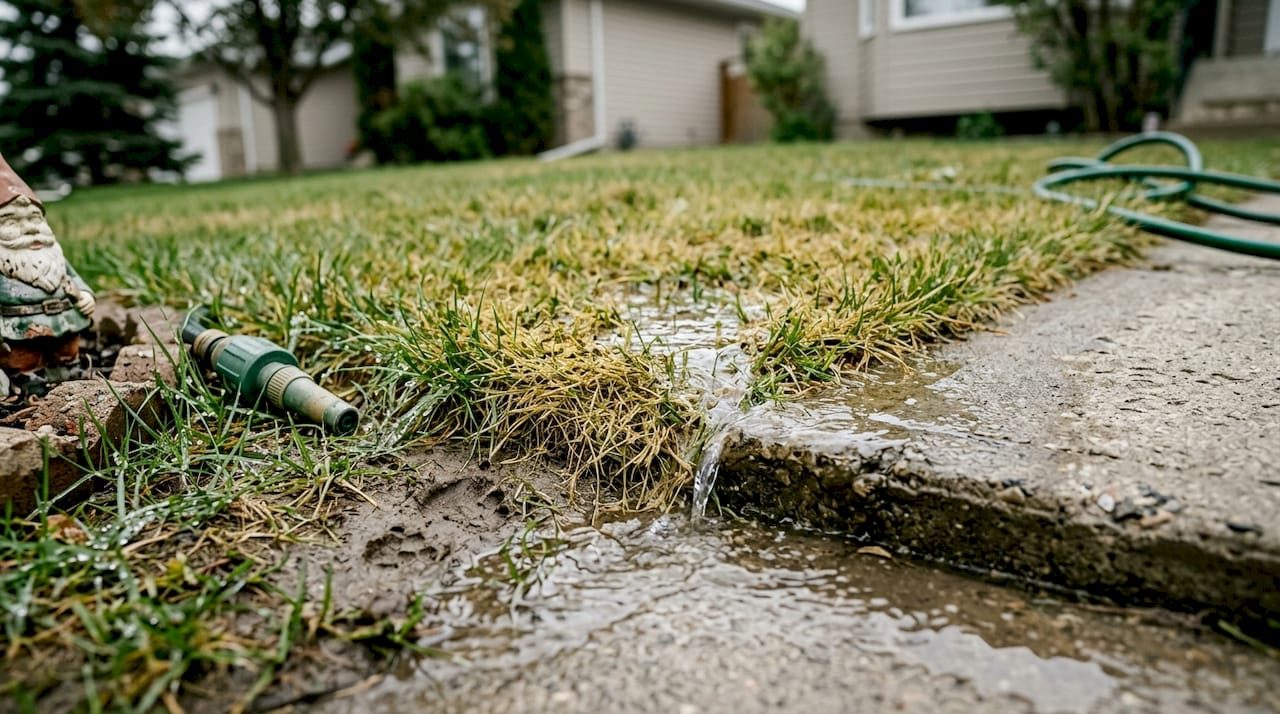
Here’s a number worth remembering: up to 50% more water runs off a lawn when thatch exceeds 1.5 cm. That means your sprinkler system or rainfall is essentially wasted, running off into the street instead of feeding your grass. For a city that deals with dry summers and water restrictions, that’s a serious problem.
Pro Tip: Grab a screwdriver and push it into your lawn. If it meets resistance before reaching the soil, or if you can see a distinct brownish layer between the grass and soil, your thatch is likely too thick. This simple test takes 30 seconds and tells you exactly what you’re dealing with.
For a full picture of what your lawn needs each season, a spring lawn maintenance plan that includes dethatching is a smart investment. You can also use a seasonal lawn maintenance checklist to stay on top of every task throughout the year.
When and how to dethatch your lawn
Timing is everything with dethatching. Do it too early and you risk damaging grass that hasn’t fully woken up from winter. Do it too late in the season and the grass won’t have enough time to recover before the next frost. The best time to dethatch is in early spring or fall when grass is actively growing.
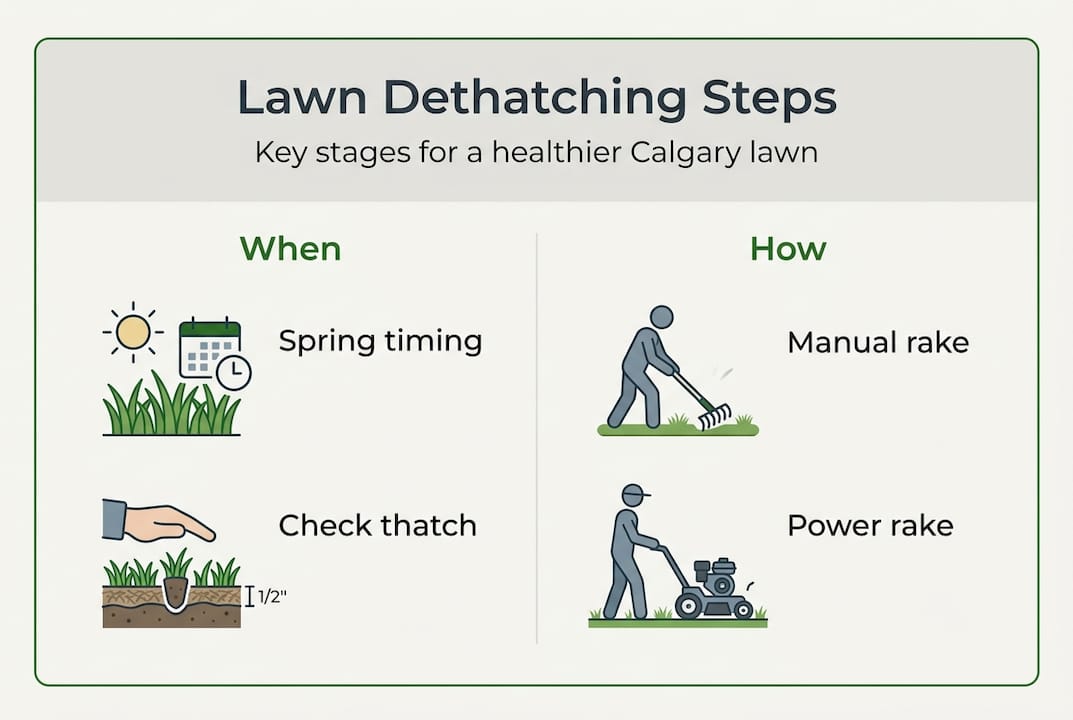
For Calgary, that means late April to early May for spring dethatching, and early September for a fall session. These windows align with active grass growth, giving your lawn the best chance to fill in and recover quickly.
Here’s how to approach it step by step:
- Test your thatch depth using the screwdriver method or by pulling a small plug of turf to measure the brownish layer.
- Mow your lawn to about half its normal height before dethatching so the machine can reach the thatch layer more effectively.
- Dethatch in two passes, moving in perpendicular directions to loosen material evenly across the lawn.
- Rake up and remove all the loosened thatch debris. Leaving it on the lawn defeats the purpose.
- Water thoroughly after dethatching to help the grass recover and encourage new root growth.
| Method | Pros | Cons | Effort level | Approx. cost |
|---|---|---|---|---|
| Manual dethatching rake | Low cost, no fuel needed | Slow, tiring for large lawns | High | $30 to $60 |
| Power rake rental | Faster, more thorough | Requires skill, can damage lawn | Medium | $80 to $150/day |
| Professional service | Expert timing, no effort from you | Higher upfront cost | Low | $150 to $400+ |
For more on what power raking involves and whether it’s right for your yard, check out the power raking options available locally.
Pro Tip: Combine dethatching with core aeration in the same session. Aeration pulls small plugs of soil out of the ground, relieving compaction and improving drainage. Together, these two treatments give compacted Calgary soil the best possible reset.
Watch for signs of over-dethatching too. If your lawn looks scalped, with bare patches and exposed soil, you’ve gone too deep. Grass should look rough and thinned out after dethatching, not stripped bare. Check the frequency of dethatching that’s right for your grass type before you start.
DIY or hire a pro? Making the right choice for your lawn
Dethatching yourself is absolutely possible, especially for smaller lawns with moderate thatch buildup. But it’s worth being honest about what’s involved before you commit to a Saturday afternoon project.
Here’s a straightforward look at both sides:
- DIY pros: Lower cost, you control the timing, satisfying to do yourself
- DIY cons: Physically demanding, easy to damage lawn with wrong technique, equipment rental adds up
- DIY risk: Over-dethatching or dethatching at the wrong time can set your lawn back weeks
- DIY best for: Small to medium lawns with light to moderate thatch buildup
Professional lawn care services reduce the risk of accidental lawn damage and ensure optimal timing, which matters a lot in Calgary’s narrow growing windows. A pro who knows local grass types and soil conditions will get better results in less time, and they’ll spot other issues while they’re at it.
If your thatch layer is dense, your lawn is large, or you simply don’t have the time, hiring a local service is the smarter call. It also helps you prevent lawn damage that can result from aggressive DIY dethatching done at the wrong time or depth.
Pro Tip: When vetting a local company, ask specifically whether they’re familiar with Calgary’s grass types, such as Kentucky bluegrass and fescue blends, and whether they adjust their approach based on the season. A company with genuine local knowledge will answer confidently.
For property managers juggling multiple sites, efficient lawn workflow tips can help you schedule dethatching across properties without disrupting other maintenance tasks. The City of Calgary also offers general yard maintenance guidance that’s worth reviewing alongside professional advice.
Get professional help for a healthier Calgary lawn
If this guide has made one thing clear, it’s that dethatching done right makes a real difference. But getting the timing, depth, and technique correct takes experience, especially in Calgary’s unpredictable climate.

At YearLong Property Maintenance, we’ve been helping Calgary homeowners get more out of their lawns since 2017. Our team understands local soil conditions, grass types, and seasonal windows, so your lawn gets the right treatment at the right time. Whether you need a one-time dethatch, ongoing lawn care packages, or a full-season plan that includes seasonal clean ups and bed maintenance services, we make it easy to keep your property looking its best. Reach out today to book a service or request a quote, and let’s get your lawn back on track before the season gets away from you.
Frequently asked questions
How do I know if my lawn needs dethatching?
If your lawn feels spongy underfoot or you can see a brownish layer thicker than 1.5 cm between the grass and soil, it’s time to dethatch. Thatch over 1.5 cm restricts root growth and causes water runoff.
Can I rake instead of dethatch?
Light raking clears surface debris but won’t break through a dense thatch layer. Dethatching uses specialised tines or blades that cut deeper, and rakes may not penetrate heavy thatch at all.
Is dethatching safe for all lawns?
Most established lawns handle dethatching well, but you should avoid dethatching newly seeded or drought-stressed lawns until they’re fully recovered and actively growing.
How long after dethatching will my lawn recover?
Most Calgary lawns recover in two to four weeks when dethatching is timed with active growth periods and followed by thorough watering. Proper post-dethatching care leads to noticeably faster recovery.
One Response