

Calgary winters arrive fast, and unprepared yards suffer damage that sets back spring recovery. Proper fall preparation protects your lawn, trees, and shrubs from harsh conditions while positioning them for vibrant growth when temperatures rise. This guide shares expert-backed techniques tailored to Calgary’s unique climate, covering essential tasks from final mowing to tree protection. You’ll learn practical steps to strengthen roots, prevent winter stress, and maintain healthy outdoor spaces through 2026’s coldest months.
Table of Contents
- Final Mow And Fertilize Your Lawn For Winter Health
- Protect Your Trees And Shrubs From Winter Damage
- Manage Watering And Leaf Care For A Healthy Yard
- Prune, Secure Branches And Prepare For Snow Loads
- Fall Yard Preparation Made Easy With Yearlong Calgary Services
Key takeaways
| Point | Details |
|---|---|
| Final mow and fertilize | Cut grass to 2 inches and apply slow-release fertilizer to strengthen roots for winter survival and spring greening. |
| Protect trees early | Wrap young trees, prune weak branches, and secure limbs before heavy snow to prevent sun scald and breakage. |
| Water until freeze | Provide established trees 38 litres per inch of trunk diameter monthly through September, stopping when ground freezes. |
| Manage leaves carefully | Mulch thin layers into lawns for nutrients or remove thick coverage to prevent grass smothering and disease. |
| Prepare for snow loads | Tie susceptible branches and complete pruning early in fall to reduce splitting and damage from accumulated snow. |
Final mow and fertilize your lawn for winter health
Your last mow of the season matters more than you might think. Cutting grass to 2 inches prevents snow matting and reduces fungal disease risk during Calgary’s long winter. Taller grass traps moisture under snow cover, creating ideal conditions for mould and rot that damage roots. Shorter blades dry faster and allow better air circulation.
Timing this final cut requires attention to local weather patterns. Most Calgary homeowners schedule their last mow in late October or early November, just before consistent snowfall begins. Watch for forecasts predicting sustained freezing temperatures. You want grass actively growing when you fertilize but dormant enough that it won’t require another cut.
Fall fertilization delivers nutrients when your lawn needs them most. Apply a slow-release NPK fertilizer with a 22-14-14 ratio to feed roots through winter and jumpstart spring greening. Unlike summer applications that stress grass during heat, fall feeding strengthens root systems without forcing top growth. Roots continue developing even after blades stop growing, storing energy for next season.
Test your soil before fertilizing to optimise nutrient balance. Calgary soils often lack specific minerals, and testing reveals exactly what your lawn requires. You’ll avoid wasting money on unnecessary nutrients while addressing actual deficiencies. Most garden centres offer affordable testing services.
Pro tip: Pair Kentucky bluegrass with drought-tolerant fescues for resilient lawns that handle Calgary’s variable moisture levels and temperature swings better than single-species plantings.
Consider these final mowing essentials:
- Set mower blades to 2 inches for the last cut
- Remove clippings if they’re wet or clumped to prevent matting
- Sharpen mower blades beforehand for clean cuts that heal faster
- Mow when grass is dry to achieve even height
Integrating these practices into your efficient lawn care workflow ensures consistent results year after year. The investment of time in fall pays dividends when your lawn greens up weeks earlier than neighbours’ yards next spring.
Protect your trees and shrubs from winter damage
Calgary’s winter conditions pose multiple threats to trees and shrubs. Sun scald damages young and thin-barked trees during bright winter days when bark heats up, then freezes rapidly after sunset. This temperature cycling kills cambium tissue, creating vertical cracks that invite disease and pests. Wrap vulnerable trunks with commercial tree wrap or light-coloured guards from ground level to the lowest branches.
Chinook winds compound sun scald risk by creating dramatic temperature swings. These warm winds can push daytime temperatures above freezing even in January, only to plunge back below zero overnight. Young maples, fruit trees, and ornamental species suffer most. Install wrapping in late fall and remove it in early spring once temperatures stabilise.
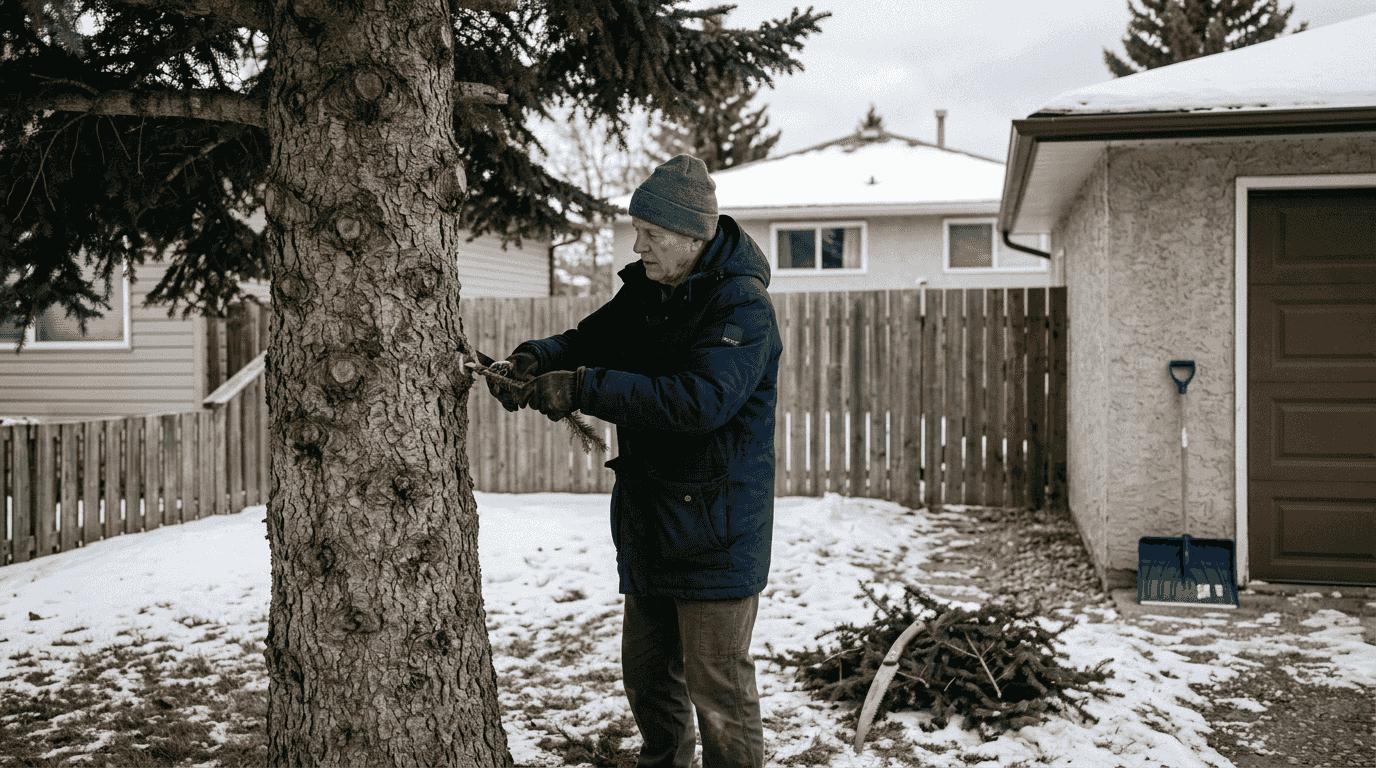
Heavy snow loads break branches and split trunks if you don’t prepare properly. Prune weak or damaged branches before snowfall begins, removing deadwood and crossing limbs that rub together. Focus on V-shaped crotches where branches meet trunks at narrow angles, as these split easily under weight. Gently shake accumulated snow off branches after storms to reduce pressure, working from bottom to top to avoid breaking limbs.
Road salt and sidewalk treatments harm trees when snow containing these chemicals gets piled near trunks. Salt draws moisture from roots and damages bark on contact. Shovel snow away from tree bases rather than creating berms against trunks. If you must use de-icing products, choose calcium chloride or sand instead of sodium chloride near planted areas.
Animal damage increases in winter as food becomes scarce. Rabbits, deer, and voles gnaw bark and girdle young trees, often killing them. Wire mesh guards around trunks prevent this damage. Remove snow piles near trees that create easy access for animals to reach higher branches.
Pro tip: Secure branches of susceptible trees with flexible ties before heavy winter to prevent splitting, but ensure ties don’t girdle branches as they expand.
Implement these protection strategies:
- Wrap thin-barked trees from November through March
- Prune during dry weather to reduce disease transmission
- Use proper pruning cuts just outside branch collars
- Install wire guards 60 centimetres high around young trunks
- Monitor trees after Chinooks for stress signs
Your professional lawn care guide approach should extend to trees and shrubs, treating them as long-term investments requiring consistent seasonal attention rather than emergency interventions after damage occurs.
Manage watering and leaf care for a healthy yard
Watering doesn’t stop when temperatures cool. Established trees and shrubs need watering one to two times monthly from April through September, receiving approximately 38 litres per inch of trunk diameter at each session. This deep watering encourages roots to grow downward rather than spreading shallowly near the surface. Measure trunk diameter at chest height to calculate water requirements accurately.
Cease watering after the ground freezes, typically in late October or early November in Calgary. Frozen soil can’t absorb moisture, and watering during this period causes ice formation around roots that damages tissue. Monitor soil temperature rather than air temperature, as ground freezes lag behind air temperature drops by several weeks.
Fallen leaves present a decision point for Calgary homeowners. Mulching thin layers of leaves back into lawns provides free organic matter that improves soil structure and adds nutrients as decomposition occurs. However, thick leaf coverage smothers grass, blocking sunlight and trapping moisture that encourages disease. Local gardeners debate this balance based on their specific lawn conditions and leaf volume.
Your leaf management strategy should match your yard’s characteristics. Lawns with sparse leaf coverage benefit from mulching, while properties with mature deciduous trees producing heavy leaf fall require removal to prevent damage. A mulching mower chops leaves finely enough that small pieces filter down between grass blades and decompose quickly.
Pro tip: Use a rake or mulch mower to finely shred leaves to speed decomposition, running over them multiple times if necessary to achieve small particle size.
Consider this watering schedule:
| Month | Frequency | Amount per inch diameter | Notes |
|---|---|---|---|
| April-June | 2x monthly | 38 litres | Encourage deep root growth |
| July-August | 2x monthly | 38 litres | Maintain moisture during heat |
| September | 1-2x monthly | 38 litres | Prepare for dormancy |
| October onward | Stop when frozen | None | Prevent ice damage |
Effective lawn care tips integrate watering and leaf management into a cohesive autumn routine. Track your watering sessions and adjust based on precipitation, reducing frequency during wet periods and increasing during dry spells. Calgary’s variable fall weather requires flexibility rather than rigid schedules.
Prune, secure branches and prepare for snow loads
Structural tree maintenance prevents costly winter damage. Pruning weak or damaged branches before heavy snowfalls reduces breakage risk significantly. Dead branches snap easily under snow weight, potentially damaging property or injuring people below. Remove these hazards while you can work safely from the ground or with stable ladder placement.
Timing matters for fall pruning. Schedule this work in early autumn, ideally September or early October, to complete tasks before consistent snow cover arrives. Trees enter dormancy gradually, and pruning during this transition minimises stress. Avoid pruning during active growth periods or extreme cold, both of which compromise healing.
Tying branches prevents splitting in multi-stemmed trees and specimens with weak crotches. Use flexible materials like rubber ties or fabric strips that won’t cut into bark as branches move in wind. Create figure-eight patterns between limbs to allow slight movement while preventing excessive separation. Check ties monthly through winter, loosening any that appear tight.
Contrast summer and winter care practices to avoid damaging trees. Summer fertilizing stresses trees during heat, while fall applications support root development. Mid-winter watering causes more harm than good unless extended dry spells occur, and even then, water only when temperatures rise above freezing and soil remains unfrozen.
Pro tip: Schedule pruning early in fall to complete before consistent snow cover, allowing cuts to begin healing before deep cold arrives and making cleanup easier.
Compare maintenance approaches:
| Practice | Proper timing | Improper timing | Result of neglect |
|---|---|---|---|
| Pruning weak branches | Early fall | Mid-winter or spring | Branch breakage, property damage |
| Tying susceptible limbs | Before snowfall | After damage occurs | Split trunks, permanent deformity |
| Wrapping young trees | Late fall | After sun scald appears | Bark death, disease entry points |
| Deep watering | April through September | After ground freezes | Ice damage, root death |
Your seasonal yard clean up routine should incorporate these structural maintenance tasks alongside surface work like raking and debris removal. Trees represent significant investments in property value and aesthetics, justifying the time required for proper care.
Fall yard preparation made easy with yearlong Calgary services
Preparing your yard for Calgary’s winter demands time, knowledge, and proper equipment. Professional services handle expert mowing, fertilizing, pruning, and cleanup tailored to local climate challenges, ensuring your outdoor spaces receive appropriate seasonal care. Yearlong provides reliable lawn bed maintenance services and professional lawn care services that protect your yard through winter and promote healthy spring growth.

Our team understands Calgary’s unique conditions, from Chinook impacts to variable snow loads. We time services precisely to match weather patterns, applying treatments when they deliver maximum benefit. Using experts saves you weekends of labour while ensuring proper technique protects your investment. Our seasonal yard clean up services cover everything from final mowing to tree protection, giving you confidence your property will emerge from winter ready for vibrant growth.
FAQ
When is the best time to mow my lawn for the final cut in Calgary?
The best time is late fall before the first heavy snowfall, typically late October or early November. Mowing to 2 inches prevents matting and supports lawn health through winter. Exact timing depends on local weather forecasts predicting sustained freezing. Your efficient lawn care workflow should track temperature trends to schedule this critical task properly.
How should I protect young trees from sun scald and winter damage?
Wrap thin-barked young trees with commercial tree wrap to protect them from sun scald during Chinooks and harsh winter sun. Young trees are vulnerable to temperature cycling that damages cambium tissue. Also prune weak branches and tie susceptible limbs to manage heavy snow loads. Install wrapping in late fall and remove it in early spring once temperatures stabilise.
Is it better to remove or mulch fallen leaves in the fall?
Mulching thin leaf layers back into your lawn provides nutrients and improves soil structure. However, thick leaf coverage smothers grass and encourages disease. Choose based on your lawn’s health and leaf volume. Properties with heavy deciduous tree coverage typically require removal, while sparse leaf fall benefits from mulching. Your leaf management in lawn care strategy should match your specific yard conditions.
How often should I water my trees before winter in Calgary?
Water established trees one to two times per month from April to September. Provide 38 litres per inch of trunk diameter measured at chest height. Stop watering after the ground freezes, typically late October or early November, to prevent frost damage. Deep watering encourages downward root growth that improves drought tolerance and winter hardiness.