

TL;DR:
- Winterizing outdoor spaces protects property assets from damage caused by cold temperatures, moisture, and snow before winter begins. Proper preparation ensures that furniture, plumbing, landscaping, and equipment withstand harsh conditions, reducing costly repairs and damage. Starting early in September allows thorough work and minimizes risks, especially in Calgary’s long, freezing winters.
Winterizing outdoor spaces is the process of protecting your yard, garden, furniture, and exterior systems from cold temperatures, moisture, and snow damage before winter arrives. Done correctly, it prevents freeze-thaw cycles from cracking concrete, rotting wood, and bursting pipes. Skipping this preparation means facing costly spring repairs that a few hours of autumn work could have avoided entirely. For Calgary homeowners and property managers, where temperatures can plunge well below freezing for months, seasonal outdoor preparation is not optional. It is one of the most direct ways to protect your property’s long-term value.
What is winterizing outdoor spaces, and what does it cover?
Winterizing outdoor spaces is defined as the systematic preparation of all exterior property elements to withstand winter conditions without sustaining damage. The process covers four main categories: furniture and décor, outdoor plumbing, landscaping, and power equipment. Each category carries its own failure risks if ignored. Furniture left uncovered can warp, rust, or crack. Unprotected pipes burst. Unmulched garden beds lose soil structure. Untreated engines seize.
Winterizing is primarily about protecting property assets from cumulative weather damage and costly spring repairs, not just aesthetic upkeep. That distinction matters because it shifts your mindset from “tidying up” to “risk management.” A property manager who treats autumn prep as risk management will always spend less on repairs than one who treats it as optional housekeeping.
The core principle is simple: remove what you can, protect what you cannot, and monitor everything through the season. Calgary winters are long enough that a problem left unchecked in november can become a serious repair bill by april.
What are the key components to winterize in your outdoor spaces?
Every outdoor space has the same four categories to address. Working through them in order prevents you from missing anything.
Furniture and décor
- Clean all surfaces before storing or covering. Dirt and moisture trapped under covers accelerate rot and rust.
- Store cushions, pillows, and fabric items indoors. Fabric holds moisture and will mildew outdoors.
- Apply teak oil to wooden furniture before storage to prevent drying and cracking.
- Use breathable, waterproof covers for any furniture left outside. Non-breathable covers trap condensation.
Outdoor plumbing
- Locate and shut off all outdoor water supply valves before the first hard freeze.
- Drain garden hoses completely and store them indoors. Hoses left full of water will crack.
- Insulate exposed spigots with foam covers or wrapped rags.
Landscaping
- Apply mulch to garden beds to insulate soil and roots.
- Prune dead or diseased branches before storms arrive.
- Deep-water trees and shrubs before the ground freezes.
Power equipment
- Drain or treat fuel in lawn mowers, trimmers, and other engine-powered tools.
- Remove batteries from cordless tools and store them indoors at partial charge.
- Clean and dry all equipment before storage.
Pro Tip: If local forecasts predict more than two nights below 28°F, move all freeze-sensitive items indoors immediately. Hoses, cushions, and batteries are all susceptible to damage at that threshold.
The single biggest decision in this process is indoor storage versus outdoor protection. Indoor storage reduces maintenance needs and damage risk significantly compared to covering items outside. When space allows, always choose indoor storage first.
How to protect and store outdoor furniture and grills for winter
Proper furniture preparation follows a clear sequence. Rushing any step leaves moisture or debris trapped where it will cause the most damage over a long winter.
Clean every surface thoroughly. Use a mild soap and water solution on metal and wood. Rinse and allow everything to dry completely before moving to the next step. Moisture sealed under a cover or inside a storage shed is the primary cause of winter furniture damage.
Apply the right protectant for the material. Teak and hardwood furniture benefits from teak oil applied before storage. Metal furniture needs a rust inhibitor spray on any scratched or bare areas. Resin and plastic furniture needs only a thorough clean.
Remove and store all cushions and fabric indoors. Even “weather-resistant” fabric will degrade over a Calgary winter if left outside. Store cushions in a dry basement or garage.
Cover or store the furniture frames. If storing indoors, stack chairs and fold tables to save space. If leaving outdoors, use breathable, UV-resistant covers secured with ties or straps so wind cannot lift them.
Prepare grills for winter storage. Clean grills thoroughly and disconnect propane tanks before storing to prevent corrosion and ensure safety. Empty all charcoal ash and clean grill grates completely. Store propane tanks upright in a well-ventilated outdoor area, never inside a garage or shed.
Pro Tip: Place moisture-absorbing packets inside grill covers and storage bags. They cost almost nothing and prevent the rust that forms when condensation builds up inside a sealed cover over winter.
What landscaping practices help safeguard plants and soil from winter damage?
Good winter care for gardens starts in autumn, before the ground freezes. The goal is to protect root systems, reduce pest habitat, and prevent storm damage.
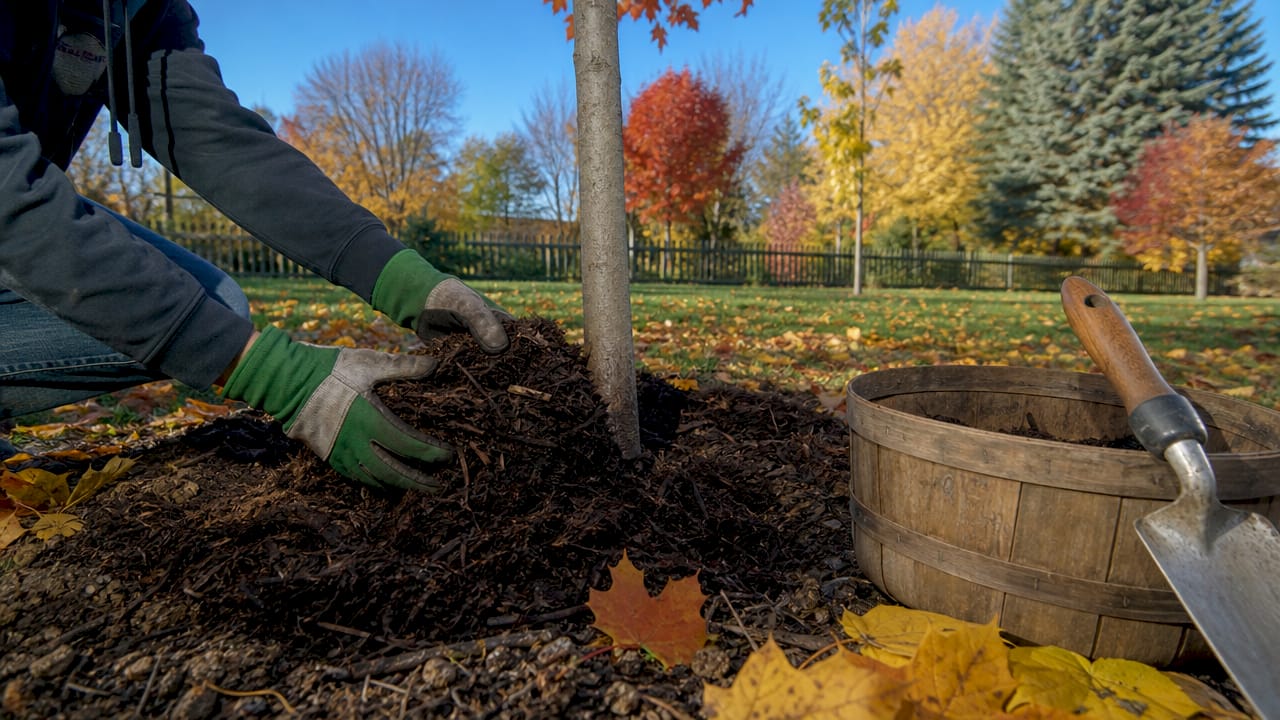
Mulching is the single most effective soil protection technique. Apply mulch in a 2–4 inch layer around trees and garden beds to insulate soil against freeze-thaw cycles. Freeze-thaw cycling is what heaves roots out of the ground and kills otherwise hardy plants. Keep mulch 3–6 inches away from tree trunks to avoid moisture-induced rot and disease.
Pruning serves two purposes in autumn: it removes hazards and improves plant health. Remove dead or diseased tree branches before winter storms to prevent them from becoming storm hazards that can damage property or power lines. Pruning is a risk-mitigation step, not just cosmetic trimming. Healthy branches left on the tree are fine. Dead ones become projectiles in a Calgary windstorm.
Deep watering before the ground freezes is a step many homeowners skip. Trees and shrubs lose moisture through their leaves and needles all winter, even when dormant. Watering deeply in late october gives root systems a moisture reserve that prevents winter burn on evergreens and desiccation damage on shrubs.
| Landscaping task | Timing | Key detail |
|---|---|---|
| Apply mulch | Before first hard freeze | 2–4 inch layer; keep clear of trunks |
| Prune dead branches | Mid to late autumn | Focus on dead, diseased, or crossing branches |
| Deep water trees and shrubs | Late october | Water slowly and deeply at the drip line |
| Remove garden debris | Before snowfall | Reduces overwintering pest and disease habitat |
| Wrap vulnerable evergreens | Early november | Use burlap, not plastic, to allow air circulation |
Removing dead plant debris from beds before snowfall is also worth the effort. Decaying leaves and stems provide shelter for insects and fungal spores that will re-infect your garden in spring. A clean bed in november means fewer pest problems in may.
Why and how to winterize outdoor plumbing, hoses, and irrigation systems
Frozen pipes are one of the most expensive and preventable winter repairs a homeowner faces. The fix is straightforward, but the sequence matters.
Locate your outdoor water shut-off valves. Most homes have a dedicated valve inside the basement or crawl space that controls all outdoor spigots. Know where it is before you need it.
Shut off the water supply to all outdoor lines. Do this before the first hard freeze, not during one.
Open all outdoor faucets and leave them open. This allows any remaining water in the line to drain out and relieves pressure if any water does freeze.
Drain garden hoses completely. Disconnect them from spigots, hold one end up, and walk the length of the hose to push all water out. Store them coiled in a garage or shed.
Insulate exposed spigots and pipes. Simply covering outdoor faucets isn’t enough; water lines should be shut off inside and drained with faucets open to avoid freezing damage. Foam covers or wrapped rags add a useful second layer of protection after the line is drained.
Blow out irrigation systems with compressed air. Any water left in irrigation lines will freeze and crack the tubing. A professional blow-out service uses a compressor to clear every zone completely.
Pressurised water lines to outdoor spigots freeze even if covered; complete draining after shutting off interior valves is the only reliable protection. Check your outdoor plumbing monthly through the winter to catch any slow drips or frost damage early.
What are best practices for protecting outdoor equipment and preparing for winter?
Equipment left in poor condition over winter rarely starts reliably in spring. These steps prevent the most common failures.
- Drain or stabilise fuel in all engine-powered tools. Fuel in engine-powered tools gums carburetors within 60 days if left untreated. In Calgary’s deep-freeze climate, draining fuel completely is the safer choice over stabilisers alone.
- Store batteries indoors at partial charge. Lithium-ion and lead-acid batteries both degrade faster when stored fully charged or fully drained in cold temperatures. A cool, dry indoor space at 40–60% charge is ideal.
- Clean all equipment before storage. Grass clippings and soil left on mower decks trap moisture and cause rust over winter. A wire brush and a rinse take five minutes and prevent a season’s worth of corrosion.
- Mark driveway edges with reflective stakes before snowfall. Reflective stakes prevent damage from snow removal equipment that cannot see curbs under deep snow. This precaution protects both your hardscape and your landscaping from blade damage.
- Plan your de-icing approach carefully. A 50/50 mixture of rock salt and sand provides traction while limiting chemical damage to concrete and plants. Excessive salt harms vegetation and degrades concrete surfaces over multiple winters.
For year-round property maintenance in Calgary, having your equipment ready to go in spring is just as important as protecting it in autumn. A well-stored mower starts on the first pull. A neglected one costs you a repair bill and two weeks of long grass.
Key takeaways
Winterizing outdoor spaces protects your property from freeze-thaw damage, burst pipes, and equipment failure by addressing furniture, plumbing, landscaping, and power tools before the first hard freeze.
| Point | Details |
|---|---|
| Prioritise indoor storage | Storing furniture and equipment indoors reduces damage risk more than any cover or protectant. |
| Drain all outdoor water lines | Shut off interior valves, open faucets, and drain hoses before the first hard freeze. |
| Mulch garden beds correctly | Apply a 2–4 inch layer before freezing, keeping mulch clear of tree trunks to prevent rot. |
| Drain fuel from engines | Fuel left in carburetors gums within 60 days; drain completely in deep-freeze climates. |
| Mark driveways before snowfall | Reflective stakes protect hardscape and landscaping from snow removal equipment damage. |
Why I start winterizing in september, not october
Most homeowners wait until the first frost warning to start preparing their outdoor spaces. I’ve learned that waiting until then means rushing, cutting corners, and missing things. Calgary can see hard freezes in early october, and by the time a forecast warning appears, you’ve already lost a day or two of preparation time.
The approach I’ve found most reliable is to treat winterizing as a three-week project starting in mid-september. Week one covers landscaping: pruning, deep watering, and mulching. Week two covers furniture, grills, and equipment. Week three covers plumbing and final checks. Spreading the work out means nothing gets skipped and nothing gets rushed.
The other thing I’d push back on is the idea that outdoor covers are a reasonable substitute for indoor storage. They’re not. A breathable cover is better than nothing, but it is not a replacement for a dry garage shelf. Every item you can move indoors is one less thing to worry about when a chinook blows through in january and then temperatures drop to minus 30 the next week. Calgary weather does not follow a predictable script.
Winterizing also pays off in ways that don’t show up until spring. Equipment that was stored properly starts reliably. Furniture that was cleaned and dried doesn’t need refinishing. Garden beds that were mulched correctly come back faster. The role of maintenance in property value is real and measurable, and autumn prep is one of the highest-return investments you can make in your property.
— Lewie
Yearlong’s seasonal services make winter prep easier
Calgary winters are demanding, and outdoor preparation takes real time and physical effort. Yearlong has been helping Calgary homeowners and property managers handle exactly this kind of seasonal work since 2017.

Yearlong’s lawn bed maintenance service covers the autumn cleanup and mulching that protects your garden beds through winter. The team also handles fall yard preparation, debris removal, and seasonal cleanup so you’re not spending your weekends raking and hauling. For snow management through the season, Yearlong’s snow removal service keeps driveways and walkways clear and safe. Reach out to Yearlong to schedule your autumn preparation before Calgary’s first hard freeze arrives.
FAQ
What does winterizing outdoor spaces mean?
Winterizing outdoor spaces means preparing your yard, furniture, plumbing, and equipment to withstand cold temperatures and snow without sustaining damage. The goal is to prevent freeze-thaw damage, burst pipes, and equipment failure before winter arrives.
When should I start winterizing my outdoor space in Calgary?
Starting in mid-september gives you enough time to work through landscaping, furniture, and plumbing before the first hard freeze. Calgary can see freezing temperatures in early october, so waiting for a frost warning leaves too little time.
How do I protect outdoor furniture for winter?
Clean all surfaces thoroughly, apply the appropriate protectant for the material, remove and store cushions indoors, and either bring furniture inside or cover it with a breathable, waterproof cover secured against wind.
Do I need to drain outdoor faucets even if I use foam covers?
Foam covers alone are not sufficient protection. Shut off the interior water supply valve, open the outdoor faucet to drain the line, and then add a foam cover as a secondary layer of insulation.
How do I prevent salt from damaging my lawn and concrete in winter?
Use a 50/50 mixture of rock salt and sand for walkway de-icing. This blend provides traction while reducing the chemical concentration that damages concrete surfaces and kills grass along driveway edges.