

Winter power washing in Calgary makes sense only when a heated system removes heavy salt and grit before it eats into your concrete or siding. If your driveway is coated in road salt and sand, book a heated winter wash now rather than let it sit until spring. If temperatures are running below 5°C with no salt buildup to speak of, wait. Local pros can assess your property and tell you which case you’re in.
TL;DR:
- Winter power washing in Calgary is most effective for removing heavy salt and grit from concrete surfaces, especially when using heated water and high pressure.
- Low-pressure soft washing is essential for siding, roofing, and delicate trim to avoid damage and voiding warranties.
- Reputable providers use heated equipment, plan runoff management, and follow safety protocols to prevent refreezing hazards and slips.
- The best time for winter washing is right after freeze-thaw cycles when salt and debris are loosened but before a new cold snap locks them in.
- Costs are higher in winter due to specialized gear and safety measures, so always request a detailed written quote before scheduling.
Table of Contents
- Which surfaces to wash in winter and the correct method for each
- Cold-weather equipment and safety measures pros need
- When to schedule winter washing and what it actually prevents
- Cost expectations and how winter jobs get priced in Calgary
- How to choose a winter power washing provider
- Yearlong Property Maintenance: local winter-capable cleaning
- A practical read on timing and risk
- Sources
- FAQ
Which surfaces to wash in winter and the correct method for each
Not every surface handles a winter wash the same way, and using the wrong pressure on the wrong material can do more damage than the salt ever would. Concrete driveways and walkways tolerate high-pressure cleaning well, and combined with a heated water system, that’s what actually strips embedded salt and grit out of the pores before freeze-thaw cycles force it deeper. Siding, roofing, and anything with paint, caulking, or shingles need a completely different approach.
- Concrete driveways and walkways: high-pressure washing, typically around 3,500 PSI, paired with heated water, clears salt and sand without needing a summer redo.
- Siding, roofs, and delicate trim: soft washing at 200 to 500 PSI with a cleaning surfactant lifts grime without forcing water behind panels or lifting shingles.
- Why it matters: using high PSI on siding can void a manufacturer warranty, and skipping salt removal on concrete accelerates the pitting and scaling that freeze-thaw cycles cause year after year.
A provider who quotes the same PSI for your driveway and your house siding hasn’t thought it through. Ask which method they’re using on which surface before they show up, not after.
Cold-weather equipment and safety measures pros need
Anyone showing up to power wash your property in January without heated equipment is either going to fail or create a hazard. Standard pressure washers freeze solid within minutes at Calgary winter temperatures, and water pooling on a driveway at minus fifteen turns into a skating rink fast. This is where the gap between a serious operation and a weekend hustle shows up clearly.
Heated water systems, sometimes called hot box units, keep the lines and cleaning solution from freezing mid job and cut down on the ice sheeting that plain cold water leaves behind. Reputable crews also plan for what happens to the water after it hits the ground.
- Temporary anti-slip treatments or sand, applied immediately after washing, to manage new ice formation
- Runoff capture or redirected drainage so water doesn’t refreeze across a walkway or driveway
- Crew protocols for non-slip footwear and spacing equipment away from foot traffic zones
- Proof of insurance and confirmation that crew members are trained for winter-specific hazards
Pro Tip: Ask any winter provider what happens to the runoff. If they don’t have a clear answer, that’s your sign they haven’t done this in freezing conditions before.
Insurance matters more here than in a summer job. A slip-and-fall claim on a driveway that refroze after a bad wash is a liability that lands on whoever hired the crew if that crew isn’t properly covered.
When to schedule winter washing and what it actually prevents
The ideal window falls right after Calgary’s main freeze-thaw swings, when salt and sand have had a chance to work loose but before another cold snap locks them back in. If your driveway is visibly caked in white residue and grit through January or February, that’s not a reason to wait for spring. That’s the case for a heated winter service now.
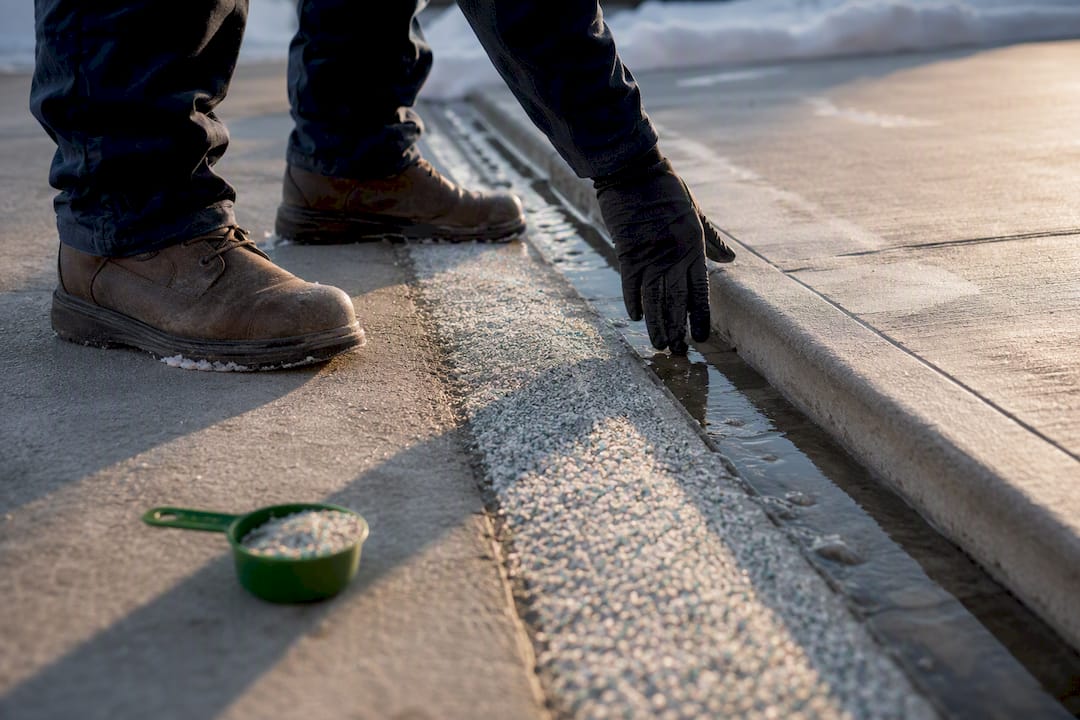
The City of Calgary applies roughly 30,000 tonnes of road salt across the city every winter season. A share of that ends up tracked onto private driveways and walkways with every vehicle and boot that crosses one.
That salt doesn’t just sit there looking dirty. It works into concrete’s surface, and each freeze-thaw cycle pushes moisture and dissolved salt deeper into hairline cracks, widening them a little more every time. Removing it before spring gives your concrete a head start and sets you up properly if you’re planning to seal the surface once temperatures stabilize.
Cost expectations and how winter jobs get priced in Calgary
Winter pricing runs higher than a comparable summer job, and that’s not padding. A single driveway wash with heated equipment costs more than the same job in July because the crew is running specialized gear, working shorter daylight windows, and building in time for anti-slip and runoff management. A full house soft-wash in winter is less common and usually only makes sense for urgent prep work, like getting siding ready ahead of a sale or an insurance inspection.
Bundled seasonal packages that combine concrete cleaning with other property care tend to offer better value than booking one-off jobs throughout the year.
- Heated equipment access adds cost because it requires specialized machinery, not a standard pressure washer
- Site prep, like clearing snow or ice from the work area first, adds time and labour
- Runoff management, including anti-slip treatment after the wash, is a line item most homeowners don’t expect
- Ask for an itemized written quote that separates equipment, labour, and any post-wash safety treatment
Get everything in writing before the crew arrives. A verbal estimate that balloons once they see the ice buildup on your driveway is a common complaint, and it’s avoidable with a clear quote upfront.
How to choose a winter power washing provider
Vetting a winter provider takes more scrutiny than picking a summer lawn crew, mostly because the margin for error is smaller. Ask these questions before you book anything.
- Do you use heated water systems for winter jobs, and what PSI do you run on concrete versus siding?
- How do you handle runoff and ice prevention on the site after washing?
- Can you provide proof of insurance and confirm your crew’s winter safety training?
- Do you have references from other Calgary jobs done in winter conditions specifically?
- What’s included in your satisfaction guarantee if something goes wrong?
Red flags show up fast if you know what to look for: no written quote, no insurance documentation, a vague answer about soft-wash versus high-pressure, or scheduling that ignores freeze-thaw timing entirely. A legitimate service agreement should spell out the surfaces being cleaned, the PSI and method for each, runoff handling, and what happens if weather forces a reschedule.
Pro Tip: After the job, do a quick walk-around while the crew is still on site. Check for standing water that could refreeze and confirm any anti-slip treatment was actually applied, not just promised.
Yearlong Property Maintenance: local winter-capable cleaning
Some providers have been handling outdoor property care across Calgary since 2017, and winter is where local experience actually shows. Concrete and patio cleaning, snow removal coordination, and sealing prep all fall under one provider instead of juggling separate contractors who may not talk to each other about scheduling.

That coordination matters more in winter than any other season. A crew that also handles snow removal understands how to time a driveway wash so it doesn’t conflict with your regular clearing schedule, and one that offers concrete cleaning alongside seasonal cleanups can bundle winter salt removal with the spring and fall work your property already needs. Some providers back their jobs with a satisfaction guarantee, which counts for something when you’re trusting a crew to work around ice and freezing temperatures on your property. If you’re weighing whether your driveway needs attention now or can wait, request a quote through Yearlong’s concrete sealing page and get a straight answer based on your specific situation.
A practical read on timing and risk
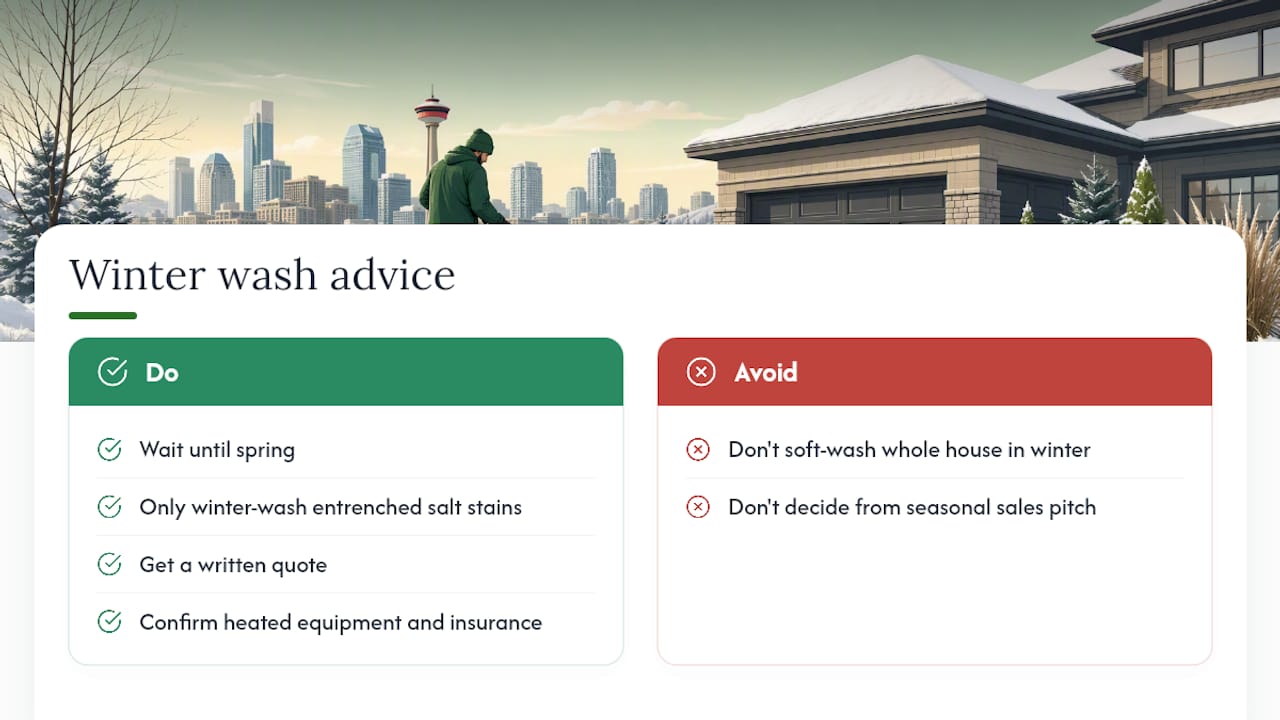
Most Calgary properties are better off waiting for spring. The exception is heavy, entrenched salt and sand that’s already staining concrete or getting tracked into entryways daily. In that specific case, a heated winter wash is worth the higher price tag because you’re preventing damage that compounds every freeze-thaw cycle between now and April.
Don’t let anyone talk you into a full house soft-wash in the dead of winter unless there’s a genuine deadline forcing it. Get a written quote, confirm the crew has heated equipment and insurance, and make the call based on what your driveway actually looks like today, not on a seasonal sales pitch.
— Lewie
Sources
For salt volumes and winter road conditions, see the City of Calgary’s snow and ice page. For entryway prep alongside exterior cleaning, One Day Doors & Closets covers winterizing doors.
- City of Calgary — snow, ice and salt
FAQ
Is winter power washing safe in Calgary?
It’s safe when a provider uses heated water systems, manages runoff to prevent refreezing, and follows crew safety protocols. It becomes unsafe when a company uses standard cold-water equipment or ignores drainage.
What PSI should be used for a winter driveway wash?
Concrete driveways typically need around 3,500 PSI for effective salt and grit removal, while siding requires a much gentler 200 to 500 PSI soft wash.
How much does winter power washing cost in Calgary?
Pricing varies based on heated equipment access, site prep, and runoff management, and it typically runs higher than a comparable summer job. Always request an itemized written quote before booking.
Should I wait until spring to power wash my house?
For most homes, yes, spring is the better window unless salt and grit have built up heavily on concrete surfaces. Yearlong and similar Calgary providers can assess your specific situation before you commit either way.
What should I ask a provider before hiring them for winter cleaning?
Ask about heated equipment, PSI used per surface, runoff and ice management, insurance coverage, and references from other Calgary winter jobs. A provider who can’t answer these clearly is a red flag.