

TL;DR:
- Proper winter lawn care in Calgary involves timing treatments before ground freeze, including watering, mowing, fertilizing, and debris removal. Snow management and avoiding road salt damage are essential for protecting the grass during winter, and early spring steps enhance recovery. Consistent attention to these practices ensures a healthy, green lawn in spring.
Winter lawn protection methods are the specific practices that preserve your Calgary lawn’s health through freezing temperatures, heavy snow, and the freeze-thaw cycles that define a Prairie winter. The industry term for this process is lawn winterisation, and it covers everything from your final autumn mow to spring soil remediation. Done correctly, winterisation prevents snow mould, salt damage, and soil compaction. Skip it, and you spend your spring repairing bare patches instead of enjoying a green yard.
What are the best winter lawn protection methods for Calgary?
Winterisation works because it shifts your lawn’s energy from top growth to root survival before the ground freezes. Calgary homeowners should complete winterisation 2–4 weeks before ground freeze, timed to nighttime air temperatures of 40–50°F and soil temperatures of 40–55°F at a 4-inch depth. That window typically falls in late september or early october in Calgary. Missing it by even two weeks means your grass enters dormancy without the root reserves it needs.
The core tasks follow a specific order:
- Final deep watering. Apply 1 inch of water to the lawn. This saturates the root zone before the soil seals, giving dormant roots moisture to draw on through winter.
- Mow to 2–2.5 inches. Mowing to this height reduces the risk of snow mould by preventing grass blades from matting under snow cover. Taller grass traps moisture and creates the wet, dark conditions that fungal growth needs.
- Apply a winteriser fertiliser. Choose a formula rich in potassium and phosphorus, not nitrogen. Nitrogen-heavy fertilisers stimulate tender blade growth that frost kills easily. Potassium and phosphorus feed the root zone and build cold tolerance.
- Clear debris and leaves. Thick leaf layers suffocate dormant turf and create ideal conditions for snow mould. A thorough autumn yard cleanup before the first snowfall removes this risk entirely.
- Repair hardscape edges. Freeze-thaw cycles shift pavers and edging, creating low spots where salt and meltwater pool. Fixing these in late autumn prevents localised lawn damage in spring.
Pro Tip: Test your soil temperature with an inexpensive probe thermometer before you fertilise. Applying winteriser when soil is still warm wastes product and can stimulate the wrong kind of growth.
How does snow and ice management protect your lawn in winter?
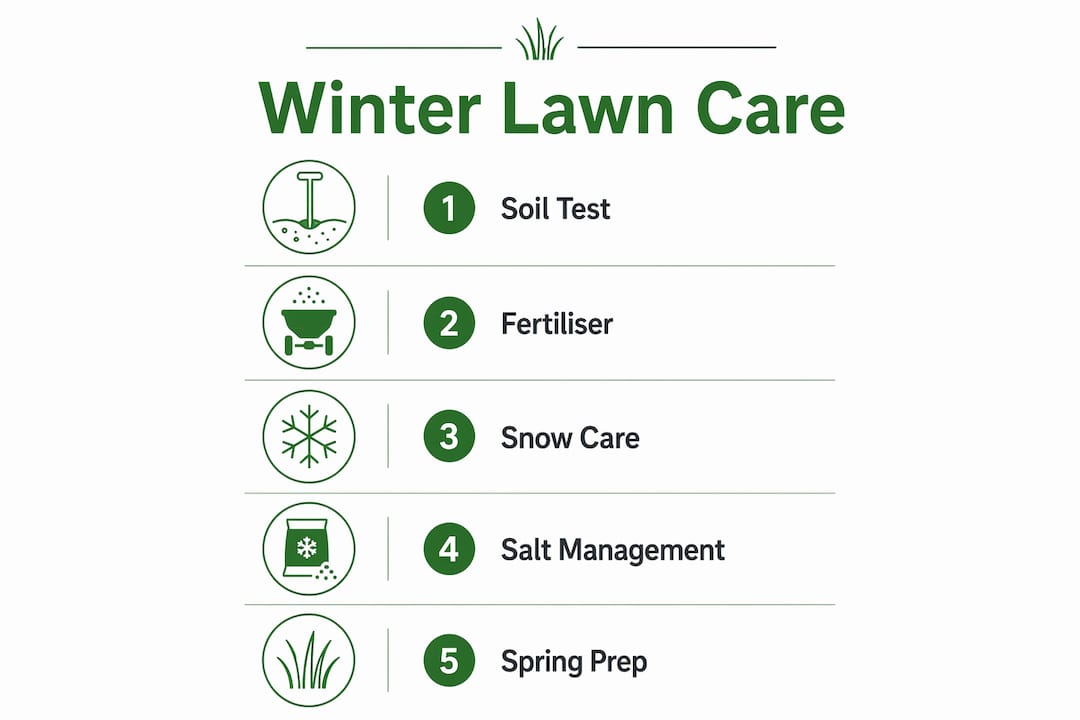
Snow is not automatically your lawn’s enemy. A light, even layer of snow acts as insulation, keeping soil temperatures stable and protecting grass crowns from extreme cold. The problem starts when snow becomes heavy, hard-packed, or piled unevenly.
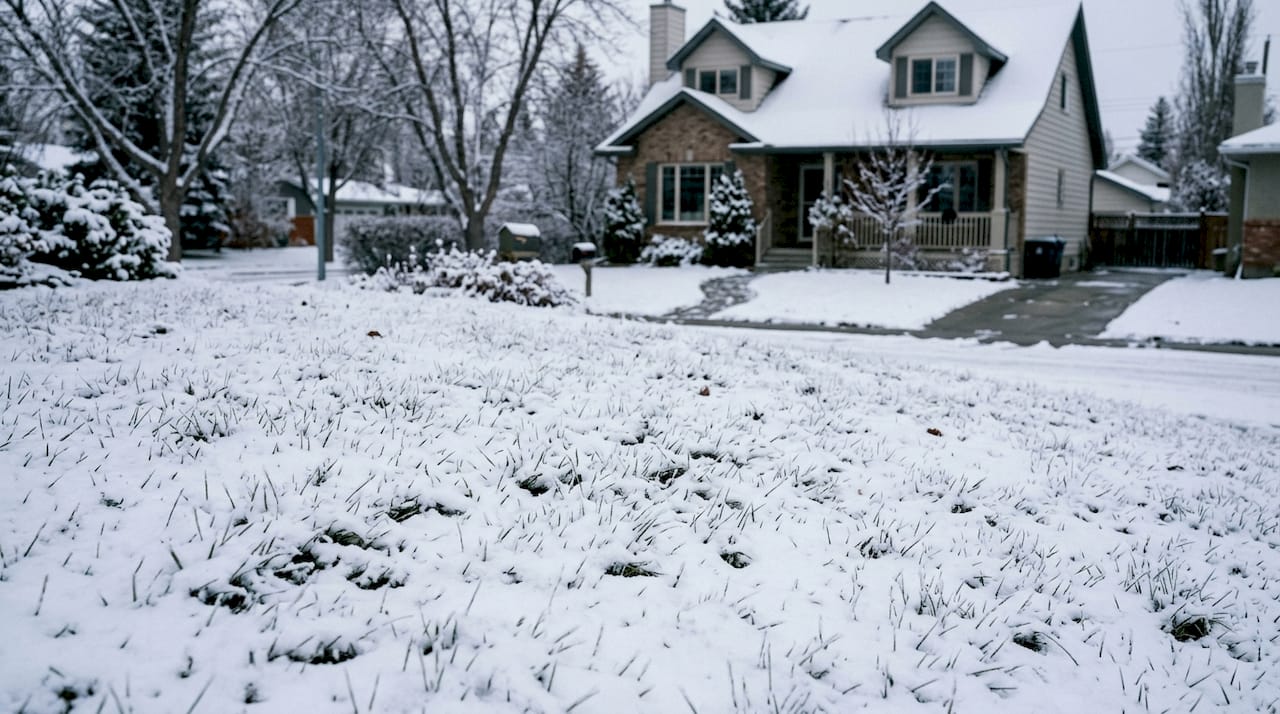
Heavy snow piles on lawn edges compact soil and suffocate grass, turning what should be a protective blanket into a damaging weight. This is especially common along driveways and sidewalks where shovelled snow accumulates all season. The solution is to spread snow evenly across the lawn surface or redirect it onto hardscape areas like patios and driveways.
Practical snow management steps for Calgary homeowners:
- Use snow fencing, wooden boards, or physical barriers along lawn edges to prevent shovelled snow from piling on the same spot repeatedly.
- Redirect snowblower discharge away from lawn edges and toward hardscape wherever possible.
- Never chip aggressively at ice that has formed on turf. Aggressive ice removal gouges and damages grass crowns, leaving visible bare spots in spring. Use a plastic shovel with a dull edge if removal is necessary, and allow natural melting where you can.
- Create small drainage channels at the edge of snow piles to prevent meltwater from pooling on the lawn surface.
“Proper snow management determines whether snow is protective or damaging. Heavy piles cause long-term harm that shows up as dead patches months after the snow melts.”
How does road salt damage your lawn, and what are the safer alternatives?
Sodium chloride, the most common road salt, causes spring lawn die-off by drawing moisture out of grass roots and raising soil sodium levels to toxic concentrations. The damage is most visible within 10 feet of driveways and sidewalks. Calgary homeowners often blame winter cold for these dead edges, when salt is the actual cause.
Safer alternatives and protective measures include:
- Calcium chloride or magnesium chloride near lawn edges. Both de-ice effectively at lower temperatures than sodium chloride and cause significantly less soil damage.
- Sand as a traction aid on paths adjacent to lawn areas. Sand adds no chemical load to the soil.
- Marker stakes along lawn edges. Stakes prevent snowplows and shovels from depositing salt-laden slush directly onto turf. Place them before the first snowfall so the boundary is visible under snow cover.
- Gypsum applied in early spring. Gypsum displaces sodium ions in salt-damaged soil and restores soil structure. Apply it to affected edges as soon as the ground thaws, guided by a soil test.
Pro Tip: Walk your lawn perimeter in late october and mark the edges with bright stakes before snow arrives. This single step prevents most salt and snowplow damage without any additional cost.
What maintenance mistakes undermine cold weather lawn protection?
Winter is not a dormant period of inactivity for lawns. Physical risks remain active all season, and the wrong actions cause damage that takes an entire growing season to repair.
The most common mistakes Calgary homeowners make:
- Walking on frozen or saturated turf. Foot traffic on frozen ground compresses dormant grass crowns and causes visible bare spots by spring. Set up an alternate path using stepping stones or a temporary walkway if you need to cross the lawn regularly.
- Late-season nitrogen fertilising. Applying a high-nitrogen fertiliser after mid-september pushes soft blade growth that cannot harden before frost arrives. That growth dies back and leaves the lawn weaker, not stronger.
- Leaving thick leaf layers on the lawn. Matted leaves block light, trap moisture, and create the exact conditions that snow mould fungi need to establish. Clear leaves before the first snowfall, not after.
- Ignoring debris along fence lines and garden beds. Debris piles hold moisture against the soil surface and become snow mould hotspots. A thorough fall yard preparation clears these risk zones before winter sets in.
The rule for winter lawn maintenance is simple: if the ground is frozen or the grass is dormant, leave it alone. Every unnecessary disturbance costs you recovery time in spring.
How does winter lawn protection affect your spring recovery?
The quality of your spring lawn is determined almost entirely by what you did the previous autumn. Lawns that were properly winterised recover faster, green up more evenly, and need less intervention in april and may.
The spring recovery sequence follows soil temperature, not the calendar:
| Task | Timing trigger | Purpose |
|---|---|---|
| Soil test | Ground thaw, early spring | Identify pH and nutrient gaps after winter |
| Gypsum application | Ground thaw | Displace sodium in salt-damaged areas |
| Early irrigation | Soil temps above 40°F | Flush residual salts and activate root growth |
| Pre-emergent herbicide | Soil temps 50–55°F | Prevent crabgrass before it germinates |
| Spring fertilisation | Soil temps 55°F+ | Feed actively growing roots |
| Aeration and overseeding | Soil temps 55–65°F | Repair compaction and fill bare patches |
Pre-emergent herbicide application is the most time-sensitive task. The window is when soil temperature reaches 50–55°F, typically in early to mid-march in Calgary. Missing this window by even a week allows crabgrass to germinate and renders the treatment ineffective for the season.
Early irrigation serves a purpose beyond hydration. Flushing the root zone with water after snowmelt dilutes salt concentrations and moves sodium away from the grass crowns. Homeowners who skip this step often see salt damage worsen through spring, even after the snow is gone. Planning a spring yard clean up alongside these tasks keeps the recovery on track.
Key takeaways
Effective winter lawn protection in Calgary requires precise timing, root-focused fertilisation, and active snow and salt management throughout the cold season.
| Point | Details |
|---|---|
| Winterise before ground freeze | Complete all tasks 2–4 weeks early, timed to soil temps of 40–55°F. |
| Mow short, clear debris | Cut to 2–2.5 inches and remove leaves to prevent snow mould. |
| Manage snow placement | Spread snow evenly and use barriers to stop heavy piling on lawn edges. |
| Replace road salt near lawns | Use calcium chloride, magnesium chloride, or sand within 10 feet of turf. |
| Time spring recovery by soil temp | Apply pre-emergent herbicide at 50–55°F and fertilise at 55°F or above. |
What I have learned about winter lawn care in Calgary
Calgary winters are unforgiving, and I have seen the same pattern repeat itself every spring: homeowners who skipped autumn preparation spend may pulling dead sod and reseeding bare patches. The ones who took two weekends in september and october to winterise properly are mowing a full, even lawn by late april.
The mistake I see most often is treating winterisation as optional. It is not. In a climate where temperatures swing 20 degrees in a single day and freeze-thaw cycles happen weekly, your lawn needs a deliberate buffer between the growing season and dormancy. Timing the final fertiliser application and the last mow is not fussiness. It is the difference between a lawn that bounces back and one that needs a full renovation.
Salt damage is the second most overlooked issue. Most homeowners do not connect the dead strip along their driveway to the bag of sodium chloride they used in january. Switching to calcium chloride and placing marker stakes costs almost nothing. The spring result is dramatic.
My honest advice: do not wait for the first snowfall to think about your lawn. By then, the soil is too cold for fertiliser to work and the grass is already stressed. Start in late september, follow the soil temperature triggers, and your spring lawn will take care of itself.
— Lewie
Yearlong’s winter lawn and snow services for Calgary homeowners
Calgary winters demand consistent attention, and Yearlong has been delivering that attention since 2017. Whether you need help with autumn winterisation, ongoing snow removal that protects your lawn edges, or a full lawn care programme that carries your turf from dormancy to spring recovery, Yearlong’s local team handles it all.

Yearlong serves the entire Calgary area with flexible service packages and a satisfaction guarantee. The team understands Calgary’s specific climate patterns and applies that knowledge to every property they maintain. If you want a lawn that recovers fast in spring without the repair costs, professional winter care is the most cost-effective step you can take now.
FAQ
When should Calgary homeowners start lawn winterisation?
Start winterisation 2–4 weeks before the ground freezes, when nighttime temperatures drop to 40–50°F and soil temperature at 4 inches reaches 40–55°F. In Calgary, this typically means late september to early october.
What fertiliser is best for winter lawn preparation?
Use a winteriser fertiliser high in potassium and phosphorus, and avoid high-nitrogen formulas. Nitrogen stimulates soft blade growth that frost kills, while potassium and phosphorus build root strength and cold tolerance.
How do I prevent snow mould on my Calgary lawn?
Mow to 2–2.5 inches before the first snowfall and remove all leaf and debris layers. These two steps eliminate the wet, matted conditions that snow mould fungi need to establish under snow cover.
Is it safe to walk on my lawn during winter?
Walking on frozen or saturated dormant turf causes compaction and crown damage that shows up as bare spots in spring. Use an alternate path or temporary stepping stones if you need to cross the lawn regularly.
How do I fix salt damage on my lawn in spring?
Apply gypsum to salt-affected areas as soon as the ground thaws. Follow with early irrigation to flush sodium from the root zone, then conduct a soil test to confirm pH and nutrient levels before fertilising.