

TL;DR:
- Regular, consistent outdoor maintenance prevents problems from escalating and saves property owners money long-term.
- Implementing a simple routine based on weekly, fortnightly, and seasonal tasks creates healthier landscapes and enhances property value.
Most homeowners assume that a big spring cleanup and the odd summer mow will keep their property in reasonable shape. That assumption is expensive. Why consistency in outdoor care matters goes well beyond appearances. Irregular attention creates compounding problems: weeds seed and spread, plants weaken under unmanaged stress, and hardscaping deteriorates faster than it should. The result is a property that looks worse every season and costs significantly more to restore than it ever would have cost to maintain. This article gives you the real evidence and practical strategies to build a routine that protects your investment year-round.
Table of Contents
- Key takeaways
- Why consistency in outdoor care outperforms sporadic effort
- Practical benefits for property value and risk mitigation
- Seasonal strategies for consistent outdoor care
- The real cost of letting outdoor care lapse
- How to build a routine that actually sticks
- My perspective on consistency vs. intensity
- Let Yearlong handle the consistency for you
- FAQ
Key takeaways
| Point | Details |
|---|---|
| Consistency beats intensity | Frequent small actions build healthier landscapes than occasional heavy sessions ever will. |
| Neglect compounds quickly | Skipping care even briefly allows weeds to seed, diseases to spread, and costs to climb. |
| Seasonal routines matter | Aligning tasks with soil and plant cycles produces better outcomes than fixed calendar dates. |
| Cues to care signal quality | Edged borders and clear pathways make any landscape look well-maintained, even naturalistic ones. |
| Professionals fill the gaps | Scheduled professional services remove decision fatigue and maintain quality between your own efforts. |
Why consistency in outdoor care outperforms sporadic effort
There is solid behavioural science behind why a steady routine beats a frantic occasional blitz. A University College London study found that habit strength increases linearly with the frequency of action. Miss one day and you barely notice. Miss several consecutive days and the habit unravels. The same pattern shows up in landscape health. A garden cared for every week builds resilience over time. A garden managed in panicked bursts never does.
Behaviour researchers draw a direct parallel to landscaping: small repeated actions compound over seasons to outperform irregular, intense efforts. Think of edging a garden bed every fortnight rather than hacking it back twice a year. The bed stays tidy with minimal work each visit because the problem never gets out of hand.
Here is what a manageable care routine actually looks like in practice:
- Weekly: Mow the lawn, check for new weeds, water according to conditions, remove debris from paths and beds.
- Fortnightly: Edge beds, check mulch depth, inspect plants for disease or pest signs, spot-treat weeds before they set seed.
- Monthly: Prune lightly, check irrigation system performance, assess hardscape surfaces for moss or cracking, review overall bed health.
- Seasonally: Deep clean hardscaping, apply fertiliser, complete thorough pruning, prepare for weather transitions.
Pro Tip: Start with just the weekly tasks for the first month. Add fortnightly and monthly tasks once the weekly habit feels automatic. Starting small is what keeps the routine sustainable long-term.
Practical benefits for property value and risk mitigation
Consistent outdoor care is a risk-mitigation strategy as much as an aesthetic one. Gaps in maintenance create costs that far exceed what regular upkeep would have cost. Here is how the protection plays out in real terms.
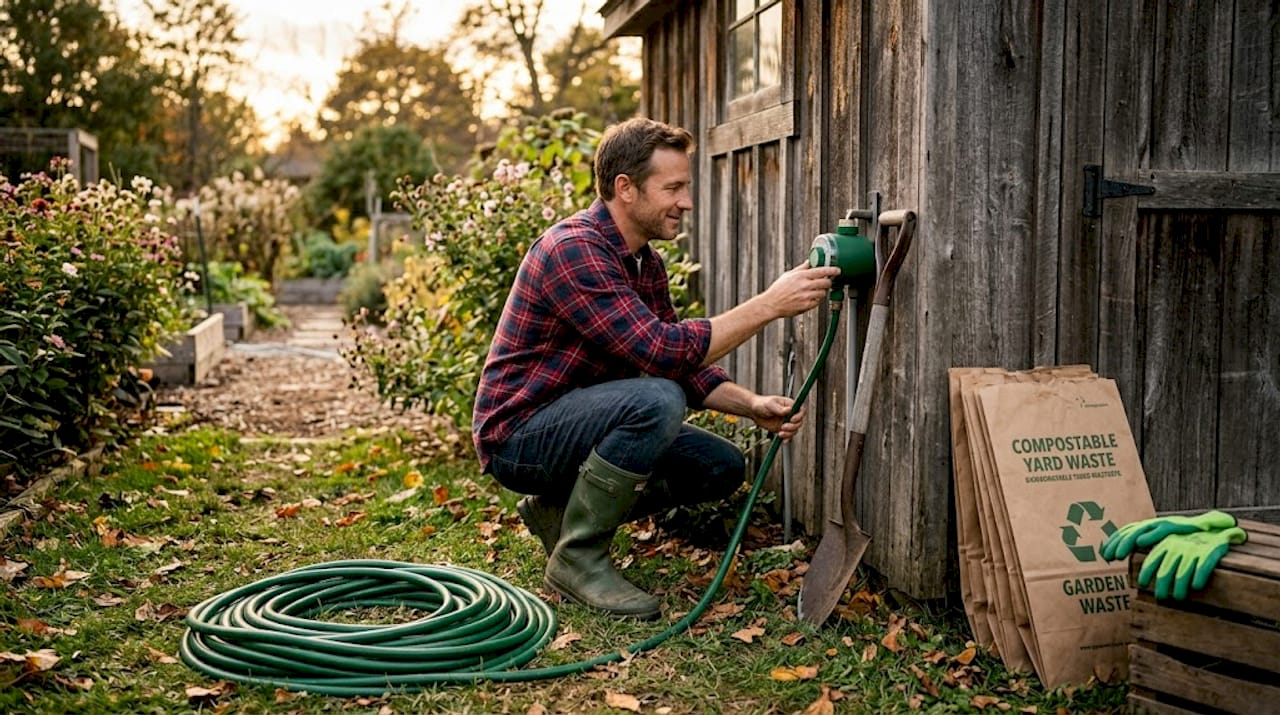
Preventative pruning protects plant investment. When you prune on a schedule, you remove dead and crossing wood before disease sets in. Reactive pruning after significant dieback often cannot save the plant, and replacement shrubs or trees are costly purchases that take years to establish.
Regular weed control stops the seed cycle. A single weed left to flower and set seed releases hundreds of seeds into your beds. Consistent weed management breaks that cycle before it begins. One pulled weed in June prevents fifty more by August.
Scheduled irrigation reduces waste and plant stress. Properly timed irrigation reduces plant stress and improves growth compared to reactive watering after a plant already shows signs of drought damage. Dry and then flooded soil also creates conditions that favour root disease.
Cues to care shape how your property is perceived. Research shows that defined edges and clear pathways signal an intentional, well-tended landscape to neighbours and inspectors, even in naturalistic or low-maintenance yards. You do not need a formal garden. You need the signals that say someone is paying attention.
Understanding these long-term maintenance benefits is what separates homeowners who enjoy their properties from those who dread them every spring.
Seasonal strategies for consistent outdoor care
One of the biggest mistakes property owners make is treating outdoor care like a fixed calendar. The problem with a rigid schedule is that soil temperatures, rainfall, and plant growth cycles do not respect the calendar. Effective maintenance aligns with plant and soil conditions rather than dates on a wall.
Here is a practical seasonal breakdown for Calgary-area properties:
| Season | Priority tasks | Recommended frequency |
|---|---|---|
| Spring | Cleanup debris, first mow, bed edging, fertilising, weed prevention | Weekly once growth starts |
| Summer | Mowing, irrigation management, pest monitoring, pruning spent blooms | Weekly to fortnightly |
| Autumn | Leaf removal, final mow, bed cleanup, hardscape sealing preparation | Fortnightly |
| Winter | Snow and ice management, pathway clearing, monitoring for freeze damage | As needed, often weekly |
Summer deserves particular attention in Calgary. Heat stress hits lawns hard in July and August, and the response most homeowners default to (watering more heavily but less often) actually encourages shallow root systems. Deep, less frequent watering on an consistent schedule trains roots to grow downward, producing a lawn that tolerates heat and drought far better.
Autumn is when the following year’s spring is won or lost. Leaves left on the lawn over winter create matted, oxygen-deprived patches that kill grass and invite fungal disease. A consistent fall cleanup protects both your lawn and your garden beds from spring headaches.
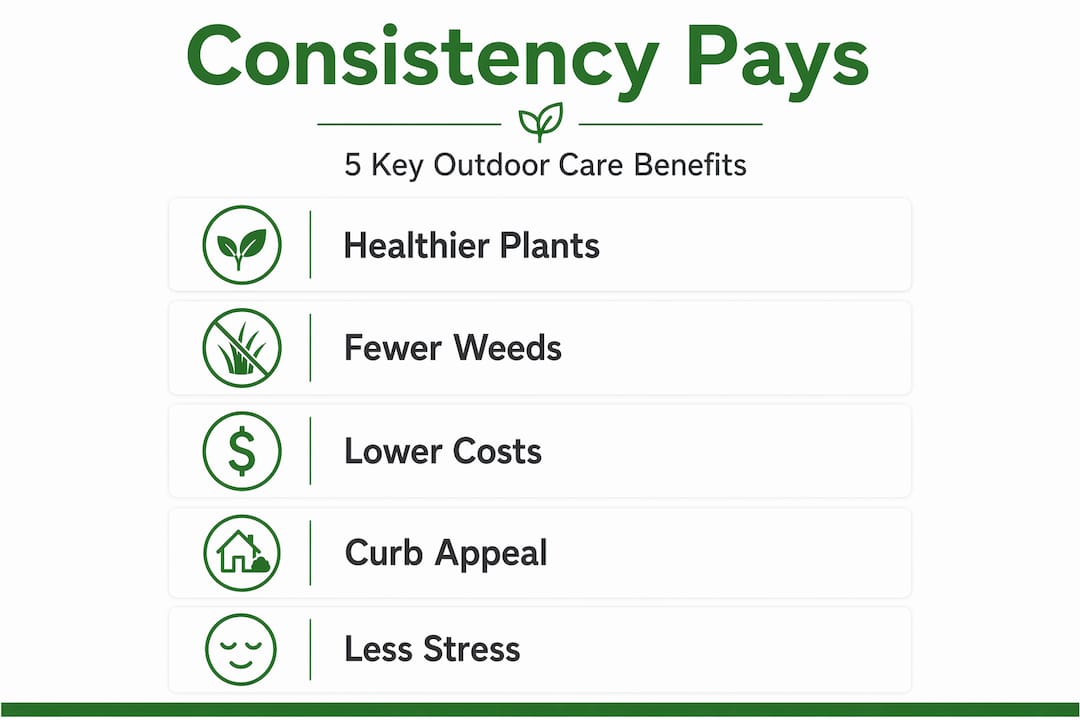
Pro Tip: Use your weekly care visit as a brief observation walk before you start any tasks. Note changes in plant colour, soil moisture, and weed presence. Adjusting your care based on what you see is what separates a functional routine from a rigid one.
The real cost of letting outdoor care lapse
Inconsistency does not just look bad. It creates a cycle that becomes progressively harder and more expensive to break. The stress-and-recovery pattern is damaging in ways most homeowners do not see coming.
Here is what the cycle actually looks like:
- Week one of neglect: Weeds germinate. Grass grows past the ideal cutting height, putting stress on the plant when you do eventually mow.
- Month one: Weeds begin to flower and set seed. Overgrown areas create habitat for pests. Bed edges lose definition.
- Month two and beyond: Missing consecutive care days forces heavier intervention. Weed seed banks build up in the soil. Diseased or pest-damaged plants deteriorate past recovery. Hardscape surfaces accumulate staining and organic growth that require professional cleaning.
The emotional dimension matters too. Catch-up maintenance is exhausting and discouraging. You spend an entire weekend wrestling your property back to baseline and still feel like it does not look good. That feeling makes it easier to delay the next round of care, and the cycle continues.
A property maintenance checklist built around smaller, more regular tasks costs less effort per visit and produces a property that consistently looks cared for. The HOA maintenance strategies used by experienced property managers exist for exactly this reason: preventing the cycle before it starts.
How to build a routine that actually sticks
The biggest threat to any outdoor care routine is overambition at the start. People set up elaborate plans, fall behind by week three, and abandon the whole thing. These steps are designed to prevent that.
Define your minimum viable routine. Write down the three or four tasks you must complete each week to keep your property from falling behind. Mowing, basic weeding, and path clearing are usually enough. That list is your non-negotiable baseline.
Schedule care like an appointment. Choosing a specific day and time each week removes the decision of when to do it. Decision fatigue is a real barrier. When Saturday morning at nine o’clock is always your care time, it becomes as automatic as any other regular commitment.
Observe before you act. A two-minute walk around your property before starting tasks tells you where to focus. Properties change quickly across seasons, and a routine that monitors and adjusts based on actual conditions is far more effective than one applied blindly.
Use the right tools for the scale of your property. Professional-grade tools for DIY homeowners genuinely reduce the physical effort per task, which means you are less tempted to skip sessions because the work feels hard.
Bring in professionals where it makes sense. Starting small and building minimum viable routines prevents burnout. Scheduling a professional service for the heavy-lift tasks, like seasonal cleanups or bed maintenance, protects your own routine from being derailed by one overwhelming job.
My perspective on consistency vs. intensity
I have watched a lot of properties in Calgary go through the same cycle. Owners invest heavily in a spring blitz, get proud of the results, and then coast through summer assuming the work is done. By late August the property looks worse than it did in April, and the frustration is real.
What I have learned is that the owners who have the best-looking properties rarely do the most work in a single session. They do the least work per visit because they do it often enough that each visit is light. The garden never gets away from them.
There is also something worth saying about the emotional payoff. A property you care for regularly starts to feel like yours in a way that a neglected one never does. You notice the small wins, the plant that recovered, the bed that stayed clean, the lawn that held its colour through a dry July. That pride reinforces the routine.
The uncomfortable truth is that consistency is not glamorous. It does not produce dramatic before-and-after photos. It produces a property that simply always looks good, and that is worth far more over ten years than any single renovation weekend.
— Lewie
Let Yearlong handle the consistency for you
Knowing the importance of outdoor care is one thing. Finding the time to act on it every week is another, especially through a Calgary winter or a dry August stretch.

Yearlong has been helping Calgary homeowners and property managers maintain consistent, professional outdoor care since 2017. Whether you need scheduled lawn care and yard cleanups through the growing season or regular garden bed maintenance to keep your beds weed-free and defined, Yearlong’s service packages are built around showing up reliably so you do not have to think about it. Explore the full range of services at yearlong.ca and get a free quote tailored to your property’s needs.
FAQ
Why does consistency matter more than intensity in outdoor care?
Habit strength builds linearly with frequency of action, and the same applies to landscapes. Frequent small tasks prevent problems from compounding, while infrequent heavy sessions only address symptoms after damage is done.
How often should I be maintaining my outdoor spaces?
Maintenance frequency affects outcomes directly: weekly visits suit formal or high-maintenance gardens, fortnightly works well for most residential properties, and monthly requires very disciplined weed and pest control to remain effective.
What are the effects of neglecting outdoor care?
Skipping regular maintenance creates a compounding cycle where weeds set seed, plants deteriorate under unmanaged stress, and hardscaping degrades. Gaps in care create costs that far exceed what consistent upkeep would have required.
How do I start building a sustainable outdoor care routine?
Start with your minimum viable tasks, schedule them at a fixed time each week, and observe your property before each session so you can adjust based on actual conditions rather than a fixed plan.
Can a naturalistic or low-maintenance garden still look well-cared for?
Yes. Defined edges and clear pathways create the visual signal of intentional care regardless of planting style. Consistent edging and path maintenance communicates that someone is paying attention, which is what neighbours and inspectors respond to.