

TL;DR:
- Routine maintenance involves scheduled inspections and servicing to prevent property failures and preserve value. It reduces repair costs, extends asset lifespan, improves safety, and maintains property appeal through proactive care. Prioritizing regular upkeep based on Calgary’s climate and detailed planning minimizes risks and maximizes long-term savings.
Routine maintenance is the proactive, scheduled practice of inspecting and servicing a property’s components before failures occur. For homeowners and property managers, it is the single most reliable method for protecting property value, controlling costs, and avoiding the stress of emergency repairs. Structured maintenance programs reduce unplanned downtime and costs by up to 30%. That figure translates directly to fewer surprise bills and a more predictable budget for anyone managing residential property in Calgary.
Why choose routine maintenance over reactive repairs?
Routine maintenance is defined as planned, recurring upkeep performed on a set schedule rather than in response to a breakdown. The industry term is preventive maintenance, and it stands in direct contrast to reactive or “run-to-failure” approaches. Understanding the difference is the foundation of sound property management.
Reactive maintenance costs arrive without warning or budget allocation. That unpredictability creates financial risk that compounds over time. When a furnace fails mid-January or a roof leak appears during a heavy Calgary snowfall, the repair cost is only part of the problem. The disruption to daily life and the premium charged for emergency service add significantly to the total bill.
Organizations using structured maintenance spend 2 to 5 times less on repairs than those relying solely on reactive approaches. That gap exists because preventive work catches small problems before they become large ones. A cracked caulk line around a window costs almost nothing to fix. Left unaddressed, it leads to water infiltration, mould, and potentially a full window replacement.
Industry leaders target an 80/20 ratio of planned to unplanned maintenance work. Reaching that ratio means the vast majority of your property’s upkeep is scheduled, budgeted, and controlled rather than chaotic and expensive.
What are the main benefits of routine maintenance?
The benefits of routine maintenance fall into five clear categories: cost savings, safety, asset longevity, energy efficiency, and property value.
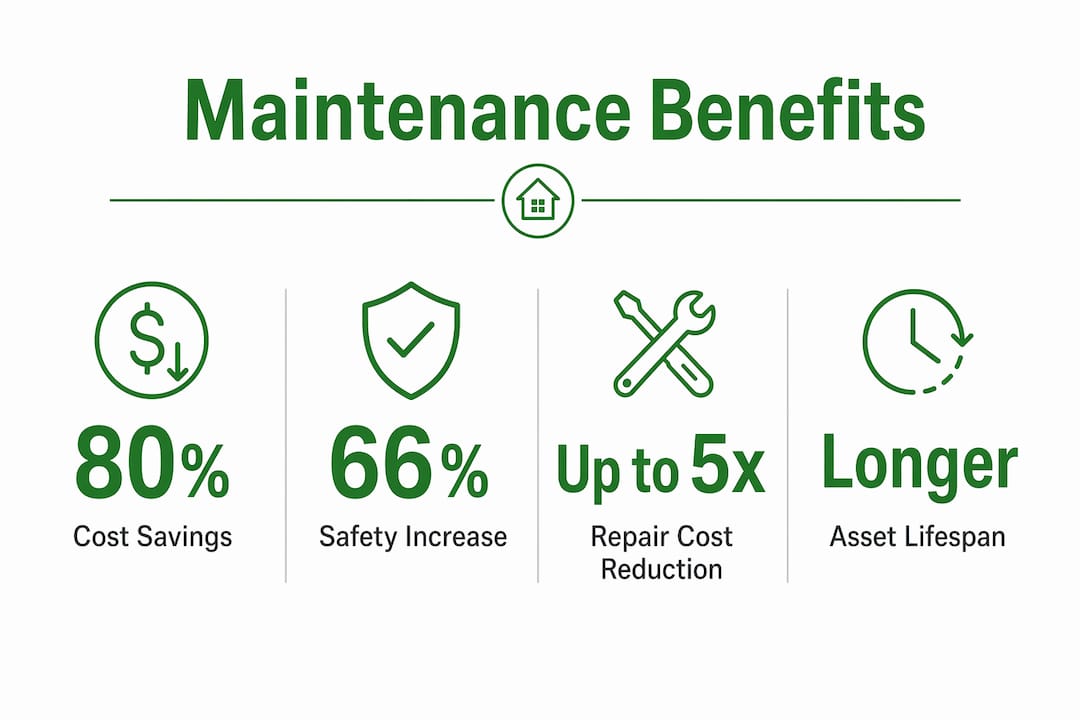
Cost savings through early detection
Small defects caught early cost a fraction of what they cost after failure. A loose shingle, a slow drain, or a slightly misaligned gate latch are inexpensive to address during a scheduled inspection. Ignored, each one escalates into a larger repair with a larger invoice.
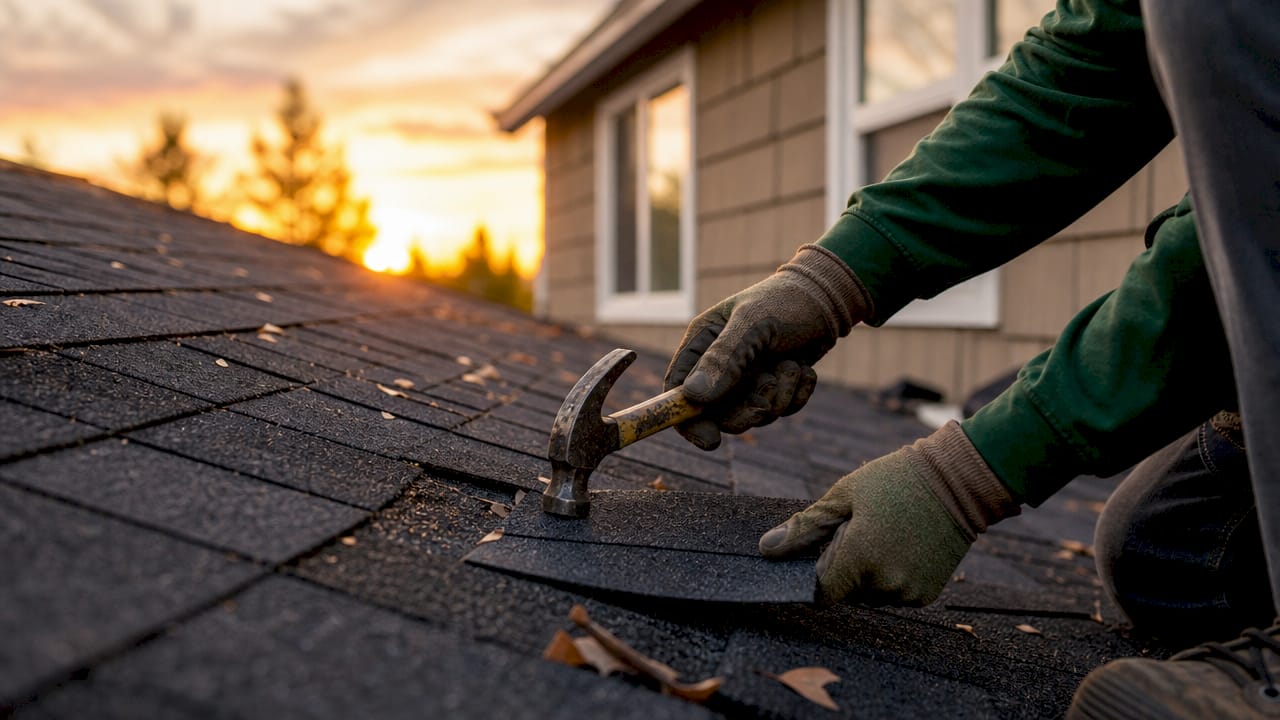
Safety and compliance
Two-thirds of electrical system failures are preventable through routine maintenance. Facilities without scheduled electrical inspections experience failure rates three times higher than those with programmes in place. For homeowners, that statistic points to a real safety risk, not just a financial one.
Extended asset lifespan
Major property components, including HVAC systems, roofing, plumbing, and concrete surfaces, all last longer when serviced regularly. Replacing a furnace filter on schedule extends the unit’s life. Sealing a driveway every few years prevents freeze-thaw cracking that would otherwise require full replacement.
Energy efficiency
Routine upkeep creates measurable energy savings. Properly maintained systems consume less energy to perform the same work, reducing monthly utility costs alongside long-term capital expenses.
Property value preservation
Consistent upkeep signals to buyers, tenants, and appraisers that a property has been well cared for. Maintenance directly supports property value by preventing the visible and structural deterioration that drives down market prices.
Pro Tip: Build a simple digital log of every maintenance task completed, including the date, the contractor used, and the cost. That record becomes a selling point when you list the property and a reference point when scheduling future work.
How does routine maintenance compare with reactive approaches?
The financial case for preventive maintenance over reactive approaches is straightforward. The table below compares the two methods across the factors that matter most to homeowners and property managers.
| Factor | Routine maintenance | Reactive maintenance |
|---|---|---|
| Cost per repair | Lower, planned expenditure | Higher, often 2–5 times more |
| Budget predictability | High, scheduled and forecasted | Low, unpredictable and variable |
| Asset lifespan | Extended through regular servicing | Shortened by deferred care |
| Safety risk | Reduced through proactive inspection | Elevated by undetected failures |
| Scheduling control | Full, work planned in advance | None, driven by emergencies |
Inadequate maintenance can reduce operational capacity by 20%. For a property manager overseeing multiple units, that kind of efficiency loss affects tenant satisfaction and rental income simultaneously.
Reactive maintenance also creates a documentation gap. When repairs happen in response to emergencies, records are often incomplete or absent. Planned maintenance generates consistent documentation that supports insurance claims, warranty applications, and future sale negotiations.
Pro Tip: When comparing quotes for reactive repairs, ask the contractor to estimate what a scheduled inspection would have cost to prevent the failure. That number is often sobering and motivating.
What factors influence your maintenance schedule?
No two properties require identical maintenance schedules. The right frequency depends on several intersecting factors.
Local climate and environmental conditions
Calgary’s climate is one of the most demanding in Canada for residential properties. Freeze-thaw cycles stress concrete, foundations, and roofing materials. Dry summers accelerate lawn and soil degradation. Environmental factors like heat, dust, and humidity accelerate asset wear and require tailored schedules rather than generic ones.
Asset criticality and usage patterns
Not every component carries the same risk if it fails. A malfunctioning garage door opener is inconvenient. A failing sump pump during spring thaw is a crisis. Prioritise inspection frequency based on the consequence of failure, not just the age of the component.
Failure history and manufacturer guidance
Effective maintenance schedules are built on 12–18 months of actual asset performance records, not solely on manufacturer specifications. OEM guidelines provide a starting point, but your property’s specific conditions will refine the intervals over time.
The MTBF principle
The industry standard for setting maintenance intervals is to schedule service at 80–90% of the Mean Time Between Failures for each component. That buffer prevents both premature servicing, which wastes money, and late servicing, which risks failure. Applied to residential property, this means inspecting a component before its typical failure point, not after.
| Component | Typical inspection interval | Key Calgary consideration |
|---|---|---|
| Furnace filter | Every 1–3 months | More frequent during high-use winter months |
| Roof and eavestroughs | Every spring and fall | Freeze-thaw damage inspection critical |
| Concrete and driveway | Annually | Seal every 2–3 years to prevent cracking |
| Lawn and garden beds | Monthly during growing season | Drought stress monitoring in dry summers |
| Exterior caulking | Annually | Wind and UV exposure accelerates degradation |
How to build an effective routine maintenance programme
A working maintenance programme does not require expensive software or a full-time facilities manager. It requires consistency, documentation, and a clear division of tasks.
Create a property inventory. List every major component of your property, including its age, last service date, and estimated replacement cost. This inventory becomes the backbone of your schedule.
Set inspection intervals based on risk. Use manufacturer guidelines as a starting point, then adjust based on Calgary’s climate and your property’s actual history. High-risk components get more frequent attention.
Use a property maintenance checklist. A written or digital checklist prevents tasks from being forgotten and creates a record of completed work. Review and update it each season.
Schedule seasonal upkeep in advance. Calgary’s seasons are distinct and demanding. Spring cleanup, summer lawn care, fall preparation, and winter snow management each require specific tasks. Book professional services before peak demand, not during it.
Separate in-house tasks from professional work. Changing furnace filters and cleaning eavestroughs are reasonable DIY tasks. Electrical inspections, roof assessments, and concrete sealing benefit from professional expertise and equipment.
Budget for maintenance as a fixed expense. Treating maintenance as a discretionary cost leads to deferred work and compounding problems. Set aside a consistent annual amount and treat it as non-negotiable.
Review your programme annually. After 12 months, assess what worked, what was missed, and what failed unexpectedly. Adjust intervals and priorities based on real outcomes.
Pro Tip: Schedule your most critical seasonal tasks, such as spring yard cleanup and fall gutter clearing, at the same time each year. Consistency builds habit and prevents the “I’ll get to it next week” delay that turns small issues into large ones.
Maintenance scheduling for property managers follows the same principles at scale. The difference is volume and documentation rigour, not the underlying logic.
Key takeaways
Routine maintenance is the most cost-effective way to protect property value, reduce emergency repair costs, and extend the lifespan of every major component in a residential property.
| Point | Details |
|---|---|
| Cost advantage is significant | Proactive maintenance costs 2–5 times less per repair than reactive approaches. |
| Safety risk drops sharply | Two-thirds of electrical failures are preventable with scheduled inspections. |
| Schedule to local conditions | Calgary’s freeze-thaw cycles and dry summers require tailored, not generic, intervals. |
| Documentation matters | Written records support insurance claims, warranties, and property resale value. |
| Planned work beats emergency work | Targeting an 80/20 planned-to-unplanned ratio is the hallmark of mature property management. |
Why I think most homeowners underestimate routine maintenance
Most homeowners treat maintenance the way most people treat dental visits. They go when something hurts, not before. I understand the logic. Spending money on something that isn’t broken feels counterintuitive, especially when budgets are tight.
But after years of working with Calgary properties across every season, I’ve seen the same pattern repeat itself. The homeowners who skip routine upkeep don’t save money. They defer it, with interest. A concrete driveway that needed sealing three years ago now needs full replacement. A lawn that skipped its fall cleanup is fighting compaction and thatch the following spring. The cost of neglect is always higher than the cost of prevention.
What changed my thinking was recognising that routine maintenance is a risk-adjusted investment, not a cost. Every dollar spent on scheduled upkeep reduces the probability of a much larger unplanned expense. That reframe matters because it changes how you budget and how you prioritise.
Calgary’s climate makes this especially true. We don’t get the luxury of mild, forgiving winters. Freeze-thaw cycles are aggressive, and a property that isn’t prepared for them pays the price in cracked concrete, damaged roofing, and stressed landscaping. The properties that hold their value and look good year after year are almost always the ones with consistent, scheduled care behind them.
The other thing I’d say is this: peace of mind has real value. Knowing your property is in good shape, that the gutters are clear, the lawn is healthy, and the walkways are safe, removes a low-grade stress that most homeowners don’t even notice until it’s gone.
— Lewie
Yearlong’s property maintenance services for Calgary homeowners
Calgary properties face some of the most demanding seasonal conditions in Canada. Yearlong has been helping homeowners and property managers stay ahead of those conditions since 2017, with scheduled, professional outdoor maintenance across every season.
From lawn bed maintenance and seasonal cleanups to lawn care and yard cleanup, Yearlong’s programmes are built around consistent, scheduled service rather than one-off visits. That consistency is what protects your property’s appearance and value over time. Yearlong serves the entire Calgary area with flexible packages designed for residential properties and property managers who need reliable, year-round outdoor upkeep without the coordination burden.
FAQ
What is routine maintenance for a residential property?
Routine maintenance, also called preventive maintenance, is the scheduled inspection and servicing of a property’s components before failures occur. It covers tasks like gutter cleaning, lawn care, HVAC filter changes, and seasonal preparation.
How much can routine maintenance save compared to reactive repairs?
Proactive maintenance programmes cost 2 to 5 times less per repair than reactive approaches. The savings come from catching problems early, when they are still inexpensive to fix.
How often should I schedule property maintenance in Calgary?
Frequency depends on the component, its age, and Calgary’s climate. Most exterior elements, including roofing, concrete, and eavestroughs, need inspection every spring and fall due to freeze-thaw stress.
Does routine maintenance actually protect property value?
Consistent upkeep directly supports property value by preventing the structural and cosmetic deterioration that reduces market prices. Well-documented maintenance records also strengthen a property’s position during sale negotiations.
What is the biggest risk of skipping routine maintenance?
Neglected maintenance can reduce operational capacity by 20% and introduces unpredictable, high-cost emergency repairs. The financial and safety risks of deferred upkeep consistently exceed the cost of the maintenance that was skipped.