

TL;DR:
- Proper debris management involves identifying, collecting, transporting, and recycling or disposing of non-routine waste to ensure site safety and compliance.
- A site walk and short waste assessment help property managers estimate debris volumes, reduce costs, and plan effective cleanup strategies.
Debris management for businesses is the organised process of identifying, collecting, transporting, and disposing of or recycling non-routine wastes — construction rubble, storm-damaged trees, land-clearing material, and demolition remains — that fall outside standard municipal pickup. According to Government of Canada debris planning guidance, proper management is essential for site safety and for meeting local environmental and building regulations. If you manage a Calgary property and you’re unsure where to start, the fastest first step is a short waste assessment or a call to a local provider for a site visit.
Table of Contents
- What debris management covers: types and the core process
- Why debris management matters for your operations and bottom line
- How to do a simple waste assessment for your property
- How pre-arranged planning speeds up emergency debris response
- How to choose a local debris-management provider in Calgary
- Concrete next steps for Calgary property managers and homeowners
- Key takeaways
- The part most property managers skip
- Yearlong handles the debris so you don’t have to
- Useful sources and further reading
What debris management covers: types and the core process
Not all waste is the same, and the category determines how it gets handled. Typical debris types that businesses and property managers encounter include:
- Construction and demolition rubble (concrete, brick, drywall, lumber)
- Land-clearing material (brush, stumps, topsoil, root balls)
- Storm and windstorm damage (downed trees, broken branches, fence sections)
- Renovation waste (fixtures, flooring, cabinetry)
- Bulky items (appliances, furniture, pallets)
- Contaminated or hazardous materials (asbestos-containing products, chemicals, treated wood) — these require HAZWOPER-trained crews and specialist disposal
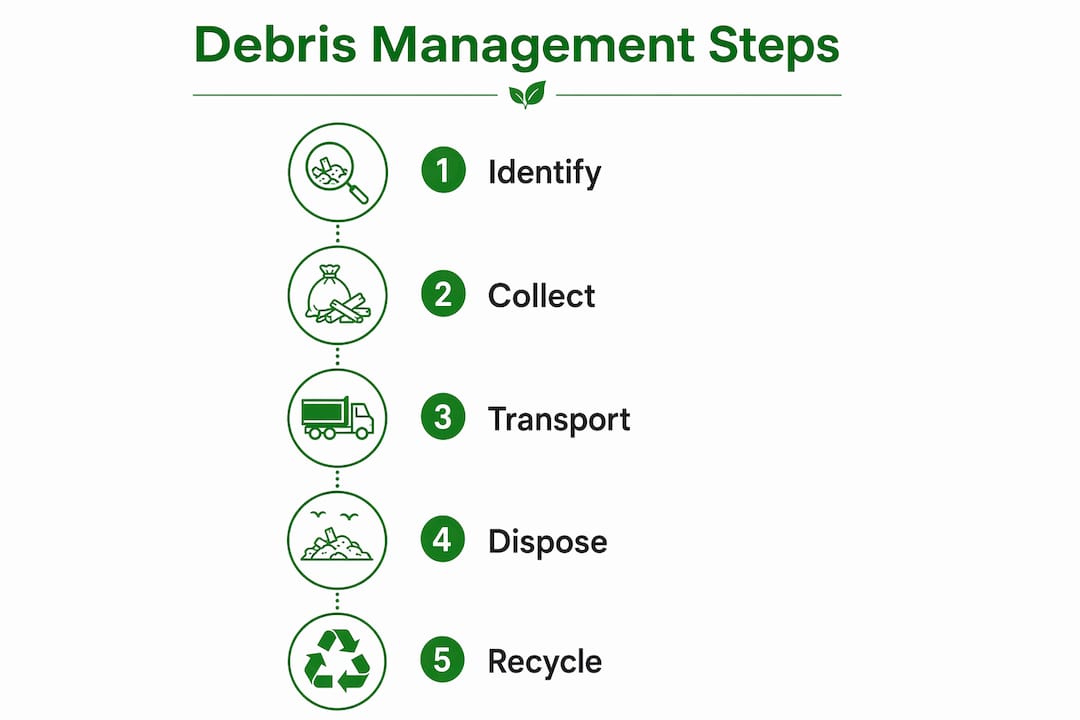
The standard process flows in five stages: identify what you have → collect and contain it on-site → transport using roll-offs or short-term hauling → segregate and recycle where possible → dispose at an approved facility. The recycling step matters more than most people realise; the UNEP notes that shifting from ad-hoc dumping to planned recycling reduces environmental footprint and creates local economic value.
Routine waste (weekly garbage pickup) and project debris are fundamentally different. Municipal collection handles the former; the latter typically needs roll-off containers and short-term hauling that standard waste contractors may not provide.
Why debris management matters for your operations and bottom line
Good debris management protects operations, lowers net disposal costs, and reduces liability. That’s the short version. The longer version involves what happens when you skip it.
Debris left on-site after a storm or renovation creates tripping hazards, fire risks, and potential bylaw infractions. A clean-site policy with multiple pickups during active projects keeps work areas safer and helps avoid municipal fines. Calgary’s bylaws treat large, unsightly piles as a fire and safety hazard, particularly during dry summers.
Statistic to know: The US EPA identifies materials and waste as “an often overlooked opportunity to improve an organisation’s sustainability, prevent greenhouse gas emissions and reduce costs” — and frames waste tracking as the essential first step.
Pre-sorting materials before disposal also cuts costs directly. Dense materials like concrete and metal fill containers fast and push loads over weight limits, triggering overage fees. Diverting those materials to recycling facilities avoids the surcharge and keeps usable resources out of landfill.
How to do a simple waste assessment for your property
You can’t manage what you don’t measure. A basic waste assessment takes one site walk and a short tracking period of one to four weeks, and it gives you the data to get accurate quotes and negotiate better service terms. The US EPA’s guidance for commercial buildings recommends exactly this approach, and tools like ENERGY STAR Portfolio Manager can support ongoing tracking for larger sites.
For a small Calgary property, the steps are straightforward:
- Walk the site and map active work areas and debris accumulation points.
- Log debris types daily for one to four weeks.
- Estimate volumes in bags, cubic metres, or roll-off equivalents.
- Flag any hazardous items separately for specialist handling.
A simple tracking table helps:
| Item | Est. volume | Frequency | Special handling? |
|---|---|---|---|
| Concrete rubble | 1 cubic metre | One-time | Pre-sort for recycling |
| Brush and branches | 4 bags | Weekly | Chip or compost |
| Drywall offcuts | — | One-time | Landfill or recycler |
| Treated lumber | 6 pieces | One-time | Specialist disposal |
A waste audit like this also reveals which materials can be diverted, which directly affects your disposal bill.
Pro Tip: Measure weights and volumes for dense materials like concrete, brick, and metal rather than guessing. Overweight loads trigger fees that can double the cost of a single haul.
How pre-arranged planning speeds up emergency debris response
Pre-arranged debris removal contracts and clear responsibilities speed recovery after storms or incidents. That’s not a theory — Government of Canada guidance confirms that planning in advance reduces confusion and shortens post-event response times.
Before an event, negotiate these contract items with your provider:
- Response times: first arrival within a few days of an event
- Scope: which debris is included (private property vs. municipal right-of-way)
- Container types: roll-offs, bins, or haul-away trucks
- Recycling diversion: what percentage gets diverted and where
- Insurance and permits: confirm the provider carries both
- Pricing structure: per load, per tonne, or flat rate
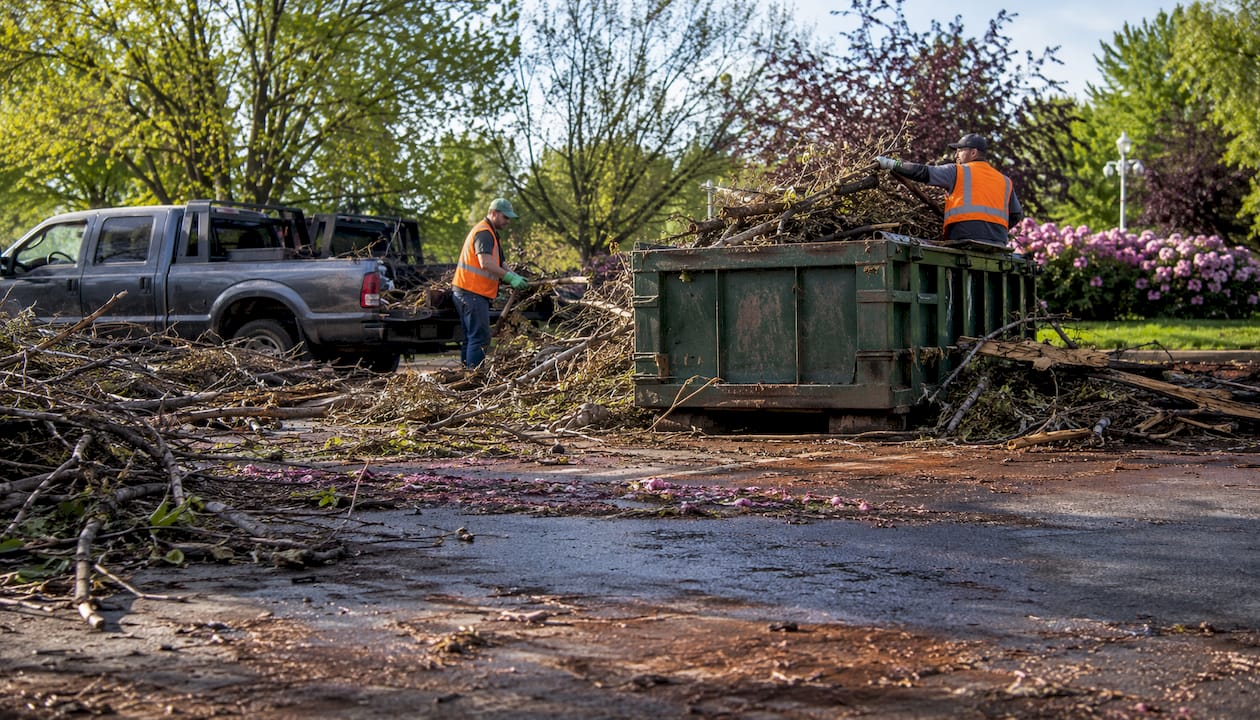
A typical multi-day response after a Calgary windstorm looks like this: initial focus on safety clearance (downed trees blocking access, hazards near structures), followed by staging debris in curbside piles separated by type, and then haul-away and recycling diversion. Private property cleanup is your responsibility; the City of Calgary handles debris on public right-of-way. Knowing that boundary before an event prevents disputes and delays.
For year-round debris management in Calgary, having a provider on call before the season changes is the single most effective preparation.
How to choose a local debris-management provider in Calgary
Prioritise local experience, proof of compliance, clear pricing, and recycling options. Here’s what to ask any provider before signing:
- Do you carry liability insurance and workers’ compensation coverage?
- Are your crews trained for hazardous material handling?
- What container types and sizes do you offer?
- What are your recycling and diversion pathways for concrete, wood, and metal?
- Can you pull municipal permits when required?
- What is your emergency response timeframe?
Red flags worth walking away from: vague or verbal-only pricing, no proof of insurance, no diversion plan, and unwillingness to provide references or a written scope.
Yearlong has operated in Calgary since 2017, which means the team understands local seasonal patterns — spring melt debris, summer storm damage, fall leaf and branch accumulation, and winter snow-load concerns. Their services include seasonal cleanups, hauling coordination, and emergency debris response, backed by a satisfaction guarantee. For a commercial property maintenance overview, their site outlines the full scope.
For post-tree-service debris specifically, reviewing best practices for post-tree cleanup can help you stage woody debris correctly before your provider arrives.
Concrete next steps for Calgary property managers and homeowners
Three tiers cover everything you need to move from reading to acting.
Immediate (this week):
- Walk your property and spot-clean any debris that poses a safety or fire risk.
- Separate hazardous items (treated wood, chemicals, asbestos-suspect materials) and set them aside for specialist handling.
- Photograph existing debris piles for your records.
Short-term (next 2–4 weeks):
4. Run a one-to-four-week waste assessment using the table format above.
5. Get two or three quotes from local providers, each with a written scope and itemised pricing.
6. Sign a pre-arranged removal agreement that includes emergency response terms.
Seasonal/annual:
7. Schedule spring and fall seasonal cleanups to stay ahead of accumulation.
8. Review your debris plan after any major storm or construction project.
Cost factors to budget for:
- Material density (concrete and metal cost more per haul than brush)
- Distance to the nearest recycling or disposal facility
- Permitting requirements for larger projects
- Hazardous material handling surcharges
Key takeaways
Effective debris management for businesses starts with measurement, moves through pre-arranged planning, and relies on a local provider who can handle both routine seasonal work and emergency response.
| Point | Details |
|---|---|
| Define your debris type first | Construction, storm, and hazardous debris each require different handling and disposal pathways. |
| Measure before you quote | A one-to-four-week waste assessment gives you accurate volumes and reduces the risk of overage fees. |
| Pre-arrange emergency contracts | Contracts negotiated before an event shorten response times and clarify private vs. public cleanup responsibilities. |
| Pre-sort dense materials | Separating concrete, metal, and brick reduces overweight fees and improves recycling diversion rates. |
| Yearlong for Calgary sites | Operating since 2017, Yearlong offers seasonal cleanups, hauling coordination, and emergency debris response across Calgary with a satisfaction guarantee. |
The part most property managers skip
Most guides on business waste management focus on the big picture: compliance, sustainability targets, circular economy goals. All worth knowing. But the gap between reading about debris management and actually having a plan is almost always one thing: nobody did the site walk.
The waste assessment step feels like admin. It’s not. It’s the moment you find out you have treated lumber mixed in with your brush pile, or that your concrete rubble is going to push a standard roll-off over its weight limit. Those discoveries before a haul save real money. After the haul, you’re just paying the invoice.
Calgary’s weather makes this more urgent than it sounds. A single spring windstorm can drop enough branch material to fill two roll-offs. Without a pre-arranged contract, you’re calling around during the busiest cleanup week of the year, competing with every other property manager in the city for the same trucks. The properties that recover fastest are the ones that already have a provider’s number and a signed scope.
One practical tip worth keeping: stage storm-damaged brush in curbside piles separated from construction rubble. Mixed piles slow removal and reduce recycling options. Keep combustible piles away from structures while they wait for pickup.
Yearlong handles the debris so you don’t have to
Calgary properties face year-round debris challenges, and Yearlong has been managing them since 2017. Site assessments, scheduled seasonal cleanups, emergency debris response, and recycling diversion coordination are all part of what the team handles across the Calgary area.

Services include site walk-throughs to identify debris types and volumes, roll-off coordination for construction and renovation projects, multiple-times-per-week pickups during active projects, emergency response within pre-agreed windows, and recycling pathways for wood, concrete, and metal. Every job comes with a satisfaction guarantee and transparent, itemised pricing.
Ready to get a quote or book a site visit? Request your estimate and get a clear scope before any work begins. Yearlong serves the entire Calgary area and can confirm availability for your property today.
Useful sources and further reading
- US EPA — Managing and Reducing Wastes: A Guide for Commercial Buildings: Practical guidance on waste assessments, tracking tools, and recycling programmes for commercial properties.
- UNEP — Sustainable Debris Management: Covers the shift from ad-hoc dumping to planned recycling and the circular economy benefits for businesses.
- Government of Canada — Debris Planning Guidance: Canadian-specific guidance on debris planning, responsibilities, and regulatory compliance.
- EPA — Planning for Natural Disaster Debris: Four-step planning process for communities and property managers preparing for disaster debris events.
- eco.ca — Waste Audit Guidance: Step-by-step waste audit methodology relevant to small commercial sites in Canada.
- Yearlong — Year-Round Debris Management in Calgary: Calgary-specific guidance on seasonal debris handling from a local provider.
- Yearlong — Seasonal Cleanups: Spring and fall cleanup services and scheduling for Calgary properties.