

Landscaping work carries real physical risk. Whether you’re running a Calgary crew or managing your own yard, the hazards are consistent: chemicals, heavy machinery, heat, uneven terrain, and overhead power lines. The top landscaping safety tips every worker and manager should know come down to a handful of non-negotiable practices.
- Wear CSA-certified PPE on every job, every time
- Inspect equipment before each use and keep all guards in place
- Store pesticides and herbicides in locked, labelled containers away from children and pets
- Hydrate consistently and schedule strenuous tasks outside peak sun hours (11 AM to 3 PM)
- Conduct a site hazard assessment before starting work, including checking for overhead power lines
- Follow CCOHS guidelines for equipment operation and chemical handling
- Train all workers on emergency procedures and first aid before they work independently
These aren’t suggestions. They’re the foundation of a safe worksite.
How to handle chemicals safely on a landscaping site
Pesticides, herbicides, and fertilisers are among the most mismanaged hazards in outdoor maintenance work. The risks range from skin irritation to serious poisoning, and most incidents are preventable.
- Store all pesticides in their original containers with labels intact, in a locked space away from children and animals
- Always check the Pest Control Product (PCP) registration number before using any pesticide in Canada
- Wear chemical-resistant gloves and a properly fitted mask when mixing or applying products
- Read the Safety Data Sheet (SDS) for every chemical before use, not after an incident
- Refill sprayers outdoors, never in enclosed spaces, and avoid spraying on windy days to prevent drift
- Dispose of containers according to your municipality’s hazardous waste regulations
- If skin or eye contact occurs, flush immediately with water for at least 15 minutes and call Poison Control
For families managing residential properties, safe chemical handling around children and pets requires the same discipline as a professional worksite.
Safe use and maintenance of landscaping equipment and tools
Equipment failure causes a disproportionate share of landscaping injuries, and most failures trace back to skipped inspections. CCOHS recommends checking every piece of equipment for damage, tight handles, and functional guards before each use.
- Inspect blades, guards, handles, and electrical cords at the start of every shift
- Never remove or bypass safety guards on mowers, trimmers, or chainsaws
- Wear close-fitting clothing; loose fabric catches in rotating parts faster than you’d expect
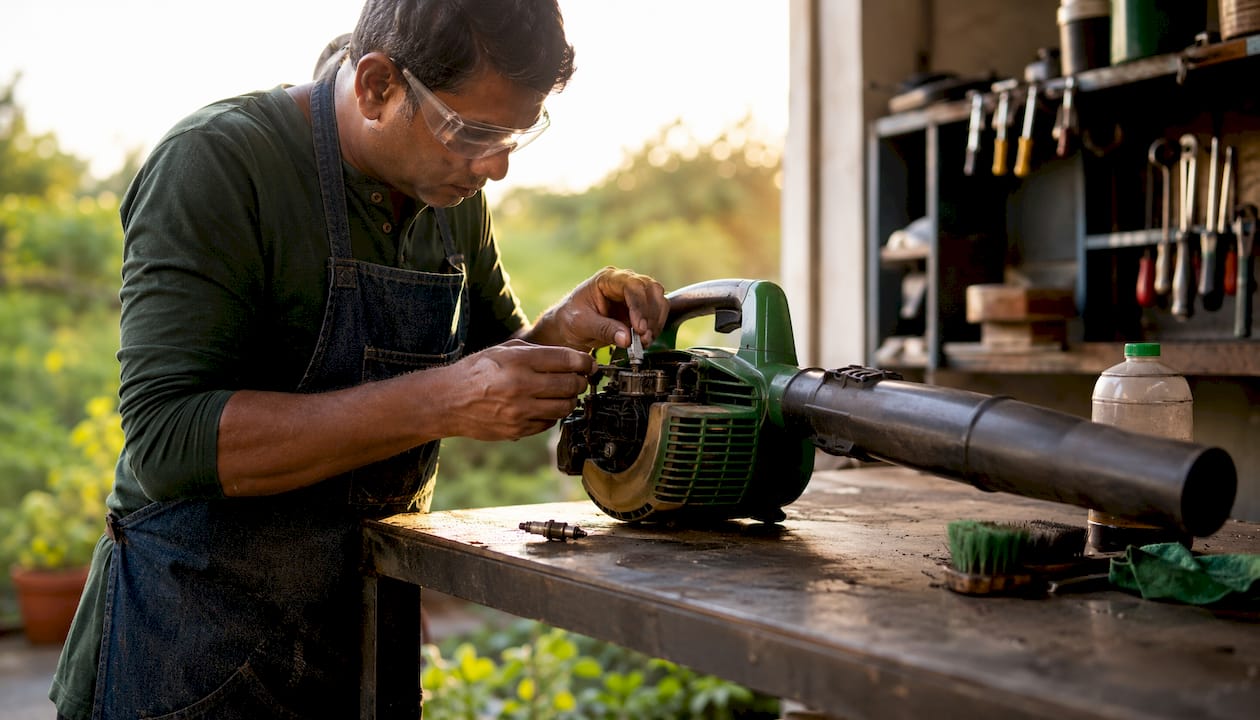
- Cool the engine completely before refuelling, and always refuel outdoors to avoid ignition risk
- Clear rocks, sticks, and debris from the work area before starting any power equipment
- Mow across slopes, not up and down, to reduce the risk of rollover or loss of control
- Turn off and unplug any machine before clearing a jam, then use a stick rather than your hand
Pro Tip: Keep a pre-use checklist on a laminated card attached to each piece of equipment. Workers who physically check a list skip fewer steps than those who rely on memory.
What environmental hazards should landscapers watch for?
The site itself is often the hazard. Overhead power lines, water features, poisonous plants, and wildlife all create risks that aren’t obvious until something goes wrong.
- Maintain at least three metres of clearance from overhead power lines before trimming or cutting trees; safe distances from power lines are a regulatory requirement, not a guideline
- Treat any unidentified line as live until confirmed otherwise
- Keep children and bystanders away from ponds and water features during work; even shallow water is a drowning risk for young children
- Learn to identify poison ivy, wild parsnip, and other common harmful plants before working in unfamiliar areas
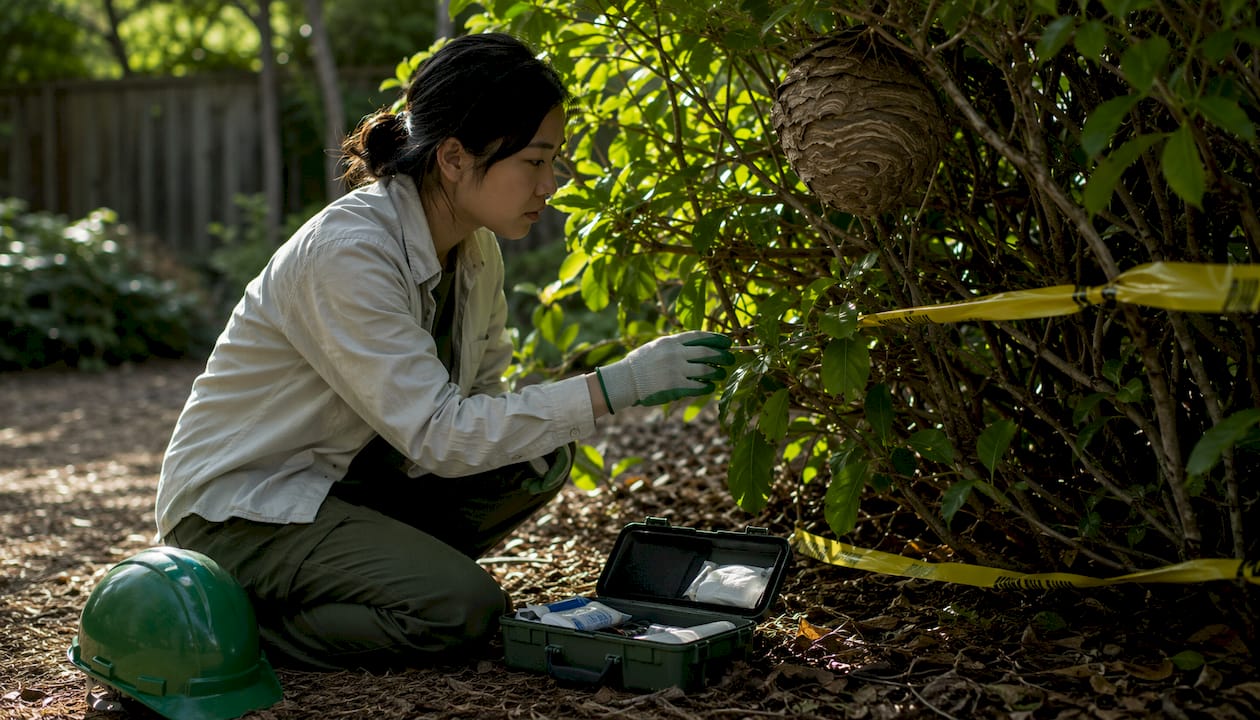
- Check for wasp or hornet nests before operating noisy equipment nearby; vibration agitates colonies quickly
- Monitor weather forecasts and have a shelter plan for lightning, high winds, or extreme heat
- Report wildlife encounters (coyotes, skunks, raccoons) to your supervisor and local animal control rather than attempting removal yourself
Residential property hazards deserve the same attention as commercial sites. A backyard cleanup in Calgary can involve all of the above, especially in spring when wildlife is active and plants are harder to identify.
Which PPE do landscapers actually need?
PPE requirements in landscaping are specific, and generic work gloves don’t cover the range of hazards. CCOHS confirms that CSA-certified equipment is a regulatory requirement, not optional.
- Safety boots: CSA-approved, steel-toed, with ankle support and traction soles
- Gloves: leather for pruning and debris handling; chemical-resistant rubber when working with pesticides or fertilisers
- Eye protection: safety goggles or glasses with side shields when using trimmers, blowers, or chainsaws
- Hearing protection: earplugs combined with earmuffs for high-noise equipment like chainsaws and ride-on mowers
- Hard hat: required when working near trees, aerial lifts, or any overhead hazard
- Sun protection: long-sleeved light-coloured shirts, wide-brimmed hat, and SPF 30+ sunscreen on all exposed skin
Inspect PPE before each use. A cracked lens or torn glove provides no protection and creates false confidence.
How do you prevent heat illness during outdoor landscaping work?
Heat exhaustion and heat stroke are genuine risks for outdoor workers in Canadian summers, particularly during July and August in Alberta. The prevention strategy is straightforward, but it requires discipline to follow consistently.
- Drink water regularly throughout the shift, not just when you feel thirsty
- Schedule physically demanding tasks for early morning or late afternoon, avoiding the 11 AM to 3 PM peak heat window
- Take rest breaks in shaded or air-conditioned areas every hour during hot weather
- Recognise early symptoms of heat exhaustion: heavy sweating, weakness, cold or pale skin, nausea, and a weak pulse
- If heat stroke is suspected (hot dry skin, confusion, rapid pulse), call 911 immediately and move the worker to a cool area
- Acclimatise new workers gradually over about one to two weeks before assigning them to full outdoor shifts in summer heat
- Workplace safety standards emphasise hydration and acclimatisation as the primary defences against heat stress for outdoor workers
Never assume a worker is “just tired.” Heat illness escalates quickly, and a short rest break costs far less than an emergency response.
Building a safety training programme that actually works
A safety poster in the break room doesn’t constitute a training programme. Effective landscaping safety guidelines require structured, documented, and repeated instruction.
- Conduct formal onboarding training before any new worker operates equipment independently
- Cover hazard recognition, emergency procedures, chemical handling, and equipment operation in every onboarding session
- Hold brief tailgate safety meetings at the start of each shift to address site-specific hazards for that day
- Document all training sessions with dates, topics covered, and worker signatures
- Rotate safety committee membership so different perspectives shape the programme over time
- Encourage workers to report hazards without fear of blame; a blame-free reporting culture catches problems before they become injuries
- Use safety checklists for equipment, chemicals, and site conditions so nothing gets skipped during busy periods
Regular refresher training and a genuine safety culture reduce incidents and keep workers engaged in maintaining safe conditions. Leadership by example matters more than any written policy.
Ergonomic practices that reduce musculoskeletal injuries in landscaping
Musculoskeletal injuries are the most common and most underestimated hazard in landscaping work. Back strain, wrist injuries, and knee problems accumulate over weeks and months, not in a single incident.
- Warm-up stretches before work reduce muscle strain and soreness, particularly for spring return-to-work periods when bodies aren’t conditioned to the physical load
- Choose ergonomic tools with cushioned grips and handle lengths matched to the worker’s height to reduce cumulative wrist and back strain
- Keep your wrist in a straight line when using hand tools; bending the wrist forces greater muscle effort and accelerates fatigue
- Lift with your knees, not your back, and keep the load close to your body; follow occupational health guidelines for safe lifting loads for men and women
- Rotate tasks regularly to distribute physical load across different muscle groups; switch from raking to pruning, for example, rather than raking continuously for long periods
- Use a wheelbarrow for transporting soil, mulch, and equipment rather than carrying loads manually
- Take genuine rest breaks. Pushing through fatigue is when technique breaks down and injuries happen
Pro Tip: Treat your pre-work warm-up the same way a professional athlete treats theirs. Five minutes of slow stretches before picking up a tool is the single lowest-cost injury prevention measure available to any landscaping crew.
Let Yearlong handle the hard work safely

Managing landscaping safely takes time, training, and the right equipment. Yearlong has served Calgary homeowners and property managers since 2017, handling everything from lawn care and yard cleanup to seasonal bed maintenance with a crew that knows Calgary’s conditions and follows safe work practices on every job. If you’d rather leave the risk management to professionals, Yearlong is ready to help.
Key takeaways
Safe landscaping requires consistent application of PPE, equipment checks, chemical protocols, heat illness prevention, ergonomic habits, and structured training across every shift and season.
| Point | Details |
|---|---|
| PPE is mandatory | CSA-certified boots, gloves, eye and hearing protection must be worn on every job. |
| Inspect equipment daily | Check guards, blades, and handles before each use to prevent malfunctions and injuries. |
| Chemical storage matters | Store pesticides in locked, labelled containers and follow Canadian PCP registration requirements. |
| Heat illness prevention | Hydrate throughout the shift and avoid strenuous work between 11 AM and 3 PM in summer. |
| Ergonomics prevent long-term injury | Warm up before work, rotate tasks regularly, and use tools sized to the worker. |