

An alkaline concrete degreaser applied directly to the stain, left to dwell for 5–10 minutes, scrubbed with a stiff-bristle brush, then rinsed with a pressure washer is the fastest safe method for tire mark removal on concrete for most bare or penetrating-sealed surfaces. Products like EZ Strip, Simple Green, Formula 409, and Kärcher Tire Mark Remover are all available at Canadian retailers and cover the range from mild household jobs to stubborn commercial deposits.
Quick-start checklist (5–30 minutes):
- Sweep loose debris off the surface
- Apply your chosen degreaser or cleaner directly to the black marks
- Keep the area wet and let the product dwell 5–10 minutes
- Scrub firmly with a stiff-bristle brush
- Rinse with a garden hose or pressure washer
One caution before you start: if your concrete has a topical sealer, epoxy coating, or decorative finish, skip solvent-based products and aggressive pressure washing. Gentler non-filming detergents are the right call there. And if the marks are old, deeply embedded, or cover a large coated floor, a professional cleaning crew will get better results than repeated DIY attempts.
Key takeaways
An alkaline concrete degreaser applied with proper dwell time and scrubbed before rinsing removes most black tire marks from bare or penetrating-sealed concrete without damaging the surface.
| Point | Details |
|---|---|
| Fastest DIY method | Apply alkaline degreaser, keep wet for 5–10 minutes, scrub, then pressure-wash. |
| Surface compatibility matters | Use non-filming detergents on epoxy; avoid solvents on topical acrylic sealers. |
| Penetrating sealer prevents re-staining | A silane or siloxane sealer slows plasticizer absorption and makes future cleaning easier. |
| Pro cleaning costs $100–$500 in Calgary | Embedded marks, coated floors, or large areas are worth hiring out rather than repeating DIY attempts. |
| Yearlong for Calgary jobs | Yearlong offers inspection, test patching, cleaning, and resealing for residential and commercial concrete in Calgary. |
Table of Contents
- Why do black tire marks form on concrete?
- Step-by-step DIY methods for removing tire marks from concrete
- Which products and tools actually work in Canada?
- What if the marks still won’t come out?
- How to prevent tire marks from coming back
- What does DIY vs. professional removal actually cost?
- A Calgary property maintenance perspective
- Yearlong handles concrete cleaning and sealing in Calgary
- Sources
Why do black tire marks form on concrete?
Rubber tyres contain plasticizers, which are oily chemical compounds that keep the rubber flexible. When a tyre rolls, brakes, or turns sharply on concrete, friction and heat transfer a thin film of these compounds onto the surface. Fresh marks sit mostly on top of the concrete and wipe away with moderate effort. The problem is that concrete is porous. Over days or weeks, plasticizers migrate into the pores and bond with the cement matrix, turning a surface deposit into an embedded stain that resists simple scrubbing.
Bare, older, or porous concrete absorbs rubber compounds faster than a sealed surface does. Industrial guidance confirms that solid industrial tyres and heavy machinery leave deeper marks than passenger car tyres, but even a standard vehicle can leave stubborn deposits on a hot summer driveway if the concrete is unsealed. The surface type matters: a penetrating sealer slows absorption, while a topical acrylic coating sits between the tyre and the concrete but can itself be damaged by aggressive cleaning.
Step-by-step DIY methods for removing tire marks from concrete
Work from least to most aggressive. Jumping straight to a solvent on a sealed or epoxy floor can strip the coating and create a bigger problem than the original stain.
Soap and stiff brush. Start with dish soap or a household degreaser diluted in warm water. Scrub with a stiff-bristle brush and rinse. Works on fresh, light marks on bare concrete.
Alkaline concrete degreaser. Products like Simple Green Concrete Cleaner or a dedicated concrete degreaser target the petroleum-based plasticizers in rubber. Apply undiluted or per label directions, keep the surface wet throughout the dwell time, scrub, and rinse. This handles most residential driveway marks.
Citrus or degreasing solvent. For tougher marks, citrus-based cleaners or Formula 409 add more cutting power without being as harsh as pure solvents. SUNDEK recommends citrus cleaners and non-filming detergents as reliable mid-range options, especially where a coating is present.
Poultice for embedded rubber. Mix an absorbent powder (diatomaceous earth or cat litter) with a degreasing solvent into a thick paste. Apply it over the stain, cover with plastic wrap, and leave it for several hours or overnight. The paste draws the plasticizer out of the pores as it dries. Scrape off and rinse.
Spot solvent for extreme cases. Brake cleaner or acetone can dissolve stubborn rubber deposits on bare concrete. Use only in a well-ventilated area, wear nitrile gloves and eye protection, and never apply these to epoxy or coated floors.
Pressure washer guidance: a surface cleaner attachment or a 25-degree fan nozzle at 1,500–2,500 PSI works well on bare concrete. Keep the nozzle at least 30 cm from the surface and move in steady passes. Higher pressure on a single spot can etch the concrete or lift a sealer.
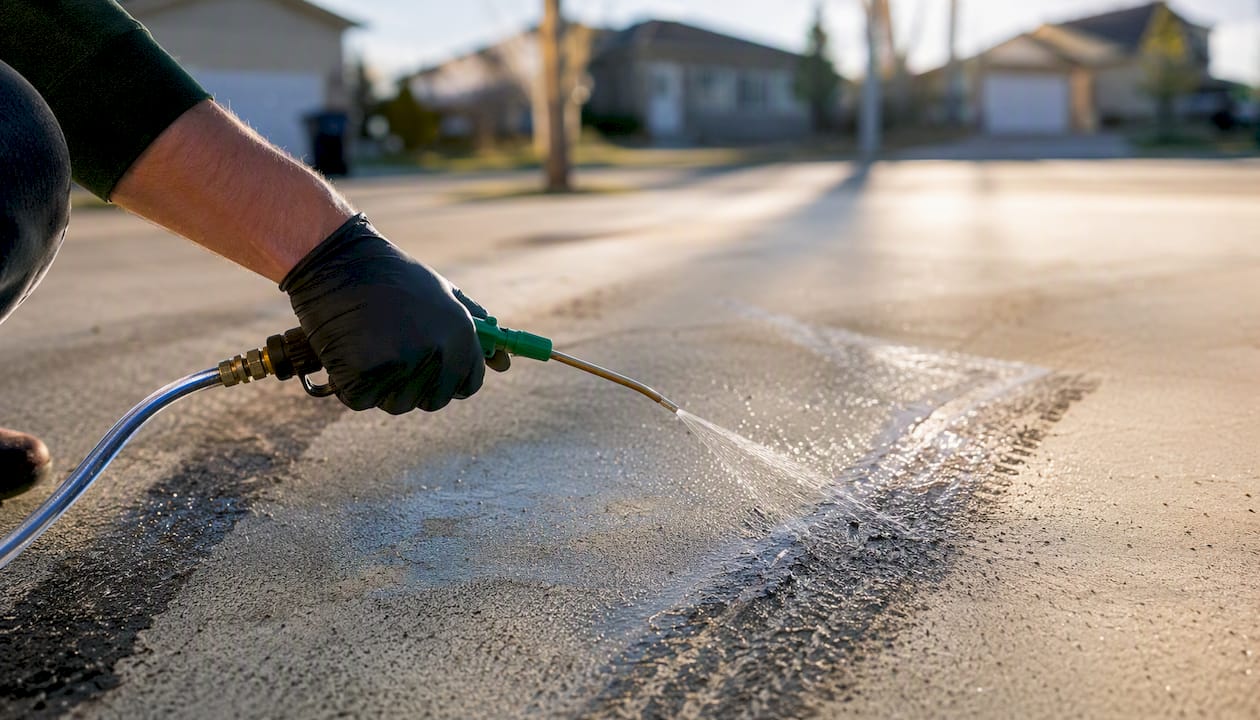
Pro Tip: *Alkali degreasers stop working the moment they dry. On a warm Calgary day, mist the area with water every few minutes to keep the cleaner active.
Surface compatibility at a glance
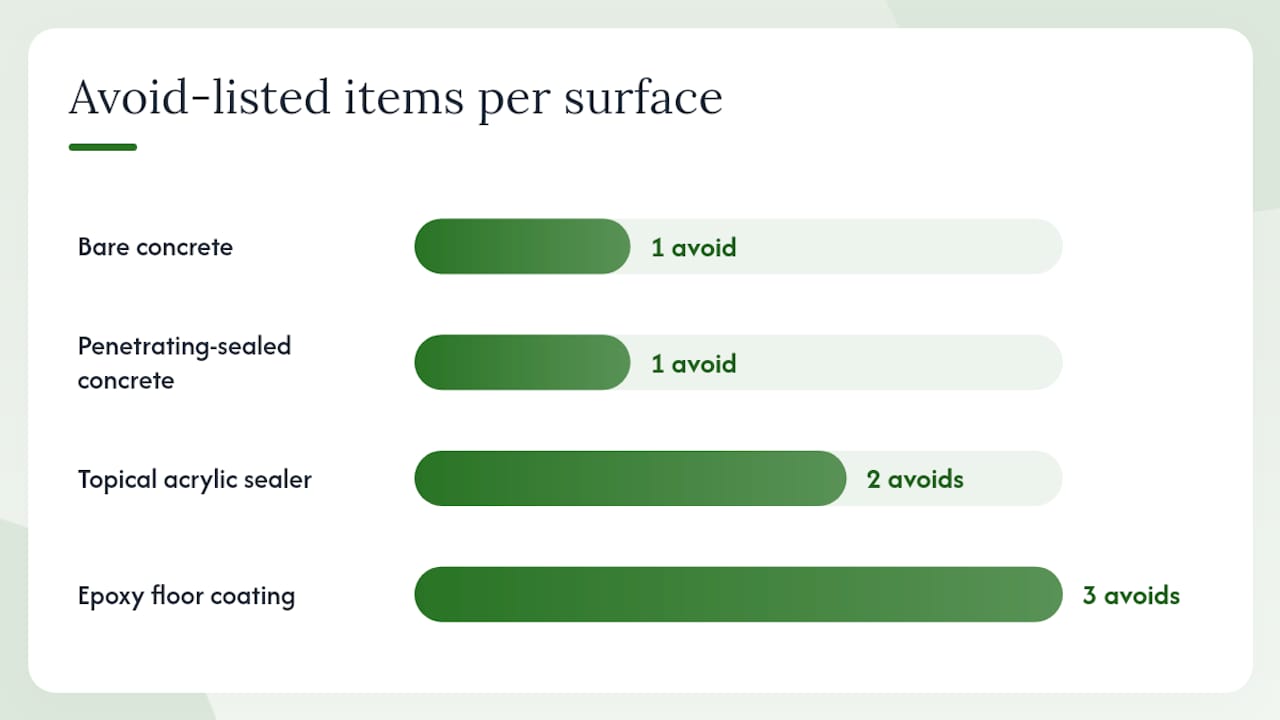
| Surface type | Recommended method | What to avoid |
|---|---|---|
| Bare concrete | Alkaline degreaser, citrus cleaner, poultice | Strong acids (can etch) |
| Penetrating-sealed concrete | Alkaline degreaser, citrus cleaner | Prolonged solvent contact |
| Topical acrylic sealer | Non-filming detergent, gentle citrus | Solvents, high-pressure washing |
| Epoxy floor coating | Non-filming detergent only | Solvents, Goof Off, aggressive scrubbing |
Which products and tools actually work in Canada?
Recommended products
- EZ Strip (EZStrip.ca): A Canadian-made heavy-duty stripper and cleaner that handles embedded rubber and old sealers. Available through EZStrip.ca and some Canadian pro supply stores.
- Simple Green Concrete and Driveway Cleaner: Widely available at Home Depot, Canadian Tire, and Rona. Biodegradable, safe for most sealed surfaces, and effective on moderate marks.
- Formula 409: A household degreaser found at every grocery and hardware store. Best for fresh or light marks; less effective on embedded stains.
- Kärcher Tire Mark Remover: A commercial-grade ready-to-use spray designed to pre-soak and dissolve rubber deposits quickly. Suited for property managers dealing with parking areas or garage floors. Available through Kärcher dealers and select industrial suppliers in Canada.
Tools checklist
- Stiff-bristle brush (nylon or natural fibre; avoid wire on sealed surfaces)
- Pressure washer with 25-degree nozzle or surface cleaner attachment
- Mop, bucket, and spray bottle for applying and keeping the surface wet
- Plastic wrap and absorbent powder for a poultice application
- Nitrile gloves and safety glasses for any solvent or commercial cleaner
Contractor-grade vs. consumer products: for a single driveway spot, Simple Green or Formula 409 from Canadian Tire is enough. For a full garage floor, a parking pad, or a commercial property with recurring marks, step up to a contractor-grade alkaline degreaser or Kärcher’s commercial line. These are available through janitorial supply houses and pro concrete suppliers across Canada.
What if the marks still won’t come out?
Some marks are genuinely beyond DIY reach. Old, deeply embedded rubber on porous concrete, marks on a damaged or lifting epoxy floor, or large commercial areas with years of deposits all benefit from professional methods.
Professional removal often combines reactive chemical cleaners with mechanical action for embedded marks. Here is what pros typically bring to the job:
- Hot-water or steam cleaning: high-temperature water loosens rubber compounds that cold water leaves behind.
- Chemical stripping: contractor-grade alkaline or solvent-based strippers applied with dwell time and agitation.
- Mechanical abrasion: rotary scrubbers with diamond or abrasive pads for surface-level embedded marks.
- Shot-blasting or diamond grinding: for severe or large-area staining, these methods remove the top layer of concrete along with the embedded rubber, then the surface is resealed.
- Resealing or re-coating: after any aggressive cleaning, a penetrating sealer protects the cleaned surface and makes future marks easier to remove.
Estimated cost ranges in Canada (broad guidance):
Questions to ask before hiring a concrete cleaner:
- Are you licensed and insured for concrete cleaning in Alberta?
- Will you do a test patch on my surface before full treatment?
- Do you offer a warranty on the cleaning or resealing work?
- Can you provide references from similar residential or commercial jobs in Calgary?
- What happens if the marks don’t fully come out after the first visit?
For Calgary homeowners and property managers, Yearlong’s concrete cleaning and sealing service covers inspection, test patching, cleaning, and optional resealing, with local knowledge of how Alberta’s climate affects concrete condition.
How to prevent tire marks from coming back
Prevention costs far less than repeated remediation, and a few straightforward habits make a real difference. Mats, tyre choice, and resealing older porous concrete are the most cost-effective options for both homeowners and property managers.
- Apply a penetrating sealer. A silane or siloxane penetrating sealer reduces how deeply plasticizers can migrate into the concrete. Reapply every 3–5 years depending on traffic and climate. Avoid topical acrylics in high-traffic zones; they wear faster and can interact with rubber compounds.
- Use rubber mats or pads in heavy-use spots like the front of a garage stall or a loading zone. They absorb the transfer before it reaches the concrete.
- Let tyres cool before parking. Hot tyres fresh off the highway transfer plasticizers far more readily than cool ones. A short wait makes a measurable difference on a hot day.
- Avoid spinning or sharp turns on the driveway. The friction and heat from these manoeuvres are what drive rubber into the surface.
- Schedule regular cleaning. Fresh marks clean up in minutes. Marks left for weeks become a multi-step job. A quick rinse and scrub every month or two keeps the surface manageable. A concrete maintenance checklist helps property managers stay on a consistent schedule.
- Note on epoxy floors: some epoxy coatings are prone to hot-tyre pickup, where the coating bonds to the warm tyre and peels when the car moves. If you have an epoxy garage floor, confirm the product’s temperature rating before parking a recently driven vehicle on it.
What does DIY vs. professional removal actually cost?
DIY tire mark removal on a small driveway spot takes 20–45 minutes and costs $10–$30 in materials. A full garage floor treated with a degreaser and pressure washer takes 1–3 hours and runs $30–$80 in supplies. Those numbers assume the marks respond to consumer-grade products on the first or second attempt.
Variables that push costs up: embedded marks in old porous concrete, a damaged or lifting coating that needs stripping before cleaning, limited site access for a pressure washer, and Calgary’s short outdoor cleaning season. Frost and freezing temperatures affect both chemical dwell times and the ability to rinse and dry properly, so timing matters here more than in milder climates.
Professional single-visit cleaning typically runs $100–$500 for residential jobs in Calgary, depending on area and severity. Resurfacing and resealing a full garage floor or driveway sits in the $700–$1,500 range. For commercial parking areas, costs scale with square footage and the degree of embedded staining. A proactive maintenance approach consistently costs less than deferred remediation for property managers overseeing multiple surfaces.
A Calgary property maintenance perspective
Calgary’s freeze-thaw cycles do something most homeowners don’t account for: they open and close the pores of concrete repeatedly through the winter, which drives road salt, sand, and rubber plasticizers deeper into the surface than they would go in a milder climate. By spring, what looked like a surface mark in October is often a genuinely embedded stain. That’s the pattern we see most often at Yearlong when clients call in April or May wondering why their driveway looks worse than it did before the snow fell.
The clients who avoid that situation almost always have a penetrating sealer on their concrete, applied in late summer or early fall before the first hard freeze. It doesn’t make the surface immune, but it slows absorption enough that spring cleaning stays a manageable DIY job rather than a professional remediation. For coated or epoxy floors, we always run a test patch before committing to any degreaser or pressure washing. One wrong product on an epoxy floor can cost more to fix than the original tire marks ever would have.
Yearlong handles concrete cleaning and sealing in Calgary
Scrubbing a driveway yourself is fine for fresh marks. But if you’re looking at a full garage floor with years of embedded rubber, a concrete pad that needs resealing before winter, or a commercial property where the job is simply too large to tackle on a weekend, Yearlong is the local crew for it.

Yearlong’s concrete cleaning and sealing service in Calgary includes a surface inspection, a test patch on coated or sensitive areas, professional-grade cleaning, and optional resealing to protect the surface through the next freeze-thaw season. The team has been working Calgary driveways, patios, and commercial pads since 2017, and every job comes with a satisfaction guarantee. To book, visit Yearlong, have a rough surface size and a photo of the staining ready, and the team will get back to you with a straightforward quote.
Sources
- How To Remove Tire Marks From Concrete | RadonSeal
- How To Get Tire Marks off Concrete (+ Prevention Tips) | SUNDEK
- How to remove tire marks on floors | BECOSAN®
- Tire Mark Remover, 1gal – Kärcher
- Concretenetwork
One Response