

For most stamped concrete in Calgary, hire a local professional for the full clean-and-reseal job. Wrong pressure, the wrong detergent, or resealing at the wrong time strips colour, traps moisture, and accelerates freeze-thaw damage. DIY works fine for light dust, leaves, and mild surface grime. Anything involving oil, rust, salt staining, or a sealer that looks cloudy or peeling belongs with a pro, and a local Calgary-based option understands the freeze-thaw and salt exposure conditions that out-of-town advice may overlook.
TL;DR:
- Use low-pressure washing between 1,500 and 2,500 PSI with a wide-angle nozzle to avoid damaging the sealer or surface.
- Only reseal stamped concrete after it has fully cured, typically 30 to 60 days post-installation, to prevent blistering or peeling.
- Regularly clean with sweeping and mild detergent washes, reserving deep cleaning or stain removal for trained professionals to minimize surface damage risks.
- Address salt damage and algae buildup early, using gentle rinses and biocides, to avoid worsening freeze-thaw deterioration and surface staining.
- Always get a written, site-specific quote and verify the contractor’s experience, insurance, and test procedures before scheduling sealing or cleaning work.
Table of Contents
- How to clean stamped concrete safely
- What PSI is safe for pressure washing stamped concrete?
- How do you remove specific stains from stamped concrete?
- Which sealer is right for stamped concrete in Calgary?
- What does a stamped concrete clean and reseal cost in Calgary?
- How do you choose a stamped concrete cleaning contractor?
- Yearlong’s local perspective: Calgary realities and practical takeaways
- Book Yearlong for stamped-concrete cleaning and sealing in Calgary
- Sources
- FAQ
How to clean stamped concrete safely
Most stamped concrete only needs regular dry cleaning: sweep off grit, leaves, and sand at least weekly through fall, since trapped debris holds moisture against the surface and speeds up freeze-thaw wear over winter. Follow that with a mild detergent wash every few weeks using warm water and a pH-neutral cleaner made for concrete, never a household degreaser with unknown chemistry.
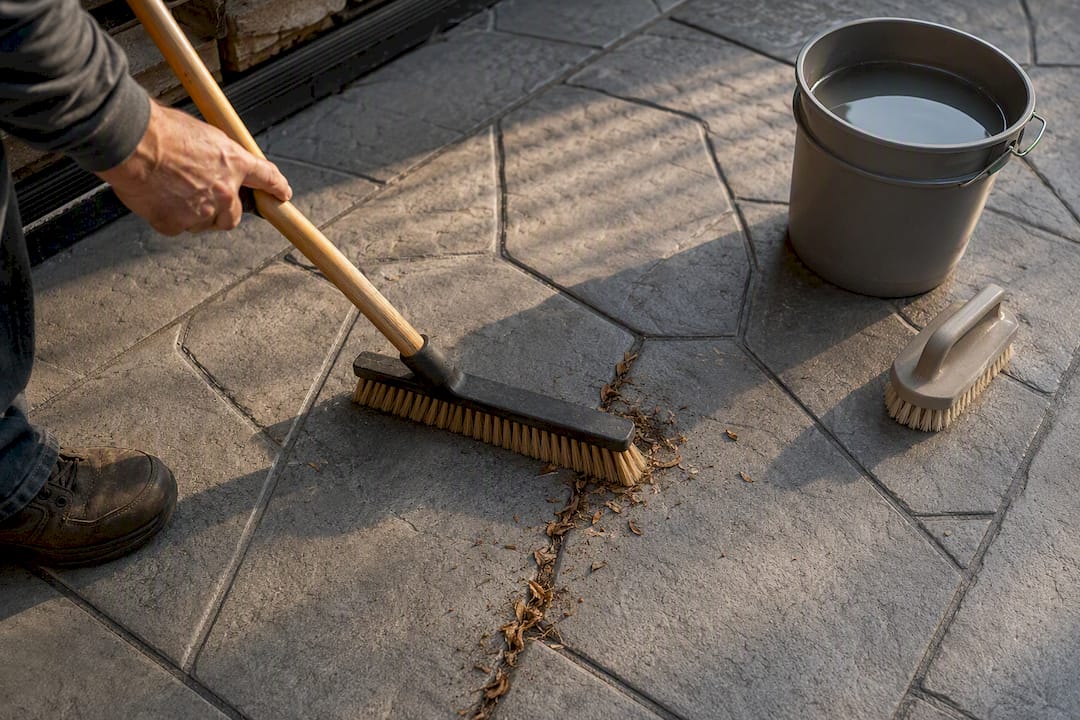
Test any product on a hidden corner first. Sealed colour can react unpredictably to cleaners, and a patch test saves you from bleaching a visible section of your patio or driveway.
For routine washing:
- Wet the surface first so dirt doesn’t grind into the texture.
- Apply detergent with a soft-bristle brush, never a wire brush or scrub pad.
- Work in small sections and rinse before the cleaner dries on the surface.
- Rinse thoroughly with a garden hose rather than a pressure washer for everyday cleaning.
Heavier grime, like ground-in dirt in deep stamp patterns, sometimes needs a poultice or a commercial concrete degreaser. That’s the point where DIY risk climbs. Poultices pull contaminants out through absorption and can lighten colour if left too long, and commercial degreasers vary widely in strength. Avoid acids, bleach, and anything abrasive. Acidic cleaners etch the surface and dull the sealer’s sheen permanently, and there’s no undoing that short of a full strip and reseal.
Pro Tip: Keep a small labelled jar of your driveway’s original sealer or a photo of the pattern on file. It makes colour-matching after a spot repair much easier for whoever ends up doing the work.
What PSI is safe for pressure washing stamped concrete?
Decorative and older concrete should be cleaned at 1,500 to 2,500 PSI, well below the 2,500 to 3,000 PSI range used on plain residential flatwork. Stamped or sealed surfaces should always run at the lowest effective pressure with a wide-angle nozzle, never the narrow, concentrated tip meant for stripping paint or concrete stains off garage floors.
A few practical rules keep pressure washing from becoming a repair job:
- Test a small, inconspicuous area first and check for whitening, etching, or lifted sealer before treating the whole surface.
- Keep the nozzle at least 30 to 45 centimetres from the surface and keep it moving in a steady sweep.
- Use a 25 to 40 degree fan nozzle rather than a 0 or 15 degree tip.
- Never hold the wand still in one spot, even for a second.
Technique matters as much as the PSI number itself. Equipment condition, nozzle angle, and how steady the operator’s sweep is all decide whether the sealer survives, which is one reason Calgary specialists treat pressure washing stamped concrete as a skill, not just a setting on a machine. If you’re not confident reading how the surface responds in real time, that’s the signal to call someone who does this daily.
How do you remove specific stains from stamped concrete?
Stain type dictates the fix, and treating all of them the same way usually makes things worse.
- Fresh oil: Blot immediately, don’t wipe, and cover with an absorbent material like clay-based cat litter or baking soda for a few hours before sweeping it away. Set-in oil needs a concrete-safe degreaser, and stubborn spots may call for a poultice treatment to draw the oil back out.
- Rust: Rust responds to chelating rust removers, but those same products can etch coloured or stamped surfaces if left too long. Test the corner first, then follow the product’s timing exactly rather than guessing.
- Salt: Winter de-icing salt leaves white haze and pitting. Rinse with warm water and a mild detergent, and avoid re-applying salt on the same area, since it soaks into microcracks and accelerates freeze-thaw damage.
- Algae and mould: Shaded, damp corners get green or black growth. A soft wash with a diluted oxygen bleach or a sealer-safe biocide usually clears it. If it keeps returning after two or three treatments, drainage or shading is the real problem, and that’s a job for a specialist to assess.
Which sealer is right for stamped concrete in Calgary?
Two sealer families dominate the Calgary market, and picking the wrong one is the single most common reason decorative concrete looks tired within a couple of years.
Penetrating sealers (silane or siloxane based) soak into the concrete and repel water without changing the surface look. They’re the safer long-term choice for Calgary’s freeze-thaw cycles because they don’t trap moisture under a film. Film-forming sealers sit on top, giving that wet, glossy look homeowners often want, but they need more frequent attention.
- New concrete should be sealed 30 to 60 days after installation, giving it time to cure fully. Seal too early and moisture gets locked in, which leads to blistering and peeling the following winter.
- Reapply penetrating sealers every 3 to 5 years; film-forming sealers need it every 1 to 2 years in Calgary’s conditions.
- Watch for whitening, bubbling, or a chalky texture. Those are signs of sealer failure, and resealing over a failing coat doesn’t fix it. A mechanical strip and full rebuild of the sealer system is the only real solution once that happens.
Pro Tip: Before booking a reseal, check the forecast. You want a stretch of dry weather with daytime temperatures consistently above 10°C, since sealer applied in a cold snap or right before rain almost never cures properly.
What does a stamped concrete clean and reseal cost in Calgary?
Pricing depends on square footage, current condition, sealer type, and how much prep work the surface needs before anything gets applied. A driveway with peeling old sealer costs more to restore than one that’s just dirty, because stripping the failed coating is its own labour-intensive step.
Main cost drivers to expect on a quote:
- Total surface area and pattern complexity (tighter stamp detail takes longer to clean and seal evenly).
- Condition: routine maintenance clean versus a full strip-and-reseal after sealer failure.
- Sealer choice: penetrating sealers generally cost less per application but get applied more rarely; film-forming sealers cost more upfront and more often over time.
- Site access and obstacles like planters, steps, or attached structures.
Because these variables swing the price significantly, get a written, site-specific quote rather than trusting a flat per-square-foot number pulled from a national average. A typical job runs through inspection, surface prep and repairs, cleaning, a full dry-out period, sealer application, and a cure window before the surface handles foot or vehicle traffic again. Booking that work in late spring or early fall, when Calgary weather holds steady, cuts the risk of a reseal failing before it’s even had a chance to cure.
How do you choose a stamped concrete cleaning contractor?
A good contractor tells you their exact method before you ask twice. Run through this before signing anything:
- Ask for local references and photos of stamped concrete jobs specifically, not just plain driveways or sidewalks.
- Confirm they carry liability insurance and WCB coverage, and ask to see proof.
- Get a written quote that names the cleaning method, sealer brand, and expected cure time.
- Ask what PSI and nozzle they use on decorative surfaces, and whether they test a small area first.
- Check whether they offer any guarantee on the work.
Pro Tip: Ask directly, “What happens if the sealer looks patchy after it cures?” A contractor with real experience has a clear answer ready. One who hesitates or blames the weather without offering a fix is worth a second look elsewhere.
Red flags are usually obvious once you know to watch for them: a contractor who pushes maximum pressure on everything, refuses a test spot, promises same-day sealing without checking cure time, or can’t name a single past Calgary client. Any one of those is reason enough to keep looking.
Yearlong’s local perspective: Calgary realities and practical takeaways
Yearlong Property Maintenance has worked Calgary’s outdoor maintenance market since 2017, and stamped concrete jobs follow a pattern: most failures trace back to sealing too early or sealing over salt damage nobody addressed first. Late spring and early fall remain the safest reseal windows here, and skipping salt on a slab’s first winter matters more than most homeowners expect. On a site visit, checking moisture and cure state before recommending any sealer application comes before anything else.
— Lewie
Book Yearlong for stamped-concrete cleaning and sealing in Calgary
This local service approach includes an on-site inspection first, a cleaning method matched to the surface’s actual condition, and a sealer recommendation that considers Calgary’s freeze-thaw conditions rather than a generic product.

Requesting a quote provides a written estimate after inspection, a sealer recommendation with an expected reseal window, and a clear timeline before booking. Visits include a satisfaction guarantee to ensure clarity about the service.
Start with the concrete cleaning page to see what’s included, or go straight to concrete sealing if your surface just needs a fresh coat done at the right time of year. Either page gets you a real quote, not a ballpark guess.
Sources
Technical guidance in this article draws from Omega 2000’s pressure-washing PSI recommendations, Omega Ready Mix’s Calgary decorative concrete guide, and Yearlong’s own sealing timeline guidance.
FAQ
How do you get stamped concrete clean?
Sweep and rinse regularly with a pH-neutral detergent and a soft-bristle brush, working in small sections and rinsing before the cleaner dries. Save pressure washing for periodic deep cleans at low PSI with a wide-angle nozzle.
What does stamped concrete cost in Calgary?
Cost depends on square footage, current condition, and sealer choice, so pricing varies significantly job to job. Get a written, site-specific quote rather than relying on a flat rate, and check current pricing directly on a provider’s site like Yearlong’s concrete cleaning page.
Is it safe to pressure wash stamped concrete?
Yes, at the lowest effective pressure, typically 1,500 to 2,500 PSI, with a wide-angle nozzle and a steady sweep. High PSI or a narrow nozzle can strip sealer and etch the colour permanently.
What is the downside of stamped concrete?
It needs more upkeep than plain concrete: periodic resealing every 1 to 5 years depending on sealer type, careful cleaning to protect colour, and salt avoidance in winter to prevent freeze-thaw pitting. Skipping that maintenance is what leads to the peeling and fading homeowners complain about most.