

TL;DR:
- Proper assessment and pre-treatment of surfaces are essential for efficient Calgary winter snow removal.
- Using the right tools and safety gear helps prevent injury and equipment damage during snow clearing.
- Building flexible routines and having professional support ensures safety and efficiency during unpredictable Calgary snowstorms.
Calgary winters don’t ease you in gently. One morning you’re looking at a dusting, and by afternoon your driveway is buried under 30 centimetres of wet, heavy snow. For homeowners and property managers across the city, an unprepared property isn’t just an inconvenience — it’s a liability. Missed clearing windows lead to ice buildup, slip-and-fall injuries, and city bylaw fines. A clear, repeatable workflow changes all of that. This guide walks you through every step, from assessing your property to troubleshooting common issues, so you can handle Calgary’s unpredictable winters with confidence and without costly surprises.
Table of Contents
- Assessing your property and snow removal needs
- Essential tools and supplies for Calgary snow removal
- Step-by-step snow removal workflow for Calgary properties
- Troubleshooting, common mistakes, and quick fixes
- What most snow removal guides miss: Building resilience into your routine
- Get reliable snow removal with local Calgary experts
- Frequently asked questions
Key Takeaways
| Point | Details |
|---|---|
| Assess property needs | Survey all snow-prone areas and obstacles on your property before winter begins. |
| Use the right tools | Equip yourself with quality shovels, blowers, and de-icing products suited for Calgary snow. |
| Follow an efficient workflow | Clear snow soon after it falls, prioritizing entrances and ice-prone spots. |
| Avoid common mistakes | Address re-freezing and schedule snow removal to prevent hazards and fines. |
| Consider professional help | For large or complex properties, contracting experts improves safety and compliance. |
Assessing your property and snow removal needs
Before the first flake falls, walk your entire property with fresh eyes. You’re looking for every surface that will need clearing after a snowfall, and every obstacle that snow could hide. Most people think of the driveway first, but the full picture is much larger.
Start at the street and work inward. Note your driveway length and width, any side pathways, front and back walkways, steps, and entry points. If you manage a commercial property, include parking stalls, loading zones, and fire exit routes. These aren’t optional — blocked emergency access is a serious safety and legal concern.
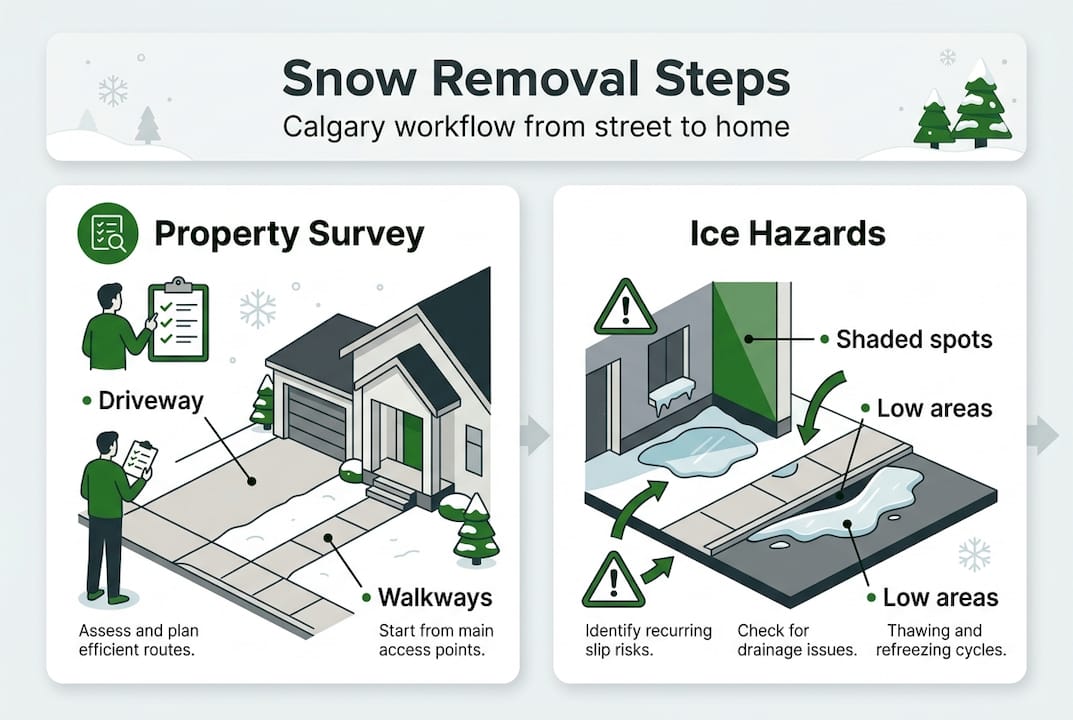
Next, flag ice-prone zones. Low-lying areas, shaded spots, and surfaces near downspouts tend to freeze faster and stay frozen longer. Marking these now, before snow covers them, saves real time when you’re working in the dark at 6 a.m. after an overnight storm.
Also, identify obstacles that could damage your equipment or get buried: garden edging, decorative stones, hose bibs, and low landscaping features. Stake them with driveway markers before freeze-up. This is a step many homeowners skip, and it leads to broken shovel handles and gouged lawns come spring. Good fall yard preparation includes exactly this kind of pre-winter walkthrough.
Here’s a quick checklist of areas to monitor after every snowfall:
- Primary driveway and any secondary vehicle access
- Front walkway and steps to the main entrance
- Side gate pathways and rear access
- Parking pads and visitor parking areas
- Utility metre access points
- Drains and catch basins (to prevent ice dams)
Once you’ve mapped your property, you can estimate what resources you’ll need. Pricing varies with property size, snow depth, and location, so a thorough assessment helps you budget accurately whether you’re doing it yourself or hiring out. You can also explore outdoor cleaning services that pair well with winter maintenance to keep your property in top shape year-round.
| Factor | How it affects your workflow |
|---|---|
| Property size | Larger areas need more time and equipment |
| Snow depth | Deep snow may require multiple passes |
| Surface type | Concrete, asphalt, and interlock each need different tools |
| Ice-prone zones | Require pre-treatment and extra attention |
| Obstacles | Increase clearing time and risk of equipment damage |
Essential tools and supplies for Calgary snow removal
With a full picture of your property, it’s time to stock the right gear. Using the wrong tool for the job doesn’t just slow you down — it can cause injury and damage your surfaces.
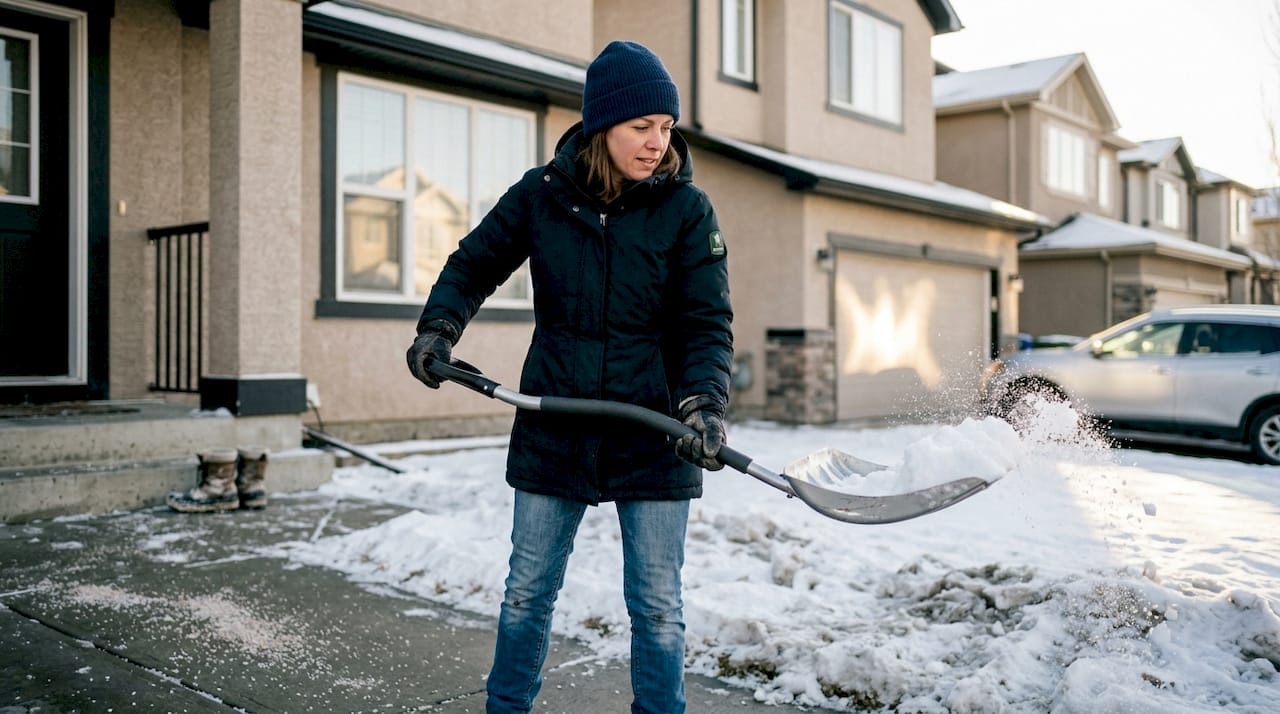
For residential properties, a quality ergonomic snow shovel handles most light-to-moderate snowfalls. Look for a curved handle to reduce back strain. For heavier or more frequent snowfalls, a single-stage snow blower works well on flat driveways up to two car lengths. Two-stage blowers are better suited to larger driveways or properties with gravel surfaces, since they handle deeper snow and can be adjusted to avoid throwing stones.
Commercial properties almost always require powered equipment. Skid-steer ploughs, truck-mounted ploughs, and ride-on blowers are standard for parking lots and large paved areas. The investment is significant, which is why many commercial managers opt for contracted services rather than owning and maintaining heavy equipment themselves.
Ice management is a separate but equally important layer of your toolkit. Ice management often adds $15–$45 per application, so if you’re doing it yourself, budget for quality product. Calcium chloride works at lower temperatures than sodium chloride (rock salt) and is less damaging to concrete. Sand adds traction without melting ice, making it useful in extreme cold.
Understanding the difference between tools helps you invest wisely. Here’s a quick comparison:
| Tool | Best for | Approximate cost |
|---|---|---|
| Ergonomic shovel | Small residential driveways | $40–$80 |
| Single-stage blower | Medium driveways, light snow | $500–$900 |
| Two-stage blower | Large driveways, heavy snow | $900–$2,000+ |
| Calcium chloride | Ice melt in extreme cold | $25–$60 per bag |
| Sand/grit | Traction on icy surfaces | $10–$20 per bag |
For a deeper look at what snow plowing explained means for your specific property type, it’s worth reviewing before committing to any equipment purchase.
Pro Tip: After each use, rinse metal shovel blades and blower augers to remove salt and moisture. Dry them before storage to prevent rust and extend the life of your equipment by several seasons.
Don’t overlook personal safety supplies:
- Insulated, waterproof gloves and boots with good grip
- High-visibility vest or jacket for early morning or evening work
- Traction cleats for your footwear when working on icy surfaces
- Headlamp or work light for pre-dawn clearing
Step-by-step snow removal workflow for Calgary properties
Armed with the right tools, here’s how to move through a snowfall event efficiently and safely.
- Monitor the forecast. Check Environment Canada the night before any predicted snowfall. Knowing the expected depth and timing lets you schedule your clearing window and decide whether pre-treatment is warranted.
- Pre-treat high-risk surfaces. Apply calcium chloride or a liquid de-icer to steps, walkways, and shaded zones before snow begins. This prevents bonding and makes clearing significantly easier.
- Clear main vehicle areas first. Start with the driveway so vehicles can exit safely. Work from the centre outward, pushing snow to the sides rather than the street where possible.
- Move to pedestrian areas. Walkways, steps, and entrances come next. Use a narrower shovel or blower attachment for tight spaces. Pay attention to entry points where foot traffic concentrates.
- Manage ice on all cleared surfaces. Once snow is removed, apply de-icer or sand to any slick spots. Don’t skip this step — bare pavement can refreeze quickly in Calgary’s temperature swings.
- Check drains and catch basins. Blocked drains lead to pooling water that freezes overnight. A quick clear now prevents a much bigger ice problem tomorrow.
- Final inspection. Walk the entire property one more time. Look for missed patches, hidden ice near steps, and any equipment or debris that may have shifted during clearing.
Safety warning: Slip-and-fall injuries are among the most common winter accidents on residential and commercial properties. Always wear traction footwear when working on cleared surfaces, and never assume a surface is safe just because it looks dry.
Residential per-visit prices average $45–$85; commercial per-push $180–$420, which reflects the real labour and time involved in doing this properly. For more detail on safe practices, review these snow removal tips and learn how a professional service can help you avoid fines this winter.
Troubleshooting, common mistakes, and quick fixes
Even with a solid workflow, things go sideways. Here’s how to handle the most common problems quickly.
Delayed clearing. This is the single most costly mistake. Snow left too long compacts and bonds to pavement, making it far harder to remove and increasing ice risk. If you miss your window, apply calcium chloride first, let it work for 20 minutes, then clear. It won’t be easy, but it helps.
Insufficient de-icer. Many people apply too little product or use the wrong type for the temperature. Rock salt loses effectiveness below minus 10 degrees Celsius. In a Calgary cold snap, switch to calcium chloride, which works down to minus 29 degrees Celsius.
Forgetting drains and downspouts. Water has to go somewhere. If drains are blocked by snow or ice, it pools and refreezes in the worst possible spots. Add drain checks to your post-storm checklist and treat them as non-negotiable.
Snowplough berms at the end of the driveway. City ploughs push snow from the road back onto cleared driveways. It’s frustrating, but plan for it. Do your final driveway pass after the city plough has come through your street, not before.
Equipment jams and failures. Blower augers jam on wet, heavy snow. If this happens, shut the machine off completely before clearing the jam — never use your hands with the engine running. Keep a clean-out tool attached to the blower handle for fast access.
Pro Tip: Set a recurring calendar alert for every storm forecast above five centimetres. Seasonal contracts with a local provider take this entirely off your plate. Commercial contracts are often preferred for exactly this reason — consistent service without the guesswork.
Here are quick fixes for the most frequent issues:
- Refreeze after clearing: Apply sand for immediate traction, then treat with calcium chloride
- Icy steps: Use a stiff-bristle brush to break surface ice before applying de-icer
- Blower won’t start in cold: Check fuel, prime the engine, and store the machine in a garage between uses
- Shovel scraping but not clearing: The blade may be worn — replace it before the season, not during
For a full breakdown of what professionals follow, the industry standards for snow removal in Calgary are a useful reference point.
What most snow removal guides miss: Building resilience into your routine
Most guides hand you a checklist and call it done. But Calgary winters don’t follow checklists. We’ve seen seasons where three major storms hit in a single week, and we’ve seen Januaries that barely needed a shovel. Rigid routines built around averages fail when conditions are anything but average.
The smarter approach is building flexibility into your system from the start. That means having a backup plan when your blower breaks mid-storm, knowing which neighbour you can call for help, and having a professional service on speed dial for the storms that overwhelm your capacity. It also means reviewing your workflow each autumn, not just repeating last year’s habits. What worked in a mild winter may leave you scrambling in a heavy one.
We’ve learned from years of service in Calgary that the properties that handle winter best aren’t the ones with the most expensive equipment. They’re the ones with the most adaptable owners and managers. Pairing your snow strategy with a broader lawn care workflow strategy keeps your property healthy across every season, not just the ones you planned for.
Get reliable snow removal with local Calgary experts
Handling snow removal yourself is absolutely doable with the right preparation. But there are seasons when the storms come faster than your schedule allows, or when the volume of work simply exceeds what one person can manage safely.

YearLong Property Maintenance has been serving Calgary homeowners and property managers since 2017, offering dependable Calgary snow removal services that keep your property clear, compliant, and safe all winter long. Whether you need a one-time clear or a full seasonal contract, we build our service around your property’s specific needs. Pair snow removal with our safer winter strategies and seasonal clean up options for complete year-round care. Reach out today for a no-obligation quote.
Frequently asked questions
How much does snow removal typically cost for Calgary homeowners?
Residential snow removal in Calgary generally costs $45–$85 per visit, with seasonal contracts ranging from $300–$600 depending on property size and service frequency.
What surfaces should I prioritise when clearing snow?
Prioritise driveways, front walkways, entry steps, and any areas near downspouts or shaded zones that are prone to rapid ice formation and pose the greatest safety risk.
Is ice management included in snow removal services?
Ice management adds $15–$45 per application and is typically offered as an add-on rather than a standard inclusion in most residential snow removal packages.
Can I handle commercial snow removal myself or should I hire a service?
Commercial properties require heavy equipment, tight response times, and reliable ongoing service. Commercial contracts are preferred because they provide the scale and consistency that self-managed clearing rarely achieves.
How soon after snowfall should I remove snow in Calgary?
Snow should be cleared within 24 hours of a snowfall to meet Calgary bylaw requirements and prevent compaction and ice formation that make removal significantly harder.