

Before you sign anything, get five items in writing: a defined response time tied to a specific trigger, an exact accumulation depth for plowing and salting, a certificate of insurance naming your property as additional insured, a hold harmless clause, and a verification method (photos, logs, or GPS) that proves the work happened. Verbal promises from a sales rep don’t hold up when a slip-and-fall claim lands on your desk in February.
TL;DR:
- Response times should be clearly defined with specific arrival and completion windows tied to measurable storm milestones, not vague promises.
- Trigger depths must vary by site zone, and contracts should specify automatic activation procedures, approved de-icing materials, and anti-icing measures.
- Insurance coverage must include a certificate naming your property as additional insured and comprehensive liability and workers’ compensation, reviewed before service begins.
- Service verification requires GPS logs, photos, or reports documenting work details, timing, and site conditions to prevent disputes and liability claims.
- Contracts should include detailed scope, billing structure, start and end dates, and a clear review process to avoid ambiguous or unfavorable terms.
Table of Contents
- What response time guarantees actually need to say
- How should trigger depth and pre-treatment be specified?
- What insurance and liability protections do you need?
- What service verification and reporting should the contract require?
- Questions to ask a contractor before you sign
- Snow removal contract checklist: the one-page version
- When should you start the RFP process?
- How Yearlong approaches snow removal contracts
- How Yearlong can help with your next winter contract
- Standards and resources worth keeping on file
- Sources
- FAQ
What response time guarantees actually need to say
“Fast response” means nothing in a contract. You need the clock defined: does it start when snowfall begins, when your trigger depth is hit, or when you place a call? Each start point changes what “on time” means, and contractors know it.
Push for language tied to milestones, not vague promises. A strong clause specifies:
- Arrival time at the site after trigger depth is reached
- Completion time for priority areas (entrances, fire lanes, accessible parking)
- Full-site completion deadline
- A stated remedy if any milestone is missed (credit, re-service at no charge, or contract penalty)
Sample phrasing to request: “Contractor shall arrive within [X] hours of trigger depth being reached, with priority areas cleared within [Y] hours of arrival.” Vague terms like “promptly” or “as soon as possible” belong nowhere in the document.
Pro Tip: Ask the contractor how they log arrival times today. If they can’t answer without checking with dispatch, they don’t have a system built for accountability, they have one built for billing.
How should trigger depth and pre-treatment be specified?
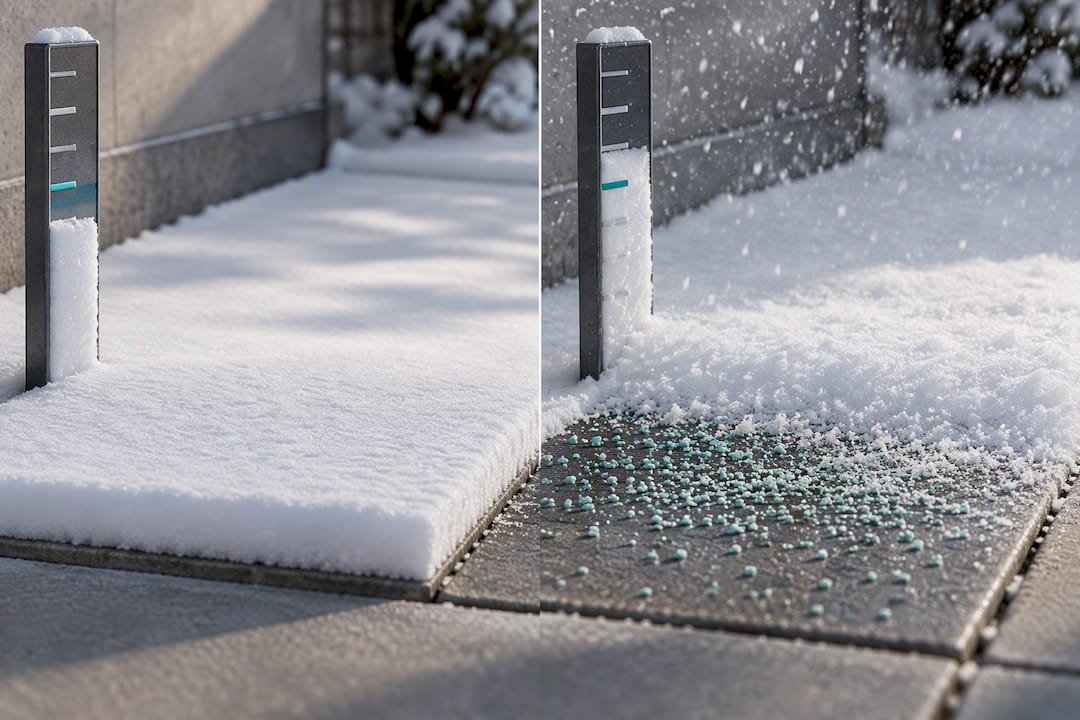
Trigger depth is the snowfall amount that activates a plow visit, and it should vary by area. A low trigger for main entrances and a slightly higher trigger for overflow parking is common and defensible; a single blanket trigger for an entire site usually isn’t.
The contract should also nail down:
- Whether triggers are automatic or require a “will-call” from you
- How a single storm versus multiple return visits gets defined and billed
- Approved de-icing materials, prohibited materials (some salts damage concrete or landscaping), and application rates
- Anti-icing or pre-treatment timing ahead of forecasted events
Operational readiness matters as much as the contract terms. Ask whether the contractor keeps enough de-icing inventory on hand for back-to-back storms, and whether they’ve engineered your site in advance for preventive anti-icing measures. A contractor without a preseason plan for your specific property is guessing when the first storm hits.
What insurance and liability protections do you need?
Get a Certificate of Insurance (COI) naming your property as additional insured, and require commercial general liability, auto liability and workers’ compensation coverage confirmed on that certificate before service starts.
Timing matters more than most property managers realize. Request the COI well before the contract start date so your broker or legal counsel has time to review it, and diarize the expiry date so a lapse doesn’t slip past you mid winter.
Missing indemnification clauses are one of the most common gaps risk-management reviewers flag in third-party snow contracts, shifting liability back onto the property owner when it should sit with the contractor.
Beyond insurance, your contract needs a hold harmless clause that shifts liability to the contractor for injuries or damage tied to their work or their failure to perform. For high-traffic HOA common areas or commercial lots with heavy foot traffic, have a lawyer or your insurance broker review the indemnity language line by line. This isn’t the section to skim.
What service verification and reporting should the contract require?
Reports need to prove the work happened and match your invoices. At minimum, insist on documentation that includes:
- Operator name and equipment used for the visit
- Site name and location, with start and end times
- Site conditions before and after service
- Materials applied, including type and quantity
- Time-stamped photos showing pre- and post-service conditions
Ask whether the contractor uses GPS tracking on plow routes and whether they cross-reference third-party weather data to confirm trigger depths were actually met. Invoices should list service dates individually rather than bundling a month into one lump charge, and reports should be submitted within a set window (48 to 72 hours is reasonable) after each event. This documentation is what protects you if a dispute or liability claim ever surfaces.
Questions to ask a contractor before you sign
Capacity questions separate contractors who can handle your property from those who’ll stretch too thin the first time three storms hit in a week. Ask directly:
- How many pieces of equipment are assigned to my site, and what’s the backup plan if one breaks down mid storm?
- Do you subcontract any work, and if so, how do you vet and supervise subcontractors?
- Who’s the after-hours contact during a storm, and how fast do they respond to a call?
- Can you provide references from properties similar in size and layout to mine?
A contractor who hesitates on the equipment question is telling you something. So is one who can’t name a supervisor for overnight events.
Snow removal contract checklist: the one-page version
Use this at the table when you’re reviewing a draft agreement. Every line should have a clear yes or no answer before you sign.
- Response time: defined trigger, arrival window, and priority-area completion deadline in writing?
- Trigger depth: specific accumulation threshold per zone, not a single blanket number?
- Level of Service (LOS): accumulation triggers, completion times and post-storm services all spelled out?
- Site-specific scope of work: includes a site map, priority zones, and acceptable service methods?
- COI: names your property as additional insured, delivered 10+ days before start?
- Indemnification: hold harmless clause protects the buyer, not just the contractor?
- Verification: photos, GPS, or logs required with every service visit?
- Billing: fee structure (seasonal vs. per event), caps, and floors clearly stated?
- Contract dates: start date, end date, and renewal terms explicit?
Pro Tip: If a section of the draft contract answers “it depends” to any of these, that’s your renegotiation flag. Ambiguity always favors whoever wrote the contract, and that’s rarely you.
Red flags worth walking away from: no COI on file, a trigger depth left blank “to be determined,” or a response clause that only promises “reasonable effort.”
When should you start the RFP process?
Timing avoids the scramble that leads to bad contracts. Start your RFP process by May and aim to award the contract by September 1, giving both sides time for site walkthroughs and hazard review before snow flies.
- Begin service at least two weeks before the typical start of winter in your area
- Consider multi-year agreements with an annual escape clause tied to performance
- Build in fee modifiers or extraordinary-event language for storms that exceed normal seasonal averages
- Define cancellation terms clearly, including notice periods for either party
How Yearlong approaches snow removal contracts
We build every agreement around a clear Level of Service, documented verification, and a certificate of insurance issued before the first storm, because clients shouldn’t have to guess what’s covered. Our contract-terms resources walk through the clauses we use.
How Yearlong can help with your next winter contract
There’s a real cost to guessing wrong on a snow contract: a missed response window during an ice storm, or a COI that expired mid season without anyone noticing. Yearlong’s approach is built around the opposite problem. Response commitments start within a few hours of snowfall, ahead of longer time frames many contracts default to, and every visit is backed by the documentation this checklist calls for.
For Calgary property managers and HOA boards, that means a Snow Removal plan starting from $130 per month with site-specific service levels, rather than a generic seasonal package that treats your entrances the same as your overflow lot. If you’d rather pay per visit, one-off snow removal service is available through Yearlong. Before your next contract renewal, request a site assessment and copy-ready contract terms to compare against what you’re currently signing, or review our HOA-specific guidance if your board is evaluating vendors for the first time this year.
Standards and resources worth keeping on file
For deeper reference, consult SIMA’s procurement and Level of Service standards, the Intact Public Entities risk-management checklist, and Yearlong’s own snow removal workflow guide.
Sources
- Risk Management Considerations for Hiring Third Party Snowplowing Contractors (Intact Public Entities)
- SIMA procurement and LOS guidance (ANSI procurement standard)
- Quality RFP creation and best practices (SIMA resources)
FAQ
What should be included in a snow removal contract?
A snow removal contract should include a defined response time and trigger depth, a site-specific scope of work with a site map, a certificate of insurance naming you as additional insured, an indemnification clause, and a service verification method such as photos or GPS logs. Fee structure, billing terms, and contract start and end dates round out the essentials.
How should snow removal be charged?
Snow removal is typically billed either as a flat seasonal rate or per event, with per-event billing tied to trigger depth and site size. Yearlong offers seasonal snow removal from $130 per month as well as one-off per-visit service from $30, giving property managers flexibility depending on budget predictability needs.
Do you need a licence for snow removal?
Licensing requirements for snow removal contractors vary by province and municipality, so check your local business licensing office for specifics. What every contract should require regardless of licensing status is proof of commercial general liability, auto liability, and workers’ compensation insurance.
How can property managers get better snow removal service from contractors?
Property managers get better results by writing enforceable terms into the contract rather than relying on verbal assurances, including specific milestones, remedies for missed response times, and mandatory documentation. Asking about fleet capacity and backup equipment before signing also weeds out contractors who overcommit during multi-storm weeks.