

Yes, sealing stamped concrete in Calgary is essential, not optional. Freeze-thaw cycles and de-icing salts eat away at unprotected slabs faster than almost any other climate in Canada, and sealing is the primary defence against that damage, along with UV fading and oil staining. Three sealer families cover almost every situation: acrylics for colour enhancement, penetrating silane or siloxane sealers for water and salt resistance with a natural finish, and aliphatic polyurethanes for driveways and other high-wear zones.
- Acrylic (film-forming): boosts colour and sheen, best for patios and low-traffic areas.
- Penetrating silane/siloxane: soaks in, blocks moisture, keeps a natural look and better grip when wet.
- Polyurethane/aliphatic urethane: tougher film for driveways and heavy foot traffic.
New concrete needs roughly 28 days of curing before any sealer goes down, and most Calgary pros reseal existing stamped concrete every 2 to 4 years depending on traffic and sun exposure. If your slab already beads water and looks tired, book a professional or start the DIY prep this weekend.
Key Takeaways
Sealing stamped concrete in Calgary works because it blocks the freeze-thaw and de-icing salt damage that otherwise cracks, stains, and shortens the life of the slab.
| Point | Details |
|---|---|
| Choose the right sealer family | Use penetrating siloxanes for salt-heavy driveways, acrylics for colour on patios, polyurethanes for heavy traffic. |
| Reseal every 2 to 4 years | Driveways need attention closer to the 2 year mark, patios can stretch to 4 years. |
| Prep before you seal | Clean, degrease, remove salt stains, patch cracks, and let the surface dry fully first. |
| Apply in the right window | Seal when temperatures hold above 10°C, using thin, even coats with a roller or sprayer. |
| Hire a pro for driveways | Yearlong handles prep, sealer selection, and application for Calgary homeowners since 2017. |
Table of Contents
- How do you prepare stamped concrete before sealing?
- What’s the best way to apply concrete sealer?
- Should you seal your own driveway or hire a pro?
- Why does stamped concrete peel, cloud, or turn slippery?
- What Calgary pros actually choose and why
- Get your stamped concrete sealed before the next freeze
- Where to check the details yourself
- Frequently asked questions
- Sources
How do you prepare stamped concrete before sealing?
Sealer only bonds to a clean, dry, bare surface. Skip the prep and even a premium product will peel within a season.
Start with a thorough wash to strip dirt, algae, and old sealer residue. Then degrease any oil or grease spots with a concrete-safe cleaner. Calgary’s winters leave behind a specific problem most guides skip over: white, chalky salt stains and efflorescence, the mineral deposits that migrate to the surface as moisture evaporates through the concrete. These need targeted treatment, not just a rinse, because leftover salt residue will keep pushing moisture up through a new sealer coat and cause it to cloud or fail early. A practical DIY method for removing salt stains from concrete covers the scrubbing and neutralizing steps in detail.
Hairline cracks and small chips need patching with a concrete-compatible filler before sealing, since sealer will simply pool in a gap rather than bridge it. Once cleaning and repairs are done, the slab needs to dry completely. In Calgary’s dry summer air that’s often 24 to 48 hours, but a shaded or north-facing patio can take longer. A simple check: sprinkle water on the surface. If it beads up and rolls off, you’re either dealing with old sealer that’s still intact, or the surface isn’t dry enough to trust yet.
For heavier grime or a driveway that’s years overdue for attention, a proper concrete and patio cleaning service gets you to a true bare-slab starting point faster than a garden hose and a stiff brush.
What’s the best way to apply concrete sealer?
Application method matters almost as much as which product you buy. A nap roller or airless sprayer gives the most even coverage for film-forming acrylics and polyurethanes, while a pump sprayer works well for thinner penetrating sealers that need to soak in rather than sit on top. Brushes are useful mainly for cutting in edges, steps, and tight corners where a roller misses.
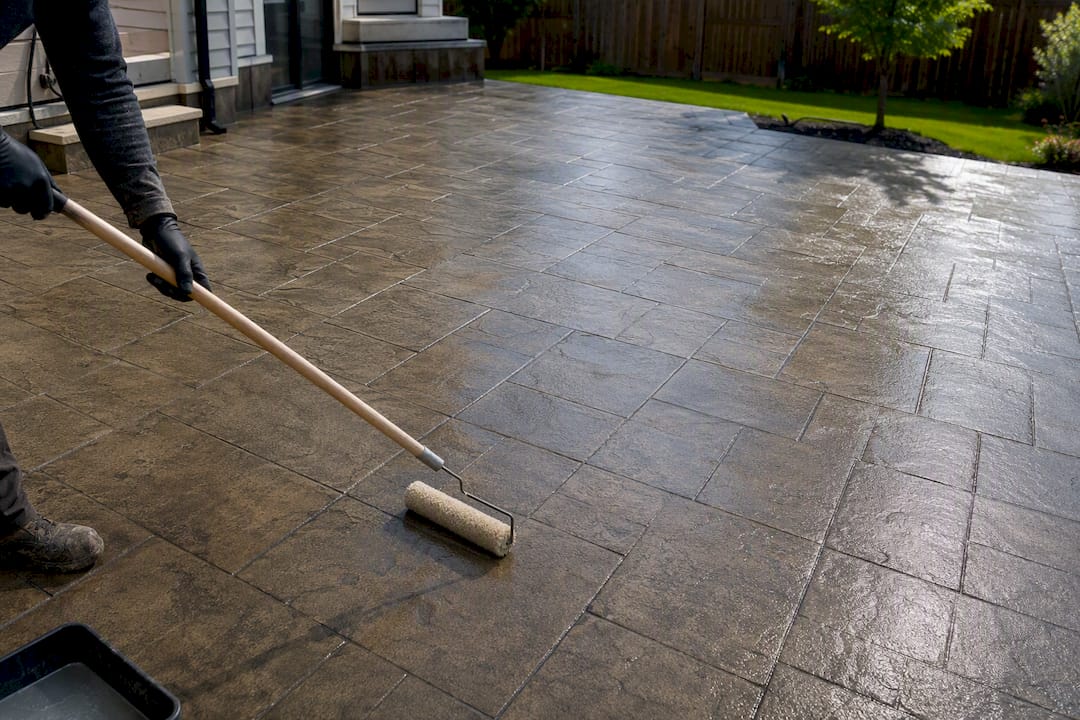
Coverage rates vary by product, but most acrylic sealers run somewhere between 200 and 400 square feet per gallon per coat, and manufacturers always print the exact number on the container label or technical datasheet. Two thin coats beat one thick one every time. A heavy single coat traps solvents underneath, which is a common cause of the milky white haze homeowners see a week later.
Temperature and humidity windows matter more in Calgary than in milder cities. Most sealers need surface and air temperatures above 10°C, holding steady for the full cure period, usually 24 to 48 hours minimum before rain, foot traffic, or vehicles touch the surface. Calgary’s swings from warm afternoons to near-freezing evenings, especially in September, can catch homeowners off guard mid-project. Low humidity actually helps here since it speeds solvent evaporation, but wind-blown dust settling into wet sealer is a real risk on an exposed driveway.
If your stamped concrete surrounds a pool or sits somewhere it gets wet often, mix in a fine anti-skid additive before the final coat. It costs little and meaningfully cuts down on slipperiness once the sealer cures glossy.
Should you seal your own driveway or hire a pro?
DIY sealing a small patio can run you the cost of a sealer bucket, a roller, and a Saturday afternoon. Sealing a full driveway or a complex stamped pattern is a different job entirely, and the cost gap between doing it yourself and hiring a professional in Calgary usually reflects real differences in equipment, material knowledge, and labour, not just markup.
The risks of DIY mistakes are specific and expensive to fix. Applying sealer too thick causes bubbling and a cloudy finish. Sealing over a surface that isn’t fully dry traps moisture, which shows up weeks later as white blotches or peeling sheets. Using the wrong sealer family (an acrylic on a pool deck, for instance) can make the surface dangerously slippery. Fixing a botched seal job almost always means stripping the whole surface and starting over, which costs more than hiring it out correctly the first time.
A professional crew brings a few things a weekend DIYer usually can’t match: the right equipment for even sprayer coverage on large surfaces, experience reading how your specific stamped pattern and exposure (shade, drainage, salt load) affects sealer choice, and the judgement to catch a crack or a moisture problem before it becomes a bigger repair. Pros also work from technical datasheets for each product’s exact cure window and application temperature, rather than guessing from a paint-can label.
For a straightforward patio refresh, DIY is a reasonable weekend project. For a driveway, a pool deck, or an intricate stamped pattern with lots of detail lines, hiring out tends to save money over the life of the sealer, not just hassle.
Why does stamped concrete peel, cloud, or turn slippery?
Most sealer failures trace back to one of four causes, and each has a specific fix.
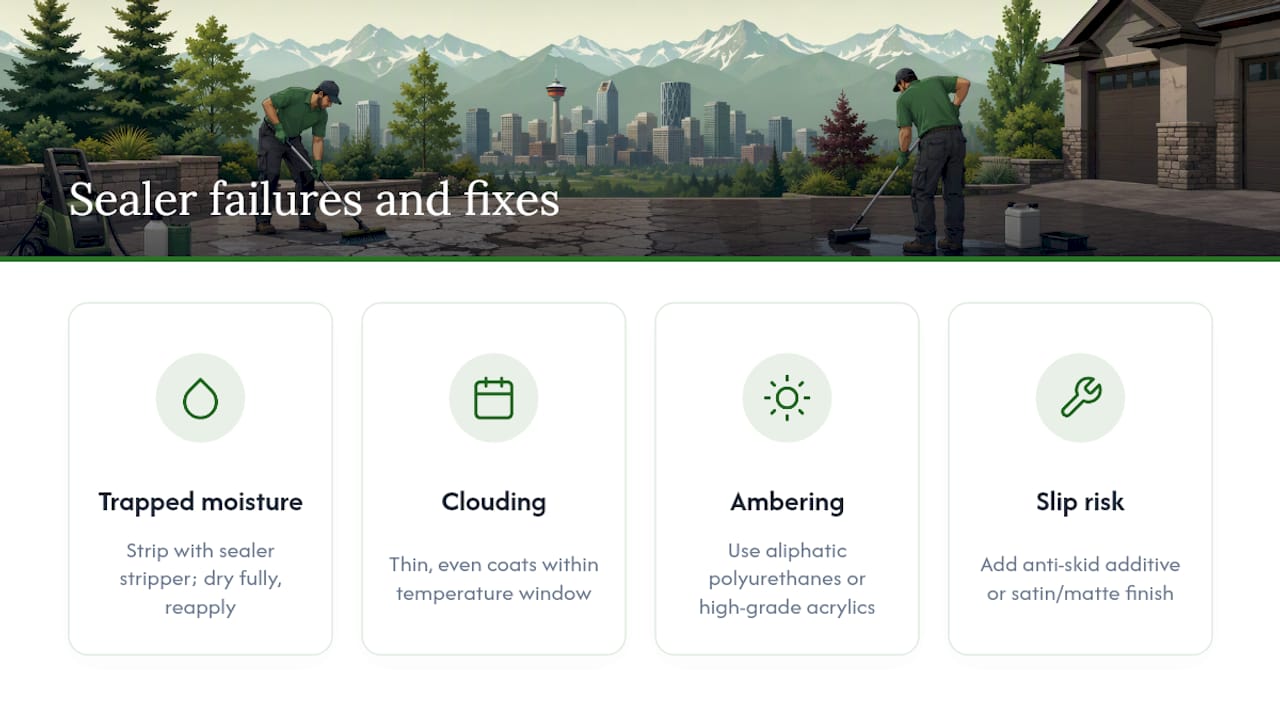
Peeling or flaking almost always means moisture was trapped under the sealer when it cured, often from applying too soon after cleaning or during a humid spell. The fix is to strip the peeling sections with a sealer stripper, let the slab dry fully, and reapply.
Clouding or whitening (sometimes called blushing) happens when humidity or cool temperatures interfere with the solvents evaporating properly during cure. It’s common on Calgary’s shoulder-season jobs, spring and early fall, when a warm afternoon application meets a cold evening. Thin, even coats applied within the recommended temperature window largely prevent it.
Ambering is yellowing, usually from a lower-grade acrylic sealer reacting to prolonged UV exposure over several seasons. Aliphatic polyurethanes and higher-grade acrylics resist this far better and are worth the extra cost on south-facing surfaces that see full sun most of the year.
Reduced slip resistance comes from a glossy film-forming sealer left bare on a wet or icy surface. Adding an anti-skid additive at application, or switching to a satin or matte finish, solves this without giving up protection.
What Calgary pros actually choose and why
Freeze-thaw and salt define every sealer decision here. Penetrating siloxanes win on driveways that see de-icer, since they resist salt without adding slickness. Acrylics still make sense on patios where colour matters more than salt exposure. Late spring through early fall, once temperatures hold above 10°C, is the only realistic application window, and that’s exactly when we book most sealing jobs for driveways and detailed stamped patterns.
Get your stamped concrete sealed before the next freeze
Yearlong is the practical alternative to piecing together a DIY sealing project yourself: since 2017, our crews have handled Calgary’s freeze-thaw cycles and salt exposure on driveways, patios, and pool decks across the city, backed by a satisfaction guarantee on every job.

Our concrete sealing scope covers the parts homeowners most often get wrong: full surface prep, cleaning and degreasing, crack repair, choosing the right sealer family for your surface and sun exposure, and adding anti-skid grit where it’s needed near pools or steps. We also handle the salt stain and efflorescence removal that has to happen before any sealer goes down, and if your slab needs more than sealing, our concrete and patio cleaning service can get a neglected driveway back to a workable starting point first.
If your stamped concrete is due for a reseal or you’ve never had it sealed at all, visit our concrete sealing page to request a quote or book a site visit before the fall temperature window closes.
Where to check the details yourself
- Yearlong’s concrete sealing service page outlines local timing recommendations and the satisfaction guarantee behind every job.
- The salt stain removal guide walks through prep steps in more detail than covered above.
Before buying any sealer, check its technical datasheet (TDS) or safety data sheet (SDS) for exact cure times and temperature limits. Yearlong can help interpret those specs if you’re unsure which product fits your surface.
Frequently asked questions
How often should stamped concrete be sealed in Calgary?
Most stamped concrete needs resealing every 2 to 4 years, with driveways on the shorter end of that range because of salt and traffic exposure.
Can I seal stamped concrete myself?
Yes, for a small patio with a straightforward pattern. Driveways and pool decks carry more risk of costly mistakes and usually benefit from professional application.
What’s the best sealer for a Calgary driveway?
A penetrating silane or siloxane sealer generally holds up best against de-icing salts, though an aliphatic polyurethane suits driveways with heavier vehicle traffic.
How long does sealer need to dry before I can walk or drive on it?
Most products need 24 to 48 hours minimum before foot traffic and longer before vehicles, so check the product’s technical datasheet for the exact window.
Why did my sealer turn white or cloudy?
Cloudy or milky sealer usually means moisture got trapped during application, often from cool or humid weather. It typically needs to be stripped and reapplied properly.
Sources
- How To Seal Pool Deck For Lasting Protection And Shine