

Yes, seal it. A properly cured exposed aggregate surface will resist staining, freeze-thaw damage, and efflorescence for years longer once it’s sealed, but the sealer you choose matters more than the decision to seal at all. Pick a penetrating sealer if you want maximum protection with zero visual change, or a topical acrylic sealer if you’re after that glossy “wet look” and don’t mind resealing more often. Either way, follow the manufacturer’s application guidelines to the letter, or hand the job to a professional like Yearlong.
TL;DR:
- Penetrating sealers last over five years and allow the concrete to breathe, making them ideal for high-traffic driveways and weathered slabs.
- Applying sealer too early, during extreme heat, or before confirming moisture levels with the plastic-sheet test often results in blushing or failure.
- Proper cleaning involves removing all stains and efflorescence before sealing; residual cement paste causes a white haze that is difficult to fix.
- Reseal topical acrylics every one to three years, as they wear faster under traffic, while penetrating sealers typically require less frequent renewal.
- Hiring a professional is advisable when dealing with stubborn stains, tight weather conditions, or complex drainage slopes to ensure proper application and durability.
Table of Contents
- Sealing exposed aggregate: which sealer type actually fits your driveway?
- When is the right time to seal a new concrete surface?
- How do you properly clean exposed aggregate before sealing?
- What’s the best technique for applying exposed aggregate sealer?
- How often should you reseal exposed aggregate concrete?
- Why does exposed aggregate sealer turn white or peel?
- What Yearlong’s crews watch for that most DIY guides miss
- What most guides get wrong about sealing exposed aggregate
- Get exposed aggregate sealed properly, without the guesswork
- Where to check the technical details yourself
- Sources
Sealing exposed aggregate: which sealer type actually fits your driveway?
Exposed aggregate sealer falls into two camps, and picking the wrong one is the single biggest reason homeowners end up disappointed with the results.
Penetrating sealers soak into the concrete’s pores instead of sitting on top. They don’t change the surface look at all, which is exactly why contractors favour them for driveways and anywhere heavy traffic will grind away a film coating over time. They also let the slab breathe, so trapped moisture underneath isn’t an issue the way it can be with film-forming products.
Topical or acrylic sealers form a visible film that darkens the aggregate and gives it that polished, “just rained” gloss. Products like EXPO-GLOSS are built specifically for this wet-look effect, and they also help lock loose stones in place. The trade-off is upkeep. Film coatings wear, scuff, and need renewal far sooner than a penetrating product.
Within acrylics, water-based formulas are generally lower in VOCs and more forgiving of residual moisture, while solvent-based versions tend to cure harder and glossier but demand tighter weather windows.
- Driveways and walkways: penetrating sealer, for durability under wheels and boots.
- Pool decks and patios: topical acrylic, for the wet look and slip-resistant additive options.
- Older, weathered slabs: water-based penetrating sealer, since solvent-based acrylics can react unpredictably with aged surfaces.
Pro Tip: If you’re torn between looks and low maintenance, ask yourself how often you’re willing to reseal. If the honest answer is “not very,” go penetrating.
When is the right time to seal a new concrete surface?
Timing wrecks more sealing jobs than product choice does. New concrete generally needs a full 28-day cure before sealing, though some cure-and-seal products are formulated for earlier application, so check the label before assuming the standard rule applies.
- Check the temperature. Aim for surface and air temperatures in the moderate range, and never seal a slab baking in direct sun. Heat causes the sealer to flash off before it can level properly.
- Run the plastic-sheet test. Tape down a 450 mm by 450 mm piece of plastic for 24 hours. If the concrete underneath darkens, the slab is holding too much moisture to seal safely.
- Watch the forecast. Avoid sealing if rain is possible within 24 hours.
- Plan around freeze-thaw season. In cooler climates, sealing before the ground starts freezing and thawing repeatedly protects the aggregate from moisture expansion damage.
How do you properly clean exposed aggregate before sealing?
Cleaning is the step people rush, and it’s the one that determines whether the sealer looks right or ruins the surface permanently.
Any cement paste left over from the exposure process gets trapped the moment sealer goes down, and that produces a milky white haze that’s extremely difficult to correct once it’s sealed in. Efflorescence, oil spots, and old stains need to come out completely first, not just get rinsed on the surface.
- Sweep and clear debris, then apply a concrete-safe degreaser to any oil or grease stains, letting it dwell per the product label.
- Pressure wash with a fan tip, holding the nozzle 20 to 30 centimetres from the surface to avoid etching the concrete or dislodging aggregate.
- Rinse thoroughly and let the slab dry for at least 24 to 48 hours before sealing. A related read on cleaning concrete and patios covers technique in more depth.
- Inspect for cracks or loose stones. Patch small cracks and remove any wobbly aggregate pieces now. Sealer won’t fix either problem, it’ll just lock them in.
Pro Tip: Wear eye protection and gloves when degreasing. Splashback from a pressure washer carries cleaner and grime farther than you’d expect.
What’s the best technique for applying exposed aggregate sealer?
Application technique separates a sealer that lasts from one that peels within a season.
For topical products, work in thin, even coats using a pump-up sprayer or a short-nap roller. For penetrating sealers, flood the surface generously and remove the excess after a short soak so the product has time to absorb.
- Have a pump-up sprayer, short-nap roller, natural-bristle brush for edges, gloves, and eye protection on hand before you start.
- Cut in the edges and corners first, then work across the field in small, manageable sections.
- Keep a wet edge and avoid overlapping strokes too heavily. Double coats in the same spot cause uneven gloss and blushing.
- Apply a second thin coat once the first has flashed off, following the label’s recoat window.
- Keep foot traffic off for at least 24 hours and vehicles off for several days, depending on the product.
If your slab has heavy staining, a complex drainage slope, or you’re working against a tight weather window before rain, that’s usually the point where hiring Yearlong makes more sense than pushing through a DIY job under pressure.
How often should you reseal exposed aggregate concrete?
Resealing intervals depend entirely on which sealer type is on your slab. Penetrating sealers commonly last five years or longer, while topical acrylics typically need renewal every one to three years because the film wears down under foot and tire traffic.
- Run a quick water-bead test. If water soaks in instead of beading up, it’s time to reseal.
- Pressure wash gently once or twice a year to clear grit before it grinds into the surface.
- Traffic, de-icing salts, and UV exposure all shorten sealer life, so a shaded backyard patio will outlast a sun-exposed driveway that sees winter salt.
- Water-based formulas tend to tolerate residual moisture better than solvent-based ones, which matters if you’re resealing in a shorter dry window.
Curious how your driveway’s timeline compares? Driveway sealer lifespan breaks down realistic reseal windows by surface type.
Why does exposed aggregate sealer turn white or peel?
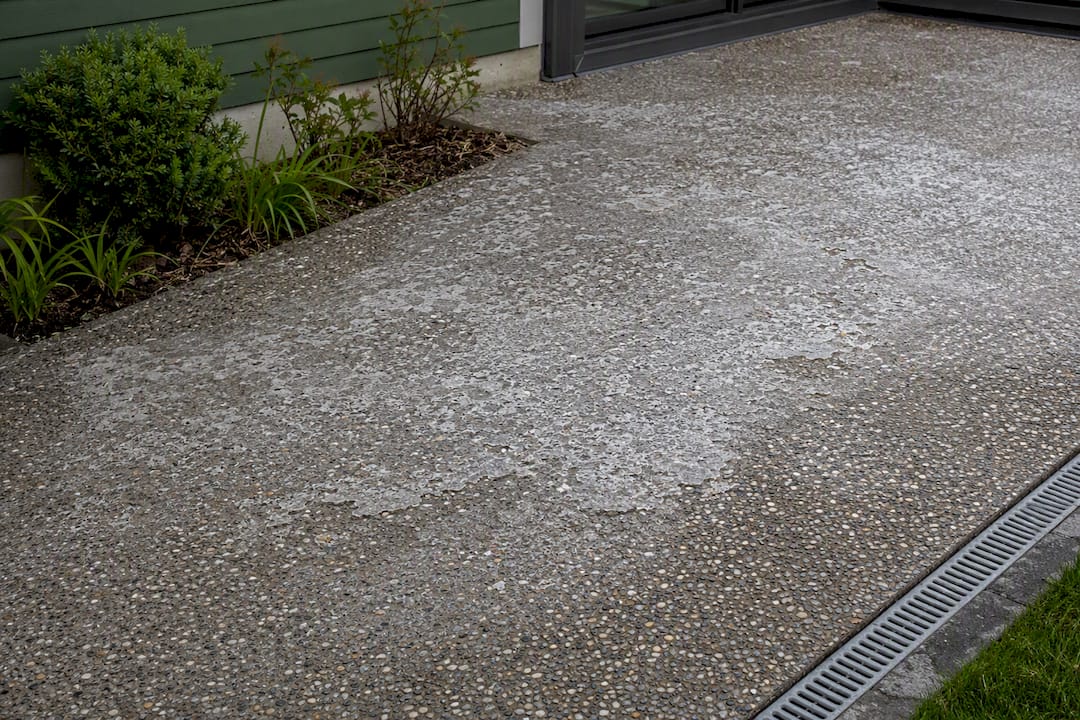
Most sealer failures trace back to two culprits: moisture and incomplete cleaning.
Milky haze happens when cement paste gets sealed in before it’s fully removed, or when moisture in the slab interferes with film formation. Blushing is the same root cause, usually from sealing too soon after rain or on a slab that failed the plastic-sheet test.
- Failed film-forming sealers usually need to be stripped, either chemically or with light abrasive methods, before reapplying.
- If the surface has become slippery, a non-slip additive mixed into the next coat solves it without stripping anything.
- Aggregate pop-out is prevented at the prep stage. Remove loose stones before sealing rather than trying to seal over them.
If stripping and abrasive correction sound like more than a weekend project, that’s a reasonable line for calling in Yearlong instead.
What Yearlong’s crews watch for that most DIY guides miss
Lewie and the Yearlong team have handled enough Calgary driveways and patios to know where DIY sealing jobs usually go sideways: rushed drying time, skipped moisture checks, and sealer applied over stains that needed a second cleaning pass first.
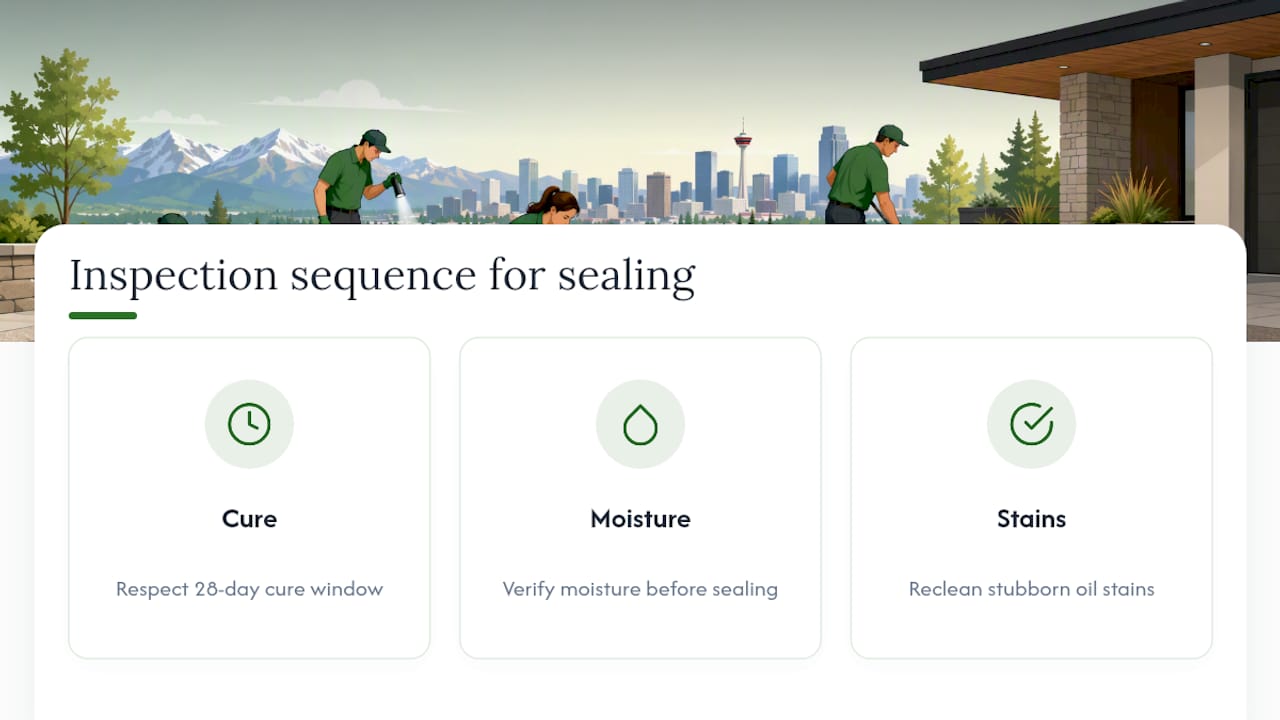
Yearlong recommends bringing in a pro when a slab has stubborn oil staining, when the weather window is too tight to safely wait out the cure, or when drainage slopes make even coverage tricky with a roller. A typical site visit includes an assessment of the slab’s condition, a cleaning plan tailored to whatever’s staining it, and a sealing schedule that respects both the 28-day cure window and the weather forecast. Jobs come with a satisfaction guarantee, so there’s no guessing about the outcome.
What most guides get wrong about sealing exposed aggregate
Most advice on this topic treats sealing like a one-size-fits-all chore: clean it, spray it, done. That’s backwards. The decision that actually matters happens before you buy a can of sealer, and it’s a durability-versus-appearance call that most homeowners never consciously make.
If you want a driveway you seal once and mostly forget for five years, penetrating sealer wins every time. If you want the glossy patio look for a backyard party surface, you’re signing up for maintenance every couple of years, and that’s a fair trade if you know it going in. The mistake isn’t picking the acrylic. It’s picking it without budgeting for the recoat.
The other place conventional advice falls short is moisture. Plenty of guides mention a cure window and stop there, skipping the plastic-sheet test entirely. That test takes 24 hours and costs nothing, yet it’s the single best predictor of whether your sealer will bond cleanly or blush within a week. If there’s one thing to prioritize above product brand or coat count, it’s confirming the slab is actually dry enough to seal in the first place.
— Lewie
Get exposed aggregate sealed properly, without the guesswork
Yearlong is the option for Calgary homeowners who’d rather book a proven crew than spend a weekend testing moisture levels and hoping the weather holds. Where a DIY job hinges on getting the timing, prep, and coats exactly right, Yearlong handles the assessment, the cleaning, and the sealing in one visit, backed by a satisfaction guarantee.

Before your appointment, clear the surface of furniture, planters, or vehicles, and let Yearlong know about any known stains or crack repairs ahead of time. That gives the crew a clear read on what the slab needs before they even show up. If a wet-look topical finish sounds more your style than a penetrating sealer, mention that too. It changes the cleaning and prep sequence slightly.
Ready to get your driveway or patio sealed before the next freeze-thaw cycle? Book a visit through Yearlong’s concrete sealing services and get a straightforward quote based on your property’s actual condition, not a guess from a photo.
Where to check the technical details yourself
The Concrete Network’s sealing guide covers the general case for sealing and reseal frequency in plain terms. For product-specific application limits, temperature ranges, and moisture thresholds, W. R. Meadows’ EXPO-GLOSS documentation is the manufacturer source worth reading before buying a topical sealer. CoverTec’s FAQ page is useful for comparing realistic sealer lifespans, and SurfacesGalore’s overview of sealer chemistry explains the penetrating-versus-film-forming distinction in more general terms if you’re still weighing the two.
Sources
- Exposed aggregate sealer – Sealing exposed aggregate concrete – Concrete Network
- EXPO-GLOSS OTC (Canada) – ‘Wet Look’ Exposed Aggregate Sealer
- EXPO-GLOSS ‘Wet Look’ exposed aggregate sealer (W. R. Meadows)
- Exposed aggregate concrete sealer – CoverTec FAQs
One Response