

TL;DR:
- Regular outdoor inspections identify risks early, help plan repairs, and prevent costly property damage. Conducting seasonal, pre- and post-winter assessments ensures safety, cost savings, and property value preservation in Calgary’s climate. Keeping documented inspection records streamlines maintenance, insurance, and resale processes over time.
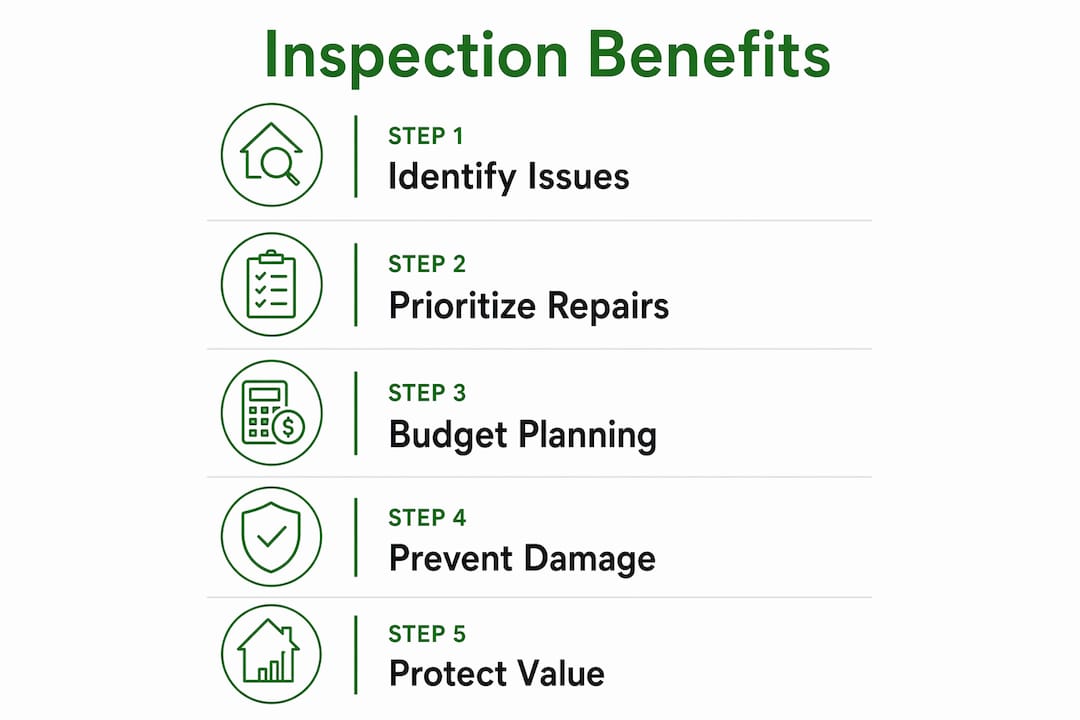
Inspections turn uncertain outdoor upkeep into a prioritised, costed stewardship plan. Instead of waiting for a cracked sidewalk to become a liability or a drainage problem to flood your basement, a structured property assessment identifies every risk, ranks it by urgency, and attaches a cost estimate so you can budget ahead. The core outcomes are straightforward: improved safety, meaningful cost avoidance, smarter capital expenditure (CAPEX) planning, and stable property value over time. A Property Condition Assessment (PCA) takes this furthest, functioning as a system-level diagnostic that ties each defect to its operating cost impact and Net Operating Income (NOI) effect.
- Safety: identify trip hazards, ice risks, and drainage failures before someone gets hurt
- Cost avoidance: catch small defects before they compound into expensive repairs
- CAPEX planning: know what capital work is coming so you can fund it deliberately
- Property value: well-documented maintenance history supports resale and insurance
Pro Tip: Book your first inspection in late April or early May, right after Calgary’s freeze-thaw season ends. Post-winter is when frost heave, drainage failures, and concrete cracking are most visible and easiest to address before summer growth hides them.
Table of Contents
- What does an outdoor property inspection actually check?
- Which inspection types should Calgary homeowners schedule, and when?
- How do inspections save money and protect property value?
- What should a professional inspection report include?
- How do you turn inspection findings into a maintenance plan and budget?
- How do you choose the right property maintenance provider in Calgary?
- Key takeaways
- Why inspections matter more in Calgary than most places
- Yearlong can inspect your property and build your seasonal plan
- Useful sources and further reading
What does an outdoor property inspection actually check?
Inspections are system-based, not cosmetic. A good inspector looks past tidy mulch and freshly mowed grass to ask whether each outdoor element is functioning the way it should. Outdoor components are often the first indicators of environmental wear, and ignoring them guarantees costlier remediation later.
Here is what a thorough outdoor inspection covers:
- Grading and drainage: Does the ground slope away from the foundation? Flat or reversed grading channels snowmelt and rain toward the house, a leading cause of basement moisture in Calgary.
- Concrete and hardscapes: Cracked driveways, heaved walkways, and spalling steps are trip hazards and worsen every freeze-thaw cycle. Early sealing costs a fraction of full replacement.
- Irrigation systems: Leaking heads, broken lines, and poorly timed controllers waste water and erode soil. A spring start-up check catches winter damage before the system runs all season.
- Trees and shrubs: Overhanging limbs near power lines, dead wood, and root encroachment near foundations are safety and liability concerns, not just aesthetic ones.
- Fencing: Frost heave shifts posts and loosens panels. A leaning fence is a liability and a security gap.
- Gutters and downspouts: Blocked or disconnected downspouts dump water at the foundation. This is one of the most common and most preventable sources of water damage.
- Snow and ice pathways: Post-winter, inspectors check for ice-dam damage on eaves, salt erosion on concrete, and pathway surfaces that will refreeze dangerously next season.
Landscape assessments also flag drainage, irrigation leaks, and tree hazards that can become insurance or liability issues if left unaddressed. Urgent items are safety-related (drainage toward the foundation, structural tree risk, cracked walkways) while routine items like mulch replenishment and shrub pruning can be scheduled across the season.
Which inspection types should Calgary homeowners schedule, and when?
There are five practical inspection types worth knowing:
- Seasonal routine check (spring and fall): a walkthrough of all outdoor systems at the season change, typically taking about an hour to an hour and a half for a residential property
- Pre-winter inspection (October): confirms snow pathways are clear, downspouts are extended, irrigation is winterised, and concrete is sealed before freeze-thaw begins
- Post-winter inspection (April–May): assesses frost heave, drainage, concrete cracking, and any damage from snow removal equipment
- Property Condition Assessment / PCA (every 3–5 years or before purchase): a formal, ASTM E2018-aligned system-level diagnostic covering all outdoor and structural elements with written findings, cost estimates, and a prioritised remediation plan
- Event-based inspection (post-storm, pre-sale, post-renovation): triggered by a specific event rather than a calendar date
Calgary seasonal calendar:
- April–May: post-winter inspection; irrigation start-up; grading and drainage check
- June–August: mid-season check on irrigation, lawn health, and tree canopy
- September–October: pre-winter inspection; gutter cleaning; concrete sealing; irrigation winterisation
- After major hailstorm or wind event: immediate exterior check for damage
Upgrade from a routine check to a full PCA when you are buying a property, planning significant capital work, or have not had a formal assessment in more than five years. For the PCA, include your landscape contractor alongside the inspector so irrigation and grading findings get a specialist’s eye.
What to expect at each visit:
- Written notes and photos taken on-site
- Findings sorted by urgency (immediate, near-term, routine)
- A brief verbal summary with the inspector before they leave
- A written report within a few days
How do inspections save money and protect property value?
Inspections pay for themselves by stopping small problems from becoming expensive ones. Proactive stewardship consistently outperforms reactive break-fix spending because early detection is almost always cheaper than emergency repair.
The financial mechanisms are specific:
- Early detection: a $200 concrete sealing job prevents a $3,000 driveway replacement
- CAPEX prioritisation: knowing a retaining wall needs replacement in two years lets you fund it deliberately rather than scrambling for cash
- Water and energy savings: fixing an irrigation leak reduces your water bill immediately
- Liability reduction: a documented, repaired trip hazard is a far better legal position than an uninspected one
- Insurance and resale: a clean inspection record supports insurance renewals and strengthens a listing price
A Calgary homeowner noticed reversed grading along the north side of their property during a post-winter inspection. The fix, regrading and extending a downspout, cost under $500. Left unaddressed, the same drainage path would have directed snowmelt toward the foundation wall every spring, a pattern that typically leads to basement moisture damage costing several thousand dollars to remediate.
Property assessments that analyse system-level performance identify hidden operational drains, including deferred exterior maintenance, that directly affect NOI for rental properties and long-term value for owner-occupied homes. The impact of inspections on property value compounds over time: a well-maintained property with documented inspection history commands stronger resale interest than a comparable property without records.
Pro Tip: After every inspection, save the report and photos in a dedicated folder labelled by date and property address. Years later, this documentation speeds warranty claims, insurance processes, and resale disclosure — and it costs nothing extra to maintain.
What should a professional inspection report include?
A useful inspection report is not a vague list of observations. The core deliverables from a professional Calgary inspection should be:
- Written report: a structured document covering every outdoor system inspected, with findings stated clearly
- Photographs: time-stamped images of each defect, providing before-and-after evidence for repairs and a record for insurance
- Priority and urgency ratings: findings sorted into immediate (safety or structural), near-term (within one season), and routine (scheduled maintenance)
- Cost estimates: short-term repair costs and longer-term capital replacement estimates so you can budget accurately
- Recommended next steps: specific actions tied to each finding, not generic advice
Inspection reports are most useful as a maintenance and negotiation tool, not simply a to-do list. Priority ratings tell you where to spend first; cost estimates let you compare quotes from contractors.
The best reports include priorities, cost bands, and a timeline so maintenance teams can execute across seasons — turning a single walkthrough into a multi-year stewardship plan.
When vetting a Calgary provider, look for:
- Demonstrated experience with Calgary’s freeze-thaw climate and chinook conditions
- Proof of liability insurance
- Sample reports you can review before hiring
- References from local residential or small commercial clients
- Willingness to include season-specific notes (snow load, ice-dam risk, frost heave patterns)
Pro Tip: Ask your inspector to flag any findings that are specific to Calgary’s climate, particularly freeze-thaw concrete damage and spring drainage risk. These notes make the report far more useful when scheduling seasonal work.
How do you turn inspection findings into a maintenance plan and budget?
Map every finding to one of three budget buckets: immediate repairs, recurring maintenance services, and capital projects. This separation keeps your operating budget predictable and prevents a surprise capital expense from wiping out your maintenance fund.
| Finding | Timing | Budget band |
|---|---|---|
| Cracked walkway (trip hazard) | Immediate (this season) | Repair/seal |
| Blocked downspout extension | Immediate (this season) | Low-cost fix |
| Irrigation head replacement | Near-term (within one season) | Moderate |
| Fence post re-setting (2 posts) | Near-term (fall) | Moderate |
| Retaining wall replacement | Capital project (2–3 years) | Plan and fund |
| Annual lawn care and bed maintenance | Recurring service | Operating budget |
Recurring services, such as lawn care and seasonal cleanups, reduce CAPEX pressure by keeping outdoor systems healthy year-round. A lawn that is aerated, fertilised, and cleaned up each season rarely needs expensive renovation. Concrete that is sealed regularly rarely needs full replacement.
Steps to build your annual maintenance calendar from an inspection report:
- Highlight all immediate items and book them within 30 days
- Group near-term items by season (spring vs. fall) and schedule them accordingly
- Add capital items to a separate multi-year fund with a target date
- Set a recurring reminder to book your next seasonal inspection
- Keep a contingency reserve of roughly 10% of your annual maintenance budget for unplanned repairs
The role of maintenance scheduling is especially important for small property managers overseeing multiple sites, where fragmented spending without a plan leads to missed items and compounding deferred maintenance.
How do you choose the right property maintenance provider in Calgary?
A concise list of questions to ask any prospective provider before signing:
- What outdoor systems does your inspection scope cover?
- What does the written report include, and can I see a sample?
- How many years have you worked in Calgary, and are you familiar with freeze-thaw and chinook conditions?
- Are you fully insured, and can you provide proof?
- Do you provide cost estimates alongside findings?
- Can you supply local references from residential or small commercial clients?
- Do you offer ongoing maintenance services to follow up on inspection findings?
Red flags to watch for:
- Vague verbal summaries with no written report
- No photographs included in the report
- No local references or inability to name Calgary-specific climate considerations
- Missing or unverifiable insurance
- Pressure to book repairs immediately without a written estimate
Yearlong has served Calgary homeowners and property managers since 2017, with year-round outdoor maintenance services and a satisfaction guarantee. Their local climate knowledge, covering everything from spring drainage assessments to pre-winter concrete sealing and snow removal, makes them a practical first call for both inspections and the follow-up work those inspections recommend.
Key takeaways
Inspections convert outdoor property risks into a prioritised, budgeted stewardship plan that prevents costly failures and protects long-term property value.
| Point | Details |
|---|---|
| Book seasonal inspections | Schedule post-winter (April–May) and pre-winter (October) checks every year for Calgary properties. |
| Prioritise safety findings first | Address drainage, concrete hazards, and tree risks immediately — they carry liability and compound quickly. |
| Use reports for CAPEX planning | Separate findings into immediate repairs, recurring services, and capital projects to budget predictably. |
| Document everything | Save dated photos and reports for insurance renewals, warranty claims, and resale disclosure. |
| Yearlong as your local option | Yearlong offers Calgary-based outdoor maintenance and seasonal care backed by a satisfaction guarantee. |
Why inspections matter more in Calgary than most places
Proactive inspection is not a nice-to-have in Calgary — it is the only approach that makes financial sense given the climate. Freeze-thaw cycles here are aggressive. A property that looks fine in September can have heaved walkways, cracked concrete, and reversed drainage by May, and none of it was visible under the snow.
Post-winter drainage problems are among the most common issues Yearlong encounters on Calgary properties each spring. Grading that seemed adequate in summer becomes a direct path to foundation moisture once snowmelt volume peaks. Catching that in April costs a fraction of what it costs after a summer of water infiltration.
The satisfaction guarantee Yearlong offers reflects exactly this philosophy: show up, document what you find, and fix it properly. Calgary’s climate does not forgive deferred maintenance, and neither does a buyer’s inspector at resale time.
Yearlong can inspect your property and build your seasonal plan
Skip the guesswork of figuring out what your property needs and when. Yearlong has been maintaining Calgary outdoor properties since 2017, and the most useful thing they do before any service starts is look at what is actually there.
Request a post-winter check or a pre-winter assessment, and Yearlong will document findings, prioritise the work, and translate the results into a seasonal maintenance plan built around your property and your budget. From spring and fall cleanups to concrete care and snow removal, every service connects back to what the inspection found. Start with the property maintenance checklist for homeowners to see what a full-year plan looks like, then get a quote to put it into action.
Useful sources and further reading
- Property Health Assessment Report, Etogo Property Stewardship — explains the PCA/PHAR methodology, closed-loop stewardship model, and how findings link to NOI and CAPEX planning (referenced in sections on inspection types, ROI, and budgeting)
- Property Condition Assessments, Granlund — covers outdoor inspection scope, multi-disciplinary team structure, and readable reporting practices (referenced in sections on what inspections check and what reports should include)
- Annual Property Condition Assessment Checklist, POPProbe — ASTM E2018-aligned checklist covering 30+ items across exterior and site systems (referenced in the inspection types section)
- How to Conduct a Property Condition Assessment, U.S. Lawns — landscape-focused PCA guidance linking outdoor findings to insurance and liability outcomes (referenced in the outdoor inspection scope section)
- Benefits of Regular Property Inspections for Landlords, Wurth Property Management — proactive stewardship argument and tenant satisfaction outcomes (referenced in the ROI and value sections)
- Home Inspections, NAR — report structure, priority categories, and how homeowners should interpret inspection findings (referenced in the deliverables section)
- Yearlong Property Maintenance — Calgary-based outdoor maintenance provider; local service pages for lawn care, snow removal, seasonal cleanups, and concrete care