

The fastest, most reliable fix for set-in rust stains on concrete is an oxalic-acid based masonry rust remover, which chemically binds to iron oxide and lifts it out of the pores. For fresh, faint marks, white vinegar or citric acid sometimes work. Whatever you use, test a small patch first, wear proper gloves and eye protection, protect nearby plants and drains, then rinse and neutralize thoroughly, repeating in light passes rather than one heavy application.
TL;DR:
- Use oxalic acid-based rust removers for deep, set-in stains, applying in small sections and avoiding letting the solution dry to prevent uneven halos.
- Light stains from recent exposure can sometimes be faded with vinegar or citric acid, but these are ineffective on older, embedded rust marks.
- Proper safety precautions include testing on a hidden patch, wearing PPE, protecting nearby plants, and thoroughly rinsing and neutralizing the surface after treatment.
- Muriatic acid is a faster but riskier alternative that can cause permanent etching and discoloration, making it a last resort for professionals.
- Regular maintenance actions, such as removing ongoing water sources and resealing concrete, help prevent rust stain reoccurrence.
Table of Contents
- How to remove rust stains from concrete with an oxalic-acid cleaner
- Do vinegar, citric acid, or WD-40 actually work on rust?
- What safety precautions matter most before you start?
- How do you rinse and neutralize after treatment?
- How do you stop rust stains from coming back?
- When should you call a professional instead of DIYing it?
- Why trust Yearlong’s take on concrete rust removal
- What the research actually gets right (and wrong) about rust removal
- Need a hand? Yearlong’s concrete cleaning and sealing service
- Sources
How to remove rust stains from concrete with an oxalic-acid cleaner
Rust sits deep in concrete pores, which is why soap, degreasers, and even pressure washing on their own rarely touch an established stain. Oxalic acid works differently: it chelates iron oxide into a water-soluble compound that rinses free instead of just sitting on the surface waiting to be scrubbed off. That’s the whole reason chemical treatment beats elbow grease here.
Before you touch the bottle, get your gear together: chemical-resistant gloves, eye protection, a nylon scrub brush, and a plastic bucket. Skip anything metal. A wire brush or steel scraper can leave tiny iron fragments behind that rust all over again days later.
- Pre-wet the concrete and the surrounding grass or beds with plain water. This stops the acid from soaking into dry soil or roots.
- Mix the rust remover following the label exactly. Many oxalic acid powders use roughly one pound per US gallon of water as a starting reference, but always defer to the manufacturer’s instructions over any generic ratio.
- Apply to a two or three foot section at a time. Check progress every 10 to 30 minutes and never let the solution dry on the slab.
- Scrub gently with the nylon brush once the stain starts lifting, then rinse the section fully before neutralizing.
Working in small sections isn’t fussiness. Letting acid dry unevenly is exactly how you get pale halos ringing the treated area instead of a clean, even result. Practical how-to guidance from restoration pros backs this up: pre-clean, test, and control dwell time rather than reaching for the pressure washer first.
Pro Tip: A second light pass the next day almost always beats one aggressive, overly concentrated application. Concrete can only take so much acid exposure before the surface itself starts to etch, so patience saves your driveway.
Do vinegar, citric acid, or WD-40 actually work on rust?
For light, recent marks, gentler options can be worth a try before you escalate to anything stronger.
- White vinegar or citric acid can fade very fresh, faint stains, but they struggle with anything set in for weeks or months and often leave a ghost of the mark behind.
- CLR and similar commercial masonry cleaners help with some spots, but always test on sealed or coloured concrete first since results vary by product chemistry.
- WD-40 occasionally lifts a very light, recent mark, but it’s not built to dissolve embedded iron oxide and can leave an oily residue that interferes with sealers or paint down the line.
Think of these as your first, low-risk attempt on a stain that just appeared. If the mark has been there since last summer, you’re likely wasting time before you get to the oxalic acid step anyway.
What safety precautions matter most before you start?
Skipping PPE or a test patch is how a simple cleaning job turns into a bigger repair bill.
- Wear nitrile or neoprene gloves, eye protection, and long sleeves. Add a respirator if dust or fumes are a factor.
- Protect lawns, garden beds, and nearby drains. Soak the surrounding soil and divert rinse water away from plants before you start.
- Spot-test on a low-visibility patch first, especially on sealed, stamped, coloured, or polished concrete, to check for etching or unexpected colour shift.
- Never mix cleaning products. Combining an acid with bleach, for instance, can produce dangerous fumes, and stick to nylon brushes instead of wire ones.
One detail homeowners consistently underestimate: muriatic (hydrochloric) acid is stronger than oxalic acid and often marketed as a faster fix, but it carries a real risk of permanent etching and a bluish discolouration if left too long. Professionals generally treat it as a last resort, not a starting point.
How do you rinse and neutralize after treatment?
Getting the acid off the slab matters as much as applying it correctly in the first place.
- Rinse immediately and thoroughly once you hit the recommended dwell time. Leaving acid on longer than needed keeps etching the surface even after the rust is gone.
- Neutralize with a baking soda and water solution after rinsing. This stops any residual acid from continuing to react.
- Let the concrete dry fully before judging the result. Wet concrete can hide a stain that reappears once it dries.
- If any colour remains, do a second light pass rather than a stronger one. Neutralizing after acid treatment also reduces the odds of dissolved iron flash rusting near the surface.
Save the pressure washer for the final rinse only, and keep the nozzle at a safe distance so you’re not adding a second source of etching on top of the chemical treatment.
How do you stop rust stains from coming back?
Cleaning the stain solves today’s problem. Finding the source stops next month’s.
- Slide furniture pads under metal chair legs and planters, and move anything rusting directly on the slab.
- Repair leaking spigots, irrigation heads, or metal fixtures that drip iron-rich water onto the same spot repeatedly.
- Rinse fertilizer granules off concrete before rain or sprinklers dissolve them, since iron-based fertilizer runoff is a common repeat offender.
- Reseal decorative or exposed-aggregate concrete on the schedule your sealer manufacturer recommends, since porous, unsealed concrete absorbs stains faster.
A quick seasonal walk-through of your driveway and patio catches most of these issues before they leave a mark. If mineral deposits rather than rust are the recurring problem, salt stain removal follows a similar prevention logic.
When should you call a professional instead of DIYing it?
Some situations are worth handing off rather than treating yourself.
- The stain keeps returning after repeated, correctly done treatments, which usually points to a source you haven’t found yet.
- Orange lines follow a crack pattern, which can signal exposed or corroding rebar rather than surface rust.
- The concrete is decorative, stamped, sealed, or coloured. These finishes often need a specific, finish-compatible product rather than a generic rust remover.
- Staining covers a large area, or you’re seeing ongoing runoff and a saturated slab, which points to a repair issue, not just a cleaning one.
For anything embedded deep enough that surface treatment isn’t reaching it, poulticing methods using absorbent media and specific reagents can pull rust out that no amount of surface scrubbing will touch. That’s specialized work, not a Saturday afternoon project.
Why trust Yearlong’s take on concrete rust removal
Yearlong Property Maintenance has handled concrete cleaning and sealing as part of its outdoor maintenance work across Calgary since 2017, alongside lawn care, seasonal cleanup, and snow removal. That kind of year-round property work means seeing the same rust stains show up season after season, on driveways, patios, and walkways exposed to Calgary’s freeze-thaw cycles and road salt.
Local climate knowledge matters here. A cleaning approach that works fine on a dry summer patio can behave differently on a slab that’s been through a Calgary winter, absorbed salt, and gone through repeated freeze-thaw stress. Yearlong’s guidance in this article reflects that practical, on-the-ground experience with the same surfaces homeowners are trying to fix themselves.

What the research actually gets right (and wrong) about rust removal
Most rust removal advice online treats every stain the same, and that’s the biggest gap. A rust mark from a folding chair left out overnight and a stain that’s been building for three years under a rusting planter need different levels of intervention. Reaching for a household remedy on a deep, set-in stain wastes a weekend before you end up buying oxalic acid anyway.
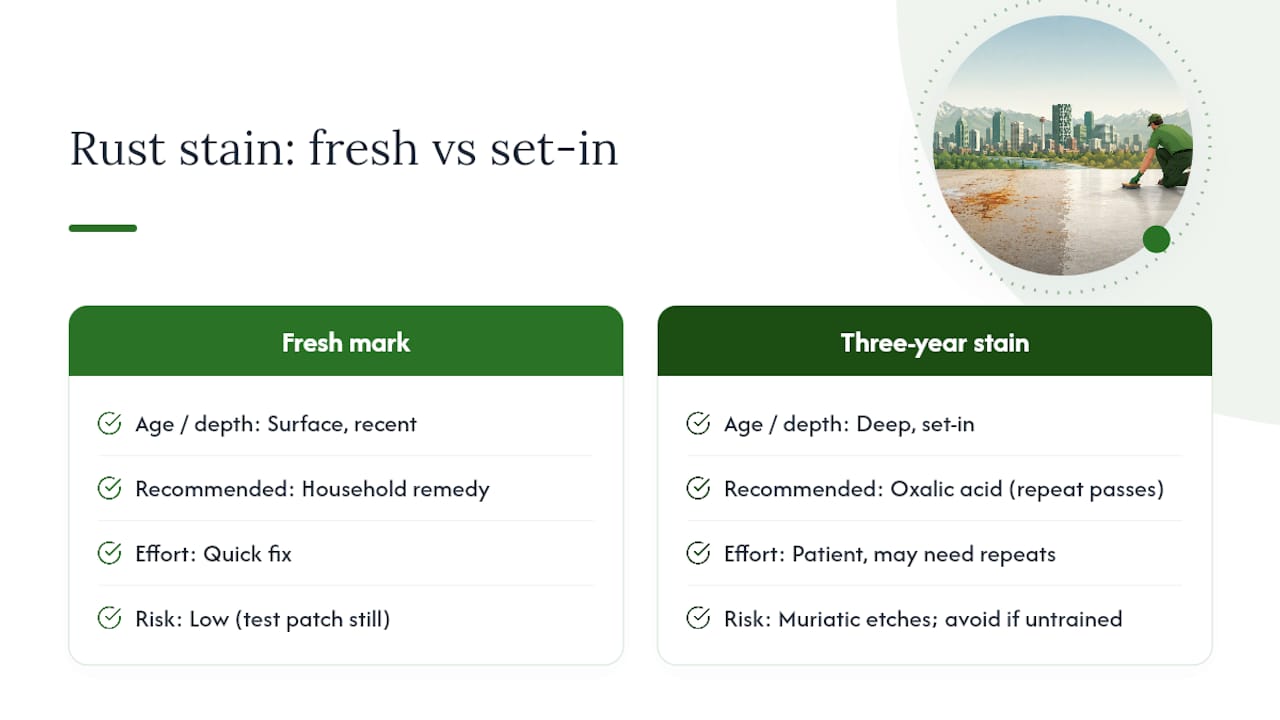
The overrated piece of conventional wisdom is muriatic acid as a quick fix. It works fast, which is exactly why so many people default to it, but the etching risk on residential concrete rarely gets mentioned until after the damage is done. Oxalic acid takes a bit more patience and a repeat pass or two, but it’s the safer bet for anyone without professional experience handling stronger acids.
If there’s one thing to prioritize, it’s the test patch. Skipping it is how a homeowner discovers, halfway through a driveway, that their sealed concrete reacts badly to a product that would have been fine on bare slab.
— Lewie
Need a hand? Yearlong’s concrete cleaning and sealing service
If your driveway has decorative stamping, a coloured finish, or rust that keeps coming back no matter what you try, a professional assessment saves you from guessing which product is safe for your specific surface. Yearlong handles concrete cleaning, degreasing, and sealing for Calgary homeowners who’d rather not spend a weekend testing chemicals on their own driveway.

Recurring stains, large-area staining, or any sign of rebar exposure are exactly the cases where a pro visit beats another DIY attempt. Professionals can check finish compatibility before applying anything, set up proper containment for plants and drains, and follow up with a sealing schedule that keeps new stains from soaking in as easily. If you’re dealing with a driveway that’s given you trouble more than once, book a concrete cleaning assessment and get it handled properly the first time.
Sources
- Crafting With Concrete: Oxalic acid, chelators and safer methods
- Concrete Camouflage: How to remove rust from concrete
- The House Mag: Safe methods for removing rust stains from concrete
- House Digest: WD-40 hack for rust on concrete