

Concentrated nitrogen and soluble salts in pet urine are what kill grass, and the single fastest thing you can do is flood the spot with water within five minutes of your dog urinating. That one action, done consistently, prevents most of the brown patches you’d otherwise be reseeding in the fall. If you missed the window and the spot is already brown, you’ll need to decide whether the turf is dormant or dead before you reach for seed.
Key takeaways
Immediate dilution with water is the most effective first response to pet urine lawn damage, and pairing it with consistent prevention habits eliminates most spots before they become permanent.
| Point | Details |
|---|---|
| Rinse within five minutes | Flooding the spot with 2–3 litres of water prevents most urine burn before salts reach the root zone. |
| Nitrogen, not pH, is the cause | pH-altering supplements don’t address the real mechanism; hydration and rinsing do. |
| Tall fescue repairs best | Among cool-season grasses, tall fescue tolerates urine better than Kentucky bluegrass when reseeding. |
| Early fall is the best repair window | Late August through September gives cool-season seed the best establishment conditions in Calgary. |
| Yearlong for recurring damage | Yearlong offers soil assessment, overseeding, and sod work for Calgary homeowners with widespread or persistent spots. |
Table of Contents
- Why pet urine damages your lawn
- What to do in the first minutes after your dog urinates
- Practical prevention strategies that actually work
- How to diagnose and repair urine-damaged turf
- Is it urine damage or something else?
- How long does it take for grass to recover?
- Do enzymatic sprays or supplements actually stop urine burn?
- When should you hire a lawn care pro?
- What technicians see most often
- Yearlong can handle the repair work for you
- Sources
Why pet urine damages your lawn
The chemistry is straightforward. Urine deposits a concentrated hit of nitrogen and soluble salts into a small area, overwhelming the grass’s ability to absorb it. The effect is almost identical to spilling a handful of granular fertilizer in one spot: the surrounding turf greens up from the lower-concentration runoff, while the centre burns. This is why urine damage is not a pH problem, despite what many product labels suggest. The culprit is nitrogen load and osmotic stress, not acidity.
Hot, dry conditions make it significantly worse. When soil moisture is low, salts concentrate near the root zone rather than leaching through. A Calgary summer with a week of 30°C heat and no rain is exactly the scenario where a single spot can go from yellow to dead in 48 hours.
Behaviour matters as much as chemistry
Female dogs and puppies squat and deposit their full bladder volume in one concentrated spot. Male dogs that leg-lift spread smaller amounts across multiple surfaces, which is why the squat behaviour explains more severe single-spot damage than any proven difference in urine chemistry between sexes. A large female dog urinating in the same corner of the yard twice a day will reliably destroy that patch within a week or two.
Which grasses hold up better in Canada
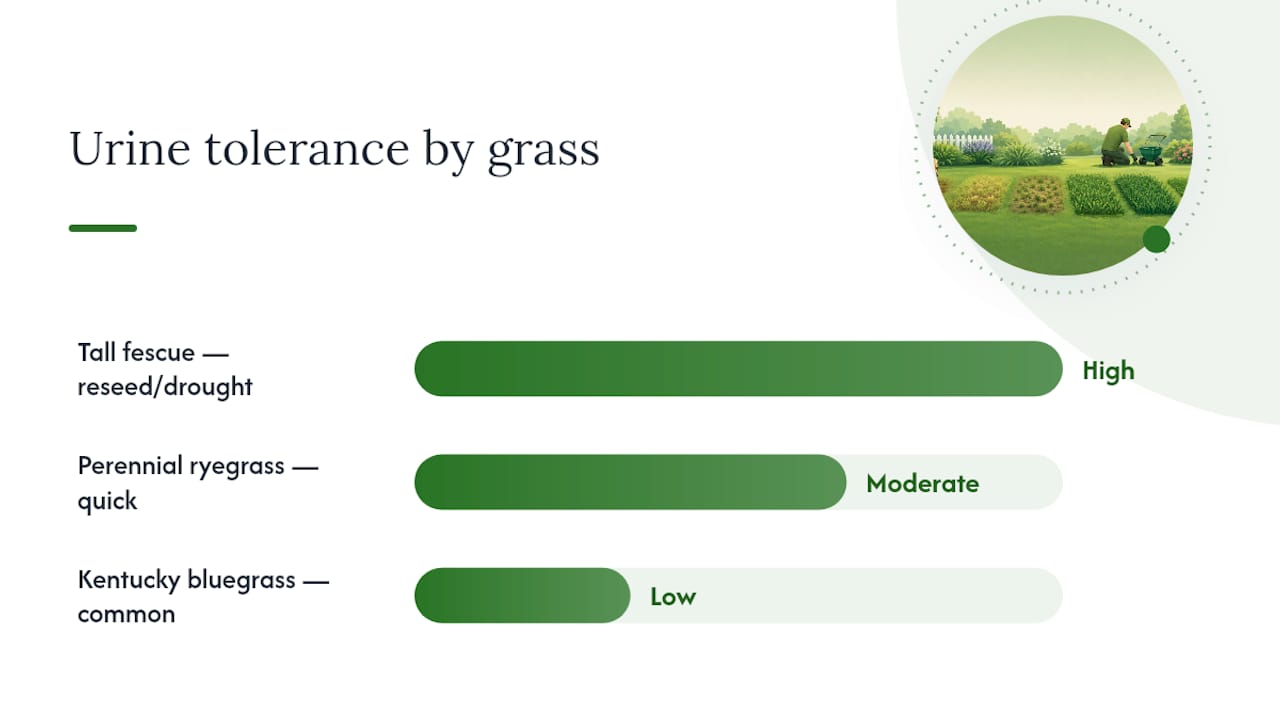
Cool-season grasses dominate Canadian lawns, and they are not equally tough. Among cool-season species, tall fescue tolerates urine damage better than Kentucky bluegrass or perennial ryegrass. Kentucky bluegrass is the most common lawn grass in Calgary and across the prairies, and unfortunately it is also the most sensitive. Perennial ryegrass sits in the middle. If you’re reseeding damaged areas, that ranking matters.
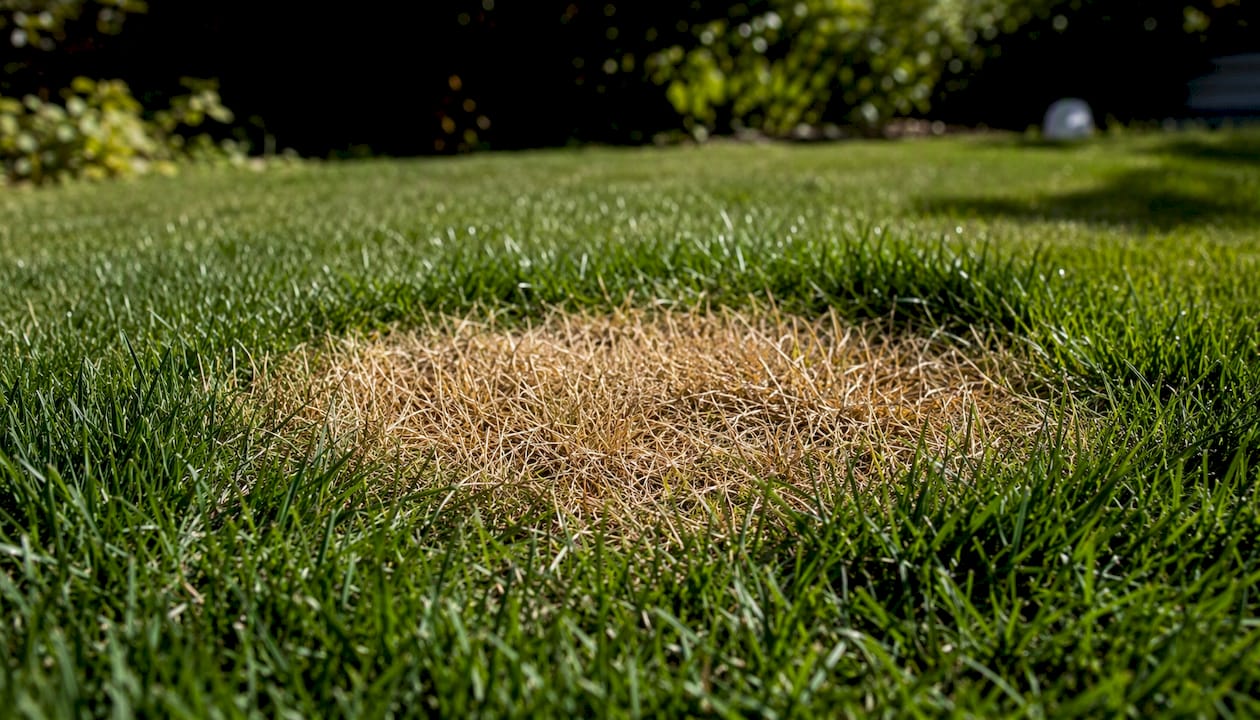
Pro Tip: The classic urine pattern is a straw-brown centre ringed by a band of unusually dark green grass. That green ring is the turf responding to the diluted nitrogen at the spot’s edge, essentially getting a light fertilizer feed. No other common lawn problem produces that exact two-tone pattern.
| Grass species | Urine tolerance | Notes for Canadian lawns |
|---|---|---|
| Tall fescue | Higher | Good choice for reseeding damaged areas; handles drought too |
| Perennial ryegrass | Moderate | Quick to germinate; better than bluegrass for repairs |
| Kentucky bluegrass | Lower | Most common Calgary lawn grass; most susceptible |
What to do in the first minutes after your dog urinates
Speed is everything here. Rinsing a urine spot within minutes lowers nitrogen and salt concentration before it reaches the root zone and is the most reliable way to prevent a brown spot from forming at all. The longer you wait, the deeper those salts migrate.
- 0–5 minutes: Grab a hose, watering can, or bucket and drench the spot. You want to apply roughly three to four times the volume of water relative to the urine deposit. For a medium-sized dog, that means roughly enough water to thoroughly soak the area around the urine spot.
- 5–30 minutes: If you missed the immediate window, watering still helps. Apply the same volume, but water more slowly so it soaks in rather than running off. The goal is to push salts below the root zone, not just wet the surface.
- Later the same day: If you noticed the spot hours later, give it a deep soak. Run a sprinkler on that area for 10–15 minutes or apply water until the soil is saturated to about 10 cm depth. This won’t undo damage that’s already started, but it stops further salt accumulation.
A few things to avoid: do not sprinkle baking soda, gypsum, or dish soap on the spot. These are salts or surfactants that can worsen turf damage rather than neutralise it. Water is the only consistently effective tool.
Pro Tip: Keep a small watering can near the back door. Fill it each morning so it’s ready to grab the moment your dog comes back inside. That 30-second habit eliminates most of the spots you’d otherwise be repairing.
Practical prevention strategies that actually work
Prevention works on two fronts: what your dog does, and how you manage the lawn. A combined approach, modifying pet behaviour, keeping dogs well hydrated, and maintaining lawn vigour through proper mowing and fertilization, outperforms any single fix.
Dog-focused habits
- Increase your dog’s water intake. More dilute urine means lower nitrogen concentration per deposit. A dog that drinks well throughout the day does noticeably less damage.
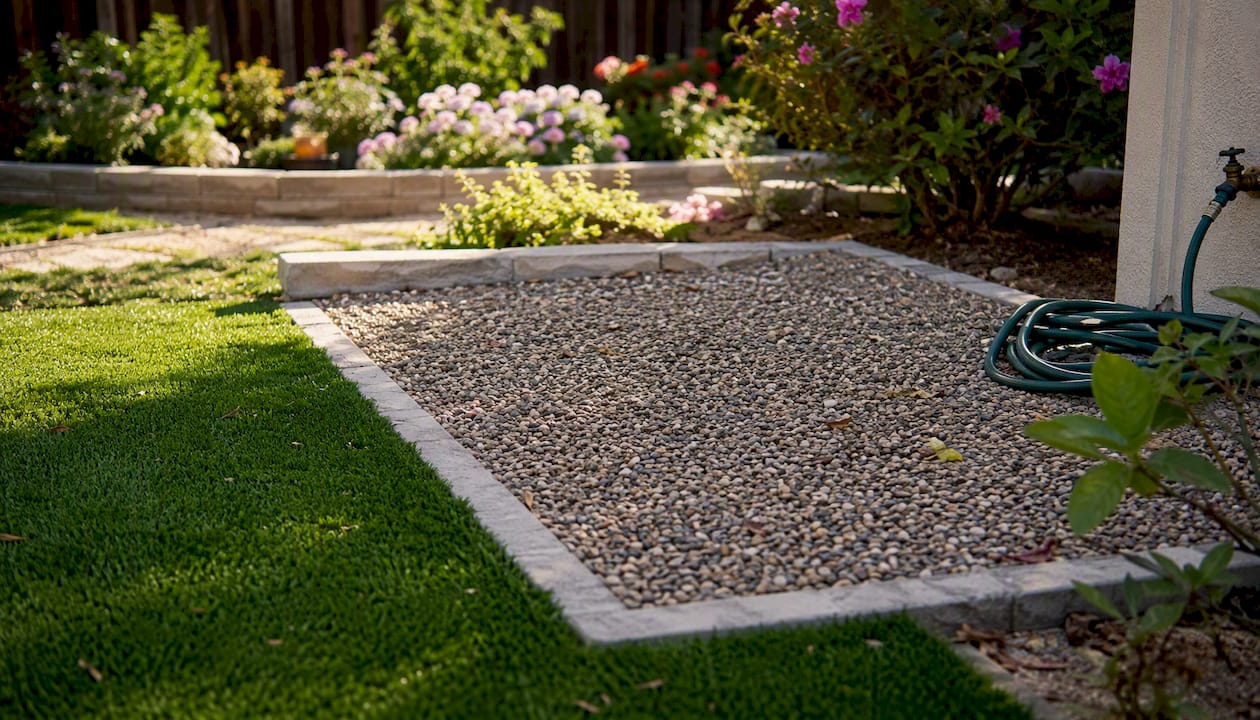
- Train a designated pee area in a low-visibility corner of the yard, ideally on gravel, mulch, or a patch of artificial turf. Reward your dog consistently for using it.
- Walk your dog before letting them into the yard. A dog that has already emptied most of its bladder on a walk deposits far less in one spot on the lawn.
- For visiting or neighbour animals, a motion-activated sprinkler placed at the yard’s perimeter is one of the most effective deterrents available.
Lawn-focused habits
- Water deeply and infrequently rather than lightly every day. Deep watering keeps the root zone moist, which naturally dilutes any urine salts that do reach the soil.
- Mow at 6–7 cm (roughly 2.5–3 inches) for cool-season grasses. Taller grass is more vigorous and recovers faster from stress. Check out proper mowing heights for Calgary lawns for species-specific guidance.
- Time your nitrogen fertilizer applications carefully. Applying heavy nitrogen right before or during peak dog-use periods makes the contrast between burned spots and lush turf more dramatic, not less.
Hardscape and surface alternatives
A small gravel pee pad (roughly 1 metre square) lined with pea gravel or decomposed granite is cheap, easy to rinse, and eliminates turf damage entirely in that zone. Artificial turf is another option, though it requires regular rinsing to manage odour and can get hot in direct Calgary sun. For a broader look at keeping your outdoor space clean with pets, the trade-offs between surface types are worth understanding before you commit.
A word on supplements and diet changes
Skip the urine pH supplements unless your vet specifically recommends them. Dietary changes and pH-altering supplements have not been proven to prevent lawn spots and can pose health risks to your pet. The nitrogen load in urine is a function of protein metabolism, not something you can safely dial down through over-the-counter products. Always consult a veterinarian before changing your dog’s diet or adding any supplement for this purpose.
How to diagnose and repair urine-damaged turf
Is the grass dead or just stressed?
Before you reseed, do a quick tug test. Grab a handful of brown grass and pull firmly. If it resists and the roots hold, the plant is likely still alive and stressed, not dead. If it lifts out easily with no root resistance, the turf is dead and will not recover on its own.
Also check the crown of the plant at soil level. A live crown feels firm and may show a faint green tinge even when the blades are brown. A dead crown is dry, brittle, and grey.
Leaching before repair
Watering deeply after urine deposits leaches salts from the root zone and is the necessary first step before any repair. For an established brown spot, water the area deeply every day for three to five days before doing anything else. This flushes residual salts and gives any surviving plants a chance to recover. Some spots that look dead will green up within two weeks of consistent leaching.
Reseeding steps for Canadian cool-season lawns
- Rake out all dead material and loosen the top 2–3 cm of soil with a hand cultivator or stiff rake.
- Choose a seed mix suited to your conditions. Tall fescue or a perennial ryegrass blend repairs faster than straight Kentucky bluegrass. For Calgary’s climate, a step-by-step patch repair guide can help you match seed to soil conditions.
- Spread seed at the rate recommended on the bag, then press it lightly into the soil with your foot or a hand roller.
- Water lightly twice a day until germination (typically 7–14 days for ryegrass, up to 21 days for fescue). Once seedlings reach 4 cm, shift to deeper, less frequent watering.
Plugs and sod
For spots larger than roughly 30 cm across, sod is faster than seed. Cut out the dead patch in a clean square, loosen the soil beneath, lay new sod, and water daily for two weeks. Plugs work well for smaller repairs when you want to match an existing grass type exactly. Both methods cost more than seed but give you a usable surface in two to three weeks rather than six to eight.
Seasonal timing in Canada
Early fall (late August through September) is the best window for reseeding cool-season lawns in most Canadian regions, including Calgary. Soil is warm, air temperatures are cooler, and fall rains reduce the watering burden. Spring (mid-April through May in Calgary) is the second-best option. Avoid reseeding in July or August when heat stress and drought slow establishment.
Pro Tip: Lay a thin layer of straw mulch over freshly seeded spots. It retains moisture, speeds germination, and blocks weed seeds from landing on the bare soil while your grass establishes.
Is it urine damage or something else?
Misdiagnosing a lawn problem leads to the wrong fix. Here’s how urine damage differs from the most common look-alikes:
- Urine spots show a brown centre with a dark green ring, appear in spots your dog frequents, and correlate directly with pet behaviour. No visible fungal growth, no irregular spreading pattern.
- Fungal diseases (dollar spot, brown patch, necrotic ring spot) often spread in irregular patches, appear in areas with poor air circulation or overwatering, and may show white or grey mycelium on blades in the early morning.
- Grub damage produces turf that lifts like a loose carpet because the roots have been eaten. Pull back the brown turf and look for white C-shaped larvae in the top 5 cm of soil.
- Fertilizer burn looks similar to urine burn but has no green ring and typically follows a straight application line or spreader pattern.
If spots are spreading rapidly, appearing in areas your pet doesn’t use, or showing any matting or fungal signs, stop treating for urine and collect photos to share with a lawn care professional or your local extension service. Rapid spread across multiple zones of the lawn almost never comes from a single dog.
How long does it take for grass to recover?
Small spots where the grass is stressed but alive can green up within two to four weeks with consistent watering and no further urine deposits. Dead spots that need reseeding take longer: expect six to eight weeks before new grass fills in, and a full growing season before it blends seamlessly with the surrounding turf.
Seasonal timing shapes everything. Cool-season grasses in Calgary grow most actively in late spring (May through June) and early fall (August through September). Repairs done in those windows establish faster and fill in more evenly. A spot reseeded in late September may not fully fill until the following spring, which is normal. Repairs attempted during summer dormancy or drought take noticeably longer and require more consistent irrigation to succeed.
Quick leaching, healthy surrounding turf, and overseeding with a compatible species all shorten recovery. A lawn that was already thin and under-fertilized before the damage will take longer to recover than a dense, well-maintained one.
Do enzymatic sprays or supplements actually stop urine burn?
The short answer: water works; most products do not.
- Enzymatic sprays are formulated for odour control, breaking down urea and ammonia on hard surfaces. There is little evidence that spray-on lawn products reliably prevent urine burn; they do not change the nitrogen concentration already in the soil.
- Urine pH modifiers (tablets or powders added to dog food) are based on the premise that acidic urine causes damage. It does not. The primary cause is concentrated nitrogen, not pH, so altering pH does not address the mechanism.
- Dietary supplements marketed to reduce lawn spots have not been proven effective in controlled studies. Some contain methionine or other compounds that, in excess, can cause health problems in dogs. Consult a vet before using any of them.
- Hydration is the one dietary intervention with a clear mechanism and no known risks. More water in means more dilute urine out.
If you want to test a topical product, apply it to a small section, monitor both the turf and your dog’s behaviour, and compare results against an untreated section over four to six weeks. That’s the only honest way to evaluate a product claim.
When should you hire a lawn care pro?
DIY repair works well for a few isolated spots. Call a professional when the damage is widespread, recurring, or when you’re not sure what you’re dealing with.
Specific situations where professional help pays off:
- Multiple dead patches covering more than roughly 10% of the lawn
- Spots that keep returning in the same areas despite regular rinsing
- Rapid spread that doesn’t match your pet’s habits (possible disease or pest)
- Soil that is compacted, poorly draining, or has never been tested
- Limited time to water twice daily during a repair window
A lawn care professional can run a soil test to check for compaction, pH imbalance, or nutrient deficiencies that make urine damage worse. They can overseed with species matched to your specific conditions, install or adjust irrigation, and set up a scheduled leaching programme so spots get flushed automatically. For Calgary homeowners, seasonal lawn care planning that accounts for the local climate makes a real difference in how quickly repairs take hold.
Yearlong offers inspection, targeted overseeding, sod and plug work, and irrigation advice for Calgary properties. A service visit typically starts with a walkthrough to assess damage extent and soil conditions, followed by a repair plan and quote.
What technicians see most often
The most common mistake Calgary homeowners make is waiting too long. By the time a brown spot is obvious, the nitrogen and salts have already done their damage and the repair window has shifted from “rinse and recover” to “reseed and wait.” The second most common mistake is reaching for a product, whether gypsum, baking soda, or a supplement, instead of just using water.
One practical tip that cuts repeat problems significantly: set up a small gravel pad in a corner of the yard, train your dog to use it, and rinse it with a quick hose-down twice a day in hot weather. It takes about a week to train most dogs and roughly 30 seconds a day to maintain. That single change eliminates the majority of turf damage for most households.
Yearlong can handle the repair work for you
Dealing with scattered dead patches across a Calgary lawn is exactly the kind of job that sounds manageable until you’re hauling seed bags and setting watering reminders for three weeks straight. Yearlong handles the full repair process for Calgary homeowners: soil assessment, targeted overseeding with cool-season mixes suited to the local climate, sod and plug installation for larger dead zones, and irrigation advice to keep new growth established.

The advantage of using a local service is timing. Yearlong’s team knows Calgary’s growing windows and can schedule repairs to hit the early-fall establishment period when reseeding success rates are highest. For recurring damage or a lawn that needs more than spot fixes, a full lawn care service covers ongoing maintenance so the turf stays dense enough to handle whatever your dog throws at it.
Ready to stop reseeding the same patches every season? Request a quote or book an inspection and get a repair plan built around your yard’s actual conditions.
Sources
- Dog urine damage on lawns: causes, cures, and prevention | Colorado State University Extension
- Animal urine damage in turf (AY-327) | Purdue Extension
- Dog injury and turfgrass interactions (UC research summary) | UC eScholarship
- TM-11: Dog and urine effects on lawns | UH CTAHR
- How to keep dog pee from ruining your lawn | PetMD
- Dead patches: urine (Kansas State turf resources)
- Dogs and turfgrass interactions | NC State Extension
- Frontiers article on animal impacts in landscapes | Frontiers in Ecology and Evolution