

TL;DR:
- Mulch improves soil health by retaining moisture, protecting roots, and supporting beneficial microbes. It reduces irrigation, weed growth, and landscape maintenance costs for HOA communities. Proper application and regular refreshes maximize benefits and promote sustainable, low-maintenance landscapes.
Mulch is defined as any organic or inorganic material applied to the soil surface to protect and improve it. For HOA boards and property managers, understanding how to explain mulch benefits for HOAs is the difference between a landscape that drains the maintenance budget and one that practically manages itself. The International Society of Arboriculture recommends mulching as a foundational practice for urban tree health, and Texas A&M University research confirms that well-mulched plants show a 50% improvement in health and disease resistance compared to unmulched areas. That single statistic should end the debate at your next board meeting.
How does mulch improve plant and soil health in HOA common areas?
Mulch does far more than cover bare soil. It creates a living system beneath the surface that feeds plants, protects roots, and builds long-term soil quality across your community’s green spaces.
Moisture retention and root protection
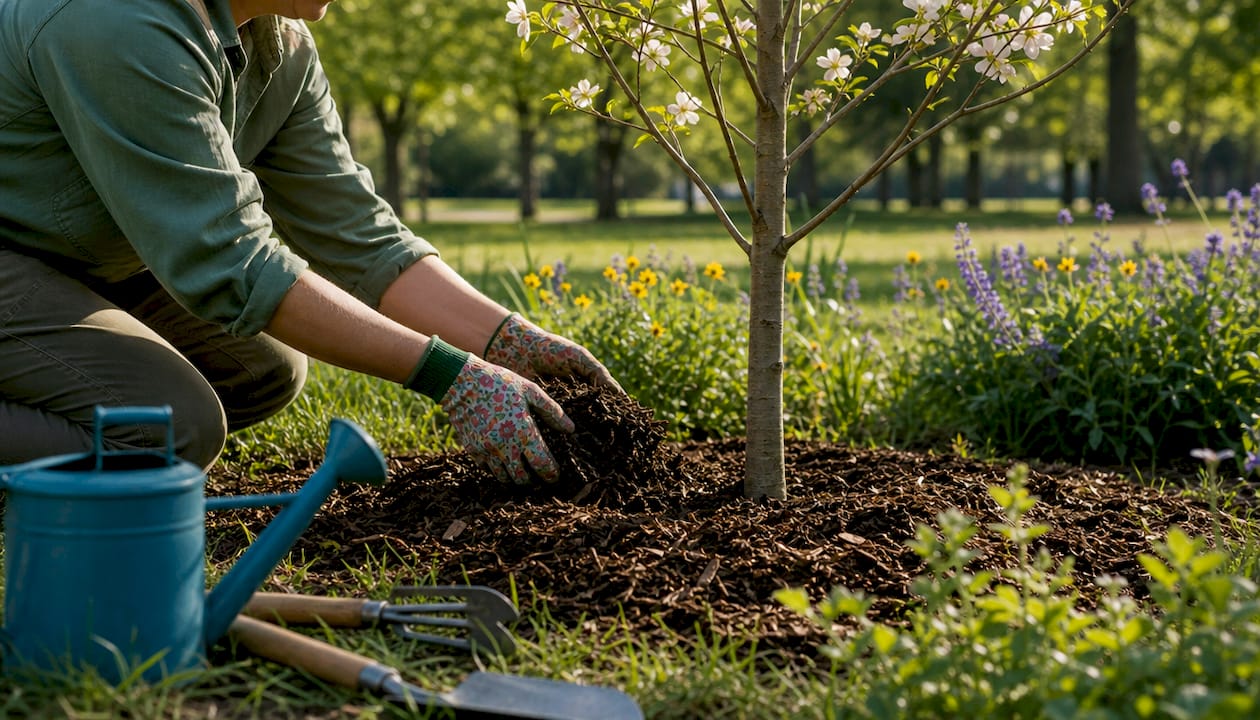
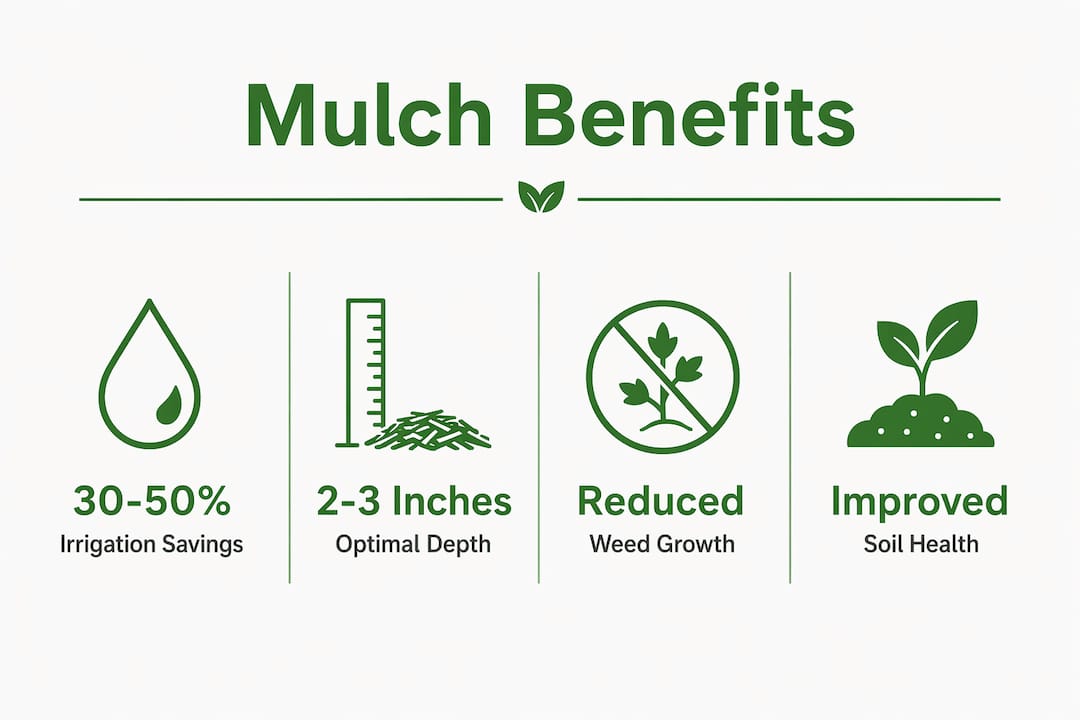
Mulch slows evaporation from the soil surface, which directly reduces how often irrigation systems need to run. HOAs that adopt organic mulching reduce irrigation needs by 30–50%, which translates to meaningful savings on water bills across large common areas. In Calgary’s dry summers, that reduction is not a minor convenience. It is the reason plants survive heat waves without emergency watering calls.
Proper mulching also protects tree roots from temperature stress by acting as a thermal regulator. Soil under a mulch layer stays cooler in summer and warmer in early spring, preventing the freeze-thaw cycles that damage shallow root systems. Board members often misattribute this kind of stress-related die-off to disease, which leads to unnecessary and expensive plant replacement.
Soil biology and plant vitality
Mulch promotes a natural forest floor environment that supports beneficial microbial activity in the soil. Microbes break down organic matter, release nutrients, and improve soil structure over time. The ISA describes this process as simulating the conditions trees evolved in, which is why mulched trees in urban settings consistently outperform unmulched ones. Healthier soil means fewer disease problems, stronger plants, and less need for chemical inputs across your HOA’s beds and borders.
Mulch also reduces soil compaction and erosion in high-traffic common areas. Foot traffic and heavy rain compact bare soil, which restricts root growth and causes runoff. A consistent mulch layer absorbs rain impact and keeps soil loose, which supports the root systems of both mature trees and newly planted shrubs.
What maintenance and cost benefits does mulching bring to HOAs?
Mulch is one of the most cost-effective tools available to property managers. Its financial advantages compound over time because it reduces several recurring maintenance costs simultaneously.
Reduced labour and chemical use
Weed suppression is one of the most immediate advantages of mulch for HOA common areas. A 2–3 inch layer blocks sunlight from reaching weed seeds, which dramatically cuts the time crews spend pulling weeds or applying herbicides. Fewer herbicide applications mean lower chemical costs and reduced liability from chemical drift near playgrounds or walking paths.
Buying mulch in bulk is more economical and environmentally friendly for large HOA properties. Bulk purchasing reduces plastic packaging waste and lowers the per-unit cost significantly compared to bagged products. It also allows for uniform application across all common areas, which creates a consistent visual standard that residents notice and appreciate.
Tree and plant protection
Mulched zones around trees act as a mechanical barrier that prevents mower and trimmer damage to bark. Lawn equipment strikes are one of the leading causes of tree decline in managed landscapes. A mature tree costs far more to replace than the mulch that protects it, so this is a straightforward return on investment for any HOA budget.
- Weed suppression reduces crew hours spent on manual removal
- Lower irrigation costs from improved moisture retention
- Reduced herbicide applications lower chemical spend and environmental risk
- Bulk purchasing cuts material costs and eliminates plastic bag waste
- Mulch buffers protect trees from equipment damage, reducing replacement costs
Pro Tip: Schedule your mulch refresh in spring, before weed seeds germinate. Applying mulch after the soil has warmed but before the first flush of weed growth gives you maximum suppression for the entire growing season.
Mulch refresh cycles typically run once per year for organic varieties, though high-traffic areas may need a top-up mid-season. Budgeting for annual mulch as a line item, rather than treating it as an occasional expense, gives your HOA predictable costs and consistent results. For more on seasonal maintenance for HOAs, a structured annual schedule makes the biggest difference.
Which types of mulch are best suited for HOA landscaping needs?
The best mulch type for your HOA depends on your climate, plant types, aesthetic standards, and budget. No single product works equally well in every situation.
Organic mulches, including hardwood chips, bark mulch, and wood chips, are the most widely used in residential community settings. They decompose over time, adding organic matter to the soil and improving its structure. Hardwood mulch is dense and slow to break down, making it a good choice for beds that need to look tidy for extended periods. Wood chips are coarser and decompose faster, which suits areas where soil improvement is the priority over appearance.
Inorganic options like crushed stone or rubber mulch do not decompose and require no annual refresh. They suit high-traffic pathways or areas where organic material would wash away. The trade-off is that they contribute nothing to soil health and can retain excessive heat in Calgary’s summer sun, which stresses plant roots.
| Mulch type | Soil benefit | Longevity | Best use |
|---|---|---|---|
| Hardwood chips | High | 1–2 years | Ornamental beds, tree rings |
| Bark mulch | Moderate | 1–2 years | Shrub borders, pathways |
| Wood chips | High | 6–12 months | Naturalistic areas, soil building |
| Crushed stone | None | Indefinite | Pathways, drainage areas |
| Rubber mulch | None | Indefinite | Playgrounds, high-traffic zones |
Pro Tip: Avoid dyed mulches in areas adjacent to water features or storm drains. The colourants can leach into waterways during heavy rain, which creates both an environmental concern and a potential liability for your HOA.
Matching mulch to context is a detail that separates a professional landscape from a generic one. For ideas on affordable landscaping for communities, selecting the right mulch type is one of the highest-impact, lowest-cost decisions available.
How does proper mulching technique ensure maximum benefits for HOA communities?
Correct application technique determines whether mulch delivers its full range of benefits or creates new problems. The most common mistakes are easy to avoid once you know what to look for.
The recommended depth for organic mulch is 2–3 inches. Less than 2 inches provides inadequate weed suppression and dries out too quickly. More than 4 inches can trap excess moisture, promote fungal growth, and suffocate roots by restricting oxygen exchange. Depth consistency across all beds creates a uniform appearance and ensures even performance.
Mulch piled against tree trunks, commonly called “mulch volcanoes,” traps moisture against the bark and invites pests and fungal disease. The correct technique is a donut shape: mulch spread in a ring around the tree with a 3–6 inch gap left clear around the trunk. This single adjustment prevents the majority of mulch-related tree damage seen in HOA landscapes.
- Apply mulch at 2–3 inches depth for optimal weed suppression and moisture retention
- Leave a 3–6 inch gap around tree trunks to prevent bark rot and pest infestation
- Refresh organic mulch annually, ideally in spring before weed season begins
- Avoid piling mulch against building foundations, which can attract termites and trap moisture
- Use edging to keep mulch contained within beds and off paved surfaces
Pro Tip: Pull back existing mulch before adding a fresh layer. Topping up without removing old material causes the total depth to creep past 4 inches over several seasons, which creates the oxygen and moisture problems you were trying to prevent.
Consistent technique across all common areas also matters for aesthetics. Residents judge the quality of HOA management partly by how the grounds look. Uniform mulch depth and clean bed edges signal that the property is well cared for, which supports community pride and mulch impact on property value over time.
What are the sustainability and community benefits of mulching for HOAs?
Mulching aligns directly with the environmental priorities that more HOA boards are adopting as part of their long-term property strategy. The benefits extend beyond individual plants to the broader community and local environment.
Community mulch programmes can divert over 1,000 pounds of organic waste per month from landfills. That figure represents leaf litter, grass clippings, and pruning waste that would otherwise require collection and disposal. Converting that material into mulch on-site reduces hauling costs and returns nutrients to the soil. HOAs with tree-heavy properties can generate a meaningful portion of their own mulch supply through seasonal cleanup.
Reduced chemical inputs improve local environmental quality in measurable ways. Fewer herbicide and pesticide applications mean less chemical runoff into storm drains and local waterways. This is a genuine benefit for communities near parks, ravines, or natural areas, and it reduces the HOA’s exposure to liability from chemical drift.
- Leaf mulch programmes divert organic waste from landfills and reduce disposal costs
- Lower chemical use improves water quality in adjacent natural areas
- Healthy soil supports beneficial insects and soil organisms that support plant health
- Attractive, well-mulched common areas increase community pride and resident satisfaction
- Water conservation through mulching aligns with municipal water-use guidelines in Calgary
Sustainable landscaping with mulch also aligns with the growing expectation among residents that their HOA operates responsibly. Boards that can point to concrete environmental actions, such as reduced water use and chemical applications, build credibility with their communities. That credibility makes it easier to pass maintenance budgets and gain resident support for long-term property improvements. For a broader look at HOA outdoor maintenance, mulching is consistently one of the highest-return practices available.
Key takeaways
Mulch is the single most cost-effective landscaping investment available to HOA boards, delivering measurable reductions in water use, labour, and plant replacement costs while improving soil health and community aesthetics.
| Point | Details |
|---|---|
| Water savings are significant | Organic mulching reduces irrigation needs by 30–50%, lowering water costs across large common areas. |
| Plant health improves measurably | Mulched plants show 50% better health and disease resistance compared to unmulched areas. |
| Correct technique prevents damage | Apply at 2–3 inches depth and leave a 3–6 inch gap around tree trunks to avoid bark rot. |
| Bulk purchasing saves money | Buying mulch in bulk reduces material costs and eliminates plastic packaging waste for large HOA properties. |
| Sustainability goals are supported | Mulch programmes can divert over 1,000 pounds of organic waste monthly from landfills. |
Why I think most HOA boards underestimate mulch
Most HOA boards treat mulch as a cosmetic expense. They budget for it reluctantly, apply it inconsistently, and wonder why their landscape still requires constant intervention. That framing is the problem.
Mulch is not decoration. It is the foundation of a low-maintenance landscape. Every dollar spent on proper mulching reduces future spending on irrigation, weeding, chemical applications, and plant replacement. I have seen properties where a single season of correct mulch application cut the crew’s weeding hours by more than half. That is not a minor efficiency gain. It is a structural change in how the property operates.
The other mistake I see regularly is boards approving mulch once and then forgetting about it. Organic mulch decomposes. It needs an annual refresh to maintain its depth and effectiveness. Skipping that refresh for a season or two undoes the benefits and forces you to start over, often at greater cost. Treat mulch as a recurring maintenance item, not a one-time fix.
Educating your board and residents on mulching for Calgary lawns also builds the internal support you need to maintain the budget for it year after year. When residents understand that mulch is why their community’s trees are healthy and their water bills are lower, they stop questioning the line item. That is the real long-term value of getting this right.
— Lewie
Yearlong’s mulching services for Calgary HOAs
Calgary HOAs need a maintenance partner who understands local soil conditions, seasonal timing, and the specific demands of managing common areas at scale. Yearlong has provided professional landscape maintenance across Calgary since 2017, with direct experience in mulch application, bed maintenance, and seasonal property care for HOA clients.

Yearlong’s bed maintenance services cover mulch selection, application, and annual refresh cycles tailored to your property’s plant types and aesthetic standards. The team applies mulch at correct depths, maintains proper clearance around tree trunks, and coordinates bulk purchasing to keep costs predictable. If your HOA is ready to reduce maintenance costs and improve the health of your community’s green spaces, contact Yearlong to schedule a property assessment.
FAQ
What is the best mulch depth for HOA common areas?
Apply organic mulch at 2–3 inches depth. Less than 2 inches provides inadequate weed suppression, while more than 4 inches restricts root oxygen and traps excess moisture.
How much can mulching reduce irrigation costs for an HOA?
HOAs using organic mulching can reduce irrigation needs by 30–50%. That reduction directly lowers water bills across large common areas and decreases the frequency of irrigation system operation.
What is a mulch volcano and why should HOAs avoid it?
A mulch volcano is mulch piled directly against a tree trunk. It traps moisture against the bark, promotes fungal disease, and attracts pests. Leave a 3–6 inch gap around all tree trunks when applying mulch.
Which mulch type is most cost-effective for large HOA properties?
Hardwood chips and bark mulch offer the best balance of longevity, soil benefit, and cost for most HOA common areas. Buying either product in bulk reduces material costs and eliminates plastic packaging waste.
How often should HOAs refresh their mulch?
Organic mulch should be refreshed annually, ideally in spring before weed season begins. Pull back existing material before adding a fresh layer to prevent depth from exceeding 4 inches over successive seasons.