

TL;DR:
- Proper lawn topdressing involves applying a thin, even layer of soil or compost to improve soil structure and promote healthy growth. Preparation, including mowing, aeration, and debris removal, significantly impacts the effectiveness of the process. Thinning layers, timely application during active growth, and proper aftercare are essential for achieving a lush, resilient lawn.
Lawn topdressing is defined as the application of a thin, even layer of soil, compost, or a blended mix directly over existing turf to improve soil structure, smooth uneven surfaces, and strengthen overall lawn health. Done correctly, the procedure addresses compaction, poor drainage, and thinning grass in a single session. The right topdressing materials, proper timing, and a disciplined application technique separate lawns that thrive from those that stall. This guide walks you through every stage of the process, from choosing your mix to post-application care, with Calgary’s climate and soil conditions in mind.
What equipment and materials do you need for topdressing?
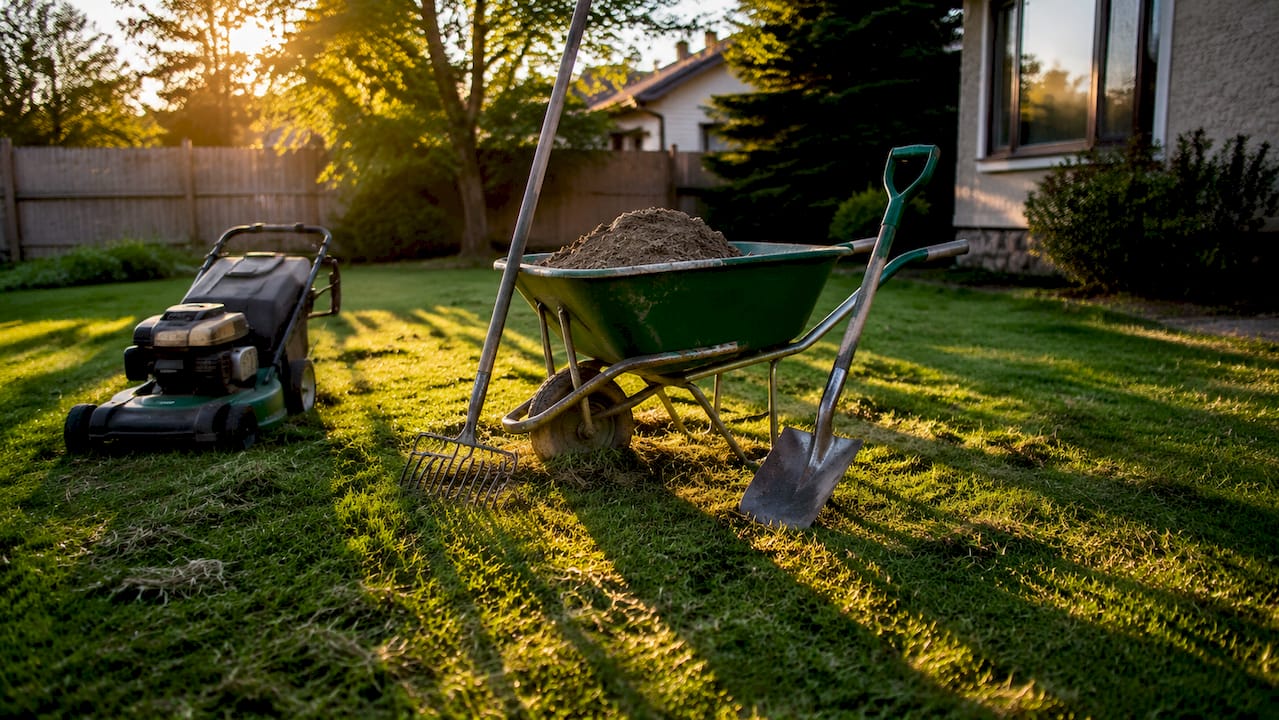
Before you spread a single shovelful, gather the right tools. You will need a mower, a stiff rake, a shovel, a wheelbarrow, a levelling or landscape rake, and either a push broom or a drag mat to work material into the turf. Each tool has a specific job. The landscape rake spreads material evenly, while the drag mat or broom works it down between grass blades without burying the crowns.
Topdressing material options compared:
| Material | Best use | Caution |
|---|---|---|
| Screened compost | Soil improvement, thin lawns | Can mat if applied too thick |
| Coarse sand blend | Levelling, drainage improvement | Avoid fine sand; compacts easily |
| Screened topsoil | General topdressing | Match existing soil type |
| Compost and sand blend | All-purpose improvement | Most versatile for Calgary clay soils |
Particle size distribution is a key quality criterion. Turf sands require a broad particle size range for stability and drainage. Avoid dusty or clay-heavy materials, which compact the soil surface rather than opening it up. For Calgary properties sitting on heavy clay, a compost and coarse sand blend works best because it improves both drainage and organic content simultaneously.
When buying materials, ask your supplier for a screened product with consistent particle size. Pre-mixed topdressing blends sold at local garden centres are a practical choice for homeowners who want to skip the guesswork. Plan on roughly 2 to 4 kg of material per square metre for a standard application. That quantity keeps layers thin enough to avoid smothering while still delivering measurable improvement.
Pro Tip: Buy a small test bag before ordering in bulk. Spread a handful on a flat surface and check that it crumbles easily and contains no large clumps or debris. Clumpy material will not incorporate well and can create bare patches.
How to prepare your lawn properly for topdressing
Preparation determines whether your topdressing session produces a lush, even lawn or a patchy mess. Follow these steps in order before you open a single bag of material.
- Mow low. Cut your lawn to roughly half its normal height. A shorter canopy lets the topdressing material reach the soil surface and settle around grass stems rather than sitting on top of the blades.
- Remove debris and clippings. Rake up all clippings, leaves, and loose thatch. Organic debris trapped under topdressing creates a barrier that blocks material from contacting soil.
- Dethatch if needed. If your thatch layer exceeds 1.5 cm, dethatch before topdressing. A thick thatch mat prevents the mix from reaching the root zone, wasting both time and material.
- Aerate the lawn. Core aeration with hollow-tine aerators pulling plugs 75 to 100 mm deep, spaced 100 to 150 mm apart, creates channels for the topdressing mix to enter the soil profile rather than sitting on the surface. This single step dramatically improves the long-term results of any topdressing application.
- Check for sprinkler heads and lawn features. Mark all irrigation heads, edging stakes, and buried cables with small flags so you do not bury or damage them during spreading.
- Confirm timing. Topdress when grass is actively growing, typically late spring or early fall in Calgary. Avoid topdressing during drought stress or dormancy. Actively growing turf recovers quickly and pushes through the new material within days.
Pro Tip: Aerate the day before topdressing if the ground is slightly moist. Dry, hard soil reduces plug depth, and overly wet soil creates muddy plugs that smear rather than crumble. Slightly moist conditions give you the cleanest aeration results.
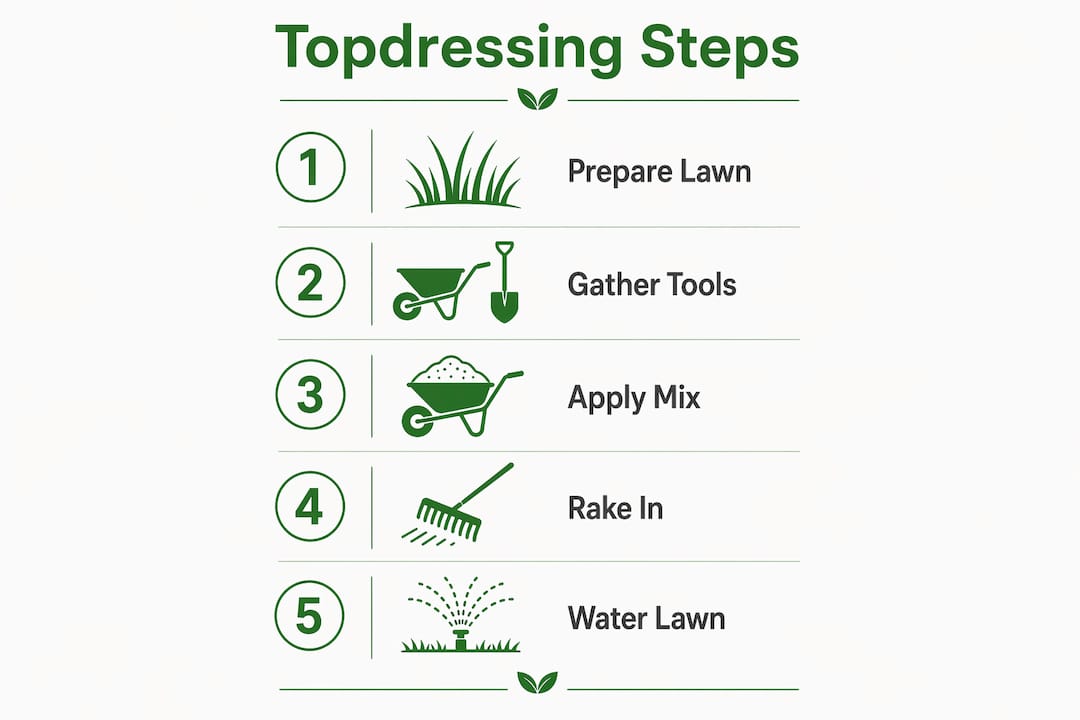
Step-by-step lawn topdressing application
This is where the procedure either succeeds or fails. Technique matters more than speed here.
What you are aiming for:
- A layer approximately 6 mm (1/4 inch) thick across the entire lawn
- Roughly 70% of grass blades still visible after spreading
- No large mounds or clumps sitting on the surface
Follow these steps for a clean, even application:
- Distribute small piles across the lawn. Use your shovel and wheelbarrow to drop small, evenly spaced heaps across the entire area before spreading any of them. Distribute small heaps immediately rather than dumping large piles and returning later. Large piles left in place even briefly can smother grass crowns and cause patchy, uneven recovery.
- Spread with a landscape rake. Work each small pile outward using smooth, sweeping motions. Overlap your passes slightly to avoid thin strips between heaps.
- Check your depth. After spreading a section, crouch down and look across the surface. You should still see the majority of grass blades poking through. If the grass has disappeared under the material, you have applied too much. Rake some back into your wheelbarrow and redistribute it elsewhere.
- Work material into the turf. Use a drag mat or stiff push broom to work the topdressing down between grass blades and into the aeration holes. Thin, incorporated layers improve soil structure and root environment far faster than heavy surface layers left to settle on their own.
- Overseed if desired. Topdressing and overseeding work well together. Overseeding during topdressing improves seed-to-soil contact, protects seed from birds and drying wind, and increases germination rates. Broadcast seed before or during the brushing step so the topdressing material covers and anchors it. For a full lawn overseeding procedure, coordinate seed selection with your topdressing mix to match existing grass species.
- Water gently. Apply a light irrigation pass immediately after finishing. The goal is to settle the material and initiate contact with the soil, not to saturate the lawn. Heavy watering at this stage can wash material off level ground and pool it in low spots, undoing your spreading work.
Pro Tip: The 70% leaf visibility rule is your best quality check. After brushing in the material, stand back and look at the lawn. If you cannot see most of the grass blades, you have applied too much and need to redistribute before watering.
Common mistakes in lawn topdressing and how to avoid them
Even experienced homeowners repeat the same errors. Knowing what goes wrong makes it straightforward to avoid.
- Over-application. Applying more than 6 mm in a single pass buries grass crowns and blocks light. Thick layers without incorporation create organic matter buildup that dries out and forms a barrier to rooting. If your lawn needs significant improvement, schedule two or three light applications across a season rather than one heavy one.
- Skipping aeration. Topdressing on a compacted, unaerated lawn leaves most of the material sitting on the surface. Without aeration channels, the mix cannot reach the root zone where it does the most good.
- Using poorly screened or mismatched materials. Fine sand on a clay soil makes compaction worse. Unscreened topsoil introduces weed seeds and inconsistent particle sizes. Always match your material to your soil type and lawn goals.
- Topdressing at the wrong time. Applying material during a dry spell or when grass is dormant slows recovery and increases the risk of fungal issues under the topdressing layer. Stick to active growth periods.
- Leaving piles unspread. Homeowners often dump material and plan to spread it later. Even a few hours under a pile can stress or kill the grass beneath. Spread each heap immediately after dropping it.
- Expecting overnight results. Topdressing is a gradual process. Visible improvement in soil structure and surface evenness typically takes two to four weeks and multiple applications over one or two seasons for severely uneven or compacted lawns.
Pro Tip: If you notice a low spot that needs more than 6 mm of fill, do not try to correct it in one application. Mark it with a small flag and return with a second light layer two to three weeks later once the grass has grown through the first application.
Aftercare: maintaining your lawn after topdressing
The work does not stop once the material is spread. Proper aftercare determines how quickly your lawn recovers and how long the benefits last.
- Water lightly and consistently for the first week. Aim for short, frequent watering sessions rather than deep soaks. The goal is to keep the topdressing moist so it settles and bonds with the soil beneath.
- Resume mowing when grass grows through the material. Grass typically pushes through topdressing within one to two weeks. Wait until the blades are clearly visible and growing before mowing, and return to your normal cutting height gradually rather than all at once.
- Monitor low spots. Walk the lawn two weeks after application and note any areas that still feel soft or uneven underfoot. These spots may need a second light application.
- Fertilise after the lawn has recovered. Wait two to three weeks before applying fertiliser so the grass is actively growing and can use the nutrients effectively. Pairing lawn fertilisation with topdressing in the same seasonal window gives you compounding benefits: improved soil structure from the topdressing and a nutrient boost from the fertiliser.
- Avoid heavy foot traffic for two weeks. Foot traffic on freshly topdressed lawns compresses the material before it has bonded with the soil, reducing its effectiveness.
- Plan repeat applications. For Calgary lawns dealing with significant clay compaction or surface irregularities, one application per season for two consecutive years produces the most noticeable long-term improvement.
Key takeaways
A successful lawn topdressing procedure requires thin, incorporated layers applied during active grass growth, combined with core aeration and proper aftercare.
| Point | Details |
|---|---|
| Use the right material | Match your topdressing mix to your soil type; compost and coarse sand blends suit Calgary clay soils best. |
| Aerate before spreading | Hollow-tine aeration creates channels for material to reach the root zone and dramatically improves results. |
| Apply thin, even layers | Keep each application to approximately 6 mm and maintain 70% grass blade visibility after spreading. |
| Spread immediately | Drop small heaps and spread them at once; never leave piles sitting on the lawn. |
| Time it correctly | Topdress during active growth in late spring or early fall; avoid drought and dormancy periods. |
What I have learned after years of watching Calgary lawns
After seeing hundreds of Calgary lawns go through topdressing, the single biggest predictor of success is patience. Homeowners who expect a transformed lawn after one session are almost always disappointed. The ones who treat topdressing as a two-year programme, combining it with aeration, overseeding, and fertilisation in the same seasonal window, end up with lawns that genuinely look different.
The other thing I keep coming back to is material quality. I have watched homeowners spend hours on perfect technique only to use a poorly screened topsoil full of clay clumps. The material undoes the method. Spend the extra money on a quality screened compost blend. It is the single variable that separates a mediocre result from a great one.
One underrated tip: coordinate your topdressing with aeration rather than treating them as separate tasks. Aerate first, then topdress within 24 hours. The open channels are at their most receptive immediately after aeration. Waiting a week closes them up and reduces how much material actually enters the soil profile.
Finally, do not underestimate the drag mat. Most homeowners use a rake and call it done. A drag mat pulled across the lawn in two directions works material into aeration holes far more thoroughly than any hand tool. If you are hiring topdressing services, ask specifically whether they use a drag mat or a mechanical spreader with a drag attachment. That question alone tells you whether you are dealing with a professional operation or someone just dumping and raking.
— Lewie
Get professional topdressing help in Calgary

If the preparation, spreading, and aftercare steps feel like a lot to manage on your own, Yearlong handles the entire process for Calgary homeowners and property managers. From core aeration and material selection through to even spreading and post-application monitoring, the team brings the right equipment and local knowledge to every job. Yearlong has been serving the Calgary area since 2017, and their crews understand how local clay soils and short growing seasons affect topdressing results. Explore Yearlong’s Calgary lawn care services to book a consultation or request a quote for this season. You can also review their lawn maintenance options for ongoing care after your topdressing is complete.
FAQ
What is the best time of year to topdress a lawn in Calgary?
Late spring and early fall are the best windows, when cool-season grasses are actively growing. Avoid topdressing during summer heat stress or winter dormancy, as the grass cannot recover effectively.
How thick should a topdressing layer be?
Apply approximately 6 mm (1/4 inch) per session. After brushing the material in, roughly 70% of grass blades should still be visible. Anything thicker risks smothering the turf.
Should I aerate before topdressing?
Aeration before topdressing is strongly recommended. Hollow-tine aeration pulls plugs that allow the topdressing mix to enter the soil profile rather than sitting on the surface, which significantly improves long-term results.
Can I overseed at the same time as topdressing?
Combining overseeding with topdressing improves seed-to-soil contact and moisture retention, which increases germination success. Broadcast seed before or during the brushing step so the topdressing material covers and anchors it.
How many topdressing applications does a lawn need?
Most lawns benefit from one application per season. Lawns with significant compaction or surface irregularities may need two to three light applications per season across two consecutive years for lasting improvement.