

TL;DR:
- Calgary lawns requiring over 50% weed coverage need full renovation rather than patching to restore health. Proper soil preparation, timely aeration, and selecting the right grass type are essential for successful renovation. Initiate seeding in early to mid-summer and ensure consistent watering and mowing for optimal turf establishment.
Lawn renovation techniques are step-by-step practices that restore damaged, weed-infested, or thinning turf to a healthy, dense state. Calgary’s short growing season, clay-heavy soils, and dry summers make this process more demanding than in milder climates. Tools like core aerators, power rakes, and dethatchers are central to any successful renovation. Whether you are managing a single residential property or overseeing multiple sites, knowing when and how to renovate separates a lawn that thrives from one that limps through every season.
1. How to assess your lawn and decide when renovation is necessary
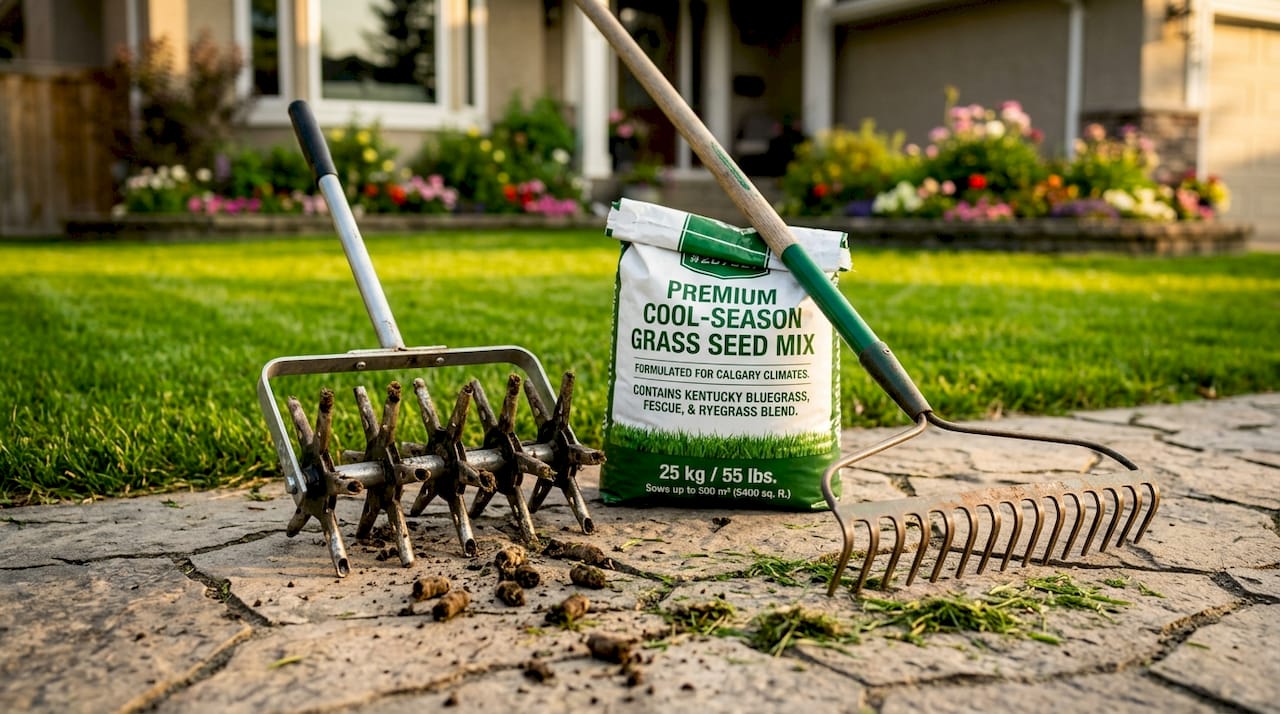
The single most reliable indicator that renovation is needed is weed coverage. A lawn with over 50% weeds is best addressed with a complete renovation rather than spot repairs. At that threshold, patching simply cannot keep pace with the underlying problem, and the effort spent on partial fixes is largely wasted.
Soil condition is the second factor to evaluate. Laboratory soil testing provides accurate pH, nutrient, and organic matter data that no home kit can reliably match. Calgary soils often trend alkaline, and knowing your exact pH before applying lime or fertiliser prevents costly over-correction.
Walk the lawn in early spring or early summer and look for these signs:
- Bare patches covering more than a third of the surface
- Persistent moss or standing water indicating compaction
- Weed species like creeping Charlie, dandelions, or quack grass dominating large zones
- Thin, pale turf that does not respond to fertilisation
Pro Tip: Take photos of problem areas before you start. Comparing before-and-after images at the end of the season tells you exactly which techniques produced results and which need adjustment.
If fewer than 30 to 40 percent of the lawn is affected, targeted patching is the smarter choice. Save full renovation for lawns where the damage is widespread and the soil itself needs correction.
2. Removing old turf and preparing the seedbed
Soil preparation is the step most homeowners underestimate, and it is where most renovations succeed or fail. Two main approaches exist for removing existing vegetation: physical removal and chemical kill.
| Method | Best for | Key consideration |
|---|---|---|
| Sod cutting or scalp mowing | Small areas, no herbicide tolerance | Labour-intensive; roots remain |
| Non-selective herbicide (glyphosate) | Large areas with dense weed cover | Two-week wait required before seeding |
| Power raking | Thatch removal after kill | Pairs well with either method |
| Tilling | Full soil reset | Risk of burying weed seeds deeper |
After a herbicide application, the two-week wait is not optional. The chemical needs time to travel through the root system and break down fully. Seeding too early means the residue interferes with germination and you lose the seed investment entirely.
Once the old vegetation is dealt with, follow these preparation steps in order:
- Mow the dead grass very short. Cutting dead material low prevents it from blocking sunlight and reduces the mat that smothers new seedlings.
- Power rake or dethatch to remove the layer of dead organic matter sitting above the soil surface.
- Core aerate the entire area. Aeration and dethatching improve seed-to-soil contact, reduce compaction, and create channels for air and water to reach the root zone.
- Level low spots with a topdressing of quality loam or compost.
- Incorporate soil amendments based on your lab test results. Add lime if pH is below 6.0, sulphur if it is above 7.5, and compost to improve organic matter in Calgary’s typically clay-dominant soils.
Pro Tip: Rent a walk-behind core aerator rather than a spike aerator. Spike aerators compact the soil sidewalls as they punch holes. Core aerators physically remove plugs, which is the only method that genuinely relieves compaction.
3. Choosing the right grass species for Calgary conditions
Grass selection is not a generic decision. Calgary sits in a semi-arid climate zone with cold winters and a growing season that runs roughly from May to September. Cool-season grasses like Kentucky bluegrass and fine fescues are the standard choices here, and for good reason. They germinate and establish during the cooler shoulder periods of the season and go semi-dormant rather than dying outright during summer heat.
Your seeding options break down into three approaches:
- Overseeding: Spreading seed over existing turf without full removal. Works well when damage is moderate and the soil structure is sound. Requires good seed-to-soil contact to succeed.
- Full seeding: Applied after complete turf removal and seedbed preparation. Gives you the cleanest start and the most control over species composition.
- Sod laying: The fastest result, but the highest cost. Best suited for high-visibility areas or properties where bare soil cannot be tolerated for the six to eight weeks seeding requires.
For most Calgary homeowners, a blend of Kentucky bluegrass and creeping red fescue performs well. Bluegrass spreads by rhizomes and fills in bare spots over time. Fescue tolerates shade and drier conditions better, which matters in yards with mature trees or south-facing slopes that dry out quickly.
Seed rate matters as much as species. Under-seeding is one of the most common mistakes. Follow the rate on the seed bag for new establishment, not the overseeding rate, even if you are working with a partially prepared surface.
4. Timing your renovation to Calgary’s growing season
Timing is the variable that separates a successful renovation from a failed one. Renovation for cool-season grasses should begin in early to mid summer and wrap up by mid-September. That window gives new turf enough time to develop a root system before the first hard frost arrives, which in Calgary can occur as early as late September.
Starting too late is the most common timing error. Seed that germinates in late September faces frost before it has developed the root depth needed to survive winter. The result is a patchy lawn the following spring that requires the process to start again.
Spring renovation is possible but carries more risk. Weed pressure is highest in spring, and newly seeded turf cannot tolerate the herbicides needed to manage those weeds until it has been mowed at least three or four times. Early summer gives you a cleaner competitive window.
Local timing and climate conditions in Calgary require that you treat the renovation calendar as a firm deadline, not a guideline. Book your equipment rental and soil test early in the season so you are not scrambling in August.
5. Watering and mowing during establishment
New seed demands a different watering approach than established turf. Water new seed lightly and frequently in the first two to three weeks to keep the top centimetre of soil consistently moist. Letting the seedbed dry out even once during germination kills the emerging seedlings before they can root.
Once the grass reaches two to three centimetres, shift to a deeper, less frequent schedule. Established cool-season lawns need about 1 inch of water per week, applied in a way that soaks roughly 15 centimetres into the soil. Watering on a fixed daily schedule leads to shallow roots and increases disease pressure.
Mowing timing is equally specific. Wait until grass blades reach 3 to 4 inches before the first cut, and follow the one-third rule: never remove more than one-third of the blade height in a single mow. Use sharp blades. A dull blade tears seedlings out of the soil rather than cutting them cleanly.
Pro Tip: Hold off on any broadleaf herbicide applications until the new turf has been mowed at least three times. Applying weed control too early stresses young grass and can cause patchy die-off that undoes weeks of careful establishment work.
Proper watering and mowing during renovation also reduce pathogen pressure, making the new turf more disease-resistant from the start. Cultural practices build resilience that chemical treatments alone cannot replicate.
6. Quick fixes vs. full renovation: choosing the right approach
Not every struggling lawn needs a complete overhaul. The decision comes down to the extent of damage and the condition of the underlying soil.
| Condition | Recommended approach | Typical timeline |
|---|---|---|
| Under 30% bare or weedy | Spot patching and overseeding | 4 to 6 weeks |
| 30 to 50% damaged | Partial renovation with aeration and overseeding | 6 to 10 weeks |
| Over 50% weeds or damage | Full renovation with turf removal | 10 to 14 weeks |
| Poor soil structure throughout | Full renovation with soil amendment | 12 to 16 weeks |
Spot patching uses lawn patching techniques like hand-seeding bare areas, topdressing with compost, and pressing seed into firm contact with the soil. It is faster and cheaper, but it does not address soil compaction or pH problems that affect the whole lawn.
Full renovation is the only practical method for incorporating soil amendments across the entire root zone. Once turf is established, working lime or compost into the soil without disrupting the grass is nearly impossible. Renovation is the window to fix the foundation, not just the surface.
Property managers overseeing multiple sites often benefit from a phased approach: full renovation on the worst sections in year one, followed by overseeding and maintenance on the rest. This spreads cost and labour without leaving any area unaddressed for more than two seasons.
Key takeaways
Successful lawn renovation in Calgary depends on correct sequencing, local timing, and soil preparation done before a single seed goes into the ground.
| Point | Details |
|---|---|
| Assess before acting | Lawns with over 50% weed coverage require full renovation, not patching. |
| Soil preparation is the foundation | Aeration, dethatching, and amendment application determine long-term success. |
| Match grass to Calgary’s climate | Kentucky bluegrass and fine fescue blends perform best in Calgary’s semi-arid conditions. |
| Timing is a hard deadline | Begin renovation by mid-summer and finish seeding before mid-September. |
| Water and mow with precision | Frequent light watering during germination, then deep and infrequent once roots develop. |
What I have learned after years of Calgary lawn renovations
The most common mistake I see is homeowners treating renovation as a single weekend project. It is not. It is a pipeline, and executing steps in the correct sequence matters more than how much effort you put in on any single day. I have seen beautifully aerated and seeded lawns fail completely because the homeowner skipped the soil test and seeded into soil with a pH of 8.2. The grass simply could not take up nutrients, and it looked worse than before by August.
The other mistake is impatience with the watering schedule. Calgary’s dry summers make it tempting to water heavily once rather than lightly and often during germination. That approach crusts the soil surface and suffocates seedlings before they emerge. Consistent light watering for the first two weeks is non-negotiable.
My honest advice: if you are managing more than one property or your lawn has failed two renovations in a row, bring in a professional for the soil assessment at minimum. The cost of a lab test and an expert eye is a fraction of what you spend re-seeding a lawn that was never going to succeed without proper soil correction.
— Lewie
Ready to renovate your Calgary lawn this season?
Yearlong has been helping Calgary homeowners and property managers restore their lawns since 2017, with local knowledge of the soil conditions, timing windows, and grass varieties that actually work here.

From core aeration and power raking to full overseeding programmes, Yearlong handles the labour-intensive steps that make or break a renovation. The team brings the right equipment and schedules work within the tight Calgary growing window so your turf has every advantage. Explore Yearlong’s Calgary lawn care services to get a customised plan for your property, whether you need a full renovation or targeted seasonal improvement.
FAQ
When is the best time to renovate a lawn in Calgary?
Early to mid-summer is the ideal window, with all seeding completed by mid-September. This gives cool-season grasses enough time to establish roots before the first frost.
How do I know if my lawn needs full renovation or just patching?
If weeds or bare patches cover more than 50% of the lawn, full renovation is the right call. Damage below 30 to 40% can typically be addressed with overseeding and spot repairs.
How long should I wait after applying herbicide before seeding?
Wait at least two weeks after applying a glyphosate-type herbicide before preparing the seedbed and seeding. This allows the chemical to break down fully so it does not interfere with germination.
What grass types work best for Calgary lawns?
Kentucky bluegrass and fine fescue blends are the top performers in Calgary’s climate. Bluegrass spreads to fill bare spots, while fescue handles shade and drier conditions well.
How often should I water newly seeded grass?
Water lightly and frequently, keeping the top centimetre of soil moist until germination is complete. Once seedlings are established, transition to deeper, less frequent watering of roughly 2.5 centimetres per week.