

The simplest way to plan property maintenance is to run a four-season annual calendar paired with a recurring service package, not a pile of one-off calls whenever something breaks. That combination gives homeowners, HOAs, and small commercial owners predictable costs and far fewer surprise repairs.
The plan has three moving parts:
- Seasonal task lists for spring, summer, fall, and winter, covering lawn care, garden beds, cleanups, snow, and concrete.
- An annual calendar with booking lead times, built around a 90-day planning window.
- A contracting approach (year-round or hybrid) plus a short tracking sheet so nothing falls through the cracks.
Preventive scheduling isn’t just tidier. Owners who follow a 4-season maintenance plan see roughly 30 to 45% fewer emergency repairs, because small problems get caught during a scheduled visit instead of during a 2 a.m. call. Providers like YearLong Property Maintenance build their service packages around exactly this rhythm.
Key Takeaways
A 4-season plan built around a recurring service package cuts emergency repairs, protects concrete and turf, and keeps budgets predictable across the year.
| Point | Details |
|---|---|
| Follow the 4-season checklist | Match spring, summer, fall, and winter tasks to your climate rather than a generic date range. |
| Book contractors early | Reserve specialists 4 to 6 weeks before peak season and lock your full calendar about 90 days out. |
| Preventive scheduling pays off | Following a seasonal plan cuts emergency repairs by roughly 30 to 45% and extends asset life. |
| Vet providers before signing | Confirm written scope, insurance proof, and surface-specific methods before booking any contractor. |
| Consider a year-round package | YearLong bundles lawn care, cleanups, snow removal, and concrete care into one predictable Calgary-based plan. |
Table of Contents
- What goes on your seasonal maintenance checklist?
- How do you build an annual maintenance calendar?
- What should you budget for property maintenance?
- How do you choose a property maintenance provider?
- How do you track and measure your maintenance plan?
- Why year-round packages tend to outperform one-off calls
- Ready to put a year-round plan on the calendar?
- Frequently asked questions
- Sources
What goes on your seasonal maintenance checklist?
Break the year into four blocks. Each one has a short list of priorities and a reason those priorities come first.
Spring (roughly April to May in most temperate climates):
- Clear winter debris from beds, lawns, and hardscape.
- Inspect the roof and gutters for ice damage before the next rain.
- Refresh garden beds: edge, mulch, and check drainage.
- Pressure-wash and inspect concrete for winter cracking before sealing.
Gutter and roof inspection sits at the top for a reason. Water that backed up over winter and froze can lift shingles or crack fascia boards, and catching that in April is a lot cheaper than a ceiling repair in June.
Summer:
- Mow and edge weekly, or every ten to fourteen days for slower-growing lawns.
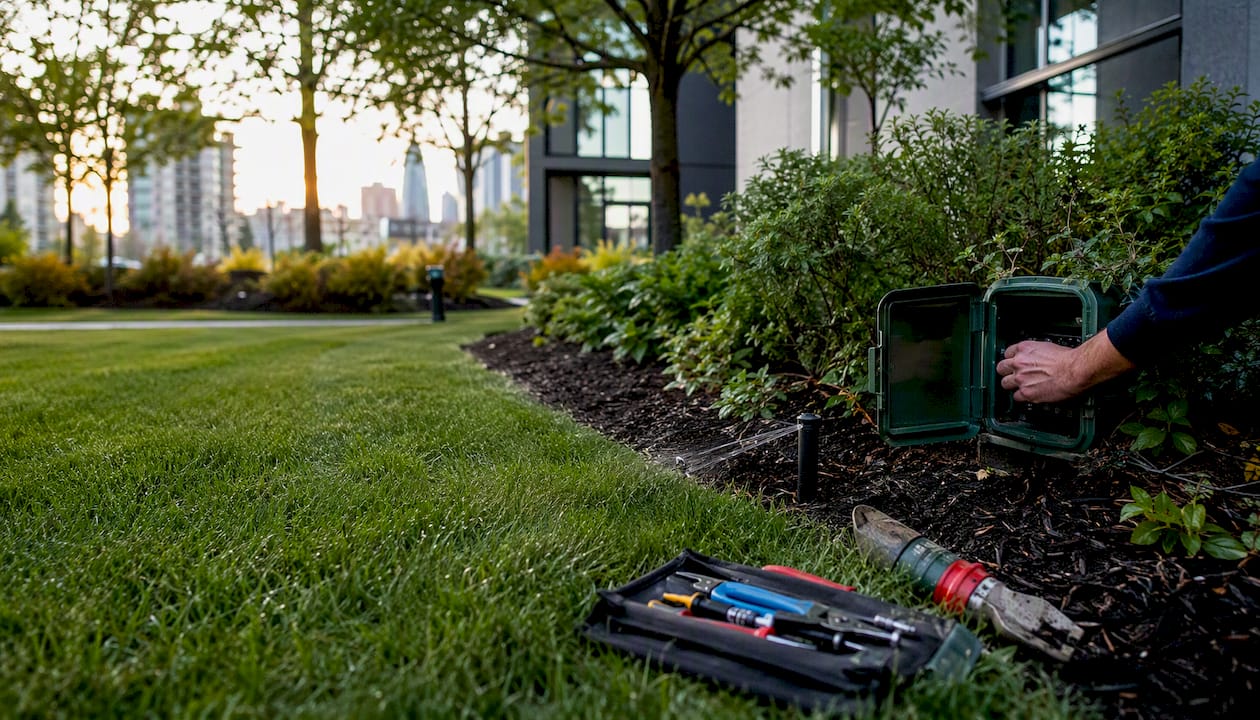
- Check irrigation lines and sprinkler heads for alignment and leaks.
- Watch for pest activity in beds and turf before it spreads.
- Trim overhangs and branches ahead of storm season.
- Inspect hardscape for cracks or heaving that create trip hazards.
Fall:
- Clean gutters again once leaf drop finishes.
- Do a full leaf removal pass, ideally in two visits rather than one.
- Winterize irrigation with a proper blowout before the first hard frost.
- Prune, mulch beds, and cut back perennials for winter.
- Apply concrete sealant now, since salt exposure over winter causes far more surface damage on unsealed concrete.
Winter:
- Confirm your snow and ice contract, including trigger depths and response times.
- Keep walkways, entries, and parking areas clear on a set schedule, not just after big storms.
- Watch for salt staining on concrete and treat early.
- Do a post-storm inspection for fence, roof, or tree damage.
Winter carries the highest liability exposure of the four seasons. A slip on an uncleared walkway is the kind of incident that turns a maintenance oversight into a legal one, which is why HOAs in particular should never leave snow response to a “someone will get to it” arrangement.
Pro Tip: Group your spring roof check and gutter cleaning into one visit. Most contractors already need to be on a ladder for one job, so bundling the second cuts a truck roll and usually shaves a bit off the invoice.
How do you build an annual maintenance calendar?
Start with the four-season checklist above and map each task to real months for your climate. A Calgary property and a coastal one won’t share the same spring window, so adjust dates rather than copying a generic template.
- Lay the seasonal tasks onto a monthly grid, one column per month, one row per task category.
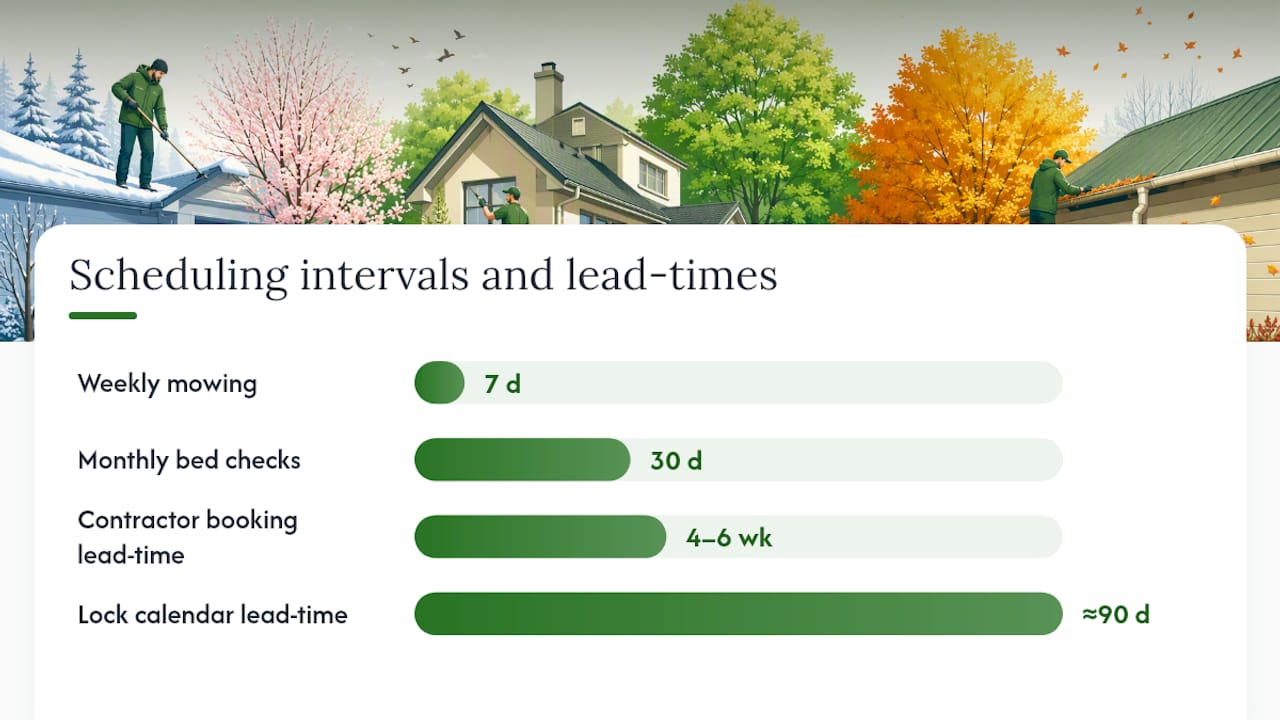
- Set repeating events: weekly mowing in summer, monthly bed checks in spring and fall, a fixed winter snow-response window.
- Add lead-time flags for anything requiring a specialist. Book roofing, irrigation, or concrete contractors 4 to 6 weeks before peak season starts, since that’s when their schedules fill fastest.
- Lock the whole calendar roughly 90 days out. That’s enough runway to secure preferred time slots and often better pricing, since providers reward advance bookings over last-minute calls.
A few bundling rules save real money over a year:
- Pair gutter cleaning with roof inspection in both spring and fall.
- Combine irrigation blowout with bed shutdown in fall so the same crew handles both.
- Schedule concrete cleaning right before sealing rather than as separate visits weeks apart.
For HOAs managing shared spaces, a simple colour-coded timeline (green for lawn care, blue for snow, grey for concrete) shared with the board makes budget conversations far shorter than a spreadsheet full of dates.
Pro Tip: If your property sits in a mixed climate with unpredictable early snow, build a “trigger week” into your calendar rather than a fixed date. Book your snow contractor’s season start based on the first forecasted freeze, not the calendar.
What should you budget for property maintenance?
Costs shape up differently depending on how you buy. A per-visit arrangement charges more per job but commits you to nothing. A seasonal package, like a full-season lawn program with roughly six visits spread across the growing season, smooths out fertilization, weed control, and grub prevention into one predictable line item. A year-round contract folds lawn, cleanup, and snow into a single agreement, usually at the lowest cost per service once you average across twelve months.
The financial case for choosing the recurring option over a-la-carte calls comes down to one number: preventive scheduling cuts emergency repairs by roughly 30 to 45% and stretches asset lifespan by two to five years. That’s the difference between resealing concrete on schedule and replacing a slab that cracked from three untreated winters of salt exposure.
For budgeting rules of thumb:
- Set aside a fixed annual per-site allowance rather than reacting to invoices as they land.
- Keep a small emergency reserve, even on a year-round contract, for storm damage outside the standard scope.
- A hybrid contract (seasonal lawn and cleanup, separate snow agreement) makes sense in milder climates with low snow risk. A full year-round agreement earns its keep on properties facing real winter exposure.
How do you choose a property maintenance provider?
Vetting a contractor takes fifteen minutes if you ask the right questions and look at the right documents. Skip that step and you’re gambling on someone who might not carry insurance.
Ask every provider:
- What’s included in the base scope, and what’s billed as an add-on?
- What method and equipment do they use on concrete? Surface-specific pressure and chemistry matter, since the wrong PSI or nozzle can etch stone or strip sealant.
- Are they insured, and can they provide proof of worker coverage?
- Can they give local references, ideally from properties near yours?
- How many routes do they run in your neighbourhood already?
Before signing anything, get these in writing: a detailed scope of work, a certificate of insurance, proof of worker safety compliance, a visit schedule, and clear terms for emergency response (storm damage, unexpected snowfall).
Watch for red flags: a quote given from the curb without walking the property, vague language like “general cleanup” with no line items, or no mention of post-service reporting.
For small commercial owners and HOAs managing several outdoor categories, a single full-service provider coordinating lawn, beds, snow, and concrete usually beats juggling three specialist subcontractors. Fewer schedule conflicts, one point of contact, and often a volume discount for bundling services.
Pro Tip: Ask a prospective contractor for their busiest month. If they hesitate, they probably don’t track capacity well enough to guarantee your slot during peak season.
How do you track and measure your maintenance plan?
A basic log turns a vague sense of “the yard looks fine” into something you can actually manage. Track these fields for every visit:
- Date and service type
- Contractor name
- Scope completed (checked against the written agreement)
- Before/after photos
- Next scheduled visit
- Invoice amount
- Warranty or notes
Four numbers tell you whether the plan is working:
- On-time completion rate
- Reactive call frequency (how often you’re calling outside the schedule)
- Cost per visit, tracked year over year
- Seasonal complaint counts, especially useful for HOAs fielding resident concerns
Once a year, run a short review: compare invoices against the agreed scope, rate contractor responsiveness, and adjust the calendar for any climate surprises from the past twelve months.
Why year-round packages tend to outperform one-off calls
YearLong has run outdoor maintenance across Calgary since 2017, and the pattern holds up every season: properties on a year-round plan call in fewer emergencies than properties buying service one job at a time. Snow crews already scheduled for a property respond faster after a surprise storm than a company meeting that client for the first time. Curb appeal stays consistent because beds and lawns never sit neglected between calls, and a predictable calendar makes budgeting far less stressful for boards and owners alike.
Ready to put a year-round plan on the calendar?
YearLong is the alternative to piecing together separate contractors for every season. One provider handles your lawn care, cleanups, bed maintenance, concrete, and snow removal on a single calendar, with one point of contact and one invoice instead of four.

Book a site visit and YearLong will walk the property, confirm the scope in writing, and lay out bundled pricing options based on your seasonal needs, backed by a satisfaction guarantee. You’ll leave that first visit with a written schedule, insurance details on file, and a clear sense of what each season costs. Start with the property maintenance checklist to see how your property maps onto a full-year plan, or go straight to lawn care services to get a package started before the next season’s lead time closes.
Frequently asked questions
How far in advance should I plan property maintenance for the year?
Set your full seasonal calendar about 90 days ahead of the year’s first busy season, and book specialist contractors 4 to 6 weeks before their peak demand hits.
What’s the difference between a seasonal package and a year-round contract?
A seasonal package covers one block of the year, like spring cleanup or a summer lawn program. A year-round contract bundles lawn care, cleanups, beds, snow, and concrete into one ongoing agreement, usually at a lower cost per service.
Which outdoor maintenance tasks should I prioritize first each season?
Prioritize anything tied to water damage or safety: roof and gutter checks in spring, irrigation checks in summer, winterization in fall, and walkway clearing in winter.
Can I handle some maintenance tasks myself and hire out the rest?
Yes. Daily debris pickup and light weekly mowing are manageable for most homeowners, while seasonal jobs like irrigation blowouts, concrete sealing, and snow contracts are best left to professionals with the right equipment.
How do I know if my maintenance plan is actually working?
Track on-time completion rates, how often you’re making reactive calls outside the schedule, and cost per visit year over year. A drop in reactive calls is usually the clearest sign the plan is paying off.
Sources
- Seasonal property maintenance planner template: 4‑season scheduling