

TL;DR:
- Integrated outdoor services unify management of landscaping, snow removal, and hardscape care, improving efficiency.
- This approach reduces conflicts, enhances consistency, and offers better property protection through coordinated planning.
Integrated outdoor services are defined as the centralized management of multiple outdoor maintenance tasks, including landscaping, snow removal, hardscape care, and seasonal cleanups, under a single coordinated provider. This model replaces fragmented vendor management with one unified system. Explaining integrated outdoor services matters because bundled outdoor maintenance improves operational efficiency by 20–30% compared to managing separate contractors. That gain comes from fewer scheduling conflicts, less duplicated effort, and consistent quality standards across every task. For Calgary homeowners and property managers, this approach means your lawn, driveway, and snow clearing all follow one plan, one schedule, and one point of contact.
How integrated outdoor services improve property maintenance efficiency
Centralized coordination is the core advantage of an integrated outdoor service model. When one provider manages all outdoor tasks, communication gaps between separate contractors disappear. Standardized operating procedures and unified scheduling reduce delays, overlap, and the kind of miscommunication that happens when a lawn crew and a hardscape contractor show up on the same day with conflicting plans.
Property managers benefit most from this structure. A single provider means one contract, one invoice, and one account manager who knows your property. That removes the administrative load of tracking multiple vendors, chasing quotes, and reconciling different service standards.
Consistency across tasks also protects property value. When the same team handles your lawn care and your seasonal cleanup, they notice problems early, such as a drainage issue forming near a garden bed or a cracked patio edge that will worsen under snow. Early detection prevents costly repairs later.
Reporting tools make this model even more useful. Photo verification, work order tracking, and real-time activity monitoring give property managers clear visibility into what was done, when, and by whom. That level of accountability is rarely available when you manage five separate vendors.
- One point of contact for all outdoor tasks
- Unified scheduling reduces service conflicts
- Consistent quality standards across every season
- Reporting tools provide clear accountability
- Early issue detection across the full property
Pro Tip: Ask your provider for a sample work order report before signing a contract. If they cannot show you what their reporting looks like, that is a sign their accountability systems are weak.
Why design integration matters for landscaping and hardscaping
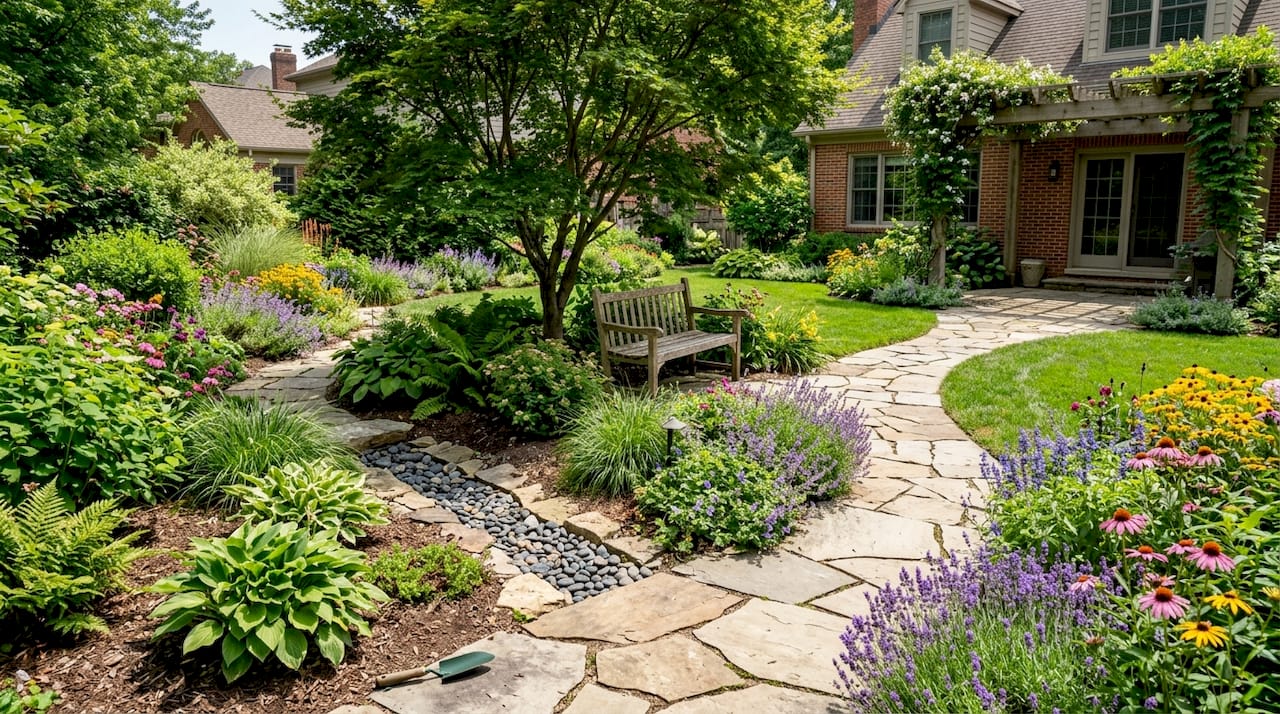
Landscaping and hardscaping are not separate systems. They function as one outdoor ecosystem, and treating them independently causes problems that show up years later. Integrated design coordinates irrigation, drainage, and landscaping as connected elements, preventing water damage and mismatched aesthetics that erode property value.
The most common failure point is drainage. A patio or walkway installed without accounting for the surrounding grade and soil absorption will shift, crack, and pool water within a few seasons. Standalone hardscapes without integrated drainage planning fail over time precisely because the site was not treated as a whole. Fixing drainage after the fact costs far more than planning it correctly from the start.
Irrigation is the other critical link. A sprinkler system designed without knowledge of where hardscape edges fall will either underwater planted areas or saturate zones near paving, accelerating erosion. When the same team plans both, those conflicts never arise.
Seasonal transitions reveal the value of integrated design most clearly. In Calgary, freeze-thaw cycles put enormous stress on surfaces. A property where grading, drainage, and planting were coordinated from the start handles those cycles far better than one where each element was added independently.
Integrated design creates a cohesive outdoor ecosystem that adapts smoothly to seasonal changes. Property owners who treat landscaping and hardscaping as one connected system avoid the most expensive and disruptive repair scenarios. This is an approach many owners undervalue until the first major failure occurs.
- Assess site grading before any hardscape installation begins.
- Map drainage flow paths and confirm they direct water away from structures.
- Design irrigation zones with hardscape edges already in place.
- Select plant species that suit the moisture levels created by your drainage plan.
- Schedule annual inspections to catch shifting or cracking before winter sets in.
Pool landscaping design follows the same principle: every water feature, paved surround, and planted border needs to be planned as one system, not assembled piece by piece.
What services are typically included in integrated outdoor solutions?
Typical integrated outdoor service agreements cover lawn care, seasonal cleanups, hardscape maintenance, snow removal, preventive maintenance, and capital improvement planning. Each category connects to the others across the calendar year. Understanding how they interact is the key to getting full value from the model.
Seasonal service breakdown
| Season | Core services | How they connect |
|---|---|---|
| Spring | Power raking, aeration, bed cleanup | Prepares lawn and beds after winter stress |
| Summer | Lawn mowing, bed maintenance, irrigation checks | Maintains growth and prevents drought damage |
| Autumn | Leaf removal, overseeding, hardscape inspection | Sets up the property for safe winter conditions |
| Winter | Snow removal, ice management, walkway clearing | Protects surfaces and prevents liability |
Lawn care and seasonal cleanups form the foundation of the model. Consistent year-round lawn maintenance prevents the kind of neglect that turns a minor thatch problem into a full lawn replacement. Hardscape maintenance, including concrete cleaning, sealing, and crack repair, extends the life of driveways, patios, and walkways significantly.
Snow and ice management is where integrated scheduling pays off most visibly in Calgary. A provider who already knows your property layout, drainage points, and surface materials will clear snow more efficiently and with less risk of surface damage than a contractor seeing your driveway for the first time in january.
- Preventive maintenance catches small issues before they become expensive repairs
- Capital improvement planning links routine care to longer-term property upgrades
- Coordinated schedules eliminate gaps between seasonal service transitions
- Asset lifecycle tracking helps property managers budget accurately year over year
Facility managers gain long-term visibility by linking daily maintenance with capital planning. That connection between routine tasks and future improvement is what separates a true integrated model from a simple bundled contract.
How to implement integrated outdoor services effectively
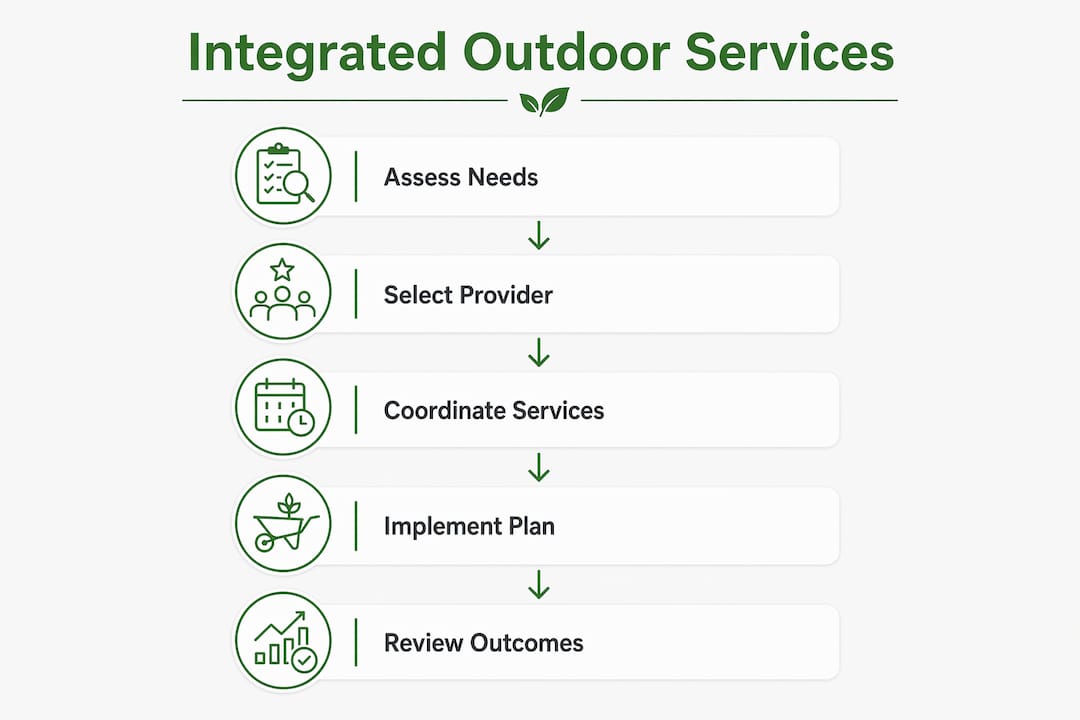
Assessing your property needs before selecting a provider is the right starting point. Walk the full property and list every outdoor task you currently manage, who handles it, and how often problems arise. That inventory tells you where the gaps are and what a unified provider needs to cover.
Evaluating provider capabilities requires more than reading a service list. Ask specifically how they handle scheduling conflicts between tasks, what their communication protocol is when an issue is found on-site, and whether they offer a single account manager for your property. A provider who cannot answer those questions clearly is not truly offering an integrated model.
Avoiding common property maintenance errors starts with the contract. A unified contract that covers all services, defines response times, and includes reporting requirements protects you far better than a series of separate agreements. Scope creep and billing disputes are far less common when everything is documented in one place.
Pro Tip: Request a property walkthrough with your provider before the contract starts. A provider who walks the site and asks questions about your priorities is far more likely to deliver consistent results than one who quotes from a photo.
- Define your maintenance goals in writing before meeting any provider
- Confirm the provider has direct experience with Calgary’s climate and freeze-thaw conditions
- Review sample reports and communication logs from existing clients
- Set quarterly check-ins to review performance against agreed standards
- Clarify who contacts whom when an urgent issue arises outside scheduled visits
Customised maintenance plans work best when the property owner is actively involved in setting priorities at the start, then steps back to let the provider manage execution. That balance of clear expectations and trusted delivery is what makes the integrated model work in practice.
Key takeaways
Integrated outdoor services replace fragmented vendor management with a single coordinated system that improves efficiency, consistency, and long-term property performance across every season.
| Point | Details |
|---|---|
| Efficiency gains are measurable | Bundled outdoor maintenance improves operational efficiency by 20–30% over separate vendor management. |
| Design integration prevents costly failures | Coordinating drainage, irrigation, and hardscaping from the start avoids expensive repairs later. |
| Year-round scheduling is the core advantage | Connecting spring, summer, autumn, and winter tasks under one plan eliminates gaps and conflicts. |
| Reporting tools build accountability | Photo verification and work order tracking give property managers clear visibility into service delivery. |
| Contract structure matters | A unified contract with defined response times and reporting requirements protects both parties. |
What I have learned about integrated outdoor care
Property owners almost always underestimate how much time they spend managing separate contractors. I have seen homeowners juggling four different phone numbers for lawn care, snow removal, concrete cleaning, and seasonal cleanup, and wondering why their property still looks inconsistent. The problem is not the individual contractors. The problem is the absence of a shared plan.
The misconception I hear most often is that integrated services cost more. They rarely do. A bundled design-build approach reduces duplicated setups, scheduling conflicts, and the kind of rework that happens when one contractor undoes what another just completed. When you account for those hidden costs, the integrated model is almost always the better value.
The other thing most people overlook is the value of institutional knowledge. A provider who has maintained your property for two full seasons knows where the low spots are, which beds dry out fastest, and which section of the driveway heaves every spring. That knowledge cannot be transferred to a new contractor every year. Continuity is a real asset, and it only comes from an integrated, long-term relationship.
My honest advice: start the integration conversation before problems force it. The property owners who get the most value from this model are the ones who set it up proactively, not the ones who switch after a drainage failure or a winter slip-and-fall incident.
— Lewie
Yearlong’s year-round outdoor care for Calgary properties
Yearlong has delivered integrated outdoor property care across Calgary since 2017, covering everything from lawn care and seasonal cleanups to snow removal and concrete cleaning under one coordinated plan. Every service is scheduled around Calgary’s specific climate, so your property transitions between seasons without gaps or last-minute scrambles.

Property managers and homeowners work with a single point of contact who knows their property, tracks service history, and flags issues before they become repairs. Yearlong’s flexible packages let you build a plan that fits your property’s actual needs, not a generic checklist. If you want consistent, professional outdoor care managed as one system, Yearlong is ready to put a plan together for your property.
FAQ
What are integrated outdoor services?
Integrated outdoor services combine landscaping, snow removal, hardscape maintenance, and seasonal cleanups under one provider and one coordinated management plan. This model replaces separate vendor contracts with a unified system that improves consistency and reduces communication gaps.
How do integrated services save money?
A bundled approach eliminates duplicated setups, scheduling conflicts, and rework costs that arise when separate contractors manage the same property. Early issue detection across all outdoor tasks also prevents small problems from becoming expensive repairs.
What should I look for in an integrated outdoor service provider?
Look for a provider who offers a single account manager, unified reporting tools, and a contract that covers all services with defined response times. Ask for a property walkthrough before signing, and confirm they have direct experience with your local climate conditions.
How does integrated design protect my property value?
Coordinating drainage, irrigation, and hardscaping as one system prevents water damage, surface shifting, and erosion that degrade property value over time. Properties where these elements were planned together handle seasonal stress, including freeze-thaw cycles, far better than those where each element was added independently.
Can integrated outdoor services work for smaller residential properties?
Integrated outdoor service management works for properties of any size. Smaller properties benefit from the same consistency and early issue detection as large commercial sites, and the administrative simplicity of one contract and one contact is often even more valuable for individual homeowners.