

TL;DR:
- DIY lawn pest control in Calgary focuses on using biological agents and cultural practices to keep pests below damaging levels. Proper identification, timing, and soil health are essential for effective management, with beneficial nematodes and milky spore playing key roles. Consistent maintenance and patience build a resilient lawn that naturally resists pests over time.
Calgary lawns face a specific set of insect threats, and DIY lawn pest solutions give homeowners the tools to fight back without expensive professional contracts. Integrated pest management (IPM) is the industry term for this approach. It focuses on keeping pests below damaging levels using biological agents, cultural practices, and targeted treatments rather than blanket chemical applications. Methods like beneficial nematodes, milky spore, and Castile soap sprays are proven, affordable, and safe for Calgary’s soil and climate. The key is correct identification, proper timing, and a healthy lawn that resists infestation in the first place.
How to identify common Calgary lawn pests

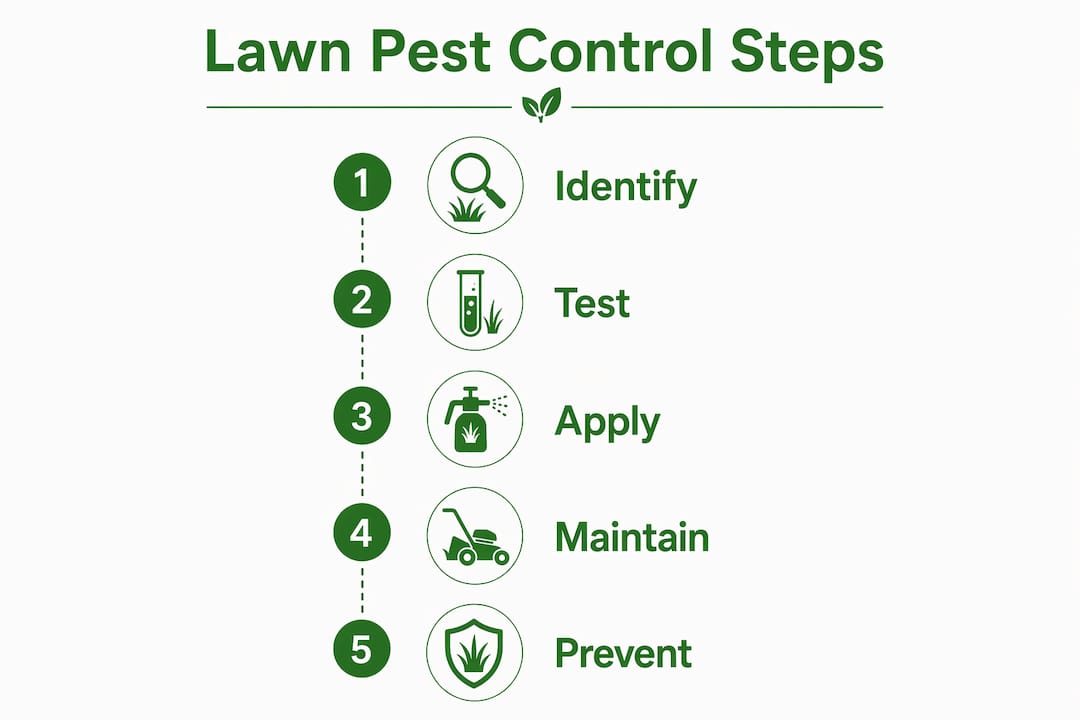
Correct identification is the first step in any pest control effort. Treating the wrong pest wastes time and money, and can harm the beneficial insects your lawn depends on.
Common pests you will find in Calgary
Calgary lawns are most commonly damaged by European chafer grubs and June beetle grubs, both of which feed on grass roots just below the soil surface. Sod webworms, cutworms, and chinch bugs also appear, though less frequently. Each pest leaves a distinct signature on your turf.
- Brown patches and wilting grass: Grubs sever roots, so affected turf wilts even after rain. Patches spread outward as the population grows.
- Spongy or lifting turf: Grub-damaged grass pulls up like a loose carpet because the roots are gone.
- Animal digging: Crows, skunks, and raccoons dig for grubs. Digging alone does not confirm infestation.
- Yellowing in dry streaks: Chinch bugs cause yellowing that spreads along dry, sunny areas of the lawn.
- Small moths at dusk: Sod webworm adults fly low over the grass at dusk. Their larvae feed on grass blades at night.
The tug and dig test
Animal digging is a clue, not a diagnosis. Confirm active grub infestation using the tug and dig test: cut three sides of a 30 cm square of turf, fold it back, and count the grubs in the top 8–10 cm of soil. Several grubs per square foot justifies treatment. Fewer than that, and the lawn can likely recover on its own.
Beneficial insects vs. pests
Not every insect in your lawn is an enemy. Ground-nesting bees and wasps pollinate plants and actively hunt turf pests. Rove beetles and ground beetles prey on grub eggs and larvae. Learning to recognise these allies prevents you from accidentally eliminating your lawn’s natural defence system.
Pro Tip: Scout your lawn every 7–10 days during peak pest season (june through august). Early detection means smaller populations and simpler treatments.
You can find a detailed visual guide to local species in this Calgary lawn pest guide from Yearlong.
Natural and biological pest control methods
Biological control is the most effective organic approach to lawn pest management. Building a resilient soil microbiome is the foundation, and two biological agents stand above the rest: beneficial nematodes and milky spore.
Step-by-step application guide
- Test first. Confirm the pest and population density using the tug and dig test before purchasing any product.
- Choose your biological agent. Use beneficial nematodes for fast results against grubs, cutworms, and sod webworms. Use milky spore (Bacillus popilliae) specifically for Japanese beetle grub control over the long term.
- Prepare the soil. Water the lawn thoroughly the day before application. Nematodes require moist soil at application and for two weeks afterward to survive and spread.
- Apply at the right time. Apply nematodes in early morning or at dusk. UV light kills nematodes within minutes in direct sunlight. Late summer (august to september) is the optimal window in Calgary, when grubs are small and near the surface.
- Water in immediately. After applying nematodes or milky spore, water the area again to push the agents into the soil.
- Monitor and repeat. Check treated areas after two weeks. Nematodes eliminate target grubs within 7–14 days under optimal moisture conditions.
Homemade Castile soap spray
For surface-feeding insects like chinch bugs and aphids, a homemade spray works well. Use mild liquid Castile soap, not typical dish detergent. Dish detergents contain harsh degreasers that burn turfgrass leaves. Mix 30 ml of Castile soap per litre of water and apply directly to affected areas in the early morning.
Biological agent comparison
| Agent | Target pest | Speed | Duration |
|---|---|---|---|
| Beneficial nematodes | Grubs, cutworms, webworms | 7–14 days | 1 season |
| Milky spore | Japanese beetle grubs | 1–3 seasons | Up to 20 years |
| Castile soap spray | Chinch bugs, aphids | Hours | Short term |
Pro Tip: Combine nematodes and milky spore for the best results against grubs. Nematodes handle the current season’s population while milky spore builds long-term soil protection.
Cultural practices that prevent pest damage
Prevention is cheaper and more reliable than treatment. Proper turf culture, including correct mowing height and aeration, reduces insect infestation more consistently than any single product.
Mowing, watering, and aeration
Mow cool-season grasses like Kentucky bluegrass and fescue at 6–8 cm. Shorter grass stresses the plant and makes it more vulnerable to pest damage. Water deeply but infrequently, aiming for 2.5 cm per week. Shallow, frequent watering encourages shallow roots, which are easier for grubs to sever. Core aerate every fall to reduce compaction and improve drainage, both of which support root depth and soil biology.
Choose the right grass for Calgary
Selecting regionally appropriate grass species is one of the most underrated pest prevention strategies. Unsuitable grasses grow under constant stress, making them far more susceptible to infestation regardless of how much you treat them. In Calgary’s climate, Kentucky bluegrass, creeping red fescue, and Canada bluegrass perform best. They tolerate cold winters, recover from drought, and support the soil microbiome that keeps pest populations in check.
Additional preventative habits
- Dethatch annually. Thatch thicker than 1.5 cm creates ideal habitat for chinch bugs and sod webworms. Power raking in spring removes this layer and exposes pest eggs to predators.
- Overseed bare patches. Thin or bare areas invite pest colonisation. Overseeding with a regionally suited mix fills gaps before pests do.
- Reduce synthetic nitrogen. Excess nitrogen produces lush, soft growth that attracts feeding insects. Organic fertilisers release nutrients slowly and support soil microbiome health.
- Tolerate beneficial insects. Healthy turf with established beneficial insects provides self-sustaining pest suppression. Avoid broad-spectrum insecticides that kill predatory beetles and parasitic wasps alongside target pests.
Pro Tip: Pair your pest prevention routine with a consistent lawn weed prevention plan. Weeds and pests often exploit the same weaknesses in turf density and soil health.
Common mistakes to avoid in DIY pest control
Most DIY failures come from skipping steps, not from choosing the wrong product. The following mistakes account for the majority of ineffective treatments.
- Treating without confirmation. Applying nematodes or milky spore to a lawn with no active infestation wastes money and disrupts soil biology unnecessarily.
- Using dish soap instead of Castile soap. Dish detergents damage turfgrass. The difference between a safe homemade spray and a damaging one is the soap type.
- Applying nematodes in full sun. UV exposure kills nematodes within minutes. Always apply at dusk or early morning on a cloudy day.
- Overwatering after treatment. Moist soil is necessary, but waterlogged soil suffocates nematodes and prevents milky spore from spreading.
- Expecting instant results from milky spore. Milky spore requires 1–3 seasons to establish dominance in the soil. Homeowners who stop after one season miss the long-term benefit entirely.
- Ignoring the rest of the lawn. Treating one patch while leaving the surrounding turf thin and stressed allows pests to recolonise quickly.
Integrated pest management does not aim for eradication. The goal is to maintain pests below damage thresholds using the fewest products necessary. A lawn with a few grubs per square foot is not a lawn in crisis.
When DIY efforts do not produce results after two full treatment cycles, the infestation may be beyond the threshold that biological agents can address alone. At that point, consulting a local lawn care professional is the practical next step, not a failure.
Key takeaways
Effective DIY lawn pest control in Calgary relies on correct identification, biological agents applied at the right time, and cultural practices that build a resilient lawn from the soil up.
| Point | Details |
|---|---|
| Confirm before treating | Use the tug and dig test to verify grub presence before applying any product. |
| Match the agent to the pest | Nematodes work fast; milky spore builds long-term protection against Japanese beetle grubs. |
| Timing determines success | Apply biological controls at dusk or early morning on moist soil for maximum effectiveness. |
| Prevention outperforms treatment | Correct mowing height, regional grass species, and aeration reduce pest pressure year over year. |
| Patience is part of the plan | Milky spore takes 1–3 seasons to establish. Combine it with nematodes for results in year one. |
What I have learned managing Calgary lawns through the seasons
Calgary’s short growing season makes pest timing unforgiving. You get one good window in late summer to treat grubs before they burrow deep for winter. Miss it, and you are waiting until the following august.
The homeowners I see struggle most are the ones who treat symptoms without fixing the underlying lawn. They apply nematodes to a thin, compacted, drought-stressed lawn and wonder why the grubs come back. The grubs come back because the lawn is still an easy target. Healthy, dense turf with deep roots and active soil biology is genuinely harder for pests to damage. That is not a theory. It is what I observe season after season.
The other thing I would push back on is the instinct to reach for a product first. The tug and dig test takes five minutes. It has saved more than a few homeowners from treating a lawn that did not need treatment at all. The digging was raccoons. The grub count was two per square foot. The lawn recovered on its own with better watering habits and a fall overseed.
Natural approaches take longer to show results, and that is uncomfortable when you are watching brown patches spread. But a lawn managed with biological controls and good cultural practices builds genuine resilience. A lawn managed with repeated chemical applications does not. That difference shows up clearly by year three.
— Lewie
How Yearlong supports your pest control efforts

DIY methods work best when your lawn is in good baseline condition. Yearlong has served Calgary homeowners since 2017 with professional lawn care services that complement everything you are doing yourself. From core aeration and power raking to bed maintenance that removes pest habitat around your turf, Yearlong handles the labour-intensive tasks that make your DIY treatments more effective. If you want a lawn that is genuinely harder for pests to damage, consistent professional maintenance is the foundation that makes it possible. Contact Yearlong to discuss a plan suited to your property and Calgary’s specific growing conditions.
FAQ
What are the best natural remedies for lawn grubs in Calgary?
Beneficial nematodes and milky spore are the most effective natural remedies for grubs. Apply nematodes in late summer on moist soil at dusk for fastest results.
How do I know if I have a grub problem?
Perform the tug and dig test: cut back a 30 cm square of turf and count grubs in the top 8–10 cm of soil. Several grubs per square foot confirms an infestation that warrants treatment.
Is homemade soap spray safe for turfgrass?
Castile soap spray is safe when diluted correctly at 30 ml per litre of water. Avoid dish detergents, which contain degreasers that burn grass leaves.
When is the best time to apply nematodes in Calgary?
Late summer, from august through september, is the optimal window. Grubs are small and near the surface, and soil temperatures are still warm enough for nematode activity.
How long does milky spore take to work?
Milky spore takes 1–3 seasons to establish in the soil. Once established, it can provide grub control for up to 20 years, making it the best long-term investment for Japanese beetle management.