

Deep core lawn aeration means pulling soil plugs or driving solid tines down to a substantial depth to break up compaction that regular aeration never touches. Homeowners with clay soil, heavy foot traffic, or lawns that puddle after rain benefit most. Grass types like Kentucky bluegrass and fescue respond well when treatment lines up with the right season.
- Who benefits: clay soil, high-traffic yards, thatch over half an inch
- Timing: cool-season lawns in early fall, warm-season lawns in late spring
- Next step: DIY rental for small yards, a provider like Yearlong for compacted or larger properties
Key Takeaways
Deep core lawn aeration relieves subsurface compaction that standard coring can’t reach, and timing it to your grass type and soil moisture determines whether it actually works.
| Point | Details |
|---|---|
| Depth defines the method | Standard coring reaches 2–4 inches; deep-tine methods go 6–16 inches to fix subsurface compaction. |
| Timing follows grass type | Cool-season lawns do best in early fall; warm-season lawns respond better in late spring. |
| Frequency depends on soil | Most lawns need aeration every 1–5 years; compacted clay sites may need it twice yearly. |
| Aftercare drives results | Overseed and topdress within the first two weeks while holes still allow direct seed contact. |
| Professional service fills the depth gap | Yearlong Property Maintenance offers Calgary-specific deep-tine service with diagnosis-first recommendations and a satisfaction guarantee. |
Table of Contents
- What is deep core lawn aeration, exactly?
- What benefits does deep aeration actually deliver?
- When is the best time for lawn aeration?
- What depth and tine spacing do deep core aeration methods use?
- How do you prepare for a deep core aeration service?
- What should you do after aeration to get the best results?
- Should you rent equipment or hire a professional?
- When should you avoid or delay aeration?
- Get your Calgary lawn properly aerated this season
- Frequently asked questions
- Sources
What is deep core lawn aeration, exactly?
Standard core aeration pulls small plugs, usually 2 to 4 inches deep, to relieve surface thatch. Deep-tine aeration goes further, using hollow or solid tines that reach well past that zone to break up compaction layers sitting deeper in the soil profile. The University of Tennessee’s turfgrass cultivation guide notes hollow tines can extend up to 12 inches and solid tines up to 16 inches for severe cases.
- Hollow-tine core aeration: removes a physical soil plug, typically 2 to 4 inches deep, aimed at thatch and surface compaction.
- Solid-tine deep-tine aeration: pushes into the ground without removing material, reaching 6 to 16 inches to fracture subsurface hardpan.
- Deep-drill aeration: a less common method that bores narrow, very deep channels, mostly used on sports turf.
Spiking, vertical mowing, and water injection loosen the surface but don’t touch compaction below 4 inches. If your lawn has been trafficked hard for years or sits on heavy clay, those lighter methods just won’t cut it.
What benefits does deep aeration actually deliver?
The payoff shows up in both water and root behaviour. Loosened subsoil lets rainfall soak in instead of pooling, and roots that were stuck in a compacted layer suddenly have room to stretch deeper.
- Less surface puddling after heavy rain
- Better water and fertilizer penetration to the root zone
- Reduced thatch buildup and improved gas exchange in the soil
- Stronger seed-to-soil contact when paired with overseeding
Short term, you’ll notice better germination within two to three weeks if you overseed right after treatment. Long term, deeper roots mean turf that handles drought stress and foot traffic without thinning out. Homeowners typically see fewer bare patches by the following season and noticeably less runoff during spring melt or summer storms.
When is the best time for lawn aeration?
Timing matters more than most homeowners realize, and getting it wrong wastes the whole effort. Cool-season grasses, including Kentucky bluegrass, fescue, and ryegrass, recover fastest when aerated in early spring or early fall, according to Briggs & Stratton’s aeration guidance. Warm-season grasses like bermudagrass and zoysiagrass do better in late spring through early summer, once they’re actively growing.
- Aerate only when grass is in active growth, never dormant
- Cool-season lawns: early September into early October works well
- Warm-season lawns: late May through June
- Water 1 to 2 days ahead so soil is moist, not soggy or bone dry
On frequency, most lawns need aeration every 1 to 5 years. The NDSU Extension notes that severely compacted or thatchy sites may need it up to twice a year until conditions improve. Clay soil and heavy dog or kid traffic push you toward the more frequent end of that range.
What depth and tine spacing do deep core aeration methods use?
Numbers matter here because they’re what separate a real deep-tine job from a light surface pass. A contractor or rental machine that only reaches 3 inches isn’t doing deep aeration, no matter what it’s called on the invoice.
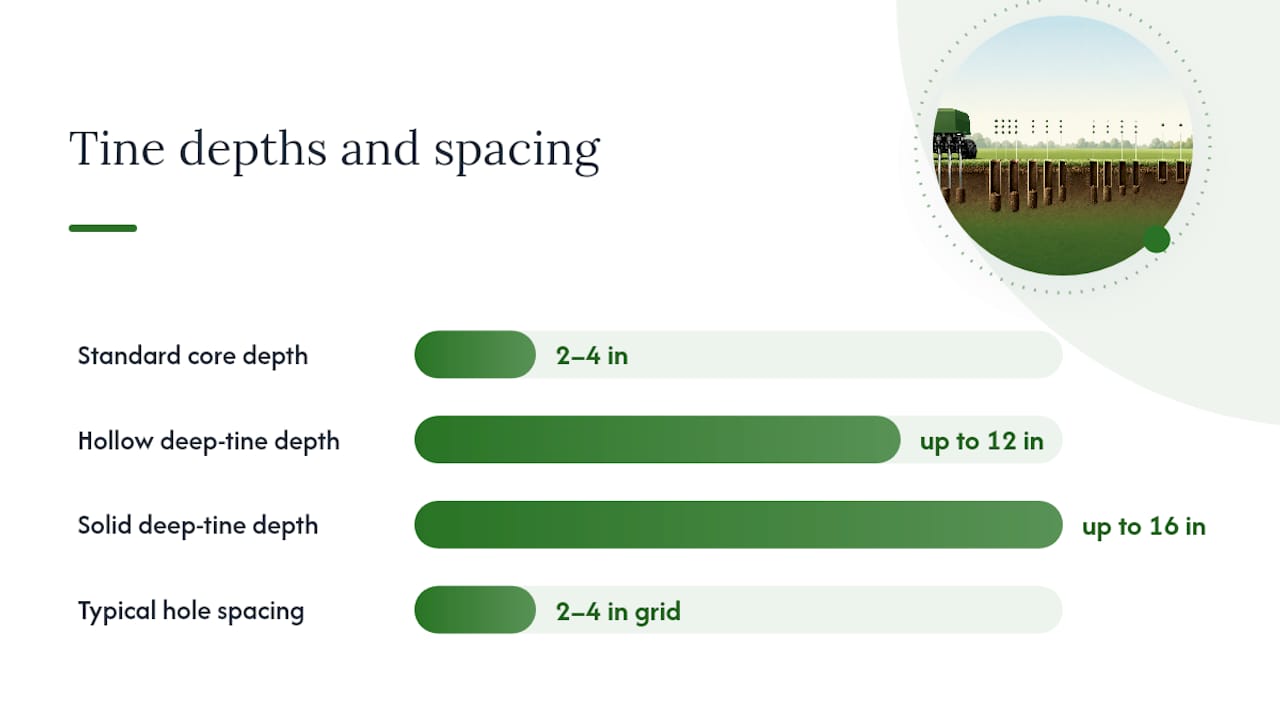
| Method | Typical depth | Tine diameter | Best suited for |
|---|---|---|---|
| Standard hollow-tine core | 2–4 in | 3/8–3/4 in | Thatch control, light compaction |
| Hollow deep-tine | Up to 12 in | 1/2–1 in | Moderate to heavy compaction |
| Solid deep-tine | Up to 16 in | Up to 1 in+ | Severe clay or gravelly soils |
The USGA’s deep-tine research recommends starting conservatively, going just 1 to 3 inches beyond standard coring depth in the first pass, then increasing over successive seasons to avoid heaving the surface.
- Spacing usually runs 2 to 4 inches apart in a grid pattern
- Denser hole spacing often matters more than maximum depth for overall soil health
- Dry, hard soil limits tine penetration regardless of the machine’s rated depth
How do you prepare for a deep core aeration service?
A little prep work saves the crew time and protects your irrigation system. Mow the lawn a day or two before service, and flag sprinkler heads, shallow irrigation lines, and any invisible fencing wires with marking flags. Water lightly if soil is dry. Clear toys, hoses, and pet waste from the yard the morning of the visit.
- Mow short, then water 1 to 2 days ahead if the soil feels dry
- Flag irrigation heads and shallow buried lines clearly
- Remove debris, furniture, and pet waste from the work area
- Keep kids and pets inside during the visit; equipment noise is brief but present
For a typical suburban yard, a professional deep-tine pass takes 30 to 60 minutes. You’ll see either soil plugs scattered across the lawn or minimal visible disruption, depending on whether hollow or solid tines were used.
What should you do after aeration to get the best results?
Aftercare determines whether the aeration actually pays off. Skip this part and you’re left with a lawn full of holes and none of the benefits.
- Days 0 to 2: Leave the cores on the surface to break down naturally. Water lightly if rain isn’t in the forecast, and keep heavy foot traffic off the lawn.
- Month 1 and beyond: Fertilize to support new growth, monitor root depth and colour, and plan a repeat deep-tine pass next season if compaction symptoms return.
Should you rent equipment or hire a professional?
Walk-behind core aerators rent for a modest daily fee at most hardware and equipment rental outlets, and they handle light to moderate compaction fine on smaller lots. What they don’t do well is reach true deep-tine depth. Most consumer rental units top out around 3 inches, which is standard coring, not deep aeration.
Professional deep-tine rigs reach the 8 to 16 inch range that actually fixes subsurface hardpan, and a trained operator knows how to avoid irrigation lines and buried cable that a first-time renter might hit blind.
- Rental gear: lower cost, shallow depth, more physical effort, higher risk of missing buried lines
- Professional deep-tine service: higher upfront cost, real subsurface results, insured against utility damage
- Vetting checklist: ask about insurance coverage, tine depth capability, whether they flag irrigation before starting, and what happens if they damage a line
For anyone with heavy clay soil, a large property, or a lawn that’s been compacted for years, a provider like Yearlong Property Maintenance brings the right equipment and Calgary-specific soil knowledge to the job.
Pro Tip: Ask any contractor for their exact tine depth spec before booking. “We aerate deep” means nothing without a number attached.
When should you avoid or delay aeration?
A few conditions turn aeration from helpful to harmful fast. Waterlogged soil clogs tines and smears rather than fractures compaction. Drought-stressed turf can’t recover from the disruption. Newly sodded lawns need a full season to root before you disturb them.
- Skip aeration on saturated or drought-stressed lawns
- Wait at least one full growing season on new sod
- Never aerate over unflagged shallow irrigation lines or utility cable
- Over-aggressive solid-tine passes can heave the surface if depth increases too fast
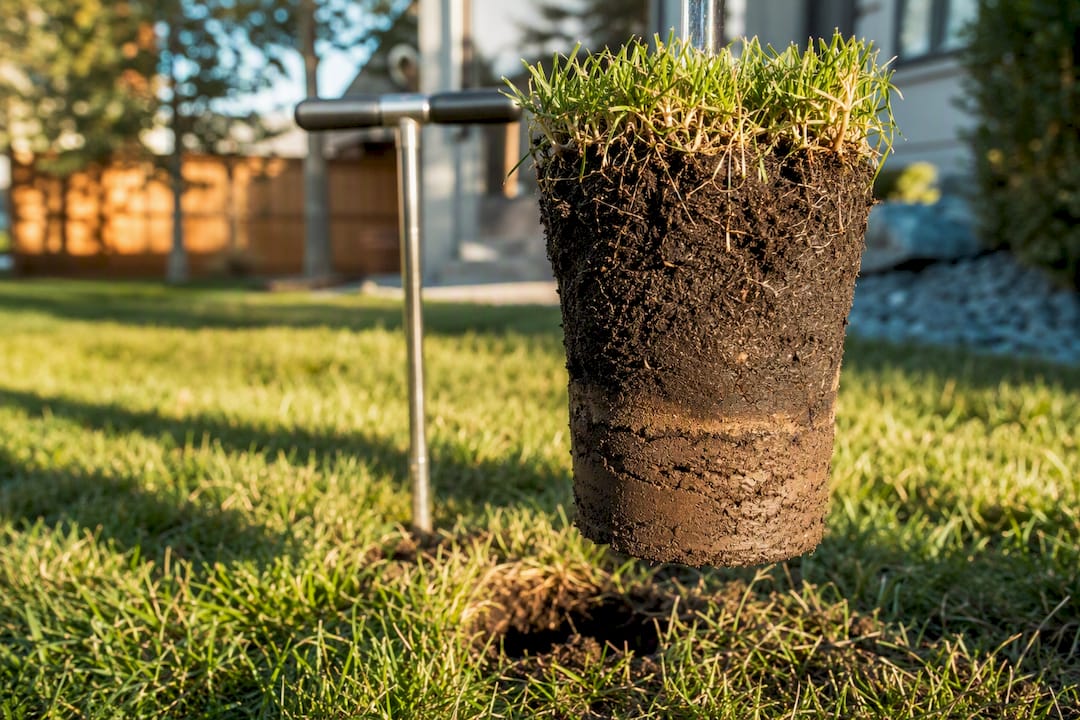
Before booking anything, check thatch depth with a simple soil plug, or push a screwdriver into the lawn. If it stops short of 3 inches, compaction is likely your problem.
A provider’s view on diagnosing before drilling
The right approach starts with assessment, not equipment. Pull a soil core, check thatch thickness, press a probe into a few spots around the yard, and only then decide whether the lawn needs standard coring, deep-tine work, or both. Yearlong’s crews follow that sequence on every visit: diagnose first, recommend a depth and tine mix based on what’s actually happening below the surface, then execute with a satisfaction guarantee behind the work.
Get your Calgary lawn properly aerated this season
Renting a machine and guessing at depth is one option. Hiring Yearlong is the option that gets your soil tested, the right tine depth applied, and irrigation lines flagged before anyone touches the yard.

Yearlong’s crews work Calgary clay and traffic patterns year-round, which means recommendations are built around what actually grows here, not generic advice from a rental counter. Beyond aeration, the team handles overseeding, fertilizing, and full seasonal packages so your lawn gets consistent care instead of a once-a-year fix. Every job comes with a satisfaction guarantee and flexible scheduling built around your property, not a rigid template.
If your lawn puddles, feels spongy underfoot, or hasn’t been touched in years, request an estimate through Yearlong’s lawn care page and get a depth-specific recommendation instead of a one-size-fits-all quote.
Frequently asked questions
Is deep core lawn aeration worth it for an average residential yard?
If your soil is clay-heavy, compacted from foot traffic, or drains poorly after rain, yes. Lawns without those issues may only need standard core aeration every few years.
How is deep core lawn aeration different from regular aeration?
Regular core aeration pulls plugs 2 to 4 inches deep. Deep-tine methods reach 6 to 16 inches to break up compaction sitting below where standard tines can go.
Can I do deep core lawn aeration myself?
Rental walk-behind aerators typically max out around 3 inches, which covers standard aeration but not true deep-tine depth. Severe compaction usually calls for a contractor with proper deep-tine equipment.
How often should I aerate a compacted lawn?
Most lawns need aeration every 1 to 5 years, but severely compacted or thatchy lawns may benefit from aeration up to twice a year until the soil improves, according to NDSU Extension.
Should I water before or after aerating?
Water 1 to 2 days before if soil is dry, since slightly moist soil allows better tine penetration. Avoid aerating saturated ground, which causes clogging and surface smearing.
Sources
Homeowners who want the technical backing behind these recommendations can check these sources directly.
- Turfgrass maintenance cultivation (UTIA, W161-B)
- Deep‑tine aeration now means better turf later (USGA)
- A3710 Lawn aeration & topdressing (UW‑Madison extension)
- Aeration — why, how and when to aerate your lawn (Briggs & Stratton)
- Should you aerate your lawn? (NDSU extension)