

The right fix for a construction-damaged lawn in Calgary comes down to how bad the damage is: decompact and topdress everything first, then slit or drill seed patchy areas, sod anything heavily trafficked or already dead, and hydroseed larger slopes prone to erosion. Small bare patches under a few square metres are fair game for a weekend DIY job. Anything involving compacted subsoil, buried debris, or more than a few hundred square feet is worth a professional site visit, and a local outfit can assess and quote it properly.
TL;DR:
- Decompacting and topdressing the soil should be the first step before seeding or sodding in construction-damaged lawns.
- Slit or drill seeding improves germination on compacted sites, especially when combined with soil decompaction.
- Large areas or those with buried debris or poor drainage require professional excavation, soil replacement, and specialized methods like hydroseeding or sodding.
- The optimal seeding windows in Calgary are late spring and early fall, with sod establishing faster but costing more.
- Contractors should provide in-person site assessments, detailed estimates, and clear guarantees to ensure effective repairs.
Table of Contents
- How to assess construction lawn repair damage in Calgary
- Professional repair methods: slit seeding, hydroseeding and sod
- How long does construction lawn repair take to establish?
- How do I choose a lawn repair contractor in Calgary?
- Getting the site ready and keeping the repair alive afterward
- Do you need a permit for lawn repair after construction in Calgary?
- Why Calgary’s climate makes lawn recovery harder than it looks
- DIY versus professional construction lawn repair: what actually makes sense
- What should be in your lawn repair contract in Calgary?
- Yearlong’s take on repairing Calgary lawns after construction
- Ready for a site assessment from Yearlong?
- Sources
- FAQ
How to assess construction lawn repair damage in Calgary
Before choosing a method, figure out what you’re actually dealing with. Construction crews compact soil just by parking equipment and stacking materials, and that compaction is often invisible until you try to dig.
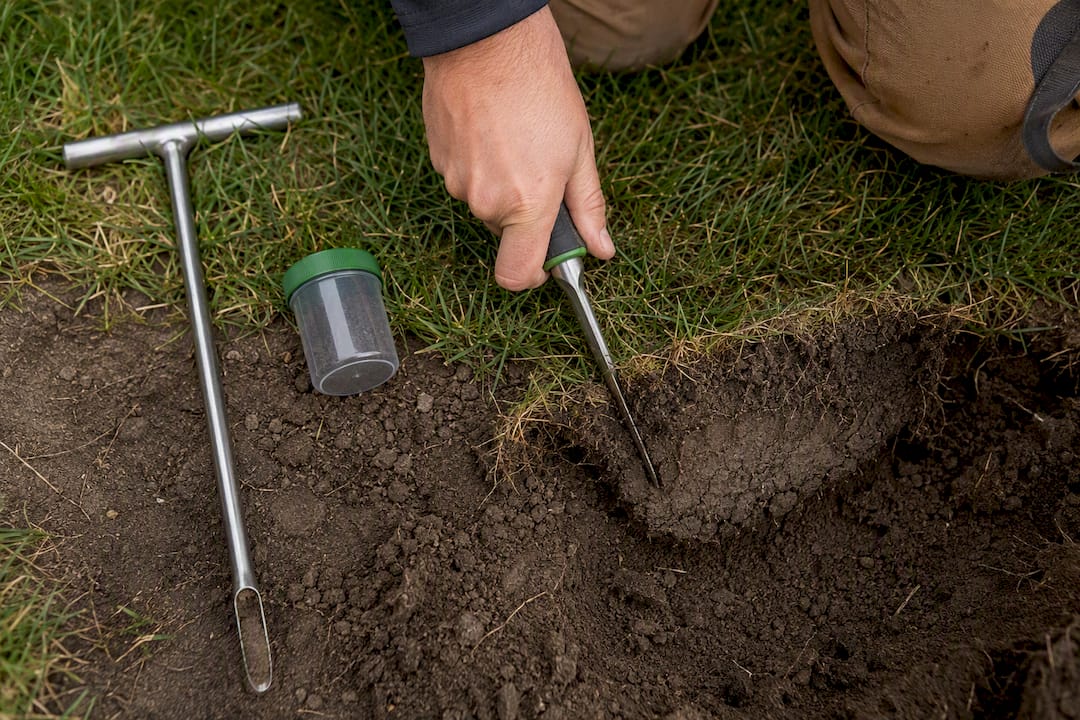
Push a screwdriver or a garden knife into the soil in several spots across the yard. If it slides in easily to 10 or 15 centimetres, the soil’s in decent shape. If it stops hard at 2 or 3 centimetres, you’ve got compaction that will strangle any grass seed you throw down, no matter how good the seed is.
Look for these signs before deciding on a repair method:
- Standing water or pooling after rain, which usually points to compaction or a grading problem, not just poor drainage.
- Bare, cracked soil with a hardpan feel underfoot, a classic sign of equipment traffic.
- Buried debris like scrap lumber, concrete chunks, or gravel just under the surface, which will kill roots and wreck a mower blade later.
- Uneven grading where water runs toward the foundation instead of away from it.
- Thin, patchy turf with shallow roots in areas that weren’t directly excavated but still took a beating from foot and equipment traffic.
Minor thinning with intact topsoil usually only needs overseeding. Compacted, bare patches call for slit seeding after decompaction. Areas with buried debris or lost topsoil need excavation and replacement before anything gets planted.
Professional repair methods: slit seeding, hydroseeding and sod
Once you know the extent of the damage, the method choice gets a lot easier. Calgary contractors lean on three main approaches, and each one solves a different problem.
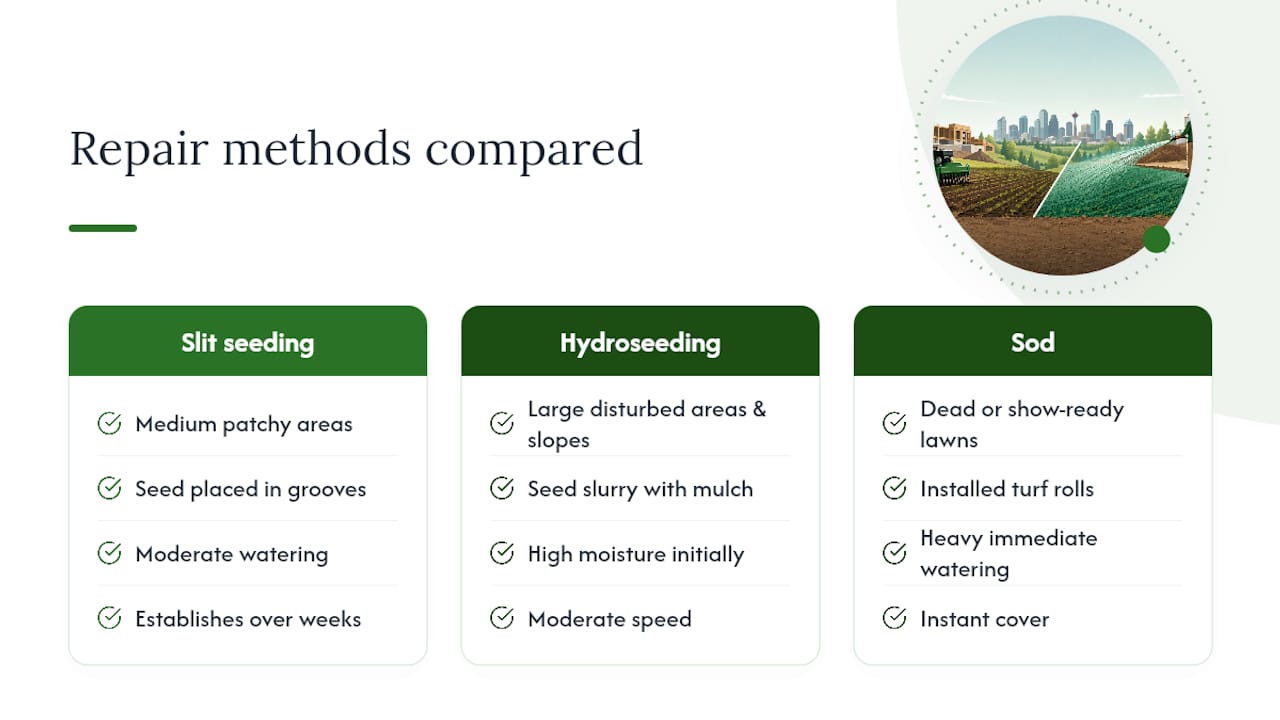
Slit or drill seeding cuts narrow vertical grooves into the soil and drops seed directly into them, which gives far better seed-to-soil contact than scattering seed by hand. On compacted post-construction sites, that contact is the difference between a lawn that fills in and one that stays patchy. Machine-based slit seeding produces meaningfully higher germination rates than broadcast seeding specifically because it places seed at a consistent depth instead of leaving it exposed on hardpacked ground. It’s the right call for medium-sized patchy areas where the soil structure is salvageable after decompaction.
Hydroseeding sprays a slurry of seed, mulch, and tackifier across the ground, and it’s built for scale. Calgary contractors typically reach for it on large disturbed areas, slopes, and anywhere erosion control matters more than a fast green-up. The trade-off is watering discipline. Hydroseeded areas need consistent moisture for the first couple of weeks, and the equipment needs decent site access, which can complicate tight urban lots.
Sod replacement is the fast, expensive option. If a driveway extension chewed through the front yard and you need it looking finished for a home sale or a summer of kids playing on it, sod gives instant cover. It costs more per square metre than seeding and demands proper grading and topsoil underneath, plus immediate, heavy watering after installation to knock down air pockets and root the new turf.
Many contractors don’t pick just one method. A common hybrid approach is topdressing the whole yard, slit-seeding the mid-damage zones, and spot-sodding the worst patches near walkways or gates. It’s often cheaper than sodding the entire lot and faster than seeding it all.
Pro Tip: If a contractor recommends sod for your entire yard without asking about your budget or traffic patterns, ask why. Full sod is rarely necessary unless most of the lawn is dead or you need it usable within days.
How long does construction lawn repair take to establish?
Seed and sod establish on very different clocks, and Calgary’s short growing season makes timing matter more than in milder climates.
Grass seed typically germinates within a few weeks depending on species and soil temperature, but “germinated” doesn’t mean “ready for foot traffic.” It’s advisable to wait several weeks before regular use, longer if seeded late in the season and growth slows before winter. Sod roots into the underlying soil faster, usually within 2 to 3 weeks, though it still needs restricted traffic during that window.
The best seeding windows in Calgary are generally during late spring and early fall, when soil temperatures support germination without the stress of peak summer heat. Sod can go down through most of the growing season as long as you can keep it watered, but avoid installing right before a hard frost.
Cost swings on a handful of factors:
- Area size and access — tight side yards or backyards needing wheelbarrow-only access cost more per square metre than open front lawns.
- Soil remediation needs — compacted or contaminated soil that needs excavation and replacement adds significant labour.
- Topsoil volume required — construction often strips several centimetres of topsoil that has to be replaced before anything gets planted.
- Irrigation setup — repairing or extending sprinkler heads damaged during construction adds to the bill.
- Follow-up visits — some contractors include a return trip to overseed thin spots; others charge separately.
Large-scale reclamation work and slope stabilization projects lean on hydroseeding and mechanical slit-seeding as the standard combination for optimizing germination on difficult terrain, which is worth knowing before you assume sod is the only serious option.
How do I choose a lawn repair contractor in Calgary?
The gap between a good contractor and a bad one shows up fast once you know what to ask. Before signing anything, run through this list:
- Will you inspect the site in person before quoting? A contractor who quotes from photos or a phone call alone hasn’t seen the compaction, the drainage slope, or the debris under the surface.
- What soil prep do you recommend for this specific yard? Vague answers (“we’ll just seed it”) are a red flag. You want specifics on decompaction, topsoil depth, and grading.
- Which equipment will you use, and does my property have room for it? Slit seeders and hydroseeding rigs need clear access; narrow gates or fenced yards may limit options.
- What guarantee do you offer, and what exactly does it cover? Ask whether a failed germination rate triggers a free reseed, and get the terms in writing.
- Who’s responsible for watering after the job, and for how long? Some contractors handle initial watering; most hand that job to you with instructions.
- Do you carry liability insurance, and can you provide references or before-and-after photos from similar Calgary jobs?
Contractors worth hiring usually have years of local experience, itemized written estimates instead of round-number quotes, and photos from real past jobs, not stock images. Walk away from anyone who skips the site visit, gives you a timeline that sounds too fast for the season, or pushes full sod when your yard clearly doesn’t need it.
Getting the site ready and keeping the repair alive afterward
A good repair can still fail if the prep work and aftercare are sloppy. Clear loose debris, mark any shallow irrigation lines so equipment doesn’t cut through them, and confirm the crew has clear access to the work area before the scheduled date.
Once the work is done, the aftercare schedule matters as much as the repair itself:
- Seeded areas need light, frequent watering, often twice a day for the first two weeks, tapering as germination progresses.
- Sod needs a deep soak immediately after installation and daily watering for the first week to root properly.
- First mow should wait until grass reaches roughly 7 to 8 centimetres, and the blade should be sharp to avoid tearing new roots loose.
- Fertilizing typically starts three to four weeks after seeding, once the new turf has established a root system that can use it.
- Keep foot traffic, pets, and equipment off the area completely until the contractor gives the all-clear.
Pro Tip: If germination looks patchy or stalled after three weeks during peak growing season, call the contractor before assuming the whole job failed. Uneven watering or a cool snap is often the cause, not a bad seed batch.
Do you need a permit for lawn repair after construction in Calgary?
Routine lawn repair, seeding, sodding, topdressing, and regrading a residential yard generally doesn’t require a City of Calgary permit on its own. Where permits and inspections do come into play is the construction project itself. If the lawn damage stems from a home addition, a new driveway, or utility work, that original project likely already went through the City’s permitting process, and any grading changes tied to it need to match the approved site plan.
The one area homeowners overlook most often is drainage. Calgary’s development guidelines require lot grading to direct water away from foundations and toward the street or a swale, and altering that grade during a lawn repair, even unintentionally, can create a compliance issue if it changes how water moves toward a neighbouring property. If your repair involves reshaping slopes near the property line or close to a foundation, it’s worth checking your original lot grading certificate before a crew starts moving soil.
Homeowners’ associations add another layer. Many Calgary HOAs and community associations have architectural guidelines covering fencing, retaining walls, and sometimes turf type, though grass repair itself rarely triggers HOA review. If your property backs onto a shared pathway, environmental reserve, or municipal easement, check before regrading or adding topsoil near that boundary, since altering city-owned or shared land without approval can create headaches later.
For most straightforward repair jobs, an itemized contractor estimate and a quick look at your lot grading certificate cover the bases.
Why Calgary’s climate makes lawn recovery harder than it looks
Calgary throws a few specific obstacles at post-construction lawn recovery that don’t come up in milder regions. The short growing season is the big one: usable seeding windows run roughly from mid-May to mid-June and again from late August to mid-September, which means missing that window by even a few weeks can push a repair into next year.
Soil is the other complication. Much of Calgary sits on heavy clay that compacts hard under equipment traffic and drains poorly once it does. That combination means construction damage here tends to compact deeper and hold water longer than sandier or loamier soils elsewhere, which is exactly why decompaction before seeding matters so much locally.
Temperature swings compound the problem. Chinook winds can push temperatures well above seasonal norms in the middle of winter, then drop back below freezing within days. Newly established turf without a full root system going into that kind of freeze thaw cycle is vulnerable to heaving and winterkill, especially on slopes or south facing areas that thaw fastest.
Hail is a real factor too. A summer hailstorm can shred tender new grass blades before roots have had a chance to anchor, which is one reason contractors sometimes recommend timing new installs to get several weeks of establishment before peak storm season in June and July. None of this makes repair unworkable. It just means the margin for error on timing is tighter here than in a place with a longer, gentler growing season, and it’s a strong argument for renovation techniques built specifically around local conditions rather than generic seeding advice.
DIY versus professional construction lawn repair: what actually makes sense
DIY repair works fine for small jobs. A single bare patch from a stacked pallet of shingles, or a narrow strip along a new walkway, is manageable with a bag of seed, a rake, and some patience. The upside is obvious: it’s cheap, and you control the schedule.
The downside shows up when the damage is bigger than it looks. Homeowners frequently underestimate compaction because the surface soil looks fine even when the layer underneath is packed hard. Renting a core aerator or a slit seeder for a one-time job costs real money, and without experience reading soil conditions, it’s easy to seed straight over compacted ground and get poor germination no matter how much seed goes down.
Professional repair costs more upfront but solves problems DIY tools often can’t touch: proper grading to fix drainage, mechanical decompaction at the right depth, and access to equipment like drill seeders and hydroseeding rigs that aren’t practical to rent for a single afternoon. Contractors also carry the experience to read a site correctly on the first visit, which matters when compaction, buried debris, and topsoil loss are tangled together.
A reasonable rule of thumb: anything under roughly 50 square feet with intact topsoil is worth trying yourself. Anything larger, anything with visible compaction or drainage issues, or anything you need to get right the first time (a yard going up for sale, a high-traffic side yard for kids or pets) is worth the step-by-step guidance a professional brings, or simply the call itself.
What should be in your lawn repair contract in Calgary?
A written estimate protects you more than a verbal promise ever will, and it’s reasonable to expect specifics before signing anything. A solid contract or written scope should spell out the exact area being repaired in square metres, the method being used (slit seeding, hydroseeding, sod, or a combination), and the soil prep included, whether that’s decompaction, topsoil depth, or grading corrections.
Payment terms matter too. Be wary of any contractor asking for full payment upfront before work starts; a deposit with balance due on completion is standard practice among established local contractors. Ask specifically what the satisfaction guarantee covers: does a poor germination rate trigger a free reseed, and within what window? Guarantees that are vague about timeframes or coverage are worth pushing back on before you sign.
Confirm who’s responsible for watering during the establishment period and for how long, since a contractor who hands that job to you without clear instructions is setting up a dispute if the lawn doesn’t take. Get a completion timeline in writing, understanding that weather can shift it, and ask what happens if germination fails through no fault of your own, whether that’s covered by the guarantee or billed as a separate job.
Finally, confirm the contractor carries liability insurance, since equipment damage to a fence, irrigation line, or neighbouring property during a repair job isn’t a situation you want to be personally on the hook for.
Yearlong’s take on repairing Calgary lawns after construction
Since 2017, Yearlong Property Maintenance has worked on plenty of yards left rough after a build, a driveway pour, or a basement dig. Our approach starts with an in-person look at compaction and grading before recommending anything, then bundles the right mix of decompaction, topdressing, slit seeding, or sod based on what the yard actually needs. Clients get a clear timeline, straightforward communication, and a satisfaction guarantee built on years of reading Calgary soil and weather correctly.
— Lewie
Ready for a site assessment from Yearlong?
If your yard took a beating during a renovation, an addition, or a new driveway install, some companies handle the full repair sequence including yard cleanup, soil decompaction, slit seeding, sod installation, and bed maintenance, consolidating services under one local crew instead of using separate contractors for each step — see these Home Maintenance Services in BC, Alberta & Saskatchewan for reference.

A site visit gets you a real answer, not a guess over the phone. Yearlong walks the property, checks compaction and drainage, and gives you an itemized plan for what the yard actually needs, whether that’s a full lawn care package or a one-time repair tied to your construction project. Backed by a satisfaction guarantee and years of experience with Calgary’s clay soil and short growing season, the goal is a lawn that establishes properly the first time. Book a site assessment and get a written estimate before your next seeding window closes.
Sources
- Lawn Repair & Sod Cutting | Calgary Landscape Solutions
- How to repair dead grass in Calgary and bring your lawn back to life
FAQ
How much does construction lawn repair cost in Calgary?
Costs depend heavily on area size, soil remediation needs, and method (seed versus sod), so getting an itemized, in-person quote is more reliable than any flat estimate.
Can I repair a construction-damaged lawn myself?
Small bare patches under roughly 50 square feet with intact topsoil are manageable as a DIY job, but compacted, larger, or debris-affected areas usually need professional decompaction and equipment.
What’s the best time of year to repair a lawn in Calgary?
The strongest seeding windows run mid-May through mid-June and late August through mid-September, when soil temperatures support germination without summer heat stress.
Is slit seeding better than regular overseeding after construction?
Yes, on compacted soil. Slit seeding cuts the seed directly into the ground for better seed-to-soil contact, which produces stronger germination than seed scattered on a hard surface.
Does Yearlong offer construction lawn repair in Calgary?
Yes. Some providers offer site assessment, soil decompaction, slit seeding, sod installation, and follow-up care for construction-damaged lawns in Calgary, supported by satisfaction guarantees.