

TL;DR:
- Comprehensive outdoor care involves an integrated approach to maintaining all aspects of a property, including soil health, plant care, and hardscape services throughout the year. It is more proactive and thorough than basic yard maintenance, ensuring better long-term results and cost efficiency. Proper microclimate management and regular DIY inspections further enhance the effectiveness of professional landscape programs.
Comprehensive outdoor care is defined as an integrated programme of horticultural, seasonal, and hardscape maintenance that keeps your property healthy, safe, and visually appealing year-round. The industry term for this approach is comprehensive landscape management, and it goes well beyond mowing and raking. It covers everything from soil health and plant nutrition to driveway sealing and snow removal. For Calgary homeowners and property managers, understanding what is comprehensive outdoor care means recognising that your outdoor space is a system, not a collection of separate tasks. When each element is managed together, the results are more consistent and far less expensive over time.
What is comprehensive outdoor care vs. basic yard maintenance?
Comprehensive outdoor maintenance is an all-inclusive, proactive programme integrating horticultural, design, and hardscape services that go well beyond basic lawn care. That distinction matters more than most homeowners realise.
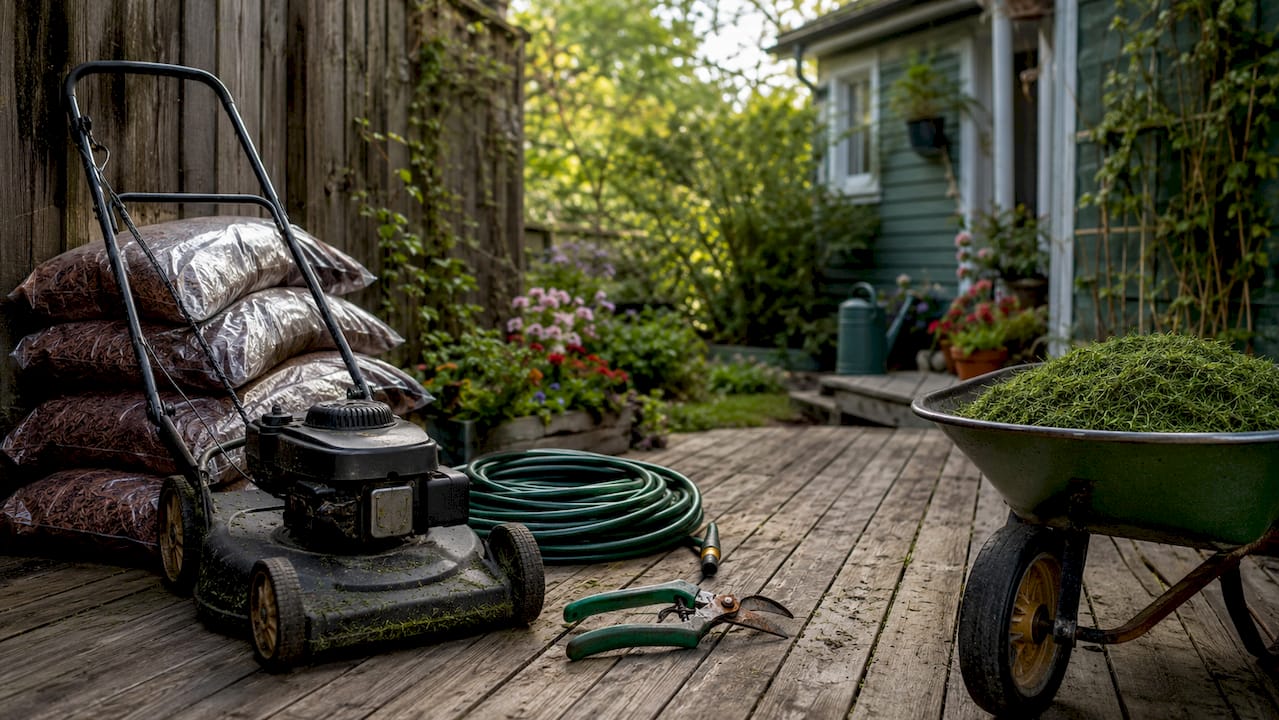
Basic yard maintenance, often called “blow-and-go” service, covers mowing, blowing, and occasionally edging. It keeps a lawn looking passable but does nothing for plant health, soil condition, or long-term property value. Comprehensive landscape management, by contrast, treats your outdoor space as a living system. It accounts for plant growth cycles, seasonal transitions, soil pH, and the condition of every hard surface on your property.
The practical difference shows up in accountability. With a single provider managing the full scope, there is no gap between who handles the beds and who handles the lawn. Problems get caught earlier because the same trained eyes are on your property every visit.
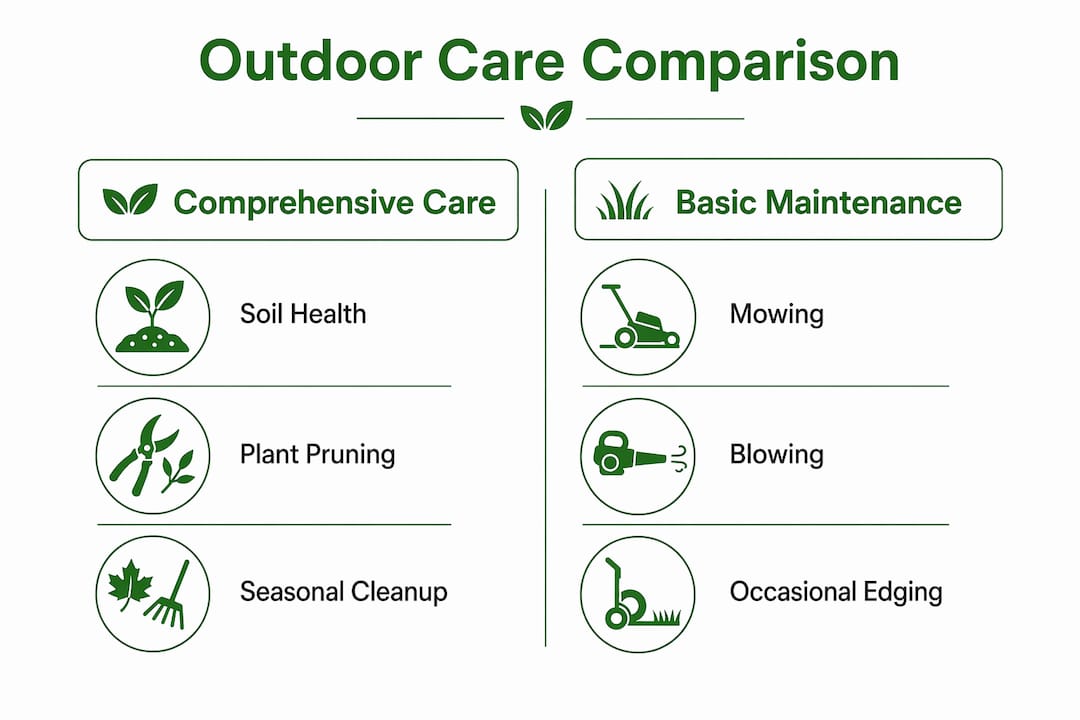
Here is how the two approaches compare:
| Feature | Basic Maintenance | Comprehensive Outdoor Care |
|---|---|---|
| Lawn mowing | Yes | Yes |
| Bed weeding and edging | Rarely | Yes |
| Fertilisation and soil care | No | Yes |
| Seasonal cleanup (spring/fall) | No | Yes |
| Hardscape cleaning and sealing | No | Yes |
| Pest and disease monitoring | No | Yes |
| Snow removal | No | Often included |
Services that fall exclusively under the comprehensive model include:
- Irrigation startup and winterisation
- Mulch refresh and bed top-dressing
- Pruning shaped to each plant’s growth habit
- Concrete cleaning, sealing, and degreasing
- Floral display planting and seasonal colour rotations
Pro Tip: Ask any outdoor care provider whether they document plant health between visits. A provider who tracks changes over time is practising true comprehensive care. One who does not is offering basic maintenance with a premium price tag.
What services are included in a full outdoor care programme?
Seasonal cleanup typically includes leaf removal, pruning, bed edging, mulching, and debris haul-away, often bundled in service packages for predictable costs. That bundling is one of the clearest signs you are dealing with a genuine comprehensive programme rather than a menu of add-ons.
A well-structured outdoor care programme covers services across four categories:
- Lawn care. Mowing at the correct height, fertilisation on a seasonal schedule, power raking to remove thatch, and overseeding thin areas. Healthy turf is the foundation of any attractive property.
- Bed and plant maintenance. Weeding, edging, pruning, mulch refresh, and monitoring for pests or disease. This is where horticultural expertise separates a comprehensive provider from a basic one.
- Hardscape upkeep. Cleaning driveways, patios, and walkways; sealing concrete and stone surfaces; and inspecting for cracks or erosion. Consistent landscape care enhances curb appeal and reduces liability risks, which matters equally for homeowners and property managers.
- Seasonal transitions. Spring cleanup to clear winter debris and prepare beds, fall cleanup to remove leaves and protect plants before freeze, irrigation startup in spring, and winterisation in autumn.
Each of these categories feeds the others. Neglecting hardscape, for example, allows water to pool near plant roots and foundations. Skipping fall cleanup means spring beds start the season buried under decomposing debris. The services are interdependent, which is exactly why managing them under one programme produces better results than booking them individually.
How do microclimates affect your outdoor care strategy?
Microclimates are the small variations in temperature, wind exposure, and moisture that exist across different parts of your property. A south-facing bed against a brick wall behaves very differently from a shaded corner near a fence, even if they are only ten metres apart.
Microclimate management uses tools like shade cloth at 30–70% density and frost cloth adding 2–4°F of protection, which are standard in professional outdoor care. Shade cloth reduces heat stress on sensitive plants during Calgary’s intense summer sun. Frost cloth extends the growing season in both spring and fall, protecting early plantings from unexpected overnight freezes.
Watering demand averages about one inch per week for garden beds, but that figure shifts significantly based on plant type, sun exposure, and wind. A bed in full sun on a windy corner may need twice that. A shaded, sheltered bed may need half. Professionals calibrate irrigation schedules to these micro-level conditions rather than applying a single setting across the whole property.
Soil testing is the other critical variable. pH levels outside the 6.0–7.0 range block nutrient uptake even when fertiliser is applied correctly. A comprehensive care provider tests soil before recommending amendments, rather than guessing. This is the kind of detail that separates a programme built on horticultural knowledge from one built on a mowing schedule.
Exploring sustainable landscaping practices alongside microclimate management gives you a fuller picture of how to work with your property’s natural conditions rather than against them.
What are the best practices for outdoor space upkeep between visits?
A proactive inspection approach is financially more effective than fixing problems after significant damage has occurred. The best thing a homeowner can do between professional visits is learn to spot trouble early.
Here are the most impactful DIY habits for consistent outdoor space upkeep:
- Mow at the right height. Never cut more than one-third of the grass blade length in a single mowing. Cutting too much weakens roots and opens the lawn to weed invasion. For most Calgary turf varieties, that means keeping blades at 7–9 centimetres.
- Weed beds weekly, not monthly. A five-minute weekly pass through garden beds prevents the kind of deep-rooted weed establishment that takes an hour to fix. Frequency beats intensity every time.
- Sweep hard surfaces regularly. Organic debris left on concrete and stone traps moisture, accelerates staining, and promotes moss growth. A quick sweep after windy days extends the life of your hardscape significantly.
- Inspect for early pest and disease signs. Yellowing leaves, unusual spots, or sticky residue on foliage are early warnings. Catching them in week one costs far less than treating a full infestation in week four.
For wood surfaces like decks and pergolas, outdoor wood is hygroscopic, meaning it absorbs and releases moisture with every weather change. That cycle causes warping and cracking unless the wood is properly sealed. Professional care involves a one-to-two-week onsite acclimation period and edge sealing before any finish is applied. As a homeowner, the practical takeaway is to reseal deck surfaces every one to two years and never leave raw cut ends exposed.
For stone patios and driveways, high-concentration bleach damages porous stone permanently by lightening and weakening the surface. Use biological removers and thorough rinsing instead. Yearlong’s concrete cleaning services use methods that protect your surfaces rather than degrade them.
Sustainable outdoor care focuses on consistent, short, repeatable tasks rather than overwhelming one-time cleanups. That principle is the most practical framework a homeowner can adopt. Build a weekly ten-minute routine and a monthly thirty-minute routine. The property stays manageable, and your professional service visits become tune-ups rather than rescues.
You can use a property maintenance checklist to organise these tasks by season and avoid missing anything critical.
Key takeaways
Comprehensive outdoor care works because it treats your property as an integrated system, where lawn health, plant care, hardscape condition, and seasonal transitions all affect one another.
| Point | Details |
|---|---|
| Comprehensive vs. basic care | Full-service programmes cover soil health, hardscape, and seasonal transitions that basic mowing services ignore. |
| Bundled seasonal services | Spring and fall cleanups bundled in a service agreement deliver consistent results and predictable costs. |
| Microclimate awareness | Adjust watering, shade cloth, and frost protection to the specific conditions of each bed on your property. |
| DIY between visits | Mow at the correct height, weed weekly, and sweep hard surfaces to prevent small problems from becoming expensive ones. |
| Stone and wood care | Use biological cleaners on stone and reseal wood surfaces every one to two years to prevent irreversible damage. |
Why most homeowners underestimate what their property actually needs
Most homeowners I speak with think of outdoor care in terms of what they can see from the street. If the lawn looks green and the driveway is clear, the property feels maintained. That view misses about half of what actually keeps a property in good condition.
The issues that cost the most money are the ones that develop out of sight. Soil that has drifted acidic over three seasons quietly starves your plants of nutrients regardless of how much fertiliser you apply. A small crack in a concrete walkway that fills with water each spring will heave and widen after two or three freeze-thaw cycles. A deck that was never properly sealed starts to grey and check within two years, and by year four the boards need replacing rather than refinishing.
I have seen homeowners spend more on a single repair than they would have spent on three years of professional maintenance. The repair mindset is understandable. It feels like you are only paying when something is wrong. The reality is that reactive spending almost always costs more than proactive care.
The other misconception I see regularly is that comprehensive care is only for large or high-end properties. A modest Calgary bungalow with a standard lot benefits from the same integrated approach as a larger home. The scale changes. The principles do not. Consistency in outdoor care is what produces results, not the size of the budget.
— Lewie
Let Yearlong handle the full picture for your property
Keeping up with every layer of outdoor maintenance is a real commitment. Yearlong has been serving Calgary homeowners and property managers since 2017, and the team understands exactly how the local climate shapes what your property needs in every season.

Whether you need lawn and bed maintenance through the growing season or a professional seasonal cleanup to prepare your property for winter or spring, Yearlong builds service packages around your specific property and schedule. The team handles everything from fertilisation and pruning to concrete cleaning and snow removal, so nothing falls through the cracks between seasons. Contact Yearlong today to get a quote and take the guesswork out of year-round property upkeep.
FAQ
What does comprehensive outdoor care include?
Comprehensive outdoor care includes lawn maintenance, bed and plant care, seasonal cleanups, hardscape cleaning and sealing, irrigation management, and pest monitoring. It is a full-property programme rather than a single service.
How is comprehensive care different from basic lawn care?
Basic lawn care covers mowing and occasional edging. Comprehensive care adds soil health management, pruning, mulching, hardscape upkeep, and seasonal transitions under one coordinated programme.
How often should outdoor care services be scheduled?
Most properties benefit from weekly or biweekly lawn care during the growing season, with dedicated spring and fall cleanup visits. Hardscape sealing and fertilisation follow seasonal schedules specific to your region.
Can homeowners manage comprehensive outdoor care on their own?
Homeowners can handle routine tasks like mowing, weeding, and sweeping effectively. Specialised work such as soil testing, irrigation winterisation, concrete sealing, and disease management produces better results with professional service.
Why does microclimate matter for plant care?
Different areas of your property receive different amounts of sun, wind, and moisture. Adjusting watering schedules, using shade cloth, and selecting plants suited to each microclimate prevents stress and reduces long-term maintenance demands.