

TL;DR:
- Affordable landscaping focuses on low-cost plants and materials to improve yard appearance without high expenses. Proper layout, native plants, and bulk hardscaping materials reduce ongoing maintenance and water costs. Small DIY projects can significantly enhance curb appeal while staying within budget.
Affordable landscaping ideas are practical design choices that improve your yard’s appearance without professional help or high expenses. Sustainable landscaping can cut annual water bills by $300–$800 and reduce maintenance time by half. That kind of saving comes from choosing the right plants, materials, and layout from the start. Budget-friendly options like bulk mulch, pea gravel, bareroot perennials, and native plants deliver lasting results at a fraction of typical landscaping costs. The key is working smarter with what you have, not spending more.
1. What are the most cost-effective plants for your yard?
Growing plants from seed is the single biggest cost-saving move in landscaping. Seed packets cost $2–$5, and a single packet can fill an entire bed. Bareroot daylilies run $15–$25 for a pack of 25, which makes them one of the best values in perennial gardening.
Other budget-friendly perennials worth planting include:
- Coneflowers ($3–$6 each): drought-tolerant, attract pollinators, and spread over time
- Ornamental grasses ($5–$10 per plug): low water needs, four-season interest, and no deadheading required
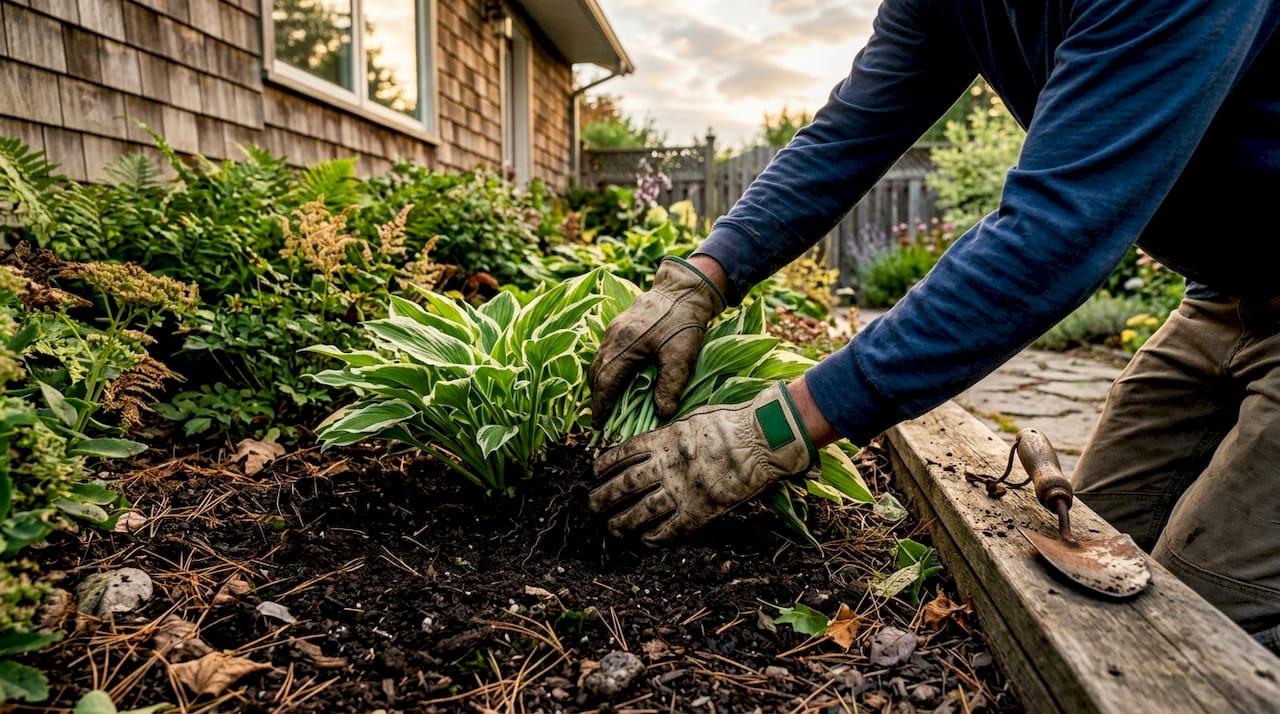
- Hostas: thrive in shade, multiply quickly, and rarely need replacing
- Black-eyed Susans and irises: spread naturally over time and can be divided to fill new areas for free
Mass plantings of a single species create a polished, designed look without the cost of variety. Three flats of the same groundcover look intentional. Three different plants in a small bed look cluttered.
Pro Tip: Divide hostas, daylilies, and ornamental grasses in early spring or fall. One plant becomes three to five within a single season, and you pay nothing for the extras.
Sourcing free plants is easier than most homeowners realise. Neighbours, local Facebook groups, and community plant swaps regularly offer established perennials at no cost. Native and drought-tolerant species are the best targets because they thrive in local conditions with minimal care.
2. How affordable hardscaping reduces maintenance and adds structure
Hardscaping is the backbone of any low-maintenance yard. Paths, edging, and mulched beds reduce the amount of grass you need to mow, water, and fertilise. They also give your yard a clean, finished look that plants alone cannot achieve.
Bulk mulch costs about $25 per cubic yard, compared to $120 or more per yard for bagged mulch. That price difference is significant on any project larger than a single bed. Ordering a full load and spreading it yourself is one of the highest-return tasks in budget landscaping.
| Material | Approximate cost | Maintenance level | Best use |
|---|---|---|---|
| Bulk mulch | $25/cubic yard | Low | Beds, tree rings, paths |
| Pea gravel | $30–$50/cubic yard | Very low | Paths, dry creek beds |
| Crushed stone | $35–$55/cubic yard | Very low | Driveways, borders |
| Steel edging | $1–$2 per linear foot | Minimal | Bed borders, lawn edges |
| Stepping stones | $2–$8 each | None | Garden paths, patios |
DIY gravel paths and dry creek beds are low-cost features that look expensive and require almost no upkeep. Steel edging holds bed lines cleanly without constant re-cutting. Expanding mulch bed areas reduces the amount of turf you need to water and fertilise, which lowers both your time commitment and your water bill.
Pro Tip: Before laying mulch, spread four to six layers of newspaper directly on the soil. Newspaper under mulch smothers weeds without any chemical herbicides, and it breaks down naturally over one to two seasons.
For Calgary homeowners, mulching your lawn beds also conserves soil moisture through dry summer stretches, which matters in a climate where rainfall is unpredictable.
3. What low-cost lighting options improve safety and curb appeal?
Outdoor lighting is one of the most underused budget upgrades in residential landscaping. Low-voltage landscape lighting kits start at about $75 and include a transformer, wiring, and multiple fixtures. That is a complete system for less than the cost of a single professional fixture installed by an electrician.
Placement matters as much as the fixtures themselves. The recommended spacing is 5–8 feet apart and 14 inches above ground for consistent coverage along a path or bed edge. Focus lights on three areas for maximum impact:
- Pathways and steps: improves safety and guides visitors to your door
- Garden beds and focal plants: adds depth and draws attention to your best plantings
- Entry features: a lit front door or gate reads as welcoming and well-maintained
DIY low-voltage lighting adds visual appeal and a sense of security with minimal ongoing electrical cost. Solar-powered stake lights require no wiring at all and work well in sunny Calgary summers. Set timers to run lights for four to six hours after dark to keep energy use low.
4. How to design a low-maintenance, affordable garden layout
The most expensive yard to maintain is one designed without a plan. Grouping plants with the same water and fertiliser needs is the single most effective way to cut watering and fertilising time. You stop running a hose to six different corners of the yard and start watering one zone at a time.
Reducing lawn area is the other major lever. Grass is the most labour-intensive surface in any yard. Replacing sections with mulched beds, ornamental grasses, or low-mow groundcovers like kurapia or ruschia nana cuts mowing time and water use significantly. These groundcovers suppress weeds naturally and handle dry spells without extra irrigation.
Key layout principles for a low-maintenance yard:
- Group by water need: put drought-tolerant plants together and moisture-loving plants together
- Use slow-growing shrubs: they fill space over time and need almost no pruning
- Shrink your lawn: every square metre of turf you replace with mulch or groundcover saves water, fertiliser, and mowing time
- Choose native species: plants adapted to your local climate need less intervention to thrive
Xeriscaping, the practice of designing yards to minimise irrigation, is particularly well-suited to Calgary’s dry summers. Native and drought-resistant species are the foundation of any xeriscape design. Reducing fertiliser use also cuts nutrient runoff, which is better for local waterways and your wallet.
Preventative landscaping choices made at the design stage, like proper grading and strategic plant placement, protect your property and reduce long-term maintenance costs. A well-planned layout pays for itself within the first season.
Pro Tip: Replace high-traffic grass strips along fences and driveways with gravel or mulch first. These are the hardest areas to mow cleanly and the easiest wins for reducing yard work.
For more practical guidance on sustainable landscaping for your yard, native plant selection and water-wise design principles are worth exploring before you start any new bed.
5. Simple DIY projects with high visual impact
Not every improvement requires a full redesign. Small, focused projects deliver outsized results when you choose the right ones. A single weekend of work can change how your entire property reads from the street.
The highest-impact DIY projects for budget landscaping include:
- Edging existing beds: clean lines make any planting look intentional and maintained
- Adding a gravel path: connects areas of the yard and reduces muddy patches near doors
- Installing a dry creek bed: handles drainage issues while adding a natural, designed feature
- Repainting or staining a fence: refreshes the whole yard for the cost of a can of stain
- Planting a single focal specimen: one ornamental grass or flowering shrub at a corner or entry point anchors the whole yard
Each of these projects costs under $100 in materials and requires no special skills. The key is finishing one project completely before starting another. A half-finished path looks worse than no path at all.
For Calgary homeowners, timing matters. Spring and early fall are the best windows for planting and hardscaping work. The ground is workable, temperatures are moderate, and plants have time to establish before the next extreme season. A comprehensive yard cleanup at the start of each season sets the stage for every project that follows.
Key takeaways
Affordable landscaping delivers the best results when you combine low-cost plants, bulk materials, and a layout designed to reduce ongoing maintenance from the start.
| Point | Details |
|---|---|
| Start with seeds and perennials | Seed packets and bareroot plants cost a fraction of nursery prices and multiply over time. |
| Buy hardscape materials in bulk | Bulk mulch at $25 per yard versus $120 bagged saves significantly on any project. |
| Group plants by water need | Matching cultural needs reduces watering runs and fertiliser use across the whole yard. |
| Shrink your lawn strategically | Replacing turf with mulch or groundcover cuts mowing, watering, and fertiliser costs. |
| Light your yard for under $75 | A low-voltage kit improves safety and curb appeal with minimal ongoing electrical cost. |
What I’ve learned from watching Calgary yards transform on a budget
I’ve seen a lot of Calgary yards go from patchy and neglected to genuinely attractive without a single call to a landscape contractor. The pattern is almost always the same: the homeowner picks two or three low-cost moves, executes them well, and the whole property shifts.
What surprises most people is how much impact bulk mulch and clean edging have on their own. Before any plants go in, a freshly edged and mulched bed reads as intentional and cared-for. That is the foundation everything else builds on.
The other thing I keep seeing is how well native and drought-tolerant plants perform in Calgary’s climate compared to the ornamental varieties people buy at big-box stores. Native species do not need babying. They establish, they spread, and they come back every year without much help. That is the definition of a low-cost landscaping win.
My honest advice: do not try to do everything at once. Pick the one area of your yard that bothers you most, fix it properly with good materials, and let that success motivate the next project. Homeowners who take that approach end up with better yards than those who try to overhaul everything in a single weekend and run out of steam halfway through.
— Lewie
Yearlong’s services keep your landscaping looking its best
You have done the work to plan and plant a yard you are proud of. Keeping it looking that way through a full Calgary season is where consistent maintenance makes the difference.

Yearlong’s bed maintenance service keeps your mulched beds edged, weeded, and tidy without you lifting a finger after the initial setup. For homeowners who want their lawn and beds handled together, Yearlong’s lawn care packages complement DIY landscaping projects and free up your weekends. Yearlong has served Calgary homeowners since 2017 with flexible, affordable packages and a satisfaction guarantee. Get in touch to find out which service fits your yard and your budget.
FAQ
What is the cheapest way to landscape a yard?
Growing plants from seed and buying bareroot perennials are the most cost-effective starting points. Bulk mulch and DIY edging add structure and reduce maintenance without significant expense.
How do I reduce lawn maintenance costs?
Grouping plants by water need and replacing sections of turf with mulch or groundcover cuts both time and water costs. Native and drought-tolerant species require the least ongoing care.
What are the best low-maintenance landscaping options for Calgary?
Native perennials, ornamental grasses, and expanded mulch beds perform well in Calgary’s climate. They handle dry summers and cold winters without intensive care.
How much does DIY landscape lighting cost?
Low-voltage landscape lighting kits start at about $75 and include everything needed for a basic installation. Solar-powered stake lights are an even lower-cost option with no wiring required.
Does landscaping increase property value?
Well-maintained landscaping consistently improves curb appeal and supports property value. Preventative design choices, like proper grading and strategic planting, also reduce long-term maintenance costs.