

Yes. For most Calgary lawns, core aeration followed the same day by overseeding in late August to mid September is the most reliable route to thicker turf. This is the primary fall window, and it comes with a hard cutoff: seeding past early September leaves seedlings too little time to root before hard frost.
Aeration and overseeding work best done together, not as separate projects weeks apart. Spring, roughly late April through early June, works as a backup window if you miss fall, though it comes with more weed competition and slower results.
- Fall window: late August to mid September, cutoff around September 10
- Spring window: late April to early June (secondary, more weed pressure)
- Do them together: aerate first, overseed the same day for best seed-to-soil contact
If the calendar is already tight, Yearlong runs local aeration and overseeding services timed specifically to Calgary’s short fall season.
Key Takeaways
Core aeration paired with same-day overseeding between late August and September 10 gives Calgary lawns the best odds of thick, healthy turf by next spring.
| Point | Details |
|---|---|
| Hit the fall window | Aerate and overseed together between August 20 and September 10 for reliable establishment. |
| Choose fescue-heavy seed | Pick a blend with at least 60% fescue and around 20% bluegrass for Calgary conditions. |
| Water in two phases | Daily light watering for 2–3 weeks, then shift to deep soakings of about 25mm once or twice weekly. |
| Time your fertilizer | Apply mid September; anything after early October is largely wasted as uptake slows. |
| Consider a local pro | Yearlong tailors aeration depth, seed blends, and follow-up watering to Calgary’s clay soil and tight fall calendar. |
Table of Contents
- Why aeration and overseeding matter for Calgary lawns
- Calgary timing: exact windows and hard deadlines
- How to combine aeration and overseeding for Calgary’s conditions
- Preparing before the job and caring for your lawn after overseeding
- Should you DIY or hire a pro in Calgary?
- Why Yearlong’s Calgary experience matters for aeration and overseeding
- The late summer window is the whole game
- Sources
Why aeration and overseeding matter for Calgary lawns
Calgary’s clay-heavy soil compacts hard, especially where kids, dogs, or foot traffic pack it down year after year. Core aeration pulls plugs of soil out of the ground, which lets air, water, and nutrients reach roots that would otherwise be starved a few centimetres down. The City of Calgary’s homeowner water guide recommends aeration in May to June and again in mid September for exactly this reason: it opens the soil structure without tearing up the lawn.
Overseeding does the other half of the job. It fills in thin or bare patches, crowds out weeds before they get a foothold, and gives turf a stronger shot at surviving the freeze thaw cycles that define an Alberta winter.
A simple test tells you if your lawn needs this: pull a 6 inch core sample. If roots only reach 1 to 2 inches deep, the soil is compacted and aeration will make a visible difference within a season.
- Short growing season means every week of establishment time counts
- Freeze-thaw cycles stress shallow-rooted turf more than deep-rooted turf
- Spring weed pressure is higher, which is why fall overseeding tends to win out
Calgary timing: exact windows and hard deadlines
Calgary’s fall lawn calendar runs on a tight clock, and missing a date by even a couple of weeks changes the outcome. The Alberta fall lawn care guide lays out a schedule that’s become the standard reference for the province: aerate between late August and early September, overseed the same day, apply fall fertilizer in mid September, then a winteriser application by early October (early October is a hard deadline).
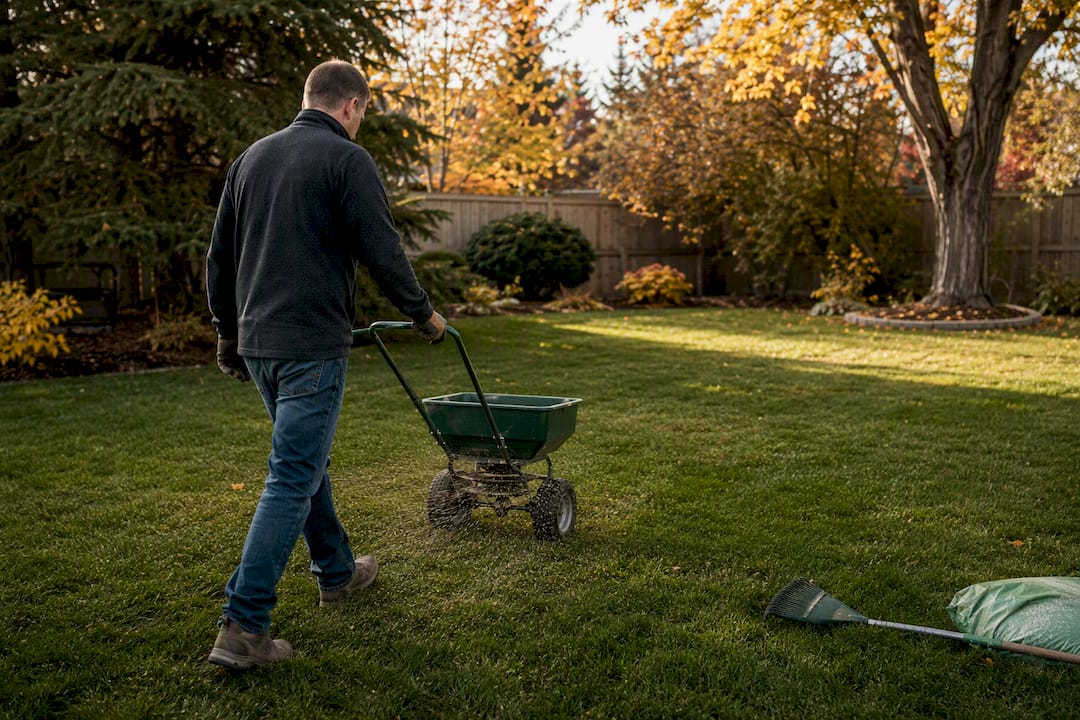
Soil temperature drives this schedule, as detailed in the Seed Sowing Schedule: A Localized Guide for Growers, which explains the differences between spring and fall overseeding windows. Cool-season grass seed germinates best when soil temperatures are warm, roughly between 10 and 20 degrees Celsius, a window that opens in late August in most Calgary yards. Growers Guide confirms the same cutoff: seeding after September 10 is discouraged because young grass rarely has enough time to establish roots before a hard frost shuts everything down.
Spring is workable but a compromise. You get warming soil from late April into early June, but you’re fighting germinating weeds for the same real estate your new grass needs, and cooler, wetter spring conditions slow root development compared to the warm-soil, cooling-air combination of September.
| Task | Calgary date range | Why it matters |
|---|---|---|
| Core aeration | August 20 – September 10 | Soil temperature (10–20°C) supports fast recovery |
| Overseeding | Same day as aeration | Seed falls directly into aeration holes for contact |
| Fall fertilizer | Mid September | Feeds new growth while roots still take up nutrients |
| Winteriser application | Early October (by ~Oct 5) | Late feeding is wasted once uptake slows |
| Spring aeration (secondary) | Late April – early June | Backup window with higher weed competition |
How to combine aeration and overseeding for Calgary’s conditions
Doing this right isn’t complicated, but the order of operations matters more than most homeowners expect.
- Mow low first. Cut the lawn to 55 to 60mm and clear away clippings, sticks, and debris so the aerator can actually reach soil.
- Water lightly two days ahead if the ground is dry and hard. Aeration tines need soil soft enough to punch through, not bone dry clay.
- Aerate in two directions. Run a core aerator with hollow tines across the lawn once, then again perpendicular to the first pass. Leave the soil cores where they land. They break down and feed the lawn.
- Choose your seed. Pick a cool-season blend with at least 60% fescue and cap Kentucky bluegrass around 20% for stronger establishment. Spread at roughly 900g per 1,000 sq ft for a normal overseed, up to 1.8kg for badly thinned areas.
- Press seed into contact. A light roll or rake pass improves seed-to-soil contact, which is the single biggest factor in germination rate.
- Water daily for two to three weeks, then shift to deep, infrequent soakings.
Pro Tip: Newly aerated lawns dry out faster than usual because the holes let moisture escape below the surface. Check soil moisture with a screwdriver test daily for the first week rather than guessing.
Full walkthroughs on how to aerate a lawn and the overseeding process itself go into more depth on tool selection if you’re renting aeration equipment yourself.
Preparing before the job and caring for your lawn after overseeding
Getting the timing right is only half the work. What you do in the following weeks decides whether that seed actually turns into turf.
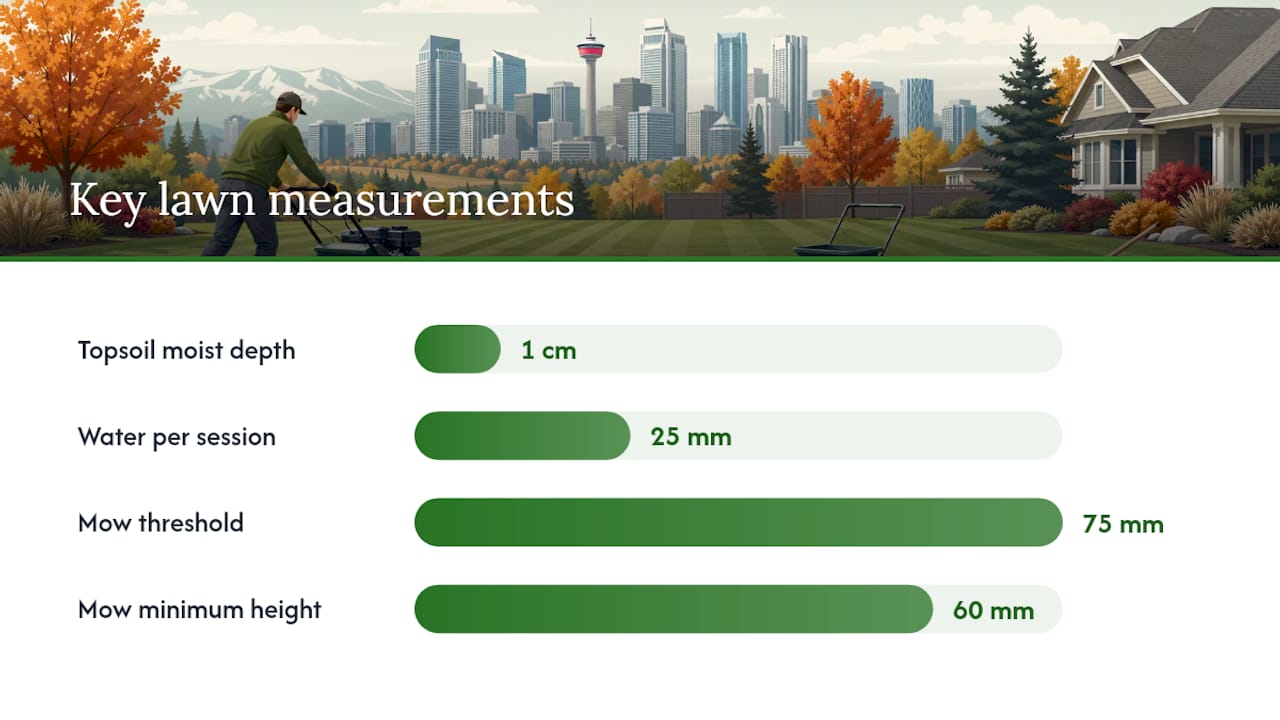
Watering is the biggest variable. During the first two to three weeks, keep the top centimetre of soil consistently moist with light daily watering. Once seedlings establish and start showing a second set of leaves, switch to deep, infrequent soakings. Calgary professionals typically recommend about 25mm per session, once or twice a week, which trains roots to grow down rather than staying shallow and vulnerable.
Fertilizer timing matters just as much. Apply a slow-release, balanced feed in mid September while roots are still actively taking up nutrients. Anything applied after root uptake slows in late fall is essentially wasted money sitting on frozen ground.
- Hold off on mowing until new grass reaches about 75mm, then cut no shorter than 60mm
- Bare or patchy spots after three weeks usually mean poor seed-to-soil contact, not bad seed
- If germination looks thin by early October, it’s often too late in the season to re-seed; wait for spring or call in a professional to assess soil conditions
Early morning watering also cuts down on fungal risk compared to evening irrigation, a detail Calgary’s own lawn care program points to for anyone trying to avoid disease on new turf.
Should you DIY or hire a pro in Calgary?
A small, flat yard with decent soil and access to a rental hollow-tine aerator is a reasonable DIY project. If you’re comfortable running equipment for an afternoon and your lawn doesn’t have serious compaction or heavy thatch, doing it yourself will save money.
Heavy clay lots, larger properties, or thatch thick enough to need power raking or dethatching first are a different story. Those jobs benefit from equipment and timing knowledge that most rental-counter tine aerators can’t match, and getting the sequence wrong (dethatching too aggressively in fall, for instance) can weaken a lawn heading into winter.
If you’re evaluating a local contractor, ask these questions before booking:
- What tine type and spacing does your aerator use, and are cores left on the lawn or hauled away?
- What’s in your seed blend, and what percentage is fescue versus bluegrass?
- Do you guarantee follow-up service if germination is poor?
- Can you confirm your crew works within Calgary’s fall timing window, not a generic national calendar?
Vague answers about seed mix, or a contractor who can’t speak to local frost dates, are red flags worth walking away from.
Why Yearlong’s Calgary experience matters for aeration and overseeding
Yearlong has operated in Calgary since 2017, running full-service lawn care and seasonal maintenance programs for homeowners, property managers, and HOAs across the city.
- Crews adjust aeration depth and pass count based on how compacted a specific property’s clay soil actually is, not a one-size formula
- Seed blends are selected for Calgary’s soil and freeze-thaw pattern rather than a generic national mix
- Post-aeration watering and fertilizer follow-up are scheduled around the same tight fall deadlines outlined above, not a loose “sometime in fall” plan
That local calibration is the difference between a lawn that greens up by next spring and one that limps through winter half-established.
The late summer window is the whole game
Most lawn care advice online treats aeration and overseeding as two separate, flexible tasks you can schedule whenever it’s convenient. That’s the part worth pushing back on. In Calgary, the window where both jobs actually pay off is narrow, and treating September 10 as a soft suggestion rather than a real deadline is where a lot of DIY overseeding attempts fail quietly. The seed goes down, germinates a little, and then gets wiped out by the first hard frost because there wasn’t enough root depth to survive it.
The conventional wisdom that “more seed fixes a bad lawn” also deserves scrutiny. Seed rate matters less than soil contact and post-seeding water discipline. A thin overseed with excellent contact and correct watering beats a heavy overseed left to dry out between waterings, every time.
If there’s one thing to prioritize, it’s this: pick your date first, then work backward. Figure out when you can realistically aerate before September 10, and build watering and fertilizer plans around that fixed point rather than around your schedule.
— Lewie
How Yearlong handles aeration and overseeding, start to finish
Yearlong is the local alternative to piecing together rental equipment and guesswork on a deadline that doesn’t leave room for trial and error. A typical package covers core aeration with commercial-grade equipment, same-day overseeding with a fescue-heavy blend suited to Calgary clay, and a satisfaction guarantee if germination doesn’t take.

Before a crew arrives, homeowners just need to mow the lawn short and clear the yard of hoses, toys, and furniture so the aerator has a clean pass. There’s no need to pre-water or pre-treat anything; that’s built into the service.
Booking is straightforward: request a quote through the Yearlong lawn care page, confirm a date inside the fall window, and the rest of the schedule (fertilizer follow-up, watering guidance) comes with the service. If your yard also needs bed cleanup or ongoing maintenance, that can be bundled into the same visit through Yearlong’s bed maintenance service.