

Start with sweeping roughly weekly for retail and grocery lots, every few weeks for typical office parks, and about monthly for low-use sites, then confirm the cadence with a 30-day curb-line check. Traffic volume, tree cover, and nearby construction all push that baseline up or down. The rest of this guide covers site assessment, seasonal flex, contract language, and how to hold a sweeping contractor accountable for showing up.
TL;DR:
- Sweeping frequency should start with a weekly schedule for retail and grocery sites, increasing during peak seasons or high debris periods.
- Conduct a 30-day curb-line check twice weekly to adjust the schedule based on visible debris accumulation or cleanliness.
- Seasonal adjustments, such as supplemental leaf fall cleanups or spring deep cleans, help prevent overpaying or under-servicing during peak debris times.
- A detailed contract should specify scope, frequency, service proof, and liability, with GPS timestamps and photos ensuring accountability.
- Bundling sweeping with other maintenance services can reduce costs and improve scheduling priority, especially during weather emergencies or seasonal peaks.
Table of Contents
- What is the right parking lot sweeping schedule by property type?
- How do I assess my site to set a baseline sweeping cadence?
- When should you adjust your sweeping schedule for the seasons?
- What should be in a parking lot sweeping contract?
- How do you schedule sweeps with minimal tenant disruption?
- Does bundling maintenance services actually save money?
- What property owners get wrong about sweeping schedules
- Get your sweeping schedule set up without the guesswork
- Sources
- FAQ
What is the right parking lot sweeping schedule by property type?
There’s no single correct answer here because a grocery store lot and a low-traffic office park shed debris at completely different rates. The recommended frequency range runs from monthly for quiet properties up to daily for the busiest retail and grocery sites, with everything else falling somewhere in between based on foot traffic, vehicle count, and what kind of business sits on the property.
Here’s a practical starting point by property type:
- Retail centres and strip malls: weekly, increasing frequency during holiday shopping seasons.
- Grocery stores and pharmacies: several times per week, since cart traffic and food packaging generate constant litter.
- Restaurants and entertainment venues: weekly at minimum, more often if there’s a drive-through or patio seating that scatters wrappers and cups.
- Industrial and warehouse sites: every few weeks to biweekly, unless the site handles bulk materials, gravel, or frequent truck traffic that tracks debris onto pavement.
- Office parks: every few weeks, since traffic is concentrated in short windows and drops off on weekends.
- Multi-residential and condominium lots: once or twice per month, with extra attention to catch basins near landscaped areas.
- Hotels: about approximately weekly, given the steady mix of guest vehicles, luggage carts, and delivery traffic.
- Low-use lots (storage facilities, small professional offices): about monthly is usually sufficient.
A shopping centre anchored by a grocery store with a food court can easily need three or four visits a week during peak periods, while a single-tenant office building with 40 parking stalls might go six weeks between sweeps without anyone noticing a difference.
How do I assess my site to set a baseline sweeping cadence?
A defensible schedule starts with a walk-through, not a guess. The criteria contractors and property owners use to set frequency include tenant mix, traffic patterns, pavement condition, and seasonal exposure, not just square footage.
Run through this checklist before committing to a schedule:
- Count daily traffic by tenant type. A fast-food drive-through generates more litter per vehicle than a dentist’s office.
- Map delivery windows. Loading docks and trash enclosures need more frequent attention than parking stalls.
- Note tree and landscaping placement. Overhanging trees near entrances or catch basins mean seasonal spikes in debris.
- Flag adjacent construction. Nearby projects track mud, gravel, and dust onto your lot regardless of your own maintenance.
- Check pavement condition. Cracked or aging asphalt collects debris in ways smooth pavement doesn’t.
- Inspect catch basins. Sediment buildup here often signals your sweeping frequency is already too low.
Once you have a starting cadence, validate it with two curb-line checks per week over 30 days. If debris visibly accumulates before the next scheduled sweep, step up frequency by one visit per week. If the lot still looks clean two days past the scheduled sweep, you can likely stretch the interval and save on the contract.
Pro Tip: Photograph the same three or four curb-line spots on your property each time you check. Side-by-side comparisons over a month tell you far more than a single glance ever will.

When should you adjust your sweeping schedule for the seasons?
Fixed frequency year-round almost always means overpaying in slow months or under-servicing during debris spikes. A baseline frequency plus seasonal ramps handles both problems without locking you into peak-season pricing for twelve months.
Common seasonal triggers worth planning around:
- Fall leaf drop: add one or two supplemental visits per week from mid-September through late November, depending on tree cover.
- Spring thaw: schedule a deep clean once snow melts to clear winter sand, gravel, and salt residue that regular sweeps miss.
- Pollen season: a short-term bump in frequency during peak bloom keeps entrances and walkways from looking neglected.
- Nearby construction: temporary weekly increases while a neighbouring project is active, then scale back once it wraps.
There are two ways to structure this: add temporary one-off visits on top of your existing contract, or negotiate a seasonal cadence change built into the annual plan. A sample calendar might look like biweekly sweeping from May through August, weekly through the fall leaf ramp, then a single spring deep clean in April before returning to the biweekly baseline. Property managers coordinating seasonal maintenance alongside sweeping often find the two schedules naturally overlap.
What should be in a parking lot sweeping contract?
A verbal agreement to “sweep regularly” is unenforceable the moment service quality slips. Every contract should spell out scope (which areas get swept, including loading docks and perimeter curbs), exact frequency, and the KPIs you’ll use to judge performance, such as appearance rating and gutter cleanliness.
Beyond scope and frequency, look for these elements:
- Insurance and liability coverage naming your property specifically.
- Termination clauses that don’t lock you into a full year if service quality drops.
- Price adjustment terms so you know how and when rates can change.
- Proof-of-service requirements, spelled out explicitly, not left as a verbal promise.
Proof-of-service has become the industry norm rather than a premium add-on. GPS geofence timestamps confirm the crew was actually on-site, dated photographs document before-and-after conditions, and a client portal lets you pull records without calling anyone. HOA boards in particular benefit from a simple vendor scorecard reviewed at each board meeting, since it turns subjective complaints into a documented pattern before a contract renewal decision.
If you’re evaluating multiple vendors, an RFQ (request for quote) works fine when you already know exactly what you want swept and how often. An RFP (request for proposal) makes more sense when you want contractors to propose their own cadence and methodology based on a site assessment, which is useful if you’re not confident in your own baseline yet.
How do you schedule sweeps with minimal tenant disruption?
Timing matters almost as much as frequency. Retail and grocery lots sweep best overnight or in the very early morning before opening, while office parks do better right after close since stalls empty out predictably by early evening.
- Give 48 hours’ notice to tenants or residents before any scheduled sweep, especially in multi-residential properties where vehicles need to move.
- Post signage at entrances and near affected stalls the day before, not just the morning of.
- Send a repeat reminder the evening before for residential properties, since a single notice often gets missed.
- Plan for partial access. Blocked stalls from unmoved vehicles happen regularly; build a re-sweep window into the contract rather than treating it as an exception.
For HOAs juggling this alongside other seasonal work, scheduling coordination tends to go smoother when notification timing is standardized across every service, not handled ad hoc for each vendor.
Does bundling maintenance services actually save money?
Recurring annual contracts almost always beat on-call sweeping on price, and they come with a benefit that’s easy to overlook: scheduling priority. When every property in the city needs an emergency clean-up after a windstorm, contractors serve their contracted clients first.
Bundling sweeping with other outdoor services compounds that advantage:
- Fewer vendors to manage means fewer invoices, fewer site visits to coordinate, and fewer scheduling conflicts.
- Seasonal cleanups and sweeping often overlap in timing, so combining them into one visit cuts down on redundant site access.
- Concrete cleaning or sealing paired with sweeping keeps pavement looking consistent instead of clean in patches.
Bundle when your property needs multiple services on a similar timeline. Keep contracts separate when your sweeping needs (high frequency, specific hours) genuinely don’t match your other maintenance needs, like an annual concrete sealing job.
What property owners get wrong about sweeping schedules
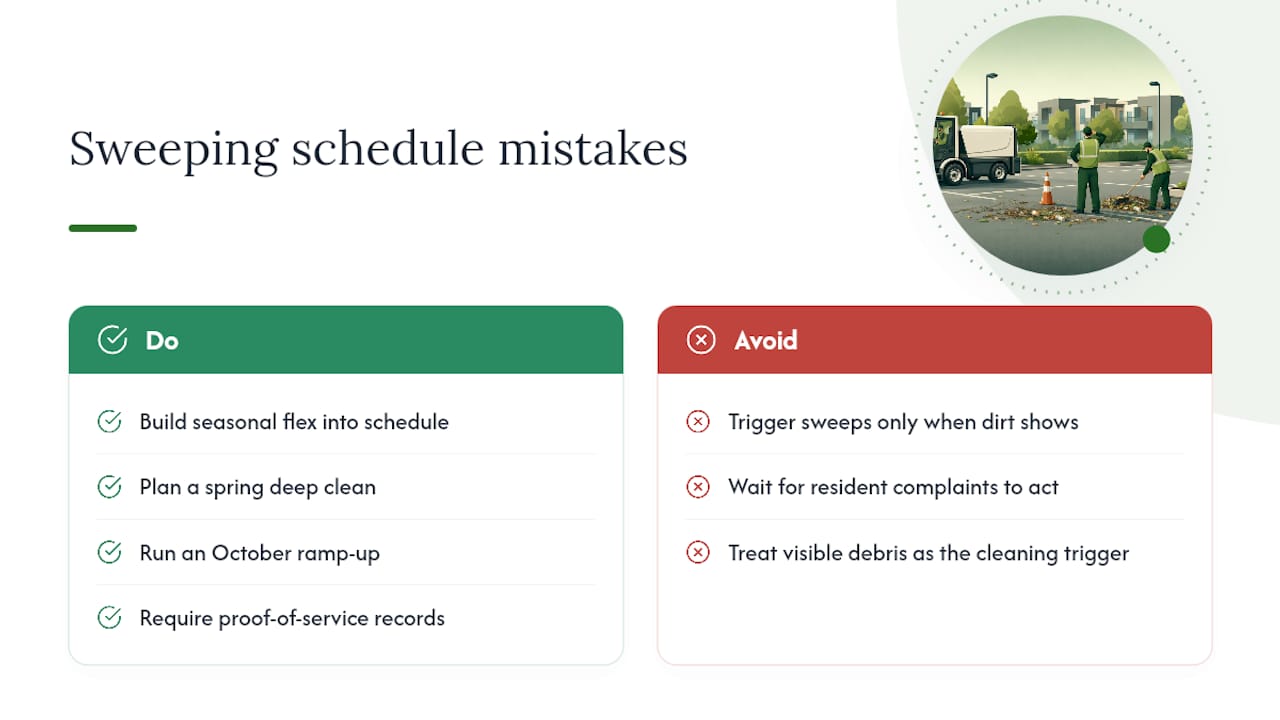
The most common mistake I see is reactive scheduling: someone notices visible dirt, calls a contractor, and treats that as the trigger for the next sweep. By the time debris is visible, sediment has usually already worked into cracks and catch basins, which costs more to remove than a preventative pass would have.
The properties that stay ahead of the problem build in seasonal flex from the start rather than negotiating it after a bad fall leaf season catches them off guard. A spring deep clean and an October ramp cost far less than an emergency call after residents start complaining. Proof-of-service requirements aren’t paperwork for its own sake either. They’re what lets a board or manager catch a slipping contractor before three months of missed visits pile up unnoticed.
— Lewie
Get your sweeping schedule set up without the guesswork
A reliable parking lot maintenance provider builds services around your property’s actual traffic and season, not a generic quarterly checklist. As a Calgary property maintenance provider handling everything from seasonal clean-ups to concrete cleaning, Some providers coordinate the bundling this guide recommends: pairing a spring deep clean or fall leaf ramp with the services your lot needs at the same time of year, instead of scheduling separate vendor visits.

A site assessment is the natural starting point. A property maintenance company can walk your property, recommend a baseline cadence based on tenant mix and traffic, and build the seasonal flex into a single annual plan rather than a patchwork of one-off calls. If your fall leaf season or spring thaw tends to catch your current schedule flat-footed, book a spring or fall clean-up alongside your sweeping plan and see how the two overlap. For properties also managing winter conditions, Yearlong’s snow removal service rounds out a genuinely year-round maintenance plan under one point of contact.
Sources
- How Often Should a Commercial Parking Lot Be Swept?
- Parking lot sweeping services: When and how often to sweep
- How often should pavements be swept? Key factors contractors and property owners must consider
- How often should parking lots be swept | Complete US guide
FAQ
How often should a parking lot be swept?
Most commercial lots need sweeping somewhere between weekly and monthly, with the exact frequency depending on property type: retail and grocery sites at the high end, office parks and low-use properties at the low end. Confirm your specific cadence with a 30-day curb-line check before locking in a contract.
How do I know if I’m sweeping too often or not enough?
Run two curb-line checks per week for 30 days and watch whether debris builds up before your next scheduled sweep. Visible accumulation means you need to increase frequency; a lot that still looks clean well past the sweep date means you can likely stretch the interval.
What proof-of-service should I require from a sweeping contractor?
Ask for GPS timestamps confirming the crew was on-site, dated before-and-after photos, and access to a client portal where you can review visit logs without calling anyone. These have become standard requirements rather than premium extras.
Does bundling sweeping with other services actually save money?
Yes, in most cases, because managing one vendor for sweeping, seasonal cleanups, and concrete cleaning cuts down on coordination and often reduces total cost compared to separate contracts. Yearlong bundles seasonal clean-up services with sweeping-adjacent maintenance for exactly this reason.
What does Yearlong charge for related seasonal services?
Spring and fall clean-ups through Yearlong start from $95 per visit, and lawn care plans range from $30 per week for weekly service to a $50 flat rate for a one-time visit. Pricing for bed maintenance and concrete cleaning is available on request through Yearlong’s site.