

TL;DR:
- Preventive maintenance involves scheduled, proactive property servicing to prevent failures and lower costs. It reduces emergency repair expenses by 3 to 5 times and enhances tenant satisfaction through faster issue resolution. Prioritizing critical assets and using data-driven, adaptive scheduling improves maintenance efficiency and protects property value long-term.
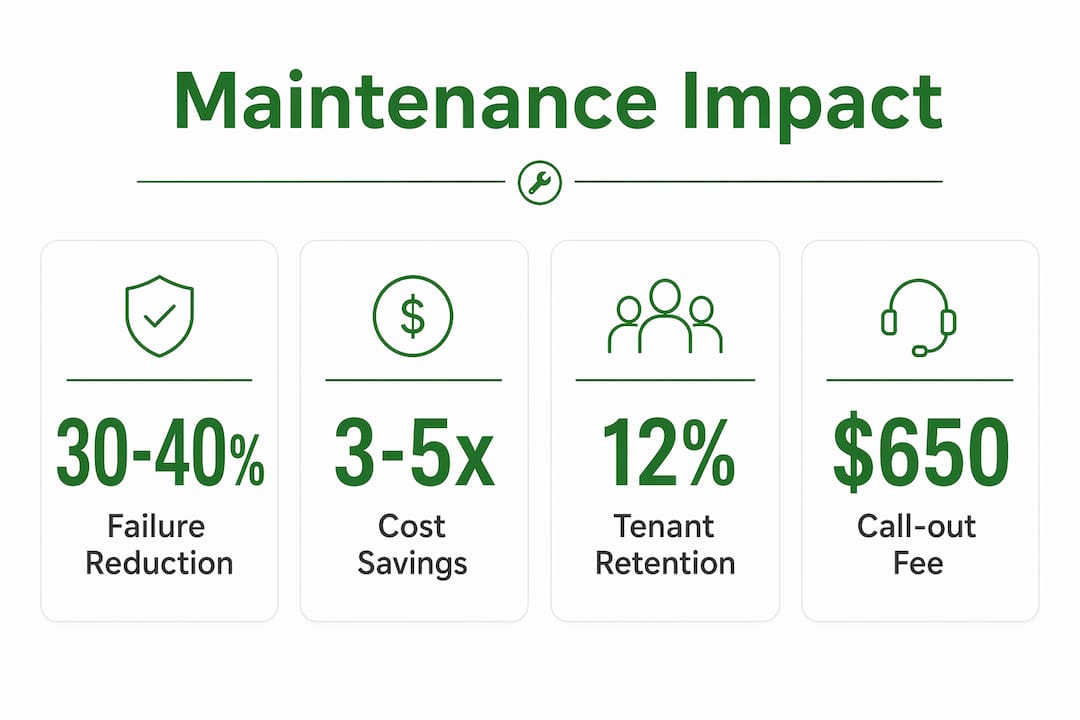
Preventive maintenance is defined as scheduled, proactive servicing of property assets to prevent failure before it occurs. The role of preventive maintenance for properties goes well beyond ticking compliance boxes. It protects asset longevity, stabilises operating budgets, and keeps tenants satisfied. Reactive repairs cost 3–5 times more than planned preventive services. That gap makes the case for structured maintenance programmes clearer than any other single metric. Property owners and managers who treat upkeep as an investment rather than an expense consistently outperform those who wait for things to break.
How does preventive maintenance reduce emergency repair costs?
Emergency repairs are the most expensive way to maintain a property. Properties without a formal preventive maintenance programme face emergency call-out fees averaging $650 per incident. Multiply that across a multi-unit building or a portfolio of properties, and the annual cost becomes significant.

A structured preventive programme replaces unplanned work with scheduled, budgeted maintenance. The financial benefit is direct. Planned tasks cost less because labour is booked in advance, parts are ordered at standard rates, and technicians are not rushed. Emergency work carries premium labour rates, expedited parts costs, and the hidden cost of tenant disruption.
| Maintenance type | Average cost driver | Relative cost |
|---|---|---|
| Planned preventive | Scheduled labour, standard parts | Baseline |
| Reactive repair | Emergency call-out, expedited parts | 3–5x higher |
| Emergency call-out fee | Per incident, unplanned | $650 average |
Implementing a data-driven preventive programme reduces unplanned equipment failures by 30–40%. That reduction directly stabilises monthly net operating income by removing the unpredictable spikes that reactive repairs create. The target ratio most property management professionals aim for is 70% preventive work orders to 30% reactive. Reaching that ratio takes time, but the financial payoff is measurable.
Pro Tip: Schedule HVAC filter replacements and exterior drainage checks before the season changes, not after the first complaint. Pre-seasonal scheduling costs a fraction of what mid-winter emergency HVAC calls do in Calgary.
What are the best practices for scheduling preventive maintenance tasks?
Calendar-only scheduling is the most common mistake in property maintenance planning. Replacing a filter every three months regardless of actual usage or environmental conditions wastes money on some assets and under-protects others. The most effective PM scheduling combines calendar, usage, and condition-based triggers to achieve compliance rates above 90% and reduce unplanned failures by 30–40%.
Asset criticality tiers
Not every asset deserves the same attention. Categorising assets by criticality is the foundation of any effective maintenance programme:
- A-Class assets are safety-critical or revenue-critical. Fire suppression systems, elevators, and main HVAC units fall here. These assets receive frequent, condition-monitored maintenance. They represent roughly 20% of a typical property’s asset inventory.
- B-Class assets are important but have workarounds if they fail. Water heaters and secondary HVAC units are common examples. These make up around 30% of assets.
- C-Class assets are low-impact. Light fixtures, interior doors, and minor appliances belong here. They represent roughly 50% of assets and need the least intensive scheduling.
Prioritising by criticality prevents two common failures: over-maintaining low-impact equipment and under-maintaining the assets that matter most. Both errors waste money, just in different directions.
Adaptive intervals over fixed calendars
OEM maintenance recommendations are a starting point, not a rule. Adjusting maintenance intervals based on local environmental factors and real failure data produces more efficient resource use than blindly following manufacturer schedules. A rooftop HVAC unit in Calgary faces different stress from chinook winds and freeze-thaw cycles than the same unit in a mild coastal climate. Your intervals should reflect that reality.
Hybrid programmes layer predictive maintenance tools such as sensors and thermal imaging on top of scheduled preventive tasks for A-Class assets. Integrating predictive maintenance with scheduled PM focuses intensive monitoring on the top 10–20% of critical assets while keeping costs manageable across the rest of the portfolio. A structured maintenance scheduling approach makes this layering practical for property managers without large in-house teams.
Pro Tip: Avoid “iatrogenic” over-maintenance. Servicing equipment too frequently introduces unnecessary wear from repeated disassembly and reassembly. More maintenance is not always better maintenance.
Does preventive maintenance improve tenant satisfaction and property value?
Tenant satisfaction and property value are directly connected to how quickly and reliably maintenance issues get resolved. Properties that resolve maintenance tickets within 24 hours achieve a 12% higher tenant renewal rate. Unresolved issues past 72 hours increase move-out intent by 18%. Those two numbers tell the whole story of why response speed matters.
Here is how regular upkeep drives tenant retention and asset value:
- Timely repairs build trust. Tenants who see maintenance handled quickly feel respected. That feeling translates directly into lease renewals.
- Documented inspections protect you legally. Audit-ready digital records of preventive maintenance activities lower insurance premiums and smooth the claims process when incidents do occur.
- Energy efficiency improves. Preventive maintenance reduces energy consumption by keeping HVAC systems, insulation, and building envelopes in good condition. Lower utility costs benefit both owners and tenants.
- Structural integrity is preserved. Regular inspections of roofing, foundations, and drainage systems catch deterioration early. Catching a small crack before it becomes a structural problem is the clearest example of how to reduce property deterioration.
- Curb appeal supports market value. Properties with consistent exterior upkeep, including lawn care, bed maintenance, and seasonal clean-up, command stronger market positions. Buyers and appraisers notice the difference between a maintained property and a neglected one.
The connection between maintenance and property value is well established. Properties with documented preventive maintenance histories sell faster and at stronger prices than comparable properties without records.
What mistakes do property managers make with preventive maintenance?
The most damaging mistake is treating preventive maintenance as a compliance programme rather than a reliability programme. Compliance thinking produces the minimum required work. Reliability thinking produces the work that actually prevents failure. Many managers fail by viewing PM as a burden rather than a system for protecting income.
Common pitfalls include:
- Relying on manual tracking. Spreadsheets and paper logs create execution gaps. Work orders get missed, intervals slip, and no one notices until something fails. Automated scheduling tools close that gap by generating recurring work orders without human intervention.
- Treating all assets equally. Applying the same maintenance frequency to a fire alarm panel and a storage room door wastes resources on the door and risks under-servicing the panel.
- Ignoring vendor communication. Property managers who do not brief contractors on asset history and criticality get generic service. Sharing your asset criticality tiers with vendors produces better-targeted work.
- Skipping resident communication. Tenants who receive advance notice of scheduled maintenance are far more cooperative than those surprised by a technician at the door. A simple message 48 hours ahead reduces complaints and no-access calls.
- Failing to review and adjust. A maintenance programme that never changes is not a programme. It is a fixed cost. Reviewing failure data quarterly and adjusting intervals based on what actually breaks keeps the programme efficient.
A property maintenance checklist gives property owners and managers a structured starting point for identifying which tasks to automate, which to schedule seasonally, and which to monitor by condition.
Key takeaways
Preventive maintenance is the most cost-effective way to protect property value, reduce emergency repair costs, and retain tenants over the long term.
| Point | Details |
|---|---|
| Emergency repairs cost far more | Reactive repairs run 3–5 times the cost of planned preventive work, with call-outs averaging $650 per incident. |
| Target a 70:30 PM-to-reactive ratio | Structured programmes reduce unplanned failures by 30–40% and stabilise monthly operating income. |
| Prioritise by asset criticality | Focus intensive maintenance on A-Class assets; avoid over-servicing low-impact C-Class equipment. |
| Fast resolution retains tenants | Resolving tickets within 24 hours raises renewal rates by 12%; delays past 72 hours raise move-out risk by 18%. |
| Digital records reduce insurance costs | Audit-ready maintenance documentation lowers premiums and supports smoother insurance claims. |
Why I think most property managers are still doing this backwards
After years of watching how properties are managed across Calgary and beyond, the pattern is consistent. Owners invest in renovations to attract tenants, then cut maintenance budgets to manage costs. The renovation gets the attention. The maintenance programme gets the spreadsheet.
The problem is that a renovated property with a weak maintenance programme depreciates faster than a modest property with a disciplined upkeep schedule. The asset you protect is worth more than the asset you improve once and neglect. That is not a philosophical point. It shows up in appraisals, insurance rates, and tenant turnover costs.
The shift that actually works is treating maintenance as a data problem. What failed last year? How often? Under what conditions? Those answers tell you where to spend your maintenance budget, not the OEM manual and not a fixed calendar. Managers who build feedback loops into their programmes consistently outperform those who set and forget their schedules.
Technology helps, but it is not the whole answer. I have seen properties with sophisticated maintenance software still running reactive programmes because no one changed the culture. The software is only as good as the commitment behind it. Building owner buy-in means showing the numbers: what reactive repairs cost last year versus what a structured programme would have cost. That conversation changes minds faster than any argument about best practices.
The future of property maintenance is hybrid. Scheduled preventive tasks for the majority of assets, layered with condition monitoring for the critical 10–20%. Calgary’s climate makes this especially relevant. Freeze-thaw cycles, heavy snowfall, and chinook winds stress building envelopes and outdoor assets in ways that fixed schedules cannot fully anticipate. Adaptive, data-informed maintenance is not a luxury for large portfolios. It is the practical standard for any property owner who wants to protect their investment.
— Lewie
Yearlong’s outdoor maintenance services for Calgary property owners
Calgary’s climate demands year-round attention to outdoor property assets. Freeze-thaw cycles damage concrete, heavy snowfall stresses drainage, and spring thaw leaves lawns and beds in rough condition without proper seasonal care.
Yearlong has served Calgary property owners and managers since 2017, providing lawn bed maintenance, lawn care, and seasonal clean-up services that keep outdoor assets in consistent condition across every season. Consistent outdoor upkeep protects curb appeal, supports property value, and removes the reactive scramble that comes from neglecting seasonal transitions. Yearlong’s flexible service packages are built for homeowners, property managers, and HOAs who want reliable, scheduled care without managing it themselves. Contact Yearlong to schedule a consultation or review available maintenance packages for your Calgary property.
FAQ
What is the role of preventive maintenance for properties?
Preventive maintenance is scheduled, proactive servicing designed to prevent asset failure before it occurs. Its role is to reduce emergency repair costs, extend asset life, and stabilise operating budgets.
How much do reactive repairs cost compared to preventive maintenance?
Reactive repairs cost 3–5 times more than planned preventive services. Emergency call-out fees average $650 per incident, not including parts and extended labour.
How does preventive maintenance affect tenant retention?
Properties resolving maintenance tickets within 24 hours achieve a 12% higher tenant renewal rate. Unresolved issues past 72 hours increase move-out intent by 18%.
What is the best way to prioritise preventive maintenance tasks?
Categorise assets into A-Class, B-Class, and C-Class by criticality. Focus the most frequent and condition-monitored maintenance on A-Class assets, which represent roughly 20% of a typical property’s inventory.
Does preventive maintenance lower insurance costs?
Insurers reward properties with comprehensive, audit-ready digital maintenance records. Documented preventive maintenance activities lead to lower premiums and smoother claims processes.