

Start your winter lawn prep in mid-to-late October, before frost sets in for good. That window is when you fit in the final mow, aeration and overseeding, and one last potassium-rich feed. Shut down your irrigation before the pipes freeze, then leave the lawn alone until spring: minimal foot traffic, and keep road salt away from the grass.
TL;DR:
- Applying slow-release, potassium-rich fertilizers in October strengthens roots and prevents soft new growth that could be damaged by early frosts.
- Core aeration should be completed before the final mow while the soil remains workable, especially on clay soils, to maximize lawn recovery.
- Snow cover protects dormant grass from extreme temperature swings, so avoiding snow removal and salt use near the lawn reduces winter damage risks.
- Fall cleanup of leaves, debris, and salt residues before snow accumulation minimizes snow mould development and pest infestation chances.
- Starting spring assessments two to three weeks after snow melts helps distinguish between dormant and dead grass, guiding necessary overseeding or repairs.
Table of Contents
- Winter lawn care Calgary homeowners need: the fall prep checklist
- Caring for a dormant lawn through a Calgary winter
- Winterising equipment and locking in spring bookings
- Assessing winter damage and getting your lawn moving again
- What Yearlong sees every fall that homeowners miss
- Which grass types actually hold up to a Calgary winter
- Winter pests and diseases that show up on Calgary lawns
- Guarding your lawn against Calgary’s extreme cold swings
- Stopping winter desiccation before it starts
- Why fall discipline beats winter panic
- Let Yearlong handle your fall-to-spring lawn transition
- Sources
Winter lawn care Calgary homeowners need: the fall prep checklist
Everything that matters for a healthy spring lawn gets decided in October, not April. Local guidance from the City of Calgary treats fall work like aeration and fertilization as the biggest single factor in how a lawn bounces back next season. Miss this window, and you’re not fixing it in January.
Watch the forecast, not the calendar. Calgary’s first hard frost usually lands somewhere in that mid-to-late October stretch, but a warm fall can push your deadline later and an early cold snap can close it sooner. The real signal is soil that’s still soft enough to aerate and grass that’s still actively growing. Once the ground stiffens up, you’ve missed your chance until spring.
Final mowing height matters more than people think. Drop your mower down gradually until you’re cutting at around 2 inches (5 cm) for the last pass of the season. Never take off more than a third of the blade length in one cut. Grass left too tall going into winter mats down under snow and invites snow mould; grass scalped too short loses the reserves it needs to survive the freeze.
Core aeration should happen before your final mow, while soil is workable. The City of Calgary recommends core aeration over spike aeration for local clay-heavy soils, since spiking just compacts the ground further. Leave the soil plugs on the lawn. They break down naturally and feed the turf as they go.
Thin or bare patches are worth overseeding right after aeration, using a cool-season mix suited to Alberta’s climate. Water lightly and consistently until the ground freezes, then stop. If you’re dealing with more than small patches, or you’re not confident on timing, professional aeration and overseeding is worth booking. Late DIY attempts often miss the growing window entirely, which wastes the seed and the effort.
Fertilize once, near the end of this window, with a slow-release, potassium-rich winteriser rather than anything heavy in nitrogen. Nitrogen-heavy fertilizer applied too late pushes soft new growth right before a freeze, which is exactly the growth that dies first. A proper fall fertilization program strengthens roots instead and sets up faster green-up in spring.
Clear fallen leaves before the first snowfall, or mulch them finely with a mower pass if the layer is thin. A thick, wet leaf mat trapped under snow all winter is one of the more common causes of snow mould homeowners discover in April.
Pro Tip: Do your final mow and your last watering in the same week, then let the irrigation system dry out before you shut it down. A soggy system going into a hard freeze is how homeowners end up replacing cracked backflow valves every spring.
Caring for a dormant lawn through a Calgary winter
Once the grass goes dormant, the best thing you can do is mostly leave it alone. Snow is doing useful work.
Snow acts as a natural insulating layer over dormant turf, and shovelling or blowing it off the lawn strips away that protection right when the grass needs it most. Resist the urge to clear snow from the yard the way you clear your driveway.
Calgary lawns typically stay under snow and fully dormant for four to five months, often with temperature swings between mild chinook days and stretches of extreme cold. That’s a long stretch where the crown of the plant, the part just above the soil where new growth originates, is vulnerable if it gets crushed or exposed.
A few habits protect that crown through the season:
- Keep foot traffic off frozen or snow-covered grass, especially during freeze-thaw cycles when the blades are brittle.
- If you must cross the lawn, use the same path every time rather than wandering, so damage stays contained to one narrow strip.
- Skip standard rock salt near lawn edges; use sand or calcium chloride-based products instead, since they’re gentler on soil and roots.
- Note where snow piles get dumped from shovelling or plowing, and where deep shade keeps snow around longest. Those spots are your first stops for a spring inspection.
If salt does land on the grass, whether from your own walkway or runoff from the street, don’t panic and don’t treat it in winter. Plan on a heavy flush with water once the ground thaws in spring to dilute the salt concentration in the soil before it does lasting damage.
Snow piled more than knee-high in one spot for months, particularly in a shaded northwest-facing corner, is where snow mould shows up most often. Making a mental note now, or literally taking a phone photo, saves guesswork later.
Winterising equipment and locking in spring bookings
Your yard isn’t the only thing that needs prep before the freeze sets in.
- Shut down irrigation properly. Stop regular watering once days shorten and nights cool, then drain hoses and store rain barrels before the first hard freeze cracks them. A full in-ground system blowout is worth hiring a professional for if you’ve never done one, since trapped water in the lines is what causes the expensive spring breaks.
- Service the mower before storage. Sharpen or replace the blade, change the oil, clean packed grass from the underdeck, and either stabilise the fuel or drain the tank dry. Pull the battery if it has one and store it somewhere it won’t freeze.
- Mark your lawn edges. Reflective stakes along driveway and walkway borders stop snow-clearing equipment from chewing up turf edges in the dark. It’s a five-minute job in October that prevents a repair job in April.
- Book spring aeration and overseeding now. Demand for these services spikes the moment the ground thaws, and suppliers recommend ordering seed and locking in service slots by January or February rather than waiting until the snow is gone.
Pro Tip: Write your mower’s fuel and battery status on a sticky note taped to the handle before you tuck it away. You will not remember in March whether you drained the tank.
Assessing winter damage and getting your lawn moving again
The single hardest part of spring lawn care is telling dormant grass from dead grass, and most homeowners get impatient too early.
Dormant grass is straw-coloured but firm, with some flexibility left in the blade. Winterkill, by contrast, tends to look mushy, pulls up easily by the roots, or stays matted flat even after a week of warm weather. Give the lawn two to three weeks of consistent warmth before drawing conclusions. Calgary green-up is uneven year to year, but most established lawns show real colour by late April to early May.
Once the snow is gone, walk the yard with your list from winter:
- Flush any salt-affected edges along driveways and sidewalks with water to push accumulated salt out of the root zone.
- Rake away matted leaves, twigs, and other debris trapped under the snowpack all winter.
- Check the shaded and pile-zone spots you flagged earlier for the pink or grey webbing that signals snow mould.
- Decide whether thin spots need a simple overseed or a full seasonal clean-up and recovery service.
If a section stays bare or mushy well past the point where the rest of the lawn has greened up, that’s your cue to call a professional rather than keep waiting.
What Yearlong sees every fall that homeowners miss
Yearlong has been maintaining Calgary properties since 2017, through every kind of fall this city throws at us, and the pattern repeats every year: the lawns that struggle in spring are almost always the ones where fall work happened too late or with the wrong products.
The most common mistake isn’t skipping fall care entirely. It’s applying a regular summer fertilizer in October instead of a potassium-rich winteriser, or aerating after the ground has already started to firm up. Both feel like reasonable choices in the moment. Neither one actually protects the lawn.
Yearlong builds fall packages around the timing this article describes, backed by a satisfaction guarantee, because getting the sequence right the first time is what saves homeowners a spring repair bill.
Which grass types actually hold up to a Calgary winter
Not every grass variety handles a Prairie winter the same way, and the seed you choose in fall determines a lot about how rough your spring looks.
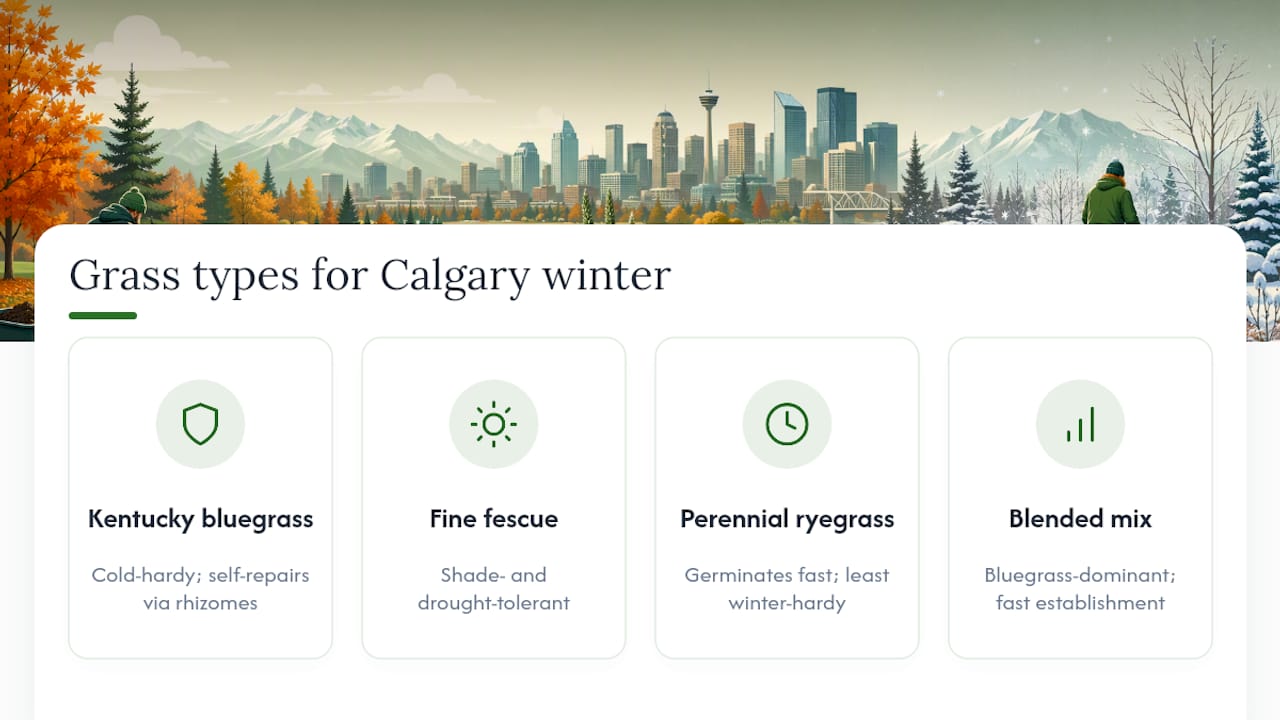
Kentucky bluegrass is the backbone of most established Calgary lawns, and for good reason: it’s cold-hardy, self-repairs through underground rhizomes, and tolerates the freeze-thaw cycles that break down weaker grasses. It’s slower to establish from seed, but it’s the most durable long-term choice for full sun areas.
Fine fescues, particularly creeping red fescue, handle shade and drought better than bluegrass and still tolerate Calgary’s cold reasonably well. They’re a strong pick for the shaded north side of a house where bluegrass tends to thin out.
Perennial ryegrass germinates fast and is often blended into seed mixes for quick cover, but it’s the least winter-hardy of the common options here. Used alone, it tends to struggle after a hard Calgary winter and needs more frequent overseeding to stay full.
A blended mix, typically dominated by Kentucky bluegrass with fescue and a smaller ryegrass component, gives you fast establishment plus long-term winter resilience. If you’re overseeding thin patches this fall, matching the new seed to what’s already established in that zone matters more than picking whatever bag is cheapest at the garden centre.
Winter pests and diseases that show up on Calgary lawns
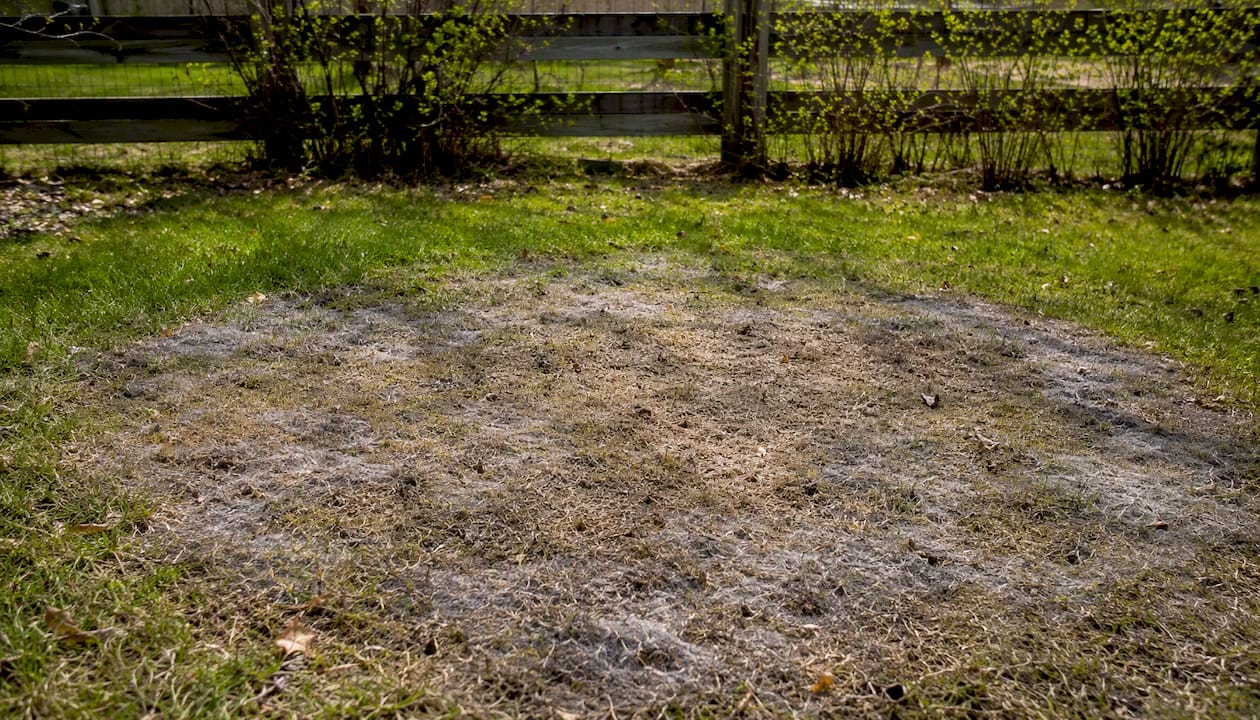
Snow mould is the disease you’ll hear about most, and it comes in two forms: grey and pink. Both appear as circular patches with a webby or discoloured coating right after snowmelt, usually in spots where snow sat deep and wet for months, like north-facing yards or piles left by snow clearing. Good fall mowing height and clearing leaves before snowfall are your best prevention, since matted, wet debris is exactly what the fungus needs to take hold.
Voles are the pest most Calgary homeowners don’t expect. These small rodents tunnel under snow cover and chew shallow trails through dormant grass and root systems, leaving winding dead paths visible once the snow melts. Tall grass and leaf litter left standing over winter give them cover, which is one more reason that final fall mow and cleanup matters.
Grubs, the larval stage of chafer beetles, are less of a winter-specific issue here than in milder climates, since Calgary’s deep frost typically keeps populations in check. Still, if you noticed adult beetle activity or thinning turf in late summer, a spring inspection is worth doing once the ground softens, before an infestation gets ahead of you.
Most of these issues trace back to the same root cause: something organic (leaves, tall grass, matted debris) sat wet under snow all winter. Fall cleanup is pest prevention as much as it is disease prevention.
Guarding your lawn against Calgary’s extreme cold swings
Calgary’s winter isn’t one long steady freeze. It’s a series of sharp swings, chinook winds pushing temperatures well above zero for a few days, then a hard drop back down, sometimes within the same week. That volatility is harder on grass than a consistent deep freeze would be.
Each thaw-refreeze cycle heaves the soil slightly, which can expose crowns and shallow roots that were otherwise insulated. This is part of why the snow layer itself matters so much: a consistent blanket of snow buffers those temperature swings far better than bare, exposed soil does.
Grass going into winter with strong root reserves, built through proper fall fertilization and aeration, handles these swings noticeably better than a lawn that was stressed or neglected in October. That’s the practical link between fall prep and cold tolerance: you’re not protecting the lawn from cold in December, you’re building its capacity to handle cold back in October.
Avoid piling extra snow onto already snow-covered turf if you can direct shovelling elsewhere, since overly compacted, deep piles trap moisture and slow the thaw well into spring, extending the window where roots sit in cold, saturated soil.
Stopping winter desiccation before it starts
Desiccation, essentially winter drought stress, happens when grass loses moisture through its blades faster than the frozen ground can replace it. Calgary’s dry winter air and frequent wind make this a real risk, particularly on exposed slopes, south-facing yards, and any lawn near a heat-reflecting wall or driveway.
The fix starts in fall, not winter. A lawn that goes into dormancy well-hydrated and with strong root depth from aeration has more moisture reserve to draw on during a dry stretch. That’s part of why watering consistently right up until shutdown time matters, rather than tapering off too early just because it’s getting cold.
Wind-exposed areas benefit from a thin, even leaf mulch layer left over the dormant lawn rather than bare soil, since it slows moisture loss without matting down heavily enough to invite mould. The balance is a light, broken-up layer, not a thick wet blanket.
If you notice consistently dry, brittle patches every single winter in the same spot, that’s usually a sign of an underlying drainage or exposure issue worth addressing permanently, whether that’s a windbreak planting or a change in slope grading, rather than something you can fix with fall watering alone.
Why fall discipline beats winter panic
Most winter lawn advice focuses on what to do once the snow is already down, and that’s backwards.
The conventional wisdom oversells winter intervention. There’s no product you can apply in January that fixes a lawn that went dormant with shallow roots and matted leaves. The lawns that green up fastest every April are the ones where someone did the boring work: mowed to the right height, aerated before the ground firmed up, fed with the right fertilizer, then genuinely left the grass alone for five months.
If you take one thing from this: prioritize the October window over everything else. Snow removal technique, salt choice, and foot traffic all matter, but they’re damage control. Fall prep is the actual lever. Homeowners who treat winter as a season to manage, rather than a deadline they missed, consistently end up doing more harm than good.
— Lewie
Let Yearlong handle your fall-to-spring lawn transition
Yearlong is the practical alternative to piecing together winter lawn care yourself between weekend commitments. We handle the fall cleanup, irrigation shutdown, and winter protection work on the exact timeline this article lays out, then follow through with spring aeration and overseeding once the ground thaws.

Our seasonal packages cover fall clean-up, irrigation winterisation, and snow management through the coldest months, so you’re not out marking edges with reflective stakes at 6 AM before work. Spring booking slots for aeration and overseeding fill up fast every year once the ground softens, so reserving your spot before April puts you ahead of the rush instead of scrambling into it.
If your lawn needs fall prep this season, start with a look at our lawn care services and get a plan in place before the frost does.
Sources
For timing, mowing height, and watering specifics year to year, the City of Calgary’s Yardsmart lawn care guide and its lawn watering guidance are the two most reliable references for local homeowners. The Project Landscape winter yard maintenance checklist is also worth a read for a second regional perspective on booking timelines.