

The biggest wins come from a handful of repeatable habits, not constant effort: mulch beds at 3 to 5 inches, water deeply so moisture reaches 6 to 8 inches, mow on schedule, and reassess the whole plan once a year.
Do these consistently and most outdoor problems (weeds, drainage headaches, dead patches) never get the chance to start.
- Walk the property every season and log what changed since last time.
- Keep mulch depth at 3 to 5 inches in planting beds.
- Water deeply and infrequently rather than daily and shallow.
- Mow on a fixed cadence tied to grass height, not the calendar.
- Check hoses, mowers, and irrigation heads before each season starts.
By the numbers: Beds need 3 to 5 inches of mulch to hold moisture and choke weeds, and irrigation should soak the soil until moisture reaches 6 to 8 inches deep, which pushes roots down instead of sideways.
Key Takeaways
Consistent, correctly timed seasonal actions, not extra effort, are what keep outdoor properties healthy and reduce long-term water, pest, and repair costs.
| Point | Details |
|---|---|
| Mulch depth matters | Keep beds at 3 to 5 inches of mulch to hold moisture and suppress weeds without smothering stems. |
| Water deep, not often | Irrigate until moisture reaches 6 to 8 inches so roots grow down and become more drought-tolerant. |
| Design cuts future work | Reducing unused lawn and grouping plants by water needs lowers irrigation, fertilizer, and mowing demands. |
| Review the plan yearly | Log seasonal observations and update the maintenance plan annually as the landscape matures. |
| Hire out when it adds up | Yearlong bundles lawn care, bed maintenance, and seasonal cleanups into one predictable Calgary-based plan. |
Table of Contents
- What’s on the outdoor property management checklist by season?
- How do you plan a property that needs less upkeep?
- What are the best planting, mulching, and watering practices?
- How do you cut lawn care time without hurting the grass?
- How do you keep hardscapes and equipment from breaking down?
- How do you build an adaptive annual maintenance plan?
- What are common outdoor problems and when should you call a pro?
- What does professional outdoor property maintenance include?
- Frequently asked questions
- Sources
What’s on the outdoor property management checklist by season?
A property that looks effortless in July usually got there because someone did the boring stuff in March. Seasonal timing matters as much as the task itself.
Spring (roughly weeks one through six after the last frost):
- Walk the whole property for winter damage: cracked pavement, snapped branches, heaved soil.
- Start up irrigation and check every zone for leaks or clogged heads.
- Prune winter damage and any deadwood before new growth hides it.
- Clear beds and lawns of leftover debris before it smothers new growth.
Summer (weekly to biweekly through the growing season):
- Water early morning or overnight to cut evaporation loss.
- Mow consistently and watch for early pest damage while it’s still cheap to fix.
- Deadhead spent blooms and pull weeds before they set seed.
Fall (six to eight weeks before first frost):
- Clean gutters and confirm drainage runs clear before heavy rain hits.
- Refresh mulch and plant perennials or woody shrubs while soil is still workable.
- Aerate compacted lawn areas and manage fallen leaves so they don’t smother turf.
Winter (once ground freezes):
- Winterize irrigation lines and drain hoses to prevent cracked pipes.
- Check walkway lighting and clear paths before ice becomes a liability.
- Store equipment properly rather than leaving it exposed to freeze-thaw cycles.
A season-by-season rhythm like this one, laid out in more detail in this seasonal task guide, removes the guesswork about when to act.
How do you plan a property that needs less upkeep?
Every hour you spend maintaining a yard traces back to a decision made before anything was planted. Start with a site assessment: sketch your property (even roughly, on paper) and mark high-use zones like patios and play areas separately from low-traffic corners that don’t need the same attention.
Unused lawn is the biggest hidden maintenance cost most homeowners carry. Turf you never walk on still needs mowing, watering, and fertilizing every year. Swapping marginal lawn sections for groundcovers, shrub beds, or mulched borders cuts that recurring work, a shift Mississippi State Extension lists among its top recommendations for an easier-care yard.
Material choices carry the same logic. Concrete or stone edging and recycled plastic lumber cost more upfront but outlast wood borders and mulch retainers that need replacing every few years.
Plant selection follows one rule: right plant, right place. Group plants with similar water needs together (a practice called hydrozoning) and lean on perennials and climate-adapted species over annuals that need replanting yearly, per UF/IFAS guidance.
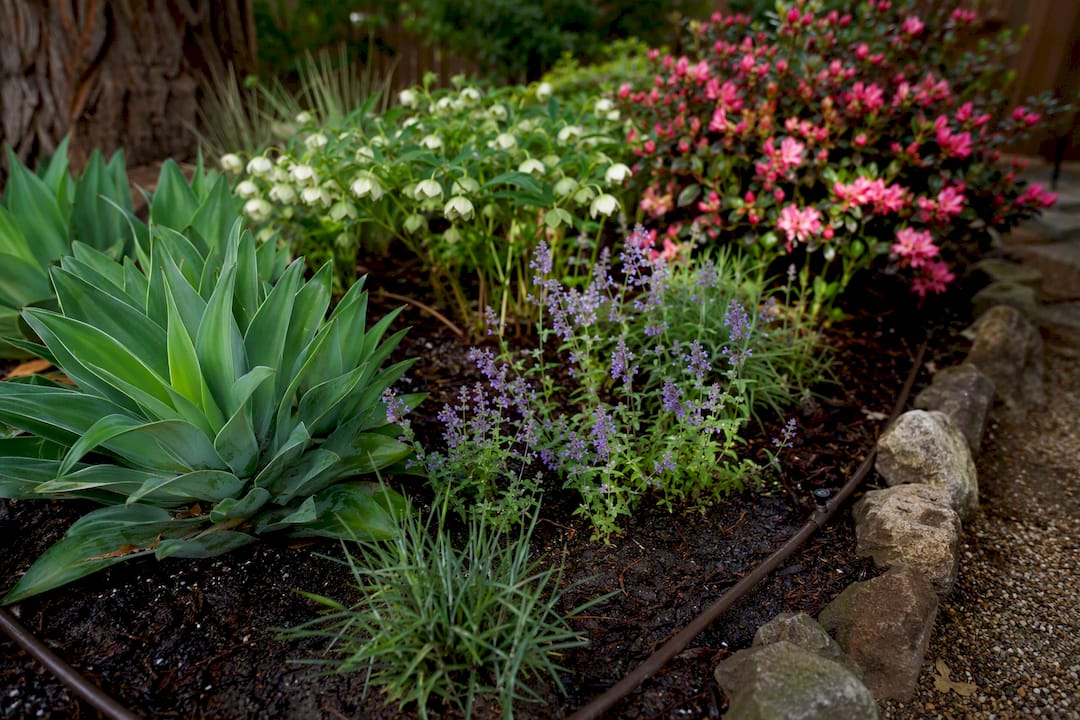
Pro Tip: Check a plant’s mature size before you plant it, not after. A shrub that looks small in a nursery pot can block a window or sightline within three years, forcing heavy pruning you could have avoided entirely.
What are the best planting, mulching, and watering practices?
Plants that go into the ground correctly need far less attention for the rest of their lives. The steps are simple but the order matters.
- Time planting for fall or early winter for most ornamentals, when cooler air and warm soil favour root growth over top growth.
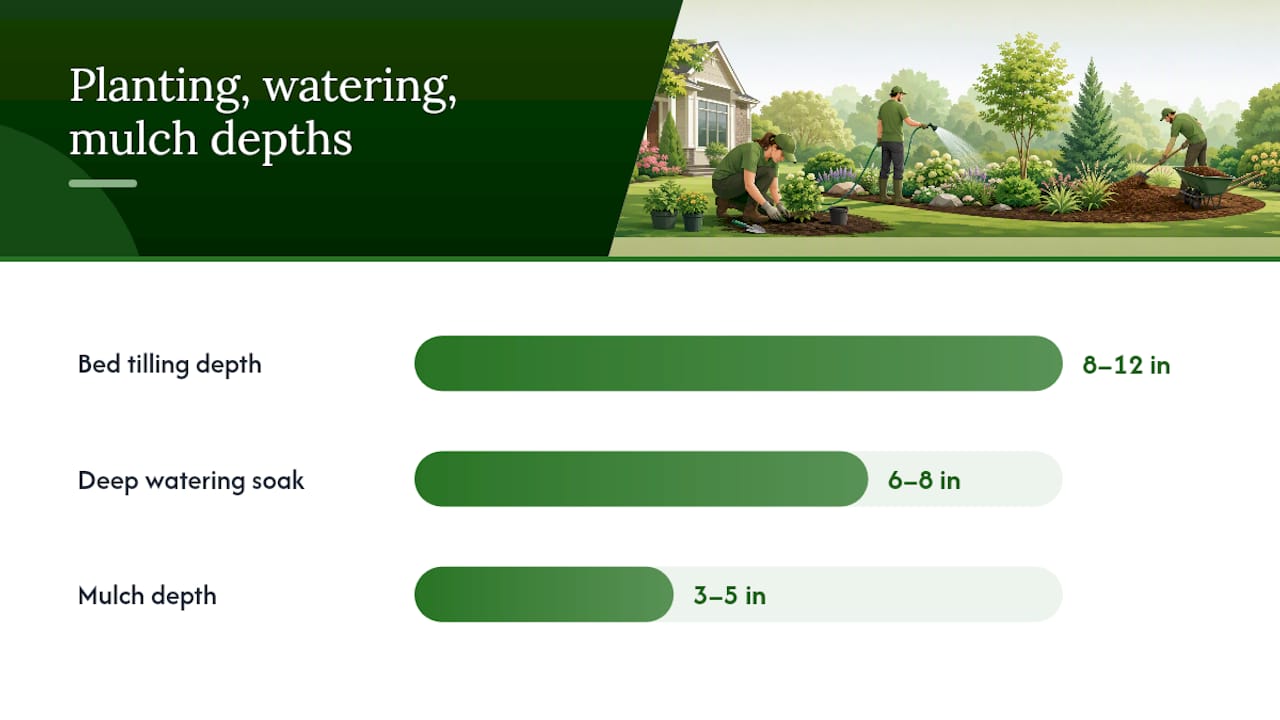
- Dig and till the bed 8 to 12 inches deep so roots aren’t fighting compacted soil.
- Amend soil only when a test shows a real deficiency, not by habit.
- Set the plant at the same depth it grew in the container or nursery row.
- Apply fertilizer at planting sparingly and placed near the root zone, not scattered on top.
- Spread mulch 3 to 5 inches deep out to the plant’s drip line, but keep it clear of trunks and stems to avoid rot.
Mulch texture matters more than most homeowners realize. Fine-textured mulch (shredded bark, compost) breaks down faster and feeds soil sooner; coarse mulch (wood chips, bark nuggets) lasts longer and suits low-traffic beds where you don’t want to reapply every year.
Watering is where most yards go wrong, usually toward too much rather than too little. UGA’s landscape best management practices call for deep, infrequent watering that soaks the soil to 6 to 8 inches, encouraging roots to grow down instead of staying shallow and drought-prone. Run irrigation overnight or early morning, roughly between 9 p.m. and 9 a.m., so water soaks in rather than evaporating in midday heat.
A basic soil test, available through most local extension offices, tells you whether you actually need the fertilizer you’re about to apply. Plants sited correctly and watered deeply need less of everything: less water, fewer pest treatments, less replacement.
How do you cut lawn care time without hurting the grass?
Turf is forgiving if you get three habits right and stop overthinking the rest.
- Never cut more than one-third of the blade length in a single mow; scalping stresses roots and invites weeds.
- Match mowing height to your grass species: cool-season lawns generally want taller cuts than warm-season varieties.
- Keep mower blades sharp; dull blades tear grass and leave it vulnerable to disease.
- Water lawns to deliver about a half-inch to three-quarters of an inch per session, and calibrate your sprinkler with a simple catch-can test rather than guessing.
- Aerate and dethatch once compaction or thatch buildup becomes visible, typically once a year for high-traffic lawns.
- Where a section of turf struggles anyway, consider swapping it for groundcover or a mulched bed rather than fighting it season after season.
How do you keep hardscapes and equipment from breaking down?
Concrete, patios, and tools all fail the same way: slowly, then all at once, if nobody’s checking on them.
- Clean concrete and pavers on a regular schedule and reseal once water stops beading on the surface, a sign the sealer has worn through.
- Walk hardscapes for cracks, heaving, or loose pavers before they become tripping hazards.
- Check edges and drainage channels for soil washing away; a small erosion channel is cheap to fix and expensive to ignore.
- Sharpen blades, change oil, and store batteries properly before equipment sits idle for a season.
- Winterize irrigation lines fully; a cracked pipe from one hard freeze can cost more than years of routine care.
Pro Tip: Keep a small stock of high-use spare parts, sprinkler heads, common hardware, mower blades, on hand. A five-minute swap beats a week waiting on a part while your lawn goes unwatered.
How do you build an adaptive annual maintenance plan?
Landscapes aren’t static, so a maintenance plan written once and never revisited eventually stops fitting the property it describes. Parks Canada’s adaptive management approach treats this as standard practice: evaluate what worked, then update the plan annually rather than assuming last year’s version still applies.
- Build a one-page checklist of monthly and seasonal tasks, with a name attached to each: owner, tenant, or contractor.
- Log observations through the season, water stress, pest sightings, drainage trouble, so you’re working from notes instead of memory come review time.
- Set aside a small contingency budget beyond routine costs for the one thing that always breaks unexpectedly.
- Once a year, sit down with the log and adjust plant choices, irrigation settings, or task frequency based on what actually happened.
A printable checklist makes this easier to keep consistent year over year instead of reinventing it every January.
What are common outdoor problems and when should you call a pro?
Most issues show themselves early if you’re looking. Wilting despite regular watering, sudden discolouration, unusual insect activity, or standing water that doesn’t drain within a day are your first warning signs.
Some fixes are safe to try yourself: adjust an irrigation zone that’s clearly overwatering, prune obviously damaged limbs, pull invasive weeds before they spread, or regrade a small low spot that’s pooling water. These common maintenance errors cover the mistakes that turn small fixes into bigger ones.
Call a professional when you see structural hardscape failure, significant tree damage near structures, drainage that’s undermining a foundation, or pest outbreaks that keep returning. For rental properties, document conditions with photos at move-in and through the season. Clear lease responsibilities and a seasonal exterior framework limit disputes and liability considerably.
A local provider’s take on seasonal discipline
The pattern that separates low-maintenance yards from constant problem yards is almost always the same: someone paid attention to timing, not effort. A mulch refresh in the wrong season doesn’t hold moisture the way one done at the right depth and time does. An irrigation schedule left unchanged from July into September usually oversaturates cooling soil and invites root rot. Small, timely adjustments (not more work overall) fix most of what homeowners assume needs a bigger intervention. YearLong Property Maintenance has seen this play out across hundreds of Calgary properties, and readers looking for local, hands-on care tend to get the most value once the seasonal basics are already in place.
What does professional outdoor property maintenance include?
Not every homeowner wants to track mulch depth and mowing height themselves, and that’s a reasonable call given how much a season adds up. Professional packages typically bundle seasonal cleanups, recurring lawn care, bed maintenance and mulching, irrigation start up and shutdown, concrete cleaning and sealing, and snow removal into one plan.
The advantage of a bundled or recurring plan is predictability: one contact, one schedule, and a property that looks consistent without you chasing five different tasks across five different weekends. Yearlong builds these plans around Calgary’s specific freeze-thaw cycles and growing season rather than a generic template, which matters when a missed mulch window or a late irrigation shutdown costs more than the maintenance would have. If your beds need a refresh or your lawn care has fallen behind schedule, Yearlong’s bed maintenance and lawn care services cover exactly the mulching and watering practices outlined above, professionally timed and applied. Request a quote and see what a recurring plan would look like for your property this season.
Frequently asked questions
How often should I check my property for maintenance issues?
Walk the whole property at the start of each season at minimum, with quicker weekly checks during peak summer growth for pests and irrigation problems.
What’s the ideal mulch depth for garden beds?
Apply 3 to 5 inches, kept clear of trunks and stems, and extended out to a plant’s drip line.
How deep should I water my lawn and garden beds?
Water deeply enough that moisture reaches 6 to 8 inches into the soil, then let it dry out before watering again.
Is reducing lawn area actually worth the upfront cost?
Usually yes over a few years, since less turf means less mowing, watering, and fertilizing every single season going forward.
When should I call a professional instead of handling it myself?
Bring in a professional for structural hardscape failure, major tree damage, drainage undermining a foundation, or pest problems that keep recurring despite treatment.
Sources
- Best management practices in the landscape (UGA CAES)
- Handbook for Home Landscapes (UF/IFAS)
- Landscape management (Mississippi State Extension)
- Parks Canada: adaptive management (Conservation 2023)
One Response