

TL;DR:
- Outdoor property care involves regular landscaping activities to keep your yard healthy and attractive throughout the year. Starting early in spring with debris removal, pruning, soil improvement, and mulching reduces long-term maintenance and plant disease risks. Consistent seasonal upkeep, including summer irrigation and fall winterization, prevents costly repairs and promotes landscape resilience.
Outdoor property care is defined as the planned, recurring set of maintenance and improvement activities that keep your landscape healthy, functional, and attractive across every season. The essential landscaping tasks 2026 demands go well beyond mowing and watering. They include soil management, structural pruning, drainage control, and seasonal scheduling built around your local climate. For Calgary homeowners and property managers, getting this right means fewer costly repairs, stronger plant health, and a yard that holds its value year after year. Yearlong has worked across the city since 2017, and the patterns are clear: the properties that look best in summer are the ones that started their spring prep early.
1. What are the top essential landscaping tasks for spring?
The spring landscaping sequence starts 4–6 weeks before the last frost. That timing window covers debris removal, structural pruning, soil improvement, fertilizing, and mulching. Starting early gives plants time to respond before the growing season accelerates.
Debris removal is the first job. Rake out dead leaves, broken branches, and matted grass from beds and lawn edges. Leaving debris in place traps moisture and creates ideal conditions for fungal disease.
Structural pruning comes next. Early pruning of shrubs and perennials prevents fungal spread, improves air circulation, and sets plants up for healthy growth. Roses and hydrangeas respond especially well to pruning before new growth pushes out. Cut to just above a healthy outward-facing bud.
Soil improvement and fertilizing follow pruning. Work compost into the top few centimetres of bed soil. Apply a slow-release fertiliser once soil temperatures reach a consistent level that supports root uptake, typically above 10°C in Calgary.
Mulch application closes out the spring sequence. Apply organic mulch at 2–3 inches deep to retain moisture and suppress weeds. Keep mulch pulled back from plant stems and trunk bases to avoid rot.
Weed control timing matters more than most homeowners realise. Tackling young weeds early can reduce bed maintenance labour by up to 50% for the rest of the growing season. If you plan to overseed your lawn, skip pre-emergent herbicides in spring. Pre-emergent herbicides block germination broadly, which means your grass seed will not take either.
Pro Tip: Prioritise pruning over fertilising if you only have time for one task in early spring. Removing dead and diseased wood first protects the plant. Fertiliser applied to a plant with poor air circulation just feeds the problem.
2. Which summer tasks keep your landscape healthy and resilient?
Summer maintenance is about protecting what spring built. Heat, drought, and pest pressure all peak between june and august in Calgary, and the right habits prevent most of the damage.
Mowing height is the most underused summer tool. Keeping grass slightly taller during hot weather above 25°C reduces heat stress and improves moisture retention. Taller blades shade the soil, slow evaporation, and keep roots cooler. Never cut more than one-third of the blade length in a single mow.
Irrigation management is the second priority. Key practices include:
- Water deeply and infrequently rather than lightly every day. Deep watering encourages roots to grow downward.
- Run drip irrigation or soaker hoses in the early morning to reduce evaporation.
- Check sprinkler heads monthly for clogs, misalignment, or broken nozzles.
- Use a timer or smart controller to automate watering schedules and avoid overwatering during cooler spells.
Pest and disease inspection should happen every two weeks. Walk the beds and lawn edges looking for chewed leaves, discolouration, or unusual wilting. Catching an infestation early costs far less than treating an established one.
Mulch refreshment in mid-summer extends the benefits of your spring application. Top up any areas where mulch has thinned below 2 inches. This is also a good time to check that mulch has not migrated against plant stems.
Pro Tip: Look at the underside of leaves during your pest inspection. Spider mites, aphids, and scale insects all hide there first. Catching them on the underside before they spread to the whole plant cuts corrective work dramatically.
3. What are the critical fall and winter prep tasks?
Fall is the most productive season for long-term landscape health. The work you do between september and november determines how well your plants and soil survive the Calgary winter.
- Final pruning and deadheading. Cut back spent perennials and deadhead any remaining flowers. Leave ornamental grasses and seed heads that provide winter interest and wildlife habitat.
- Leaf and debris cleanup. Clear fallen leaves from lawn areas before they mat down. Matted leaves block light and airflow, creating conditions for snow mould and fungal disease under winter snow.
- Compost and soil amendments. Apply a layer of compost to beds in late fall. Soil organisms continue working at low temperatures, and the compost breaks down over winter to feed roots in spring.
- Winterising irrigation systems. Blow out or drain all irrigation lines before the first hard frost. Water left in lines freezes, expands, and cracks fittings. This is one of the most expensive reactive repairs Calgary homeowners face.
- Protecting vulnerable plants. Wrap tender shrubs in burlap, not plastic. Plastic traps moisture and creates freeze-thaw damage. Burlap allows airflow while blocking desiccating winter winds.
- Edging and drainage improvements. Install or redefine bed edging before the ground freezes. Check that grading around your home still directs water away from the foundation. Proper drainage through grading and edging prevents foundation damage and landscape flooding.
Key tools to have ready for fall work include:
- Sharp bypass pruners and loppers
- Leaf blower or rake
- Compost spreader or garden fork
- Irrigation blowout compressor or a service booking with a local provider
- Burlap and garden staples for plant wrapping
4. How mulch, soil management, and drainage shape your results
Soil health is the foundation every other landscaping task builds on. Without it, even well-timed pruning and irrigation produce weak results.
Mulch application follows two non-negotiable rules. First, maintain a consistent depth of 2–3 inches across all beds. Second, never pile mulch against plant stems. A gap of 2–3 inches around trunk bases prevents moisture traps that cause rot and attract pests. This mistake, sometimes called “volcano mulching,” is one of the most common and damaging errors in residential landscaping.
Soil testing tells you what your plants actually need rather than what you assume they need. A basic pH and nutrient test from a garden centre costs very little and prevents wasted fertiliser applications. Most Calgary soils are alkaline, which affects iron and manganese availability for plants.
Drainage management protects both your plants and your home. Managing drainage with proper grading and edging protects home foundations and prevents soil erosion and pooling in landscape beds. Splash blocks under downspouts, swales in low areas, and raised bed edging all direct water away from structures.
Homeowners who design around long-lived backbone plants reduce replacement costs and benefit from staged planting. Choosing plants suited to Calgary’s climate and soil reduces the need for soil amendments over time.
Pro Tip: If you notice yellowing between leaf veins on otherwise healthy plants, suspect iron chlorosis before adding general fertiliser. In alkaline Calgary soils, iron is often present but unavailable to roots. A soil acidifier or chelated iron product addresses the actual problem.
5. How to organise your annual landscaping tasks and avoid costly repairs
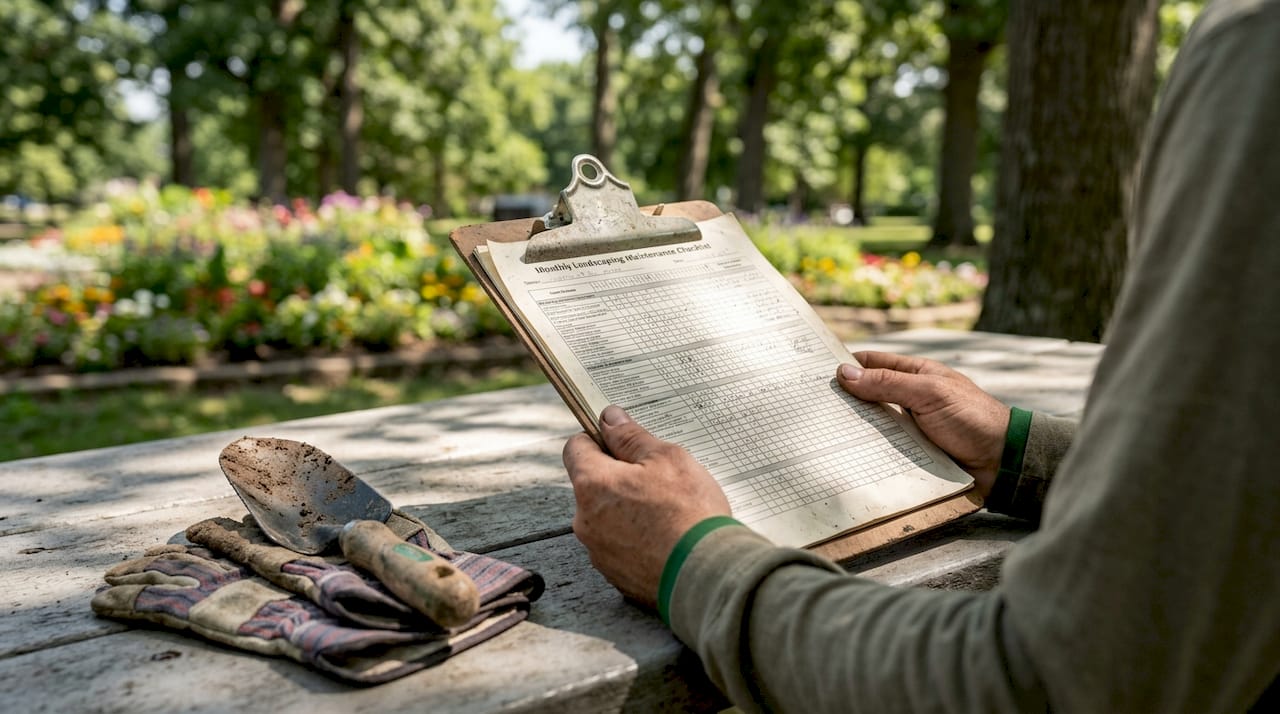
A recurring monthly maintenance checklist prevents minor issues from escalating into costly repairs and supports landscape health year-round. This is the single most effective habit for busy homeowners and property managers.
The most effective approach for property managers is a recurring monthly checklist that catches system failures before they become expensive. A broken sprinkler head found in may costs almost nothing to fix. The same head left running all summer wastes water and drowns a bed.
Practical habits that make the system work:
- Keep a garden journal or digital note with dates for each task completed. This makes it easy to spot gaps and plan ahead.
- Schedule irrigation checks at the start and end of the irrigation season, not just when something breaks.
- Book seasonal cleanup services in advance. Calgary providers fill up quickly in spring and fall.
- Budget for one or two unexpected repairs per season. Early detection through regular walkthroughs keeps these costs small.
- Use the Calgary homeowner maintenance checklist as a starting framework and adapt it to your specific property.
Timing is the most misunderstood aspect of weed control. Early-season intervention reduces labour and keeps beds manageable for the rest of the year. The same principle applies to pruning, irrigation checks, and soil amendments. Doing the right task at the right time costs far less than correcting a problem that was allowed to grow.
A simple seasonal budget split works well for most properties: allocate the largest share of your annual landscaping budget to spring setup, a moderate share to summer maintenance, and a smaller share to fall prep. Winter costs are mostly reactive unless you have snow removal on contract.
Key takeaways
Consistent, well-timed outdoor maintenance is the most cost-effective way to protect your property’s landscape and avoid expensive reactive repairs across all four seasons.
| Point | Details |
|---|---|
| Start spring tasks early | Begin debris removal, pruning, and soil prep 4–6 weeks before the last frost. |
| Adjust mowing height in summer | Keep grass taller above 25°C to reduce heat stress and retain soil moisture. |
| Winterise irrigation before frost | Drain or blow out all lines in fall to prevent costly freeze damage. |
| Never volcano mulch | Keep mulch 2–3 inches from plant stems to prevent rot and pest issues. |
| Use a monthly checklist | A recurring task schedule catches small problems before they become expensive repairs. |
What I’ve learned after years of watching Calgary yards
The biggest mistake I see homeowners make is treating landscaping as a reactive activity. Something looks bad, so they fix it. That approach costs more and delivers worse results than a simple planned schedule.
The tasks that make the biggest difference are rarely the dramatic ones. It is not the new patio or the redesigned bed layout. It is the irrigation check in may that catches a broken head before it floods a bed all summer. It is the fall compost application that makes spring growth noticeably stronger. It is pulling weeds when they are seedlings instead of waiting until they have set roots and spread.
Pruning timing is the area where I see the most confusion. Homeowners either prune too late in fall, which stimulates new growth that gets killed by frost, or too early in spring before they can see which wood is truly dead. The sweet spot is late winter to very early spring, before bud break but after the worst cold has passed. For Calgary, that usually means late march to early april depending on the year.
The other thing I would push back on is the idea that a beautiful yard requires a lot of time. A well-organised property with the right plants in the right places, maintained on a consistent schedule, takes far less time than a neglected one that needs rescuing every season. Build the system once. Then maintain it.
— Lewie
Yearlong’s services for your outdoor property care
Calgary’s short growing season makes timing everything. Yearlong has been helping homeowners and property managers stay ahead of their seasonal yard care since 2017, with services built around the tasks that matter most at each point in the year.

From lawn bed maintenance and lawn mowing to full-season lawn care packages, Yearlong handles the recurring work that keeps your outdoor space healthy without adding to your schedule. The team knows Calgary’s climate, soil conditions, and the specific challenges that come with each season here. Whether you need a one-time spring cleanup or year-round property maintenance, Yearlong offers flexible packages with a satisfaction guarantee. Get in touch to find out which service fits your property.
FAQ
What are the most important spring landscaping jobs?
The most important spring jobs are debris removal, structural pruning, soil amendment, and mulch application, all started 4–6 weeks before the last frost. Tackling weeds early in this window can reduce bed maintenance labour by up to 50% for the rest of the growing season.
How tall should I keep my grass in summer?
Keep grass slightly taller than usual during hot weather above 25°C. Taller blades shade the soil, reduce evaporation, and lower heat stress on the turf.
When should I winterise my irrigation system in Calgary?
Winterise your irrigation system before the first hard frost, typically in late september or early october in Calgary. Water left in lines freezes and cracks fittings, which is one of the most expensive reactive repairs homeowners face.
How deep should mulch be in garden beds?
Apply organic mulch at a consistent depth of 2–3 inches. Keep mulch pulled back 2–3 inches from plant stems and trunk bases to prevent moisture traps that cause rot and attract pests.
How do I stay on top of landscaping tasks without falling behind?
Use a recurring monthly maintenance checklist and keep a simple record of tasks completed. A property maintenance checklist tailored to Calgary’s seasons gives you a reliable starting framework to adapt for your specific property.
One Response