

TL;DR:
- Professional bed maintenance in Calgary involves regular expert care to enhance plant health and property value. It offers benefits such as improved curb appeal, weed suppression, pest control, and long-term savings. Scheduled professional care provides consistent results that household efforts and equipment cannot match.
Professional bed maintenance is defined as the regular, expert care of garden beds and outdoor planting areas to preserve plant health, control weeds, and protect the long-term value of your property. For homeowners and property managers in Calgary, this is not a luxury. It is a practical investment that pays back through healthier plants, stronger curb appeal, and measurable savings on replacements and repairs. Yearlong has delivered this kind of consistent, expert outdoor care across Calgary since 2017, and the difference between a professionally maintained bed and a neglected one is visible within a single growing season.
What are the key benefits of professional bed maintenance?
Professional bed maintenance delivers results that go well beyond a tidy appearance. Well-maintained garden beds directly support plant health, reduce pest pressure, and protect the financial value of your outdoor investment.
The core benefits include:
- Extended plant life. Proper soil conditioning, mulching, and pruning keep plants vigorous and reduce the need for costly replacements.
- Weed suppression. Regular edging and mulch application block weed growth before it takes hold, reducing the labour required to manage beds over time.
- Improved curb appeal. Clean, defined bed edges and healthy plants signal a well-cared-for property to neighbours, visitors, and potential buyers.
- Pest and disease control. Early identification of pest activity or plant disease prevents small problems from spreading across an entire bed.
- Financial savings. Preventative care costs far less than replacing damaged plants or rebuilding neglected beds from scratch.
The importance of mattress care applies equally to outdoor beds: consistent upkeep preserves the asset rather than reacting to damage after it occurs. Property managers who schedule regular bed maintenance avoid the expensive cycle of neglect and emergency repair.
Pro Tip: Schedule a bed inspection every spring and autumn in Calgary. The freeze-thaw cycle is hard on soil structure and root systems, so catching damage early saves significant cost.

How does professional bed maintenance compare with DIY care?
Most homeowners underestimate the gap between what they can achieve with basic tools and what a professional delivers. The difference is not just effort. It is expertise, equipment, and consistency.
| Factor | DIY care | Professional care |
|---|---|---|
| Tools available | Standard garden tools | Specialised edging, aeration, and soil testing equipment |
| Soil knowledge | General | Site-specific assessment and conditioning |
| Weed control | Reactive, as noticed | Scheduled and preventative |
| Pest identification | Limited | Trained eye for early-stage issues |
| Consistency | Dependent on homeowner schedule | Guaranteed on a set programme |
| Time required | 2–4 hours per visit | Handled entirely by the service provider |
The time factor alone is significant. Property managers overseeing multiple units simply cannot maintain bed quality across every property without professional support. DIY care also carries real risk. Improper pruning, over-fertilising, or incorrect mulch depth can damage root systems and accelerate plant decline rather than prevent it.
Professional maintenance services also bring consistency that DIY efforts rarely match. A homeowner might weed a bed thoroughly in may, then skip june and july due to other commitments. That gap allows weeds to establish and compete with ornamental plants for water and nutrients. Professionals follow a fixed schedule regardless of how busy your summer gets.
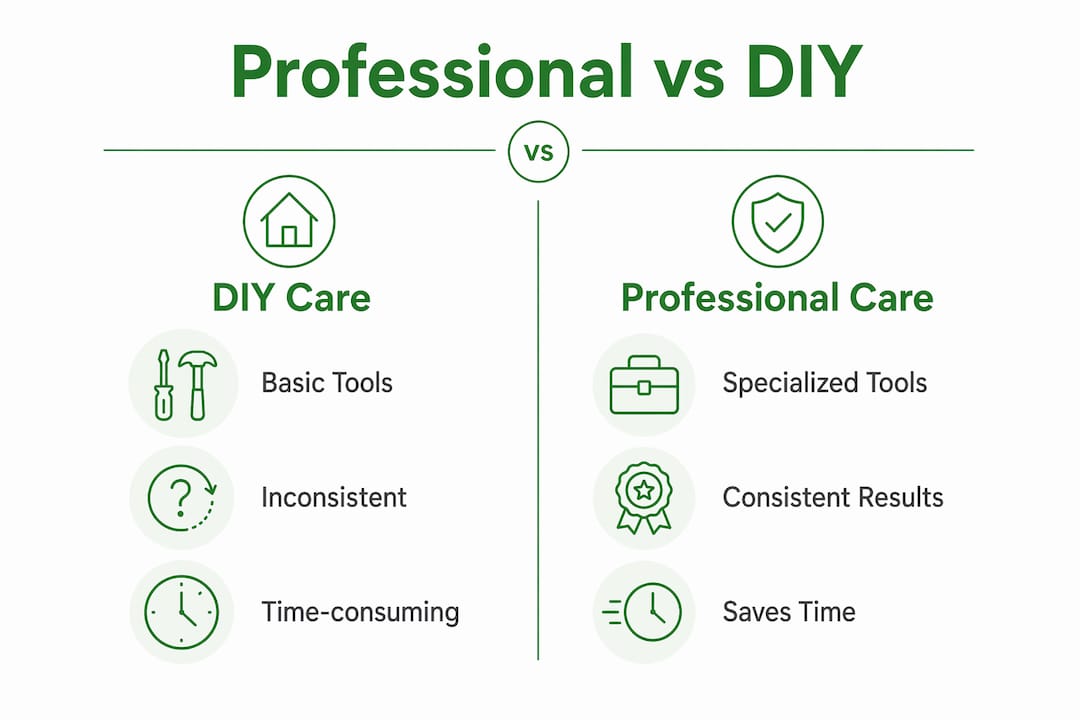
The equipment gap is equally important. Professionals use tools that reach deeper into soil profiles, test pH and nutrient levels accurately, and apply treatments at the correct rate. A homeowner with a hand trowel and a bag of general fertiliser is working with a fraction of the capability that a trained crew brings to the same bed.
Which elements are included in professional bed maintenance services?
A professional bed maintenance programme covers far more than weeding and watering. Homeowners are often surprised by the depth of care included in a well-structured service.
- Soil testing and conditioning. Professionals assess pH, drainage, and nutrient levels before applying any amendments. This prevents the common mistake of adding fertiliser to soil that already has excess nitrogen.
- Weed control and edging. Beds are edged to create clean lines, and weeds are removed at the root rather than cut at the surface. Surface cutting leaves root systems intact and weeds return within weeks.
- Mulching. A proper mulch layer of the correct depth retains soil moisture, moderates temperature, and suppresses weed germination. Depth matters. Too thin and it fails to suppress weeds. Too thick and it can suffocate plant roots.
- Fertilisation. Slow-release fertilisers are applied at rates matched to the specific plants in each bed, not a blanket treatment across the entire yard.
- Plant health monitoring and pruning. Dead or diseased growth is removed on a schedule, which redirects energy to healthy stems and encourages stronger flowering and foliage.
- Pest and disease management. Trained technicians spot early signs of aphid colonies, fungal infection, or root rot that most homeowners miss until the damage is severe.
Moisture management and airflow are often overlooked but critical factors in preserving bed materials and avoiding mould in mulch or soil. This principle applies directly to outdoor beds, where poor drainage and compacted soil create conditions that rot root systems from below. Professionals address drainage as part of every service visit, not as an afterthought.
Pro Tip: Ask your bed maintenance provider to document soil pH at the start of each season. A written record lets you track changes over time and catch nutrient deficiencies before they affect plant health.
How does professional bed maintenance impact property value?
Well-maintained landscaping has a direct and measurable effect on property appraisal value and buyer perception. Garden beds are among the first things a visitor or potential buyer notices, and their condition sets expectations for the rest of the property.
| Maintenance factor | Impact on property |
|---|---|
| Clean bed edges | Signals overall property care and attention to detail |
| Healthy, established plants | Adds perceived maturity and value to the landscape |
| Weed-free beds | Reduces buyer concern about ongoing maintenance burden |
| Proper mulching | Demonstrates professional-grade upkeep |
| Seasonal colour and structure | Increases visual appeal during listing and open-house periods |
The role of maintenance in property value is well established in real estate. Properties with professionally maintained outdoor spaces consistently attract stronger first impressions and command higher asking prices than comparable properties with neglected landscaping. For property managers, this translates directly into tenant retention and rental rate justification.
Beyond financial return, well-maintained beds improve the daily experience of living in or managing a property. Outdoor spaces that are clean, structured, and visually appealing get used more. Tenants and homeowners spend more time outdoors when the environment feels cared for. That quality-of-life benefit is harder to quantify but consistently reported by property owners who invest in professional outdoor care.
Preventative maintenance also avoids the compounding cost of neglect. A bed that goes unmanaged for two seasons may require complete soil replacement, plant removal, and replanting. That cost far exceeds what a regular maintenance programme would have cost over the same period. The property maintenance checklist approach, where care is scheduled and documented across the year, is the most cost-effective way to manage outdoor spaces at any scale.
Key takeaways
Professional bed maintenance protects plant health, preserves property value, and delivers consistent results that DIY care cannot reliably match.
| Point | Details |
|---|---|
| Preventative care saves money | Regular maintenance costs far less than rebuilding neglected beds or replacing damaged plants. |
| Professionals use superior tools | Specialised equipment and soil testing deliver results that standard garden tools cannot achieve. |
| Consistency is the key differentiator | Scheduled professional visits prevent the gaps in care that allow weeds and pests to establish. |
| Property value is directly affected | Well-maintained beds improve curb appeal, buyer perception, and appraisal outcomes. |
| Soil health drives plant health | Soil testing and conditioning at the start of each season prevents nutrient deficiencies and drainage problems. |
What I have learned from years of watching beds get neglected
The most common mistake I see homeowners make is treating bed maintenance as a once-a-year spring task. They spend a weekend in may pulling weeds, laying fresh mulch, and feeling satisfied. By august, the beds are overgrown again, and by the following spring, the soil is compacted and the plants are struggling. The problem is not effort. It is frequency.
Property managers make a different but equally costly mistake. They budget for lawn mowing and snow removal but leave bed maintenance out of the service agreement entirely. Then they wonder why the property looks tired despite a freshly cut lawn. A well-edged, mulched, and planted bed does more for curb appeal than a perfectly mowed lawn next to a weedy, overgrown border.
The other thing I have seen consistently is that homeowners underestimate how much Calgary’s climate demands from outdoor beds. The freeze-thaw cycles in spring and autumn are brutal on soil structure. Mulch breaks down faster here than in milder climates. Soil pH shifts. Plants that thrived last season struggle the next without amended soil. A professional who understands local conditions accounts for all of this. A homeowner working from general gardening advice often does not. If you are serious about your outdoor space, professional outdoor care is not an upgrade. It is the baseline.
— Lewie
Yearlong’s bed maintenance services for Calgary properties

Yearlong has provided professional bed maintenance in Calgary since 2017, serving homeowners and property managers across the city with scheduled, reliable outdoor care. The service covers edging, weeding, mulching, fertilisation, and plant health monitoring, all delivered by a crew that understands Calgary’s specific climate demands.
For property managers overseeing multiple sites, Yearlong offers flexible service packages that keep every bed on a consistent schedule without requiring you to coordinate individual visits. For homeowners, the satisfaction guarantee means the work is done right or Yearlong comes back to fix it. Pair bed maintenance with seasonal cleanup services to keep your entire outdoor space in top condition year-round. Contact Yearlong to get a quote and put your beds on a professional care programme.
FAQ
What does professional bed maintenance include?
Professional bed maintenance typically includes weeding, edging, mulching, fertilisation, soil conditioning, and plant health monitoring. Pest and disease management are also standard components of a full-service programme.
How often should garden beds be professionally maintained?
Most Calgary properties benefit from professional bed maintenance visits every four to six weeks during the growing season, with additional visits in spring and autumn for seasonal preparation and cleanup.
Is professional bed maintenance worth the cost?
Professional bed maintenance prevents the far higher cost of plant replacement, soil rebuilding, and emergency repairs caused by neglect. Consistent preventative care is the most cost-effective approach over a full growing season.
Can professional bed maintenance improve my property value?
Well-maintained garden beds directly improve curb appeal and buyer perception, which supports stronger appraisal outcomes and faster sales. Properties with professionally maintained landscaping consistently make stronger first impressions than comparable properties with neglected outdoor spaces.
Why hire a professional instead of doing it myself?
Professionals bring specialised tools, soil testing capability, and trained eyes for early pest and disease detection that most homeowners cannot replicate with standard garden equipment. The consistency of a scheduled programme also prevents the care gaps that allow weeds and pests to establish between visits.